

Strongman Model:Replacing one problem with another
Before the 1979 Revolution, Iran under the Pahlavi dynasty was undergoing a rapid process of modernization. On the one hand, this process rested on the revival of Iran’s heritage, identity, and civilization; on the other, it drew on the models of modern European and Western culture. It was accompanied by the expansion of modern education and universities, economic and urban development, greater rights and social participation for women, the secularization of state institutions, and the spread of modern and democratic ways of life. Together, these developments were placing Iran on a path toward becoming a modern state and a more open society, increasingly connected to the contemporary world.
Perhaps no other nation in the Middle East, and possibly in the world, has experienced both political Islam and communism in such a combined form and watched the two consume a country at the same time. What seems almost absurd from a distance is that much of the world is still selling an updated “Mamdani–al-Sayed” version of the same ideology, while Iranians themselves have already moved beyond it.
They have seen these two destructive forces hollow out a country that was once among the ten largest economies of its era and reduce it to a state in which the national currency, in recent weeks, has been losing roughly half a percent of its value almost every day. The fall of the regime, therefore, is not merely possible or probable; it is inevitable.
The real question is what comes next. Who takes the helm?
One answer already exists and enjoys broad popular support: the democratic transition plan put forward by Crown Prince Reza Pahlavi. In this year’s uprising, millions of Iranians chanted his name. They shouted the line that has become a refrain of the street: “This is the final battle Pahlavi will return.” Outside the country, on the Global Day of Action, more than one million members of an eight-million-strong diaspora answered the Crown Prince’s call and gathered in Munich, Toronto, and Los Angeles … Those crowds were extraordinary by any measure. They represented a large share of the entire Iranian diaspora population. Host-country politicians themselves never put comparable numbers into the streets. The Munich demonstration was the largest political gathering in Europe since the Second World War and Fall of the Berlin Wall. These are not anecdotes. They are evidence that the idea of a democratic transition via the ballot box has legitimacy both inside Iran and among Iranians abroad.
The Crown Prince has refused to dictate the final form of the state. No outsider should do so either. After the blood Iranians have already shed which, according to President Trump resulted in the death of over 100,000 innocent protesters. The right to choose a secular, democratic order belongs only to them.
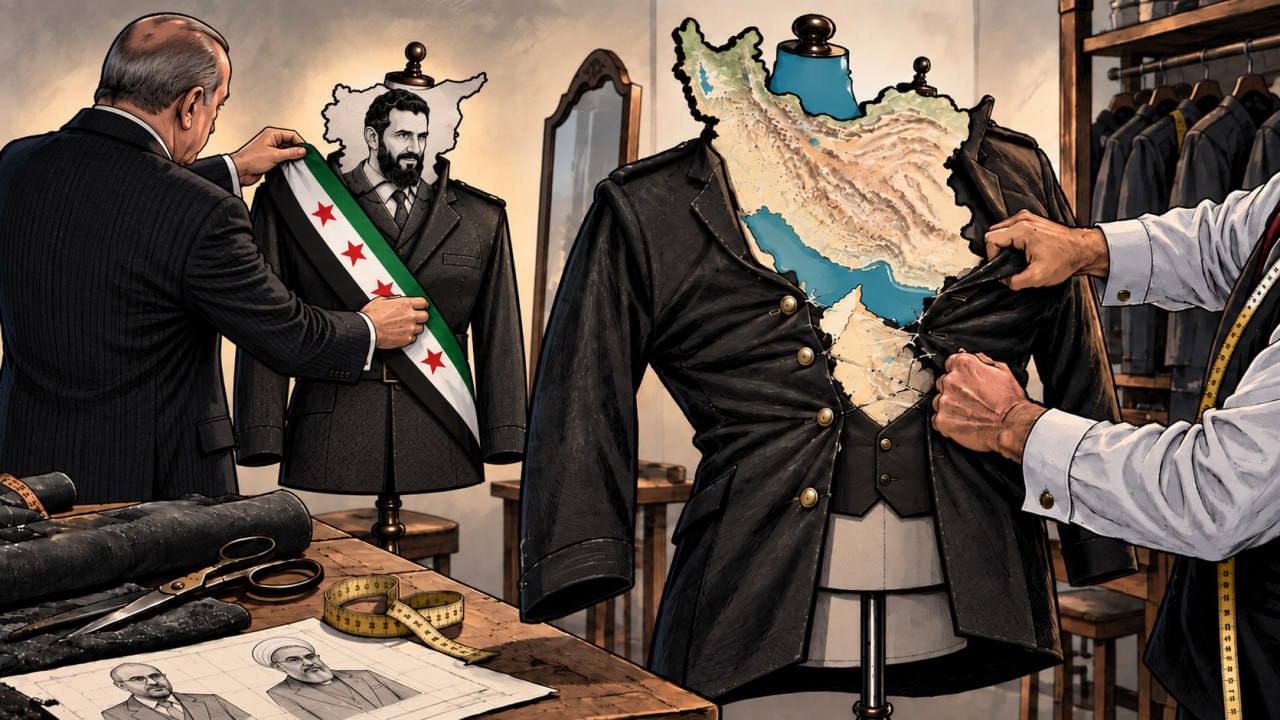
A second camp offers a different, familiar approach: “The Strongman model.” That would be a grave and unforgivable error. When a people already possess a credible alternative, when they are actively supporting a figure who promises a transition via elections, discarding their George Washington in search of a Jolani or any other Shia Islamist is not realism. It is a failure of political elites. Jolani himself has shown, in less than two years, how unreliable and temporary such an arrangement can be even for Syria, a country that never possessed Iran’s historical experience of seeking democracy. Of course, the Islamic regime always tried via paid mercenaries to display a fanatic propaganda in the streets of Iran by burning American and Israeli flags or more recently in their nightly gatherings. The reason behind this is to tell the world Iran is mainly comprised of religious fanatics and only a strongman model will work. They will then offer an alternative of one of their own oligarchs. This is the regime’s ultimate plan to steal the regime change, much like what happened in Iraq. An overthrow accomplished by the United States and ultimately taken over by the Islamists. Sounds familiar right? What we need to understand is this: These gatherings are NOT organic and will fade away with the fall of the regime itself.
Iran’s Constitutional Movement did something precise and still relevant: it placed the sultan, the representative of God on earth, under law and turned him into a constitutional Shah who represented the people. That is how the country moved from the Qajars or the strong Sultans to the Pahlavi dynasty with their first parliament. Iranians today are not looking for another sultan, clerical or communist. They want a man who represents them and who gives them the power to choose. That is the promise Reza Pahlavi has repeated for 47 years, to constitutional monarchists and republicans alike.
A leap from an absolute Islamist-communist dictatorship to a French or Swedish democracy does not happen overnight. Iran first needs discipline during a transition period and, only then, the fulfilment of the people’s will. If that sequence is skipped, Iranians will revolt again, and the region will pay the cost of, yet another regime change not long after the Islamic Republic falls.
When America fought for its own democracy, France stood behind it. President Trump now holds a comparable historic opportunity: to stand behind Iran’s George Washington. That is how the problem is solved with a solution rather than with another problem.