
Suffering, Resilience, and Redemption – a Uniquely Jewish Story, as Predicted in the Torah
Glancing at the headlines in 2024, one could be forgiven for thinking it was 1934 – or 1492, or 1648, or the Crusader period – or any of the other many eras when antisemitism raised its ugly head, threatening the lives of Jews faced with a surge of hate. Sometimes that hate led to “mere” expulsion, looting, or violence – but it could also lead to pogroms, massacres, and Holocausts.
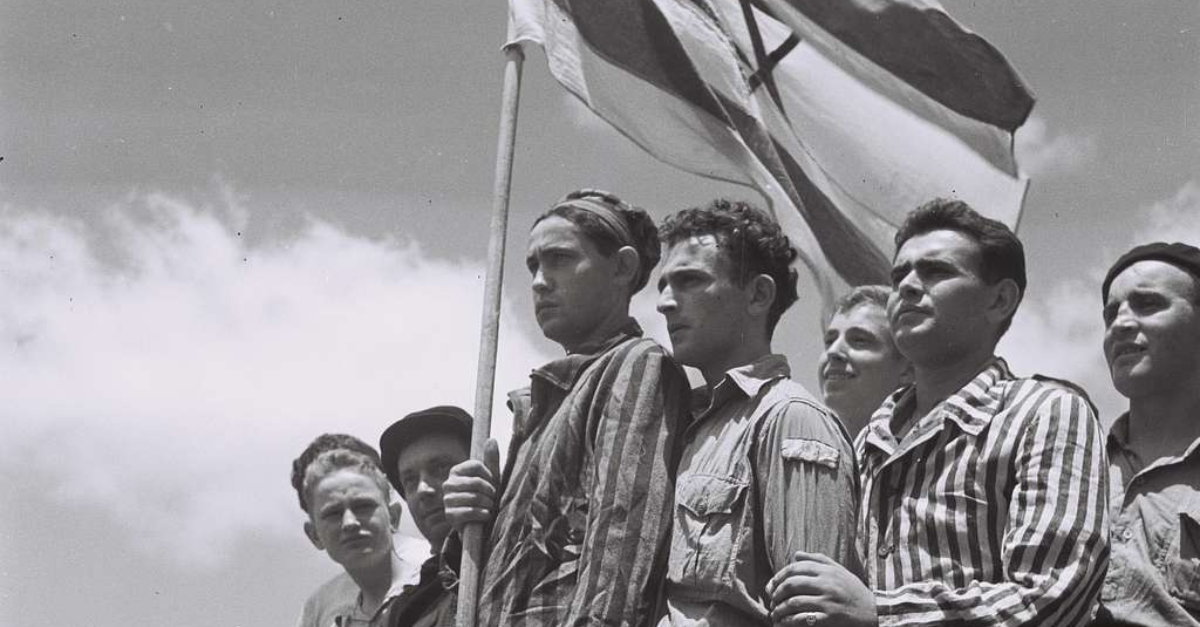
But those experiences also led to something else – the resilience that has sustained the Jewish nation through the dark centuries. That resilience gave us the strength to engineer our national revival after the Holocaust, perhaps the greatest tragedy we experienced since the destruction of the Second Temple. And that resilience will ensure that we will survive the current onslaught of antisemitism, as well.
The Torah presents this important theme of suffering and resilience in this week’s parsha, Bechukotai. God promises us a good, happy, peaceful and prosperous life if we follow His statutes – and the opposite if we don’t. But examining the passages, one notices that the verses promising the blessings are relatively few in number; there are a lot more words about the punishments Jews can expect to face if we don’t hold up our end of the Covenant God has struck with the nation. And those curses have been a feature of Jewish life over the past two millennia. As Nachmanides (Ramban), the great medieval commentator, points out, if there is one Biblical prophecy that has come to pass, it is the prophecy of the suffering predicted in Bechukotai.
But what we must not forget is that if the prophecy of suffering has indeed come to pass, then it follows that the prophecy of redemption – which appears towards the end of Bechukotai – will come to pass as well. In fact, the ingathering of the exiles to Zion and the rebuilding of the land of Israel in conjunction with the miraculous growth of Jewish life – both secular and spiritual – are an indication of where Jewish history is going.
In the passages that appear after the curses, God says “I will remember my covenant with Jacob, and also my covenant with Isaac, and also my covenant with Abraham I will remember” (Leviticus 26:42). Rashi points to the fact that only when the text refers to Jacob and Abraham is the word “remember” mentioned, but not in reference to Isaac. And the reason, Rashi says, is based on a midrash, which says that the “ashes of Isaac,” who was saved from sacrifice at the last minute in the Akedah, are always present before the Almighty – as if he was actually sacrificed. It is the same for subsequent generations; the suffering and martyrdom of all those who paid the ultimate price for being part of the Jewish nation will always be remembered.
We are being redeemed in the merit of the Patriarchs and Matriarchs of our nation who all went through numerous tests and challenges during their lifetimes. And indeed, Jewish history follows the pattern of the life of our Patriarchs; Abraham was tested ten times, and it was only later in his life that he found peace. But he survived his tests, and thrived, becoming the father and archetype of the nation. His son and grandson followed in his footsteps. The same thing is happening today to the Jewish people. After centuries of experiencing the suffering promised in Bechukotai, we are coming to the phase of the peace and prosperity God promises as he “remembers His covenant.”
And our experiences over the millennia have prepared us for the challenges we face today – perhaps the final challenges before the Redemption. After facing hatred, expulsions, and mass murder, we have been steeled – prepared to face anything, and thrive. What are mobs of haters screaming anti-Israel slogans at universities compared to the Nazis’ death camps? Yet a mere three years after the defeat of the Nazis, the Jewish people fought its way to independence and freedom – enabling a revival of Jewish life to an extent that the world hasn’t seen for thousands of years. We will come out of this current test with our heads high – and we will emerge as a stronger and more resilient nation, both in Israel and in the diaspora.
Indeed, what we are experiencing brings to mind a passage from Deuteronomy (30:5), another portion of the Torah that promises punishment for failing to honor the Covenant – and promises redemption in its wake. “And your G-d will bring you to the land that your fathers possessed, and you shall possess it; and [G-d] will make you more prosperous and more numerous than your ancestors.” The headlines may read like 1934 – but the result will not be another Holocaust, but a stronger and more resilient Jewish people.