
(PEM)
Sukkot: A Simcha Now Forever Escorted by Sadness
As expected, on the second anniversary of October 7, my feed is flooded with posts and articles about it. I am sitting at my computer, wanting to write something, but wondering if there is anything I can say that has not already been said.
So, I would like to share my thoughts and feelings, in the hope that I shine a light on aspects not yet touched by others.
One of the most tragic realizations on that terrible day, is that everything we thought we knew and believed, was violently washed away in a river of blood and billowing, black smoke.
-The belief that Israel’s existence was a certainty, and that we had passed the point of fear that it could be wiped off the face of the map, disappeared in the space of a few hours, when the proportions of the massacre and the destruction of so many settlements became clear; 253,000 Israelis were evacuated, made homeless.
-The implicit trust that the army, the strongest army in the Middle East, will always be there to protect us and prevent us from being massacred. It wasn’t, when we needed it the most.
-Any hope we may have harbored of ever being able to live in partnership with Palestinians under the terms of any kind of peaceful solution, was shattered. For, how is it possible to live next to people who are capable of committing such acts of savagery, and with such sadistic schadenfreude?
-The faith that no Israeli government, no matter how extreme, would play Russian roulette with our country’s security, placing its partisan political agenda above the priority of our country’s security, to the point of consciously abandoning and neglecting a hostile border, in order to make a point about our supremacy and “ownership” of the West Bank. How mistaken we were?
It was an earthquake.
From that day on, Sukkot will forever be the saddest Simcha. From now on, it will always be remembered for October 7.
It seems that the Palestinians maliciously choose our holidays to inflict upon us suffering and death, in order to turn our holidays of joy into memorials of mourning, that our celebrations will always be overshadowed by sadness.
However, if we are truly a resilient people, we cannot allow them to do that. Even if the wounds are still raw and our anguish is still palpable; even though there is no closure and we are still grieving and pining for our loved ones to be brought home, and the uncertainty threatens to paralyze us; even if we cannot celebrate, we can still remember and appreciate the meaningfulness of the hag.
Sukkot is to commemorate the 40 years that our forefathers spent, wandering in the Wilderness after leaving Egypt, until we came to the Land of Israel. And the sukkah is a reminder of the temporary dwellings used to protect the wanderers from the elements. We are told that it was possible to reach the Land of Israel earlier, but that the Children of Israel were not yet ready. That there was a method in the delay and why it took 40 years: so that a new generation could emerge, a generation that had not experienced slavery and upon whom reflexive submissiveness had no hold.
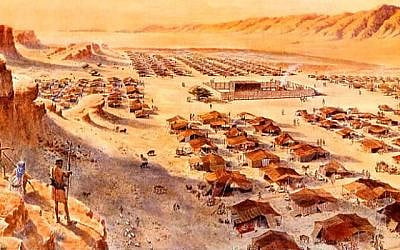
Those years were essential in tempering the resolve of a people; that they not be daunted by the prospect of entering the unknown, and fortifying them for the necessary battles to be fought, to reclaim the Promised Land..
Those 40 years of wandering shaped a collective consciousness, through common experience and a shared fate.
בַּסֻּכֹּת תֵּשְׁבוּ, שִׁבְעַת יָמִים; כָּל-הָאֶזְרָח, בְּיִשְׂרָאֵל, יֵשְׁבוּ, בַּסֻּכֹּת. מג לְמַעַן, יֵדְעוּ דֹרֹתֵיכֶם, כִּי בַסֻּכּוֹת הוֹשַׁבְתִּי אֶת-בְּנֵי יִשְׂרָאֵל, בְּהוֹצִיאִי אוֹתָם מֵאֶרֶץ מִצְרָיִם: אֲנִי, יְהוָה אֱלֹהֵיכֶם
This is the mitzvah as written in the Tanach. The instruction to reenact this moment in our history is a physical commandment. But, there is more to it than these words spoken. There are intentions far more profound behind the physical commandment to dwell in a makeshift hut.
It is a lesson in humility, that reminds us that our sense of security can be as ephemeral as a silken thread, and it is well taken. The irony that on the hag that is supposed to remind us of this, because of our government’s hubris, we paid the price for forgetting it stings deeply. October 7 will forever reinforce this lesson, now well learned.
In this commandment, we are being asked to experience in some small way, the rootlessness that our forebears experienced, so that we can better appreciate having a homeland, a place where we belong, where we can lay down roots. How sadly humbling, then, that davka on this hag two years ago, 253,000 Israelis experienced being made rootless in their own homeland?
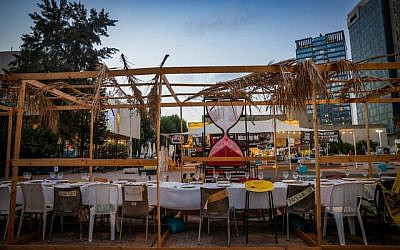
We are being asked not to forget the feeling of desperation, of the uncertainty, and the perils of a nomadic life, so that we better value the stability of now having a national home, and not to take it for granted. As unbridled antisemitism seethes on the streets of cities throughout the world, perversely paraded as a popular campaign for justice, making life for Jews in the Diaspora increasingly precarious (and what better example to make this point than the murderous attack on a synagogue in Crumpsall, Manchester on Yom Kippur, just five days ago), the last two years have further impressed upon us the absolute importance and value of Israel’s existence as a homeland and a haven for all Jews.
So, on this Sukkot day, let us not forget, and take strength in the knowledge that it was during those constitutive years of wandering in the desert, when a nation was forged and the Children of Israel became the People of Israel.
Am Yisrael.
And, Am Yisrael Hai!
Related Topics