
Sukkot and Belonging
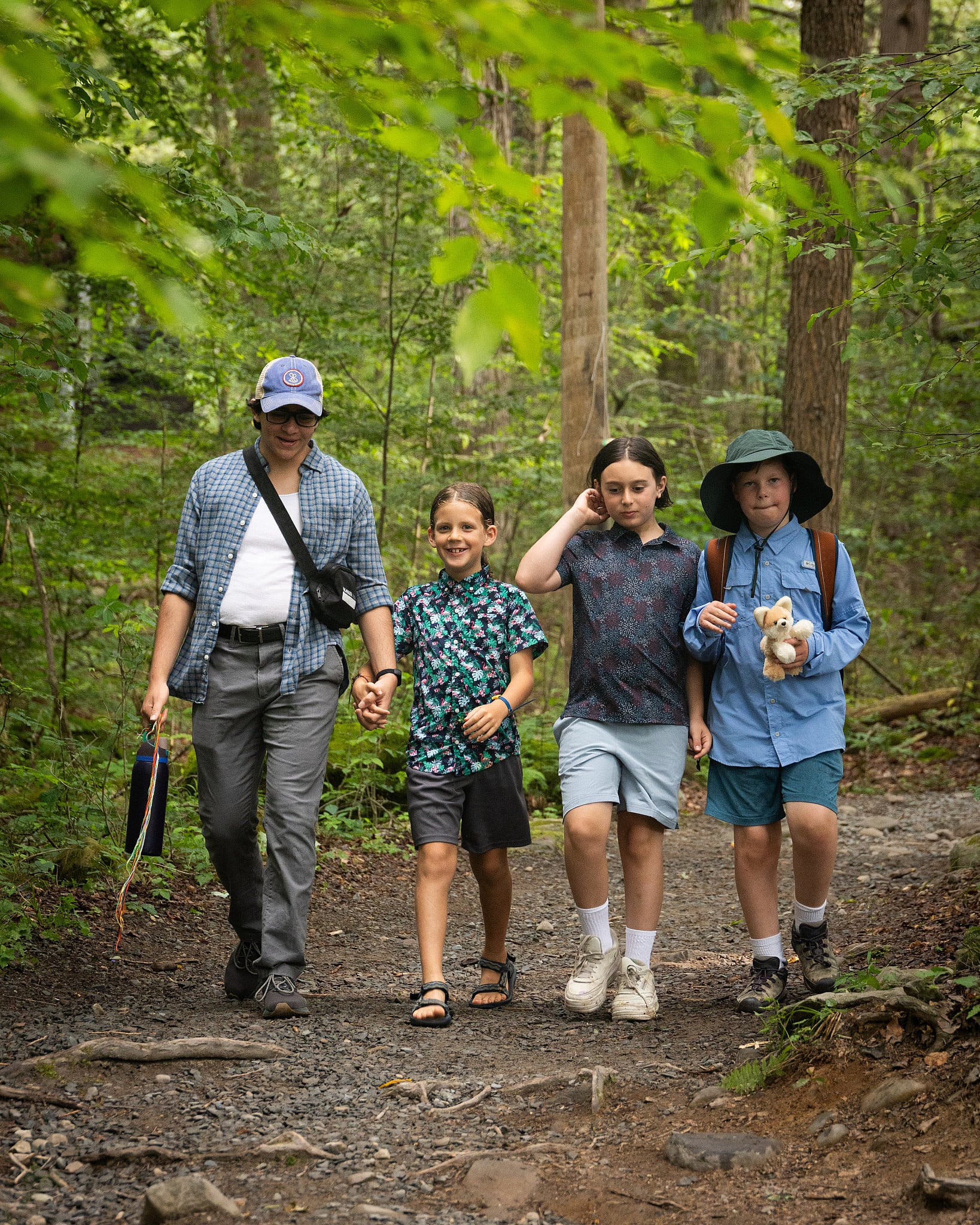
“Who would you invite to your sukkah?”
This is one of my favorite questions to ask when teaching about Sukkot. Based on the idea of ushpizin – the ethereal visitors we welcome during the holiday – it’s an opportunity to think about those with whom we’d like to build a deeper connection. People we’d like to sit together with, share stories, look up at the stars, eat good food, and sing late into the night.
It’s not lost on me that we’re inviting these guests into a temporary structure. Building it takes time and energy – but isn’t the ultimate goal. If it sits empty, we’re missing the point. Welcoming others is part of the joy of the holiday. And it’s a different kind of welcoming than when someone comes to our house during the rest of the year. There’s no waiting for the doorbell to ring or buzzing someone in from a phone app; this is old school waiting for guests to arrive, like when we were kids – watching out the window and running out to greet them. We take a page from Abraham, who hurried out of his tent to welcome the angels with open arms.
Like Abraham’s tent, a sukkah is warm and welcoming, to be sure … and it’s also impermanent. Summer camp is very much the same; even if the facilities remain in place, they are only alive with people and music and joy for a few short months each year. And our goal, just as it is with the sukkot we build in our backyards or on our balconies, is to bring people together in community.
What makes the community at camp so special is the sense of belonging we’re able to create. Aida Mariam Davis defines belonging in a way I just love: it’s “the indescribable feeling of being welcome.” This is exactly what camps are in the business of doing. This doesn’t happen on its own; just like a good sukkah, it takes significant planning, work, and commitment. And it’s an ongoing process – day after day, week after week, season after season. Over the past year, Camp Havaya set out to determine what it is that builds this deep sense of belonging. Thanks to in-depth research conducted by Dr. David McCarty-Caplan (PhD), who specializes in examining and building community belonging within Jewish spaces, and funded by a grant from Foundation for Jewish Camp, we’ve learned an incredible amount. Three things, in particular, stand out as we head into Sukkot:
Visible Inclusivity Shapes Families’ Trust and Decision-Making
A parent recently shared that our “staff are very intentional with relationship building and inclusion. It seems like there is a place for every camper and thought that goes into decisions related to bunking, food, and activities.” What this parent noticed is that belonging underlies each part of the camp experience. We ensure kids are in bunks not only with others of the same age, but with peers (and staff members) who share similar interests, experiences, and identities. We serve pizza and mac-and-cheese and other camp staples … and also tofu tikka masala, General Tso’s chicken, and arroz con pollo, because we have community members and connections around the world (not to mention lots of discerning palates!). And we design programming that gives kids opportunities to try new things, explore new concepts, and challenge themselves in ways they may never have imagined.
For the last two summers, this programming has included an opportunity for our campers who identify as Jews of Color (JoC) to meet once-a-week for an affinity group. They gather together on Shabbat afternoon for snacks, games, and a chance to talk about their experiences – both in camp and in their home communities. They’re guided by JoC staff members who serve as leaders and mentors, as well as models of who campers can become as they grow. (Because, let’s be honest: didn’t you want to be just like your camp counselors when you grew up?) Many of these staff are themselves former campers, and seeing the pride in their eyes as they help to build belonging in ways they themselves didn’t always get to experience is nothing short of awe-inspiring.
Warm, Genuine Community Culture Is a Core Value for Families
The thing about culture is that you can’t fake it. Sure, you can try … but kids will see right through it. (And so will parents and staff!) Time and again, we’ve found that being genuine and transparent not only builds trust but shows people the character of our organization from the very beginning. We give parents shared language to talk with their kids about gender and race, and we let them know our expectations about living together in community – especially when it comes to difficult conversations around Israel. A parent recently noted that, after coming home from camp, their child talked about his peers using “language that described differences without judgment, a level of nuance not commonly seen among middle schoolers.” Their child experienced the power of being part of a community where showing up as our authentic, whole, and complex selves is celebrated – and he integrated that ethos into his everyday life.
That integration is also at the core of how we train our staff. We focus first on organizational values and then invite them to partner with us in creating a culture that is positive and pervasive. This summer, we watched this play out in a myriad of wonderful little ways, perhaps none more beautiful than our final staff oneg. Usually, these Friday night celebrations are planned by a program manager, who picks a theme, purchases food, gathers decorations, and prepares activities. But this one was different. Dubbed “around the world oneg,” staff members were invited to make food that reminded them of home. We had homemade empanadas from Mexico, pilau from Uganda, scones with jam and clotted cream from Great Britain, and so much more. To see the joy on staff members’ faces was to understand the genuine care and pride with which they were serving each other. It was clearly about so much more than food; it was about identity, community, and home. And the sense of belonging in the room – real, deep, meaningful belonging – was palpable.
Structural and Logistical Features Shape Experiences of Belonging
All of this takes work. Just like putting up a sukkah, everything needs to be thought through and set up in just the right way. (And sometimes it needs to be taken down, turned around, and tried again!) But unlike a sukkah, it can’t be put away at the end of the season and forgotten about until the next year. A commitment to belonging is ongoing; it takes continual focus and attention. It must be built into the ethos of the organization from top to bottom – from the board to the professional leadership to the summer staff and campers. It requires community members who champion the work and funders who take the long-view, knowing that the impact is both immediate and compounded multi-fold over time. And it takes an understanding that structural change doesn’t happen overnight, and an unshakable belief that all the work is worth it.
Traditionally, Sukkot was a time to, quite literally, reap what we had sown. But, for most of us, the reaping (like the sowing) is much more metaphorical. At the end of this season of introspection, it’s an opportunity to step outside, to throw our arms wide, and to create a space of warm welcome where we can sit together with friends and family, old and new. To remind ourselves that community isn’t about physical space, but about the connections we form within that space. And to commit, year after year, to the holy work of belonging.