
Teacher. Listener. Builder of sacred spaces.
Summer Camp
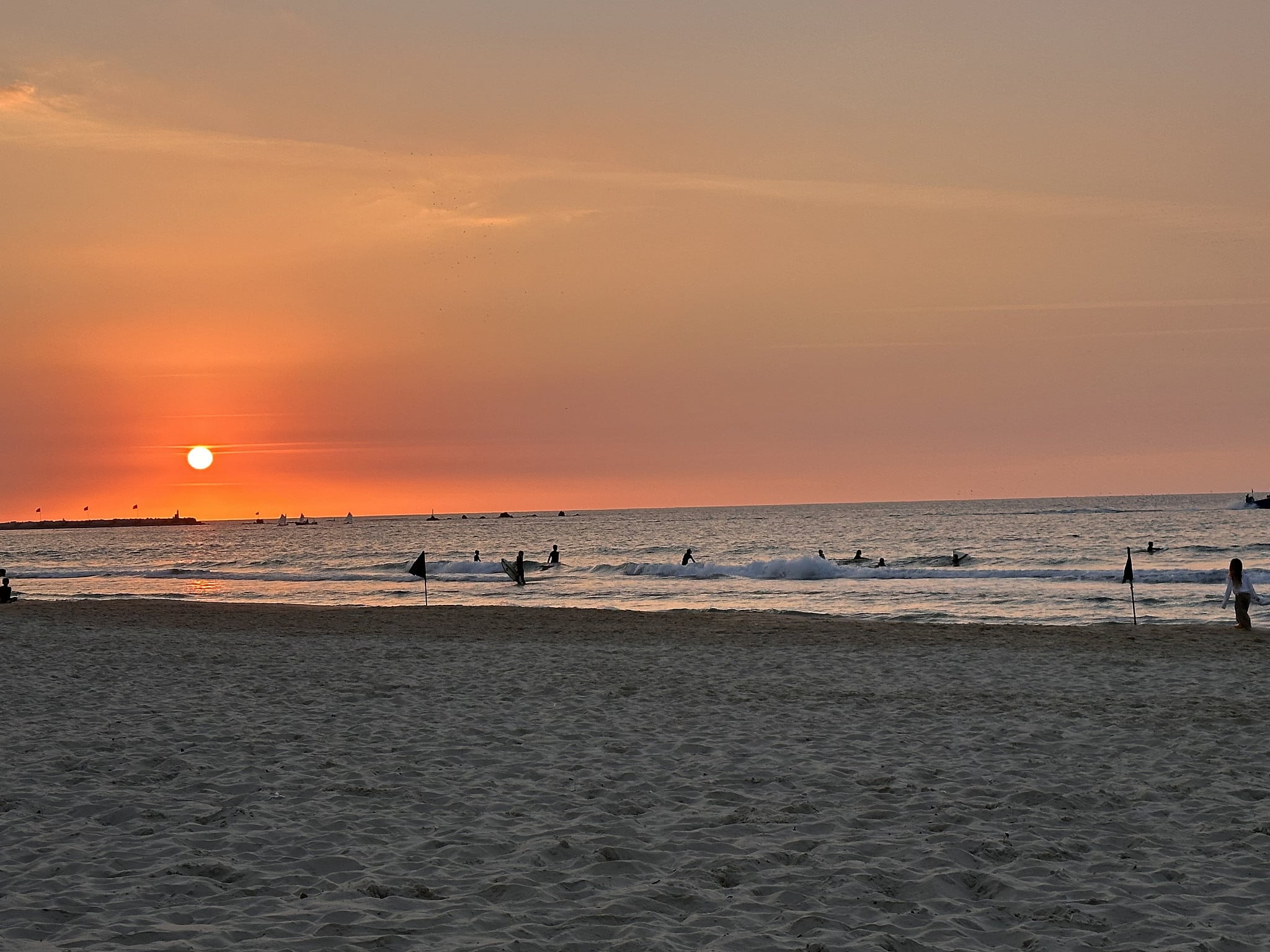
By the Beach, photo by Rabbi Shanee B. Michaelson
The summer after my first year of college, I arrived at sleepaway camp for the first time in my life—not as a camper, but as a counselor. At nineteen, I was older than the campers and on the precipice of adulthood. I had spent the previous nine months at a university a few hours from home, trying on independence in small ways. I learned how to navigate a bus system, how to eat alone sometimes in a dining hall, and how to call home less often than I truly wanted. College had changed me, though perhaps not in the dramatic ways I had imagined. Mostly, it had introduced distance into my life.
My younger sister had experienced her own milestone that year. She had become a bat mitzvah that spring, standing at the bimah with a confidence that surprised even her. In the photographs from that day, she looks poised and joyful, suspended between childhood and adolescence. Our parents stood beside her, proud and emotional, and if anyone had told me then that by the end of the year they would be living separately, I would not have believed it.
A few months after that milestone, my sister arrived at camp as a camper while I arrived as a counselor. It was the first time either of us had attended a sleepaway camp. I remember standing in the camp parking lot on opening day. Campers dragged duffel bags across the gravel. Counselors shouted greetings to old friends. My parents helped us unload our luggage.
Looking back, I can see signs that should have prepared me. My parents fought often enough that it had become part of the background noise of family life. Most of the arguments were not dramatic. They were arguments about schedules, money, household responsibilities, or things that seemed insignificant from a child’s perspective. Sometimes voices rose; sometimes doors closed. Oftentimes, silence settled over the house for the rest of the evening.
Yet none of this led me to imagine that they might someday live apart. Their disagreements seemed woven into the fabric of our family life, as ordinary and enduring as holiday celebrations, ballet classes, homework, or family dinners. I assumed the arguments would continue forever because I assumed the marriage would.
For years, my understanding of my parents had been largely defined by their role as a pair. They were a single unit in my imagination. They managed schedules, attended school events, and worried about their daughters. Like many children, even as a teenager, I rarely thought of them as separate people with separate inner lives.
Looking back now, I realize that summer was one of the first times in many years that they were left alone together for an extended period. No daughters at home. No school calendars. No drop-offs or activities to shuttle us kids to, back and forth. For two decades, much of their shared project had been raising children. Suddenly, both children were gone.
At camp, I was busy enough not to dwell on it. My days were filled with homesick campers, arts-and-crafts projects, campfires, and the endless logistics of supervising eleven-year-olds. I was focused on becoming competent at a job I had never done before. I was also experiencing new things.
Every Friday evening, the camp gathered for Kabbalat Shabbat. The campers changed into clean clothes. The dining hall tables were dressed up for the occasion. Familiar melodies echoed through a room that, for the rest of the week, was devoted to announcements, spilled juice, and the ordinary chaos of camp life.
That summer there was a counselor I liked. He was kind, funny, and seemed completely at ease in his own skin. We talked between activities and occasionally lingered in conversation after campfires. Looking back, I can see that I spent far more time thinking about him than I spent actually speaking to him.
At nineteen, I had never been in a serious relationship. Part of me imagined that camp might be the place where something finally began. Camp seemed full of stories like that. People met, connected, exchanged addresses, and started new chapters. But nothing happened between us. Not because he wasn’t interested. Not because I wasn’t interested. Mostly because I couldn’t imagine how to move forward.
With the benefit of hindsight, I wonder whether my hesitation had something to do with what I was witnessing, even before I fully understood it. My parents’ marriage had become one of those realities I took for granted, like gravity or weather. Yet that summer, I was beginning to sense that the institution that had shaped my understanding of love was far more fragile than I had once believed.
I don’t think I was consciously afraid of relationships. I would have denied it if anyone suggested as much. But there is a difference between wanting something and believing in it. That summer, I wanted romance, but I wasn’t sure I believed in it.
At the same time, my sister was having a summer of her own. We saw each other occasionally between activities, often just long enough to exchange a few words. She was discovering her independence. I was discovering mine. In many ways, we were drifting apart too, though in the expected way that siblings often do as they grow older.
Letters arrived from home. My mother wrote about extended family and neighborhood news. My father wrote about books he was reading and gardening projects. What strikes me now is not what they said, but what they left out. Neither seemed to write much about the other. At the time, I noticed it without fully understanding it. Children often sense changes before they can interpret them.
Years later, I found myself revisiting memories leading up to that summer and noticing details I had overlooked. An argument in the kitchen that seemed to begin over something trivial and end in silence. A conversation that stopped when my sister and I entered the room. The way my parents sometimes seemed exhausted in each other’s presence. At the time, these moments barely registered. They felt like ordinary family life.
Thinking back, I sometimes wonder what was happening during those months while my sister and I were away at camp. Were they sitting together in a counselor’s office, trying to repair what was fraying between them? Were they taking long walks and having difficult conversations? I don’t know. They never shared those details with me. What I do know is that by the time December arrived, the decision to live separately did not emerge from nowhere. It had evolved.
That realization has changed the way I think about adulthood. People can love one another deeply, work hard, and still discover that they are moving in different directions. Effort and ending are not always opposites.
Sometime during that summer, my sister and I began having more serious conversations than we ever had before. Perhaps it was because she had recently become a bat mitzvah, or because I had recently gone away to college. Or perhaps we both sensed that something was changing at home.
One afternoon she asked me whether I thought our parents were happy. I don’t remember exactly how I answered. What I remember is realizing that happiness was the wrong question. I knew they fought. Everyone in the family knew they fought. The mystery was not whether they struggled. The mystery was whether struggle and love could exist together indefinitely. Until that summer, I had assumed they could.
Our family life was rich with Jewish traditions, holiday celebrations, ordinary routines, and the countless small moments that, together, felt like the foundation of something enduring. Whatever tensions existed between my parents lived alongside genuine affection, shared history, and a common commitment to family. That complexity made it harder, not easier, to understand what was happening.
As the summer continued, I found myself thinking more about transitions. I was no longer a child. My sister was no longer entirely a child either. And perhaps my parents were no longer the same people they had been when they first became parents.
For most of my life, I had unconsciously imagined adulthood as a destination. You arrived there and remained essentially the same person forever after. That summer taught me something different. Adults continue changing; families continue changing. Sometimes the changes are so gradual that they remain invisible until they have already transformed everything.
When camp ended, we all returned home. Outwardly, life continued. School resumed. The holidays came and went. But something had shifted. The summer had revealed questions that could no longer be ignored. By December, my parents were living at two different addresses. That fact felt sudden when it finally happened. Yet in retrospect, it wasn’t sudden at all.
The separation that became visible in December had begun much earlier. It had begun, perhaps, before any of us fully recognized it. It had unfolded during that summer when my sister and I were finding our own independence and my parents were rediscovering who they were without children at the center of their lives.
For a long time, I thought of that summer as the summer my parents broke up. Now I think of it differently. It was the summer we all drifted apart. Not out of anger, but rather because growing up sometimes means moving into separate currents. My sister moved toward adolescence. I moved toward adulthood. My parents moved toward lives that no longer fit together. The real story was not about the moment when our family changed shape; it was about the months and even the years beforehand, when all of us were quietly becoming someone new.
Related Topics