Swaying and Bouncing with the Ostrova Biale Rebbe
“Dude, I know this is going to sound crazy, but I need to leave and head back to New York to drive my Rebbe from the airport to his apartment”
My 26 year old brain didn’t understand, did our President’s day ski trip just end? “…but we just drove 7 hours to Vermont. We’re skiing on fresh powder and drinking a plethora of Vermont IPAs…can’t someone else take him? Or he can just take an uber?”
“Bro, the Rebbe asked me to do it, I gotta go.”
You don’t usually hear the words Bro + Rebbe in the same sentence but as I’d soon learn, that’s sort of how the Ostrova Biale Rebbe ztz”l rolls. I begrudgingly went with my friend Josh back to NY, a promise to have yechidus with him in return.
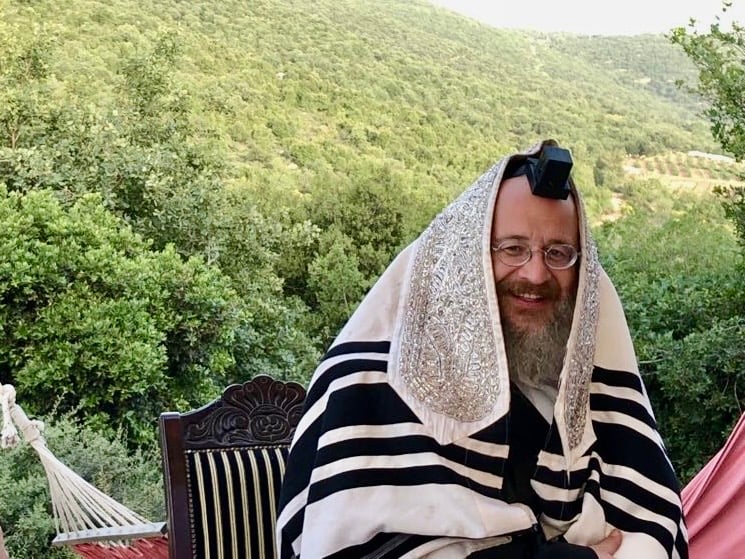
You see, this Rebbe isn’t your typical rebbe you imagine when you close your eyes. Sure he wears the typical garb, speaks Hebrew and yiddish and lives in Yerushaliyim. But he would travel for months to various locations, NYC, LA, Miami, Ukraine, etc at a moment’s notice and you’d never know where he’d go next. Whoever booked his flights quickly learned to never book a return ticket. And outside of Yerushaliyim, you never really found him in a shul either. An Airbnb there, a basement apartment here. He would often spend his weekdays at random cabins just to be in nature, learn, and have time to do hisbodedut.
But most importantly, his chassidim were not your usual chassidim either. Trade the black and white army for an eclectic mix of people who probably wouldn’t have had anything to do with each other if it wasn’t for him: Uman types, classic sefardim, YU grads morphed into neo-chassidim, Hebrew speakers and English speakers, even a batch of 6+ ft tall Italian Persian brothers.
We didn’t live in the same communities or have much to do with each other day to day. But the second a WhatsApp message went out that the Rebbe was in town, we’d drop whatever plans we thought we had that week to track him down, wherever he’d set up headquarters this time.
Sometimes it would just be a few days of meetings. You’d frantically call his oldest son Moshe ztz”l to get on the list, and he’d schedule you for a specific time, but time was really just a suggestion to the Ostrova Biale Rebbe. If you saw him at 11:45pm for your 7pm appointment with no urgent cuts before you, that was a miracle. Other times it was a simcha, a chance to watch him be sandek and mamesh stare at Eliyahu HaNavi as he came to greet the baby, a look every Ostrova Biale chossid can picture just reading this line. Maybe it was a 1am Pesach Sheini tisch in Long Beach that lasted until sunrise. But we were most fortunate when we got to spend Shabbos with him.
It’s hard to explain what would actually happen on these shabboses. You’d start with an overly sefardi Shir HaShirim and then rock out to a fiery Carlebach style Kabbalat Shabbat, the Rebbe doing some type of hybrid of a sway and bounce together as he dances to every song.
We’d clear the living room shul out and set up tables for the meal, but food was never really the point — the Rebbe himself might take a bite of challah, a forkful of fish, and a few cups of slivovitz as his main nourishment. He’d spend most of the meal conducting us in song, dancing, and lechaims, breaking for a Torah thought that was almost always cryptic, invoking some Rebbe from centuries ago that you’d have to sit with for days to even begin unpacking. You’d catch him cheek buried in his palm, eyes closed, elbow entrenched in the table, and then suddenly a song would trickle out of his mouth and his eyes would fling open. Next thing you know he’s up and dancing, the whole room behind him, singing for the next 5, 10, 30 minutes. Time didn’t really exist at these things. He’d pour lechaims all night, a full cup for him, a drop or two for you, knowing exactly how much each person needed to get where he wanted to take us that Shabbos.
This orchestration of song, Torah, and cryptic symbolism would go on for hours — people passing out from exhaustion, not alcohol, a usual scene. Every so often he’d call someone up to the head of the table and practically start a yechidus with them right there, in front of the whole room. The day was much of the same, except he’d randomly excuse himself during davening or the meal for undisclosed stretches of time, off to open a sefer or have hisbodedut with HaShem that just couldn’t wait. 25+ hours of raw chaos, but harmonious all the same. Tohu v’vohu.
And yechidus couldn’t be any different than Shabbos. There was a calmness when you walked into the room. The Rebbe’s eyes would light up when he’d see you and he’d pick up the conversation from the last place you left off from last time. I’d often bullet topics on a piece of scratch paper that I wanted to discuss with him and keep it in my pocket while I’d speak with him. Pretty typically, he’d discuss bullet by bullet in the order I listed, no matter how obscure the topic was.
I’m not really a Rebbe-chaser, I’d rather go to the Ohel than have a Mekubal read my forehead, but I think my connection to the Rebbe was the exception. Maybe it’s because I’ve been meeting with him for years and he’s seen my struggles of being single and dating morph into davening for the health and wellness of my kids as well as my sister’s. Maybe it’s just how easy it was to talk to him and knowing that he would really beg HaShem on your behalf.
There was at least one time where I didn’t want to discuss anything and just came to share good news. That might have been the most vitalized I’d ever seen him in yechidus. He told me that it’s really hard being a Rebbe, listening to everyone’s struggles and issues, and times like these gave him a lot of chizuk.
And as hard as it is to be a Rebbe, it was even harder to be the Ostrova Biale Rebbe. Our Rebbe, and this line of chassidus, has unfortunately been hit with too many tragedies. Sudden losses of his closest family members, most recently witnessing his son Moshe pass away in his sleep, who he seemed to be grooming to be the next Rebbe. So much suffering of his own to carry, on top of carrying all of ours too. We mamesh have no idea.
These last few weeks in the hospital were hard on everyone. The doctors said it was his declining health, but I really think he died of heartbreak. Watching Moshe go without warning, the leader of the next generation gone just like that, was too much. No Purim tisch this past year. None of the simcha we knew from those Shabboses, the random tisches, even the waiting room before yechidus. It had all quietly disappeared.
There’s a big question mark on what’s to be. What will become of this unique line of chassidus that we were zoche to experience in this world. But there’s one way for us to each carry on this chassidic dynasty. Love every single Jew the way our Rebbe loved each one of us. Don’t be closed off to someone just because they look different. And love our kids like your existence depends on it.
Chai Elul is a rebirth of something new into the world, to take us to a level we weren’t able to get to beforehand. Let this be the last level we need, and may we be swaying and bouncing with our Rebbe again at the Beis HaMikdash bimheira v’yameinu mamesh.
***
The Ostrova Biale Rebbe, HaRav Avraham Yerachmiel ben HaRav Dovid Matisyahu ztz”l, passed away in New York on Chai Elul 5786 and was laid to rest in Israel on Yud Tes Elul. May these words be a small zechus for the elevation of his neshama, and may his memory continue to bind us together the way he always did.