Synergy for the Future: Humanizing via Religion
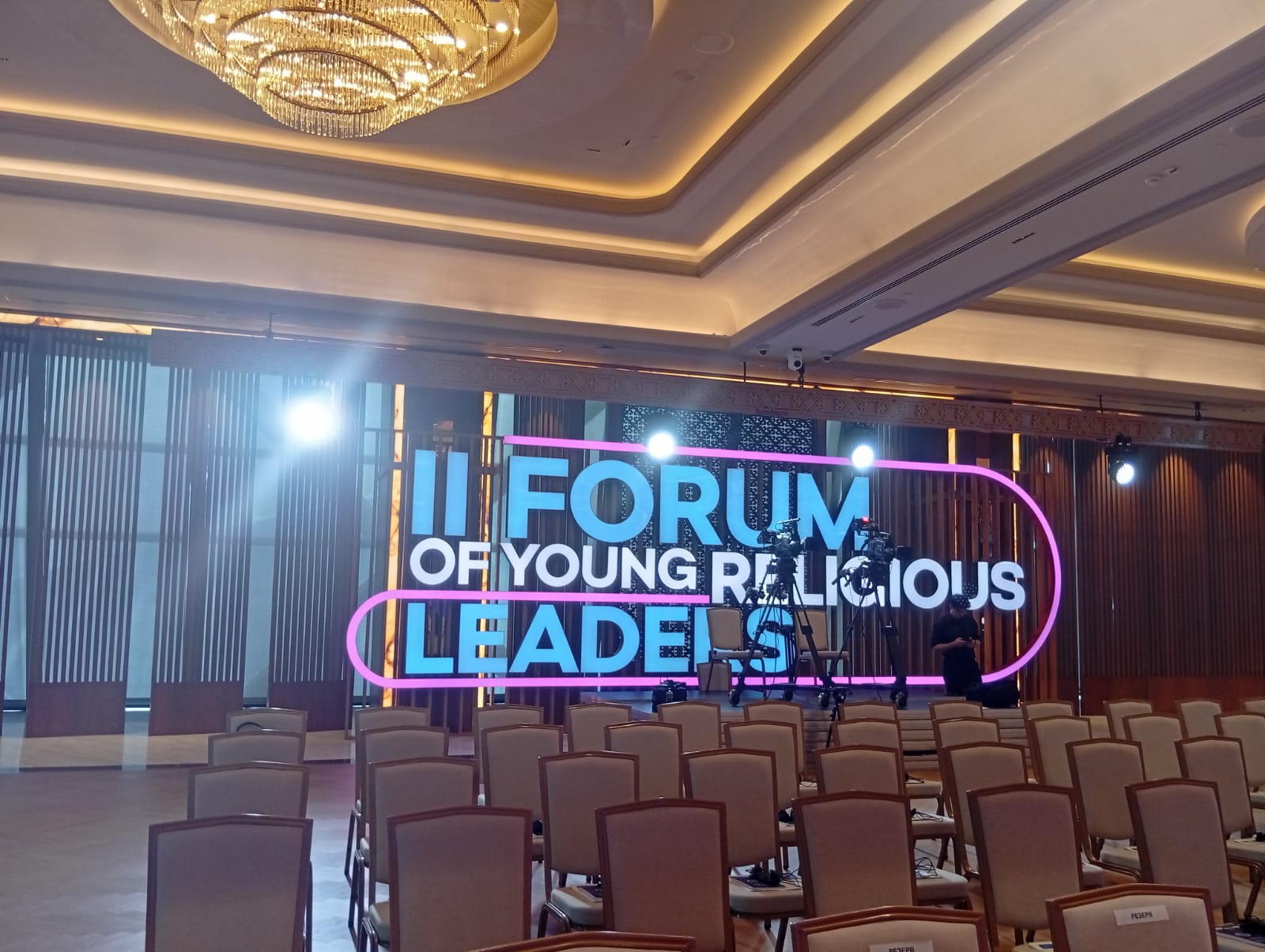
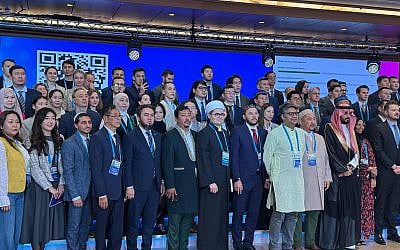
On September 18th, I was honored to be one of the speakers at the Second Forum for Young Religious Leaders, held in Astana, Kazakhstan, as part of the VIII Congress of Leaders of World and Traditional Religions. The following is the full text of my remarks, on the topic “Synergy for the Future”

The Torah teaches that all humans are created “in the image of God”. This isn’t a physical reference–just the opposite, Maimonides, one of the greatest Jewish scholars, explains that we are similar to God because our intellectual capabilities allow us to influence things without physicality, just as God can shape the world without a physical body. With today’s brain-computer interface technology, this power has taken on a new manifestation. But with great power comes great responsibility, and the Torah also teaches 13 attributes of God that we are to emulate, such as compassion, mercy, abundant kindness, truth, forgiveness.
I would like to add to the explanation of Maimonides. Synergy means “two or more things working together to create an effect greater than the sum of their parts.” This is unnatural–in the natural world, 2 plus 2 always equals 4. But as we know, sometimes different combinations create less or more. The greatest example is the transformative nature of a marriage, or any great partnership, where each member complements the other. This mirrors God’s ability to create without limitation. We have examples of this within religion–for example the teaching that giving charity will not impoverish the giver, only enrich the beneficiary.
As we look to the challenges of the future, we must embrace and unlock this power of synergy. As humans, when we work together, towards a common goal, we can solve any problem. We can create good well beyond the sum of our parts. In fact this is a Godly gift that we have been given. As humanity faces new challenges, many of our own doing, partnerships, harnessing diversity, learning from and complementing one another’s knowledge, skills and resources, these are the keys to continuing to grow and succeed.
This is easier said than done. Many partnerships fail in the end. Sometimes the whole is less than the sum of its parts. While God has given us a gift, we have also been given free will, and there is no guarantee that we make the right decisions. Our ability to achieve synergy can be hampered by hubris, selfishness, by prioritizing our own agendas, communication failures, or personality clashes. And of course by divisions into “us” and “them” that has been the Achilles heel of humans throughout history. Research has estimated the economic impact of racism to be over a trillion dollars in a 10 year span–just in the US. According to the World Bank, gender disparity is costing us as much as 20% of the global economic performance. That is the opposite of synergy.
But here too, religion can offer answers. As we heard yesterday from religious leaders from all over the world, our religions instill in us core values. These teachings are designed to help us live together–honesty, integrity, respect for our elders, justice, protection of one another. These shared values create a common language of human dignity and respect that should help drive us to make the world around us better, as individuals and in tandem. In the Mishnah Avot, a central source of Jewish ethics, the sage Rabbi Gamliel teaches that knowledge alone is not enough–it must be wedded to positive actions. Rabbi Gamliel recommends that those engaged in public service should act with good intentions, so that they find success. Later in the same chapter it is stressed that while our work here on earth is immense, we should remember that we do not need to do it all alone–but we must each do our own part. We should all be rowing in the same direction.
Our religions also teach us humility. The biblical paradigm of the prophet is a humble shepherd, because those who care about animals have the compassion and care to be good leaders. Moses was said to have a speech impediment and Muhammad to be illiterate, so that the world would know that they were merely messengers, the message itself coming from God. If our greatest leaders maintained humility, then who are we to let egos drive wedges between us?
And finally to our diversity. Throughout history, our differences have been abused to allow humans to commit atrocities to one another. All too often, religion has been twisted to support rather than stop, bigotry and discrimination. I experienced this firsthand as a child with teachers who did not live by the message of the very texts they taught.
But this is a perversion of our beliefs and texts. The Quran in Surat Rum (30:22) teaches that diversity is one of the signs of God. And the Torah reminds us that we share one origin, and that we are all godly–created in the image of God–because we each contain unlimited potential for creating synergy. If we can follow these teachings, and embrace our shared values, put aside egos for the greater good, and embrace the diversity and godly intellect in each of us, then we will create synergy for the future. Standing here together, looking around this room, I see that we have already started.
My speech was supposed to end here. But yesterday the war in my home country was mentioned in several speeches, and I feel that I should address it as well. October 7th was the worst day in 75 years for the Jewish people. And it was also the worst day in 75 years for the Palestinian people. The idea that this is a zero-sum competition, that one side will win and one side will lose, is a fallacy. In war everyone loses. This is the opposite of synergy–working together, to destroy our own future.
When we look for answers, I think there’s a path that gets overlooked. There are 2 million Palestinians living in Israel, together with 8 million Jews. While most live in separate towns and villages, they work and shop together, interact regularly. And not by coincidence, this relationship has proven to be far, far more successful for both sides, in terms of safety, prosperity, basic quality of life, than putting up fences and walls. Because living together in dignity creates synergy–while fighting one another only generates more loss for everyone.
And the inhumane horrors that the world witnessed on October 7th and has witnessed in Gaza ever since, the unthinkable things that humans have done and are doing to one another–these are the result of dehumanization. Of failure to live by our religious ethics and teachings. Of seeing someone else–Jew, Muslim, Christian, as less human than us, even though we are all creations of the same God. If we saw each other’s suffering on the news and social media, if we really felt one another’s pain, we would never have found ourselves in this situation. And yes, there are people out there on both sides using religion to add fuel to the fire, using religion to promote violence instead of peace, vengeance instead of mercy.
We must remember our roots, go back to our core values, and use them to recalibrate, to return to being Godly and remember that we are all created in the image of God.
I will end with a prayer for peace and guidance: for an immediate end to this and all wars, for the safe return of all the hostages, for the health, safety and wellbeing of every innocent man, woman and child in Gaza, Israel, the West Bank, and throughout the world, and for us to remember and never again forget that we are all brothers and sisters, that every soul lost is the destruction of one of God’s creations, and that as we learn in the Quran and the Mishnah, each life saved is a world unto itself.