


Syria: Western Illusions Meet Israel’s Hard Reality
I am watching the current Syrian sequence with a very specific sense of concern.
Not because Syria is foreign to me — it never has been — but because I recognize, once again, this dangerous moment when the West believes it understands the region, while in fact it is projecting its own assumptions onto it.
Over the past few weeks, a strange sense of convergence has emerged.
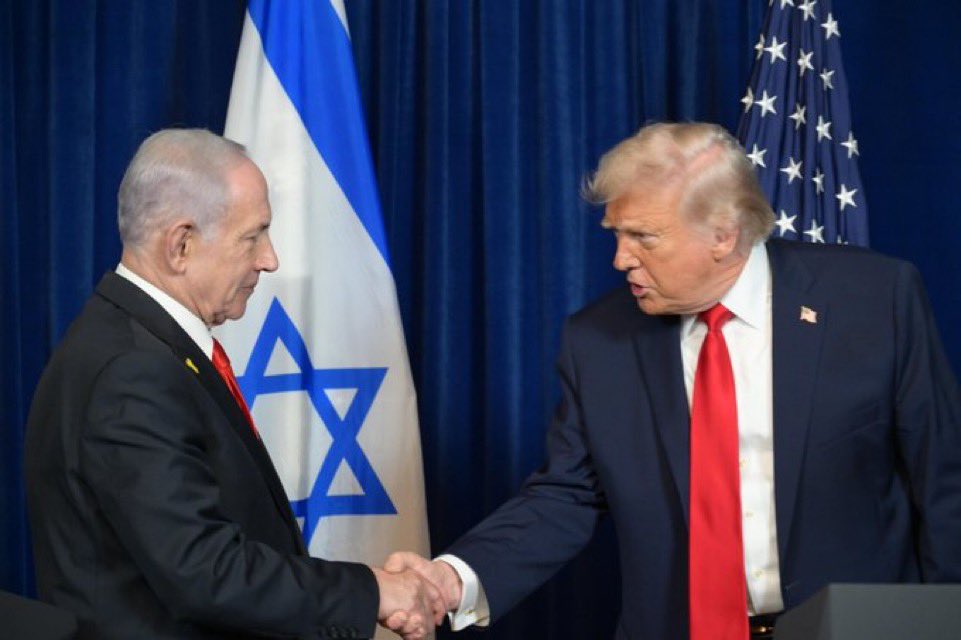
As recently as December 29, 2025, in Washington, Donald Trump publicly reaffirmed his support for Israel in confronting Iran. On that front, the American position is clear, readable, and reassuring for Jerusalem.
But at the very same time, on Syria, a completely different diplomatic mindset seems to prevail — one based on a gamble.
Trump has openly expressed his willingness to believe in Syria’s new strongman, Ahmed al-Sharaa.
He describes him as a “strong leader” Syria needs, justifying the lifting of sanctions by arguing that he deserves “a chance.”
This approach is consistent with Trump’s worldview: better a strongman than a weak state; better to attempt a political deal than to leave a strategic vacuum.
But this gamble rests on a heavy assumption — that a former Islamist figure emerging from the al-Qaeda ecosystem can change his nature through a change in rhetoric.
This is precisely where the gap with Israel becomes apparent.
Benyamin Netanyahu does not reason in terms of bets or intentions. He reasons in terms of borders, threats, and the protection of minorities — particularly the Druze.
For Israel, Syria is not merely a political project to be accompanied. It is a security risk to be contained.
Israel’s experience is harsh but clear: militias do not disappear through declarations; ideologies do not dissolve through diplomatic recognition; Islamist regimes are not judged by their promises, but by their structures, their patrons, and their actions.
And actions, in Syria, speak loudly.
While the West was enthusiastically discussing “transition,” Alawites were being massacred simply for being Alawite.
In March 2024, these crimes were dismissed as clashes with “remnants of the Assad regime.”
I have heard this narrative before. It is always used to mask sectarian violence.
In reality, Islamist fighters crossed Syria to kill Alawites — because they were Alawites.
Then it was the Druze.
The same mechanism.
The same denial.
The same European — and Parisian — silence.
I have not forgotten the chilling remark by a Macron-aligned French official who said that “the Druze are a convenient excuse” when Israelis — the only ones — came to their aid.
That sentence says everything: moral distance, strategic blindness, quiet abandonment.
Whatever Israel does, it is always blamed — even when it is the only actor defending a threatened minority in Syria.
Meanwhile, Paris stayed the course.
Emmanuel Macron condemned Israeli strikes against Iran, spoke of “excesses,” and called for restraint — while systematically downplaying the Iranian threat itself.
From Gaza to Tehran, from Damascus to Doha, this reading of the region is fundamentally flawed.
Yet the most worrying element lies elsewhere.
It is in the explicit praise given to Recep Tayyip Erdoğan — most recently by Trump, in Netanyahu’s presence.
Turkey is not a neutral actor in Syria. It is one of its most consistent and cynical architects.
For more than a decade, Ankara has facilitated the transit of jihadists, instrumentalized Islamist militias, prioritized fighting the Kurds, and used Syria as a tool of ideological and strategic projection.
Portraying Turkey as an actor that “helped Israel get rid of a hostile regime” is not only naïve — it is dangerous.
In weakening Assad, Ankara never worked for Israel’s security. It worked for its own influence, while maintaining a structurally hostile posture toward the Jewish state — now openly expressed.
This is where the real dialogue of the deaf lies.
Washington thinks in terms of personal leadership, fast transactions, and political opportunity.
Israel thinks in systems, ideologies, long-term threats, and survival.
The United States believes regimes can evolve through recognition and integration.
Israel knows — through experience, memory, and the price paid — that ideology always precedes tactics, and that regional patrons such as Turkey and Qatar are not guarantors of moderation, but multipliers of influence.
This moment is dangerous.
Not because of a personal disagreement between leaders, but because it reveals a deep fracture in how the Middle East is understood.
Between diplomatic optimism built on a gamble and existential caution forged by reality, there is no middle ground.
There is only time — and it is always the minorities who pay the price.