


Middle East Analyst
Syria’s Forgotten Humanitarian Crisis: 2026 Update
by author (AI)
Recovery, Unrest, and the Risk of a New Collapse
The fall of Bashar al-Assad in December 2024 created an opportunity Syria had not experienced in more than a decade. A brutal dictatorship was gone, international sanctions began to ease, millions of displaced Syrians saw an opportunity to return, and Gulf states and international investors began discussing the country’s reconstruction. For a population exhausted by years of war, displacement, and economic collapse, there were legitimate reasons for optimism.
But political change and economic recovery are not the same thing as national reconstruction. Nor does the end of a civil war automatically produce a stable society.
When I wrote about Syria’s humanitarian crisis in December 2025, the central argument was that the removal of Assad had not ended the humanitarian catastrophe. The danger was that international attention would shift toward the political transition and investment opportunities while millions of Syrians continued to struggle with poverty, displacement, inadequate public services, and the consequences of fourteen years of war.
Nearly a year later, that concern remains justified. However, the picture is more complicated than simply declaring that conditions have become worse. Some indicators have improved, economic recovery is underway, and refugee returns have continued. Other developments, particularly the inadequacy of humanitarian assistance, sectarian tensions, public protests, and questions about government accountability, raise serious concerns about whether the transition can deliver the stability Syrians were promised.
The question is no longer simply whether Syria can recover from the Assad era. It is whether the new government can build a state that Syrians across the country’s different communities consider legitimate, accountable, and capable of improving their lives.
The humanitarian crisis has not gone away
The United Nations estimated that approximately 15.6 million Syrians would require humanitarian assistance in 2026, down from the 16.5 million identified in the 2025 planning process. That is an improvement, but it should not be interpreted as evidence that the humanitarian emergency has been resolved. The United Nations itself notes that changes in assessment methods and access to better population data affect year-to-year comparisons.
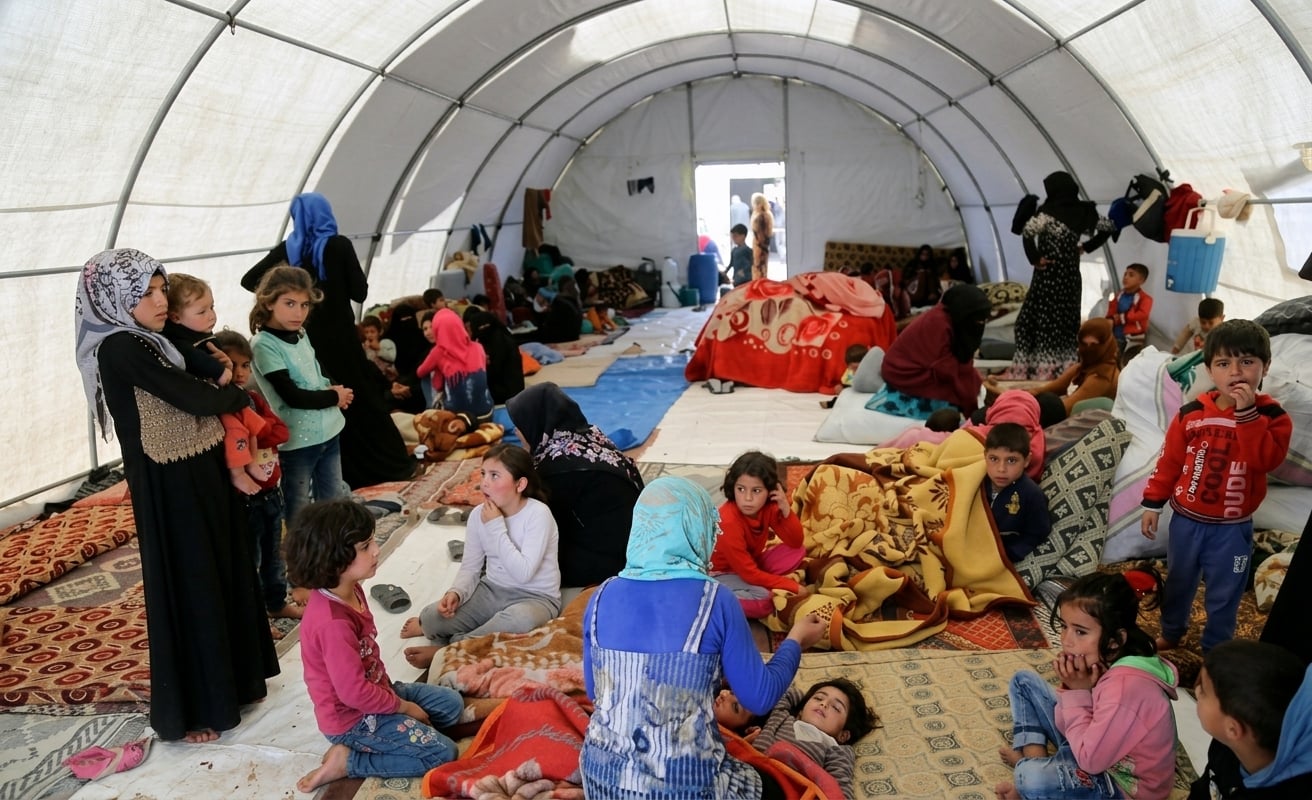
The scale of the remaining need is extraordinary. Syria’s estimated population is approximately 25.6 million, meaning that a substantial majority of the population continues to experience some form of humanitarian vulnerability. More than seven million people face acute food insecurity, while millions remain displaced or live in communities where housing, healthcare, electricity, water, and other essential services have not been adequately restored.
There has also been meaningful progress in refugee returns. The UN Commission of Inquiry reported in September 2026 that more than 1.7 million refugees and nearly two million internally displaced Syrians had returned home. These figures demonstrate that conditions have improved sufficiently for substantial numbers of people to consider returning.
But returning home and rebuilding a life are two different things. Many returnees find their homes destroyed, their neighborhoods without reliable electricity or water, schools and hospitals damaged, and employment opportunities limited. Some return to communities where property ownership remains disputed or where unexploded ordnance makes rebuilding dangerous.
The humanitarian response itself is struggling. The 2026 UN response plan requires approximately $2.9 billion to assist 8.6 million people, but funding remains substantially below requirements. The World Food Programme has already reduced emergency food assistance because of funding shortages, cutting the number of recipients from approximately 1.3 million to 650,000. It also suspended a bread subsidy program that had supported hundreds of bakeries and provided affordable bread to millions.
This is not a minor administrative adjustment. Food assistance is being reduced while millions of people remain food insecure.
The problem extends beyond food. Health facilities have closed, humanitarian organizations have reduced operations, and displaced families continue to depend on assistance that international donors have not adequately funded. The decline in humanitarian support also predates the 2026 Iran War. It reflects a broader international retreat from humanitarian spending and a growing tendency among donors to shift resources toward reconstruction and economic development before the humanitarian emergency has sufficiently subsided.
That distinction matters. A new power plant may eventually improve economic prospects, but it does little for a family that cannot afford food today.
The political transition is facing a different kind of test
The new government has made progress in restoring central authority and reestablishing Syria’s international relationships. However, the transition has also exposed unresolved divisions that could undermine the country’s future.
The most serious concern is the government’s ability to establish trust among communities that have legitimate reasons to fear domination or retaliation by other groups.
The violence against Alawite communities along the coast in March 2025 and the subsequent violence in Sweida in July demonstrated how quickly sectarian tensions can become mass-casualty events. These were not simply isolated confrontations between local armed groups.
The UN Commission of Inquiry documented widespread executions, torture, sexual violence, and destruction of civilian property during the Sweida violence. Its March 2026 report concluded that violations by government forces, Bedouin armed groups, and Druze armed groups could constitute war crimes and potentially crimes against humanity. More than 1,700 people were killed according to the Commission’s conservative assessment, and nearly 200,000 were forced from their homes.
The government has initiated investigations and some proceedings, but international investigators continue to express concern about the absence of comprehensive accountability, particularly for commanders and senior officials who may have been responsible for violations.
This is a fundamental test of the new government’s legitimacy. It cannot credibly promise national reconciliation while allowing serious abuses by individuals associated with its own security institutions to go unaddressed.
Nor can it expect minority communities to trust a central government simply because the Assad regime has disappeared. Trust must be earned through protection, equal treatment under the law, and accountability regardless of the identity or political affiliation of the perpetrators.
Civil unrest and corruption are warning signs
Another development receiving insufficient international attention is the increase in public demonstrations across Syria during 2026.
According to the Armed Conflict Location & Event Data project (ACLED), demonstrations have increased as Syrians have become more willing to express grievances that could not safely be voiced under the Assad government.
The protests are not all about the same issue. They reflect economic hardship, dissatisfaction with government decisions, demands for transitional justice, and resentment over the apparent return or reinstatement of individuals associated with the former regime.
During the first half of June alone, ACLED recorded 41 demonstrations demanding transitional justice and accountability, representing approximately 40 percent of all demonstrations recorded nationally during that period.
One particularly sensitive issue involves reports that businessmen and other individuals associated with the former Assad establishment have been able to return or reestablish influence without adequate public accountability. Critics question why individuals who benefited from the former regime should be allowed to resume economic and political influence while ordinary Syrians continue to bear the consequences of the dictatorship.
These developments have also contributed to allegations of favoritism, corruption, and the recycling of former regime networks within the new political and economic establishment.
It is important to distinguish allegations from established findings. Not every accusation of corruption is substantiated, and demonstrations should not automatically be interpreted as evidence of widespread opposition to the new government. Indeed, the ability to protest openly is itself a significant departure from the repression of the Assad era.
Nevertheless, the underlying grievances deserve attention. The government cannot build public confidence if citizens believe that political connections, sectarian affiliation, or relationships with powerful business interests determine who benefits from reconstruction.
Economic hardship makes these concerns more consequential. Public-sector workers, teachers, healthcare personnel, farmers, and other groups have protested over wages, prices, and government policies. ACLED’s analysis identifies economic pressures and governance shortcomings as important drivers of this growing public discontent.
There is a lesson here for international donors and investors. Political stability cannot be measured solely by the government’s ability to control territory or maintain security forces. A government can exercise administrative control while losing public confidence.
The new authorities must demonstrate that the post-Assad system will not simply replace one privileged political and economic network with another.
Gulf assistance: Investment is not humanitarian relief
Saudi Arabia, Qatar, and the United Arab Emirates have become important participants in Syria’s economic recovery. Their involvement represents a substantial change from the years when Syria was isolated internationally.
There has been genuine progress, but it is important to distinguish between announced commitments, money actually disbursed, and projects that have reached implementation.
Saudi Arabia and Qatar jointly committed $89 million through the United Nations Development Programme to help sustain essential public services and pay a portion of government employees’ salaries. This was tangible assistance, not simply a political announcement.
Qatar has also led a consortium behind a proposed $7 billion electricity investment program involving new gas-fired power plants and solar generation. Agreements with Siemens Energy to reserve manufacturing capacity for major power plant components represent progress toward implementation. However, manufacturing agreements and preliminary investment commitments should not be confused with completed financing or operational infrastructure.
The Gulf states have announced approximately $28 billion in memoranda of understanding with Syria since 2025. These commitments cover electricity, energy, telecommunications, ports, transport, and other infrastructure.
They are important, but Syria’s reconstruction requirements are estimated by the World Bank at approximately $216 billion. Even if all the announced Gulf commitments eventually materialize, they would cover only a fraction of the country’s needs.
There is also a fundamental difference between commercial investment and humanitarian assistance. Gulf investors have obvious reasons to finance projects that generate economic returns or provide strategic influence. Humanitarian programs generally do not offer comparable commercial incentives.
Consequently, Gulf investment cannot substitute for the humanitarian funding that remains essential to millions of Syrians.
The Iran War has added another complication. The conflict has disrupted regional energy supplies and increased the cost of imported fuel and food. The IMF reported in August that higher import prices, particularly for fuel and food, associated with the regional conflict had contributed to renewed inflationary pressures in Syria.
There is also a potential impact on Gulf investment capacity. Qatar, in particular, has been exposed to regional energy disruption. However, there is insufficient publicly documented information to conclude that the Iran War has caused major Gulf-funded Syrian reconstruction projects to be cancelled or that humanitarian assistance has been directly diverted from Syria to the war.
The more defensible conclusion is that the war has added economic and financial pressures to an already difficult recovery. The humanitarian funding problem, meanwhile, was well established before the conflict began.
Economic recovery is possible, but not guaranteed
There are legitimate reasons for optimism about Syria’s longer-term economic prospects.
The removal of major international sanctions, improved regional relations, returning refugees, increased agricultural production, and renewed investment interest have created opportunities that did not exist under Assad.
The IMF’s August 2026 assessment projected double-digit economic growth during 2026, with continued growth expected in 2027. Agricultural recovery, increased hydrocarbon production, improved electricity provision, trade, and services are among the factors supporting that outlook.
The World Bank has also identified signs of economic recovery, although it cautions that conditions vary considerably across the country.
But a high growth rate should not be confused with widespread prosperity. Syria’s economy has been devastated by more than a decade of conflict. The World Bank estimates that direct physical damage to infrastructure and buildings reached approximately $108 billion, while the overall reconstruction requirement is approximately $216 billion.
That is an enormous financial burden for a country whose government revenues and institutional capacity have been severely weakened.
The most important long-term requirements extend beyond rebuilding physical infrastructure. Syria needs a functioning banking system, credible financial institutions, predictable regulations, reliable electricity, a trained workforce, functioning public services, and a government capable of protecting private investment and enforcing contracts.
It also needs a political environment in which investors do not have to calculate the risk of renewed conflict, arbitrary government decisions, corruption, or sectarian discrimination.
The reconstruction process must benefit ordinary Syrians rather than becoming another source of wealth for politically connected individuals.
The World Bank’s decision to provide a $20 million grant to strengthen public financial management, procurement, budget controls, transparency, and accountability is therefore significant. These may sound like technical issues, but they are central to determining whether reconstruction money actually reaches its intended destinations.
What needs to happen next?
Syria needs a coordinated international approach that recognizes the relationship between humanitarian assistance, political legitimacy, security, and economic development.
First, international donors must maintain humanitarian assistance while gradually expanding recovery and reconstruction programs. The two should not be treated as competing priorities. Families cannot participate in economic recovery if they lack food, shelter, healthcare, and basic services.
Second, Gulf governments should move beyond announcing investment memoranda and ensure that projects reach financial close and actual implementation. They should also establish a meaningful humanitarian and social-services component within their assistance programs.
Third, the new Syrian government must demonstrate a genuine commitment to accountability. Investigations into sectarian violence must reach beyond lower-ranking perpetrators when evidence warrants examination of senior commanders or officials. Allegations of corruption and favoritism must be investigated transparently, and public funds must be subject to meaningful oversight.
Fourth, the international community should support inclusive political institutions and arrangements that provide meaningful representation and security guarantees for Syria’s diverse communities. The integration of Kurdish, Druze, and other local forces into national institutions cannot succeed through administrative declarations alone. It requires confidence that the new state will protect the rights and interests of all its citizens.
Finally, reconstruction must be measured by improvements in the daily lives of Syrians, not simply by the number of investment agreements signed or the percentage of economic growth reported.
Syria’s future matters well beyond its borders.
A stable and economically functioning Syria could reduce refugee pressures on neighboring countries, limit opportunities for extremist organizations and criminal networks, and contribute to a more predictable regional security environment. It could also create opportunities for expanded regional economic cooperation.
But a Syria in which economic recovery benefits only a narrow political and commercial elite, while millions remain impoverished and communities continue to fear sectarian persecution, would be a very different proposition.
The country’s humanitarian crisis, political grievances, and economic challenges are interconnected. Neglecting any one of them could undermine progress in the others.
The original argument of Syria – The Forgotten Crisis was that the world should not mistake the end of Assad’s rule for the end of Syria’s humanitarian emergency. That argument remains valid, although the country has made real progress in some areas.
The more immediate danger today may be that international enthusiasm for Syria’s political transition and reconstruction opportunities will outpace the government’s ability to deliver accountable governance, security, and tangible improvements in living conditions.
Syria has an opportunity to rebuild. But the fall of a dictator is not the same thing as the creation of a functioning state. That requires institutions, accountability, public confidence, and an economic recovery that reaches beyond those who already possess wealth and influence.
The real measure of Syria’s recovery will not be how much money the international community promises to invest. It will be whether ordinary Syrians can build secure, productive lives in a country they believe belongs to them.