


Tactical wins, strategic losses
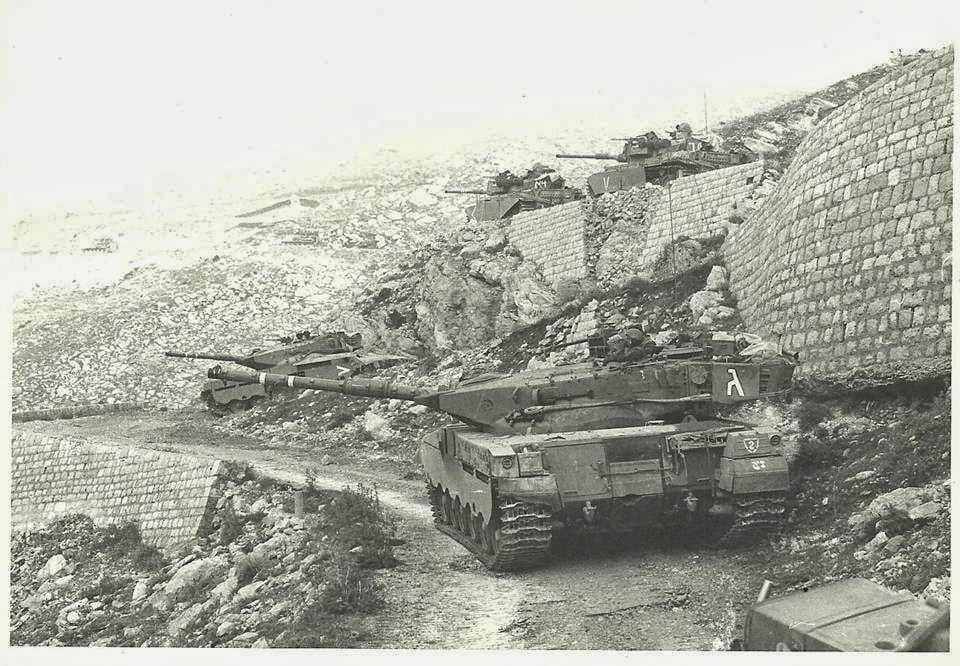
Why do we repeatedly make the mistake of thinking that if we use more military force, we will achieve more security? Why do we repeat the same mistake of the First Lebanon War, where our soldiers’ blood was spilled without strategic purpose? How do we explain that the Israeli public bought into the fantasy of total victory in Gaza and then in Iran, while in reality, even when we win on the battlefield, we lose the overall strategic campaign?
Americans learned in Vietnam that the body count theory, which Defense Secretary Robert McNamara used to define success, led to strategic failure. They learned in Iraq that victory on the battlefield, the elimination of Saddam Hussein, and the abolition of Ba’athist rule led to the rise of ISIS and the increase of Iranian influence there. They learned this lesson in Afghanistan, a war that dragged in all NATO countries and ended up with the Taliban returning to power. Because of these past mistakes, Trump’s and Netanyahu’s war in Iran is so unpopular in the U.S., but why was it popular here in Israel?
One reason we in Israel do not learn is that we do not distinguish between tactical and strategic levels. Every time we are in some kind of conflict, the media channels fill up with former military personnel, some of whom, at best, understand the tactics of using kinetic force but completely misunderstand the political arena—without which there is no way to improve our strategic situation.
There are also other military personnel who understand the limitations of such power. A prominent example is the organization “Commanders for Israel’s Security,” which operates at the strategic level. It includes former senior officials from the IDF, Shin Bet, Mossad, the police, and the Foreign Ministry, who understand that no military campaign provides security if it is not part of a wider political strategy.
The dominance of the tactical security discourse also leads to defining Israel’s achievements as a “zero-sum game,” while strategic achievements are always in the realm of “win-win,” meaning that the other side in the conflict will also advance gains and interests. A reflection of this phenomenon is that there is a translation in Hebrew for “zero-sum game” (“משחק סכום אפס”) but there is no translation for “win-win” or “lose-lose.”
I foresee our return to the tired slogans of “let the IDF win,” while in reality, the IDF, despite being one of the strongest militaries in the world, is incapable of winning asymmetric conflicts that characterize the modern battlefield. A political strategy, which has brought us security with Egypt and Jordan, is necessary to defeat Hamas, Hezbollah, and Iran.
Israel indeed needs military power, and at times it is necessary to use it. However, the way we use the army – like a carpenter with a powerful hammer who thinks every problem is a nail – leads to strategic failures and undermines our security.
I can’t understand—how do the residents of the north, whose fate I, as a son of Kibbutz Manara, am so worried about, benefit from the occupation of Beaufort? How do we advance the disarmament of Hezbollah when we cross the Litani River? How does the IDF’s presence in most of Gaza help to create an alternative to Hamas and implement Trump’s 20 points?
Unfortunately, no one has satisfactory answers to these questions. Therefore, despite our unprecedented military strength, the state of Israel is in an unprecedented strategic predicament. We are perceived as using force for the sake of force, and our actions, including against civilian populations, lack purpose. Thus, we lose the support of the majority of the American public and the support of liberal democracies around the world. Such behavior is not the way to achieve security.
Netanyahu’s Spartan vision is coming to fruition before our eyes, and we are still buying into the narrative that the whole world is against us due to antisemitism and the Muslim takeover of Europe, or Qatari money on college campuses in the U.S.
In reality, we control our fate. We, the liberal Israelis, will win and provide the citizens of the state with strategic security if we change direction and understand that we need to seize the unprecedented regional opportunity that lies before us. This is a reality in which all Arab countries, like us, want to decrease the power of extremists. The way to seize this opportunity is to adopt proactive diplomacy and integrate Israel into the region by removing the conflict with the Palestinians from the equation.