Talking to One’s Self – Naso 5786
So, it smashed everywhere.
My beautiful blue bowl, my favorite bowl filled with warm oatmeal, fell off the table, spraying clay pottery and oatmeal all over the floor, the table, and my suit.
I was a mess, and I was in a big panic.
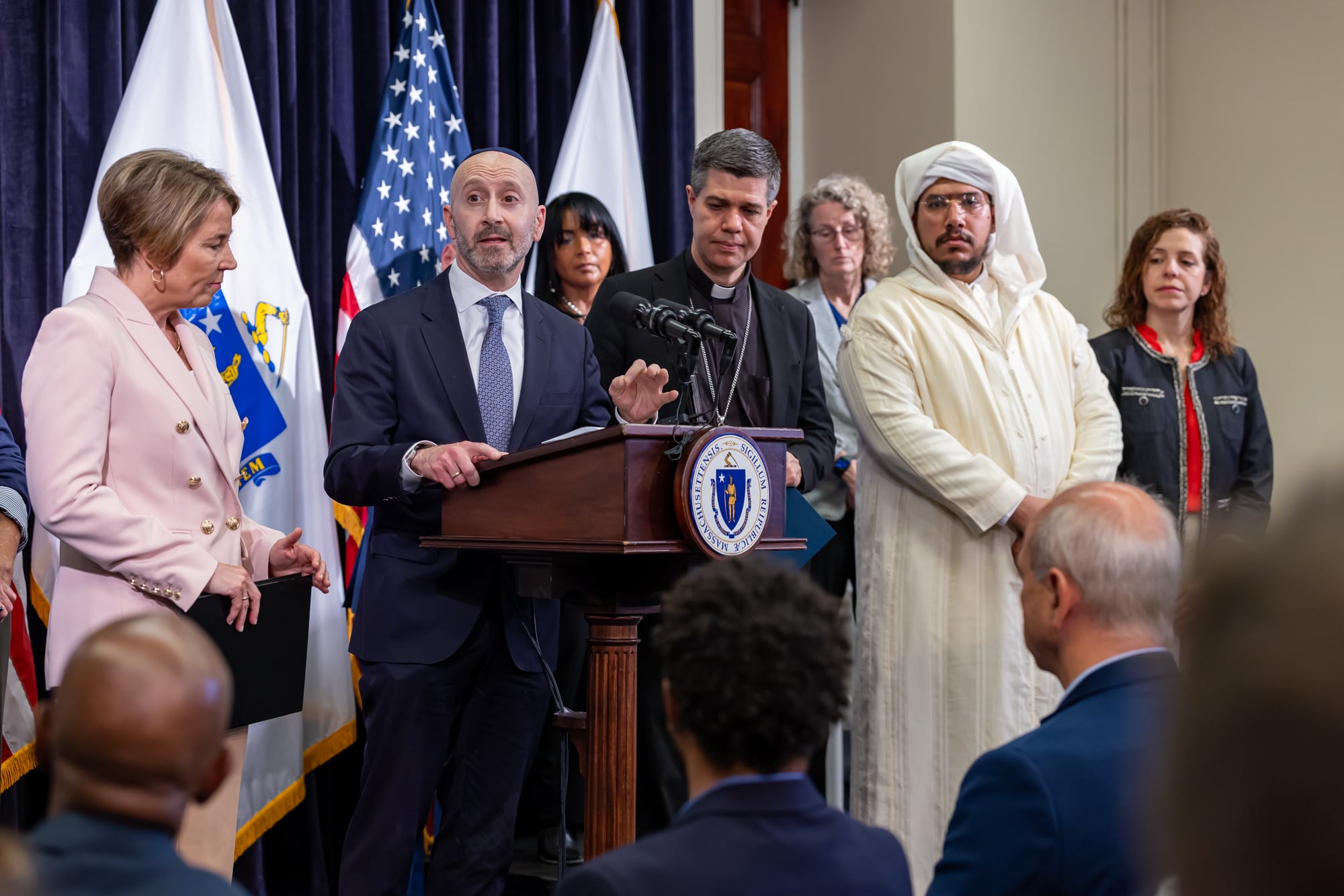
I had been invited by the Governor to speak at a press conference (click here to watch the press conference – Rabbi Lerner’s remarks begin at 29:54) about the guidance she was issuing regarding her executive order: ICE agents cannot simply enter sensitive places like our own synagogue without a judicial warrant.
And I needed to be at the State House on time.
But, as I’m sure has happened to you, I was just juggling way too much, both metaphorically and literally.
I was tying my tie.
I was texting someone about a pastoral visit.
I was on a Zoom call.
I was making breakfast.
And I was trying to get in the car as fast as possible.
Suffice it to say, I did not have time to change my suit.
So I washed away the oatmeal, which left behind only a kind of a medium-ish residue, which you can see in the pictures from the press conference.
Hopefully, people thought it was a special religious tradition in Judaism to wear oatmeal on one’s pants on Thursday mornings. ????
So I got into the car and drove.
And I was late.

And of course, it was rush hour, and it seemed like everyone had forgotten how to drive.
Or maybe they were just all Boston drivers.
People were going the wrong way.
They were going 20 miles an hour.
They forgot they could make a right turn on red.
And as I drove, I started talking to myself, getting more and more frustrated.
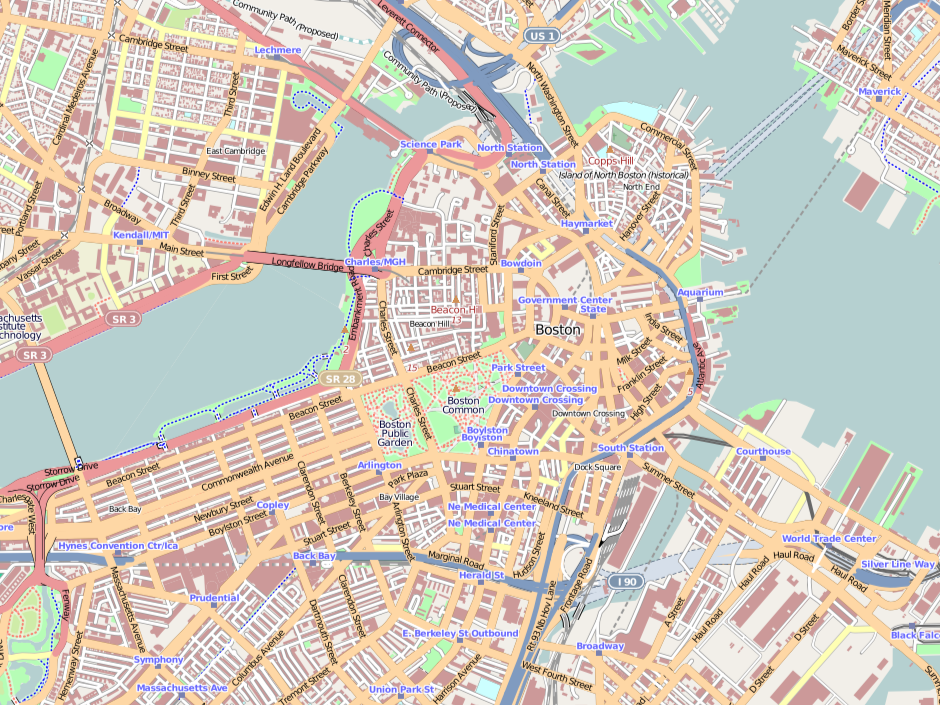
And then, I have to say, whoever designed the roads in Boston was clearly not a linear thinker.
Cropped
https://commons.wikimedia.org/wiki/File:Map_of_Boston_and_Cambridge.png
Apparently, the designers were cows (at least according to my grandmother), and these cows must have walked around in circles and circles, and I’m trying my best to turn this way and that way, find this ramp, make a slight turn, loop under here, and somehow get downtown.
I continued talking to myself, or maybe now I was praying I wouldn’t miss a turn.
And then finally, I get downtown, and I’m trying to find parking. And I start talking to myself about that. I found a spot on the street, but it’s kind of far. Will the parking app work? Should I just park in the garage anyway?
And then I start running up the hill on Beacon Street to the State House because I’m really late.
And I’m wearing these shoes that have no tread on them as I try to slide over the cobblestones, and I slipped.
And then I’m really talking to myself.
Why didn’t I pick up my shoes from the shoemaker so I wouldn’t have to wear this old, treadless pair?
Suffice it to say, there was a lot of talking to myself.
And… not all of it was that positive.
*****
This morning, we read Parashat Naso, which contains the Birkat Kohanim, the Priestly Blessing.
And it contains other sections.
At the end of the parashah, each chieftain, that is, the leader of each tribe, comes forward with gifts for the dedication of the Mishkan, the Israelites’ sanctuary in the wilderness.
And then, in the very last verse of the portion, after all of those gifts, after all of that ceremony, after all of that detail, the text states: וּבְבֹ֨א מֹשֶׁ֜ה אֶל־אֹ֣הֶל מוֹעֵד֮ לְדַבֵּ֣ר אִתּוֹ֒ וַיִּשְׁמַ֨ע אֶת־הַקּ֜וֹל מִדַּבֵּ֣ר אֵלָ֗יו מֵעַ֤ל הַכַּפֹּ֙רֶת֙ אֲשֶׁר֙ עַל־אֲרֹ֣ן הָעֵדֻת מִבֵּ֖ין שְׁנֵ֣י הַכְּרֻבִ֑ים וַיְדַבֵּ֖ר אֵלָֽיו׃
“When Moses went into the Tent of Meeting to speak with [God], he would hear the Voice addressing him from above the cover that was on top of the Ark of the Pact between the two cherubs; thus [God] spoke to him.”
There is something subtly curious here.
We would expect the Hebrew to be מְדַבֵּר (medaber), meaning “speaking.” God is speaking to Moses, a fairly common occurrence in the Torah.
But here, in our verse, the Torah uses a slightly different form: מִדַּבֵּר אֵלָיו, middaber eilav. For fans of Hebrew grammar, the letter dalet has a dagesh, a dot in the letter, which indicates that the letter is doubled. So this points to a different verbal formulation.
Rashi offers this explanation:
כְּמוֹ מִתְדַּבֵּר, כְּבוֹדוֹ שֶׁל מַעְלָה לוֹמַר כֵּן, מְדַּבֵּר בֵּינוֹ לְבֵין עַצְמוֹ, וּמֹשֶׁה שׁוֹמֵעַ מֵאֵלָיו.
“It is like [the word] מִתְדַּבֵּר, being spoken to itself. It is out of respect for the One Above that Scripture says it this way: God was speaking between God and God’s self, and Moses heard on his own.”
What an image.
God is speaking to God’s self, and Moses is listening in.
Moses, the greatest prophet in our tradition, does not simply receive a dictation.
He is not merely a spiritual secretary.
He enters the Tent of Meeting, and somehow, in that sacred space, he overhears something of God’s inner voice.
Or, perhaps, as Professor Robert Alter, the scholar of Hebrew and comparative literature and a great translator of the Bible, explains in his commentary:
“The second linguistic anomaly of this verse is the use of the reflexive form of the verb middaber instead of the usual medaber, ‘speaking’… it is also possible that the meaning is genuinely reflexive: ‘the voice speaking itself.’ There seems to be a theological impulse here to interpose some kind of mediation between the Divine source of the speech and the Audible Voice that is spoken to Moses.”
There is mediation.
There is interpretation.
There is listening.
There is a voice that is not simple, not obvious, not easy to hear.
And that brings us to prophecy.
Because sometimes we imagine prophecy as if it were simple.
God speaks. The prophet hears. The prophet repeats.
But it’s actually more nuanced, more complex, and much more human.
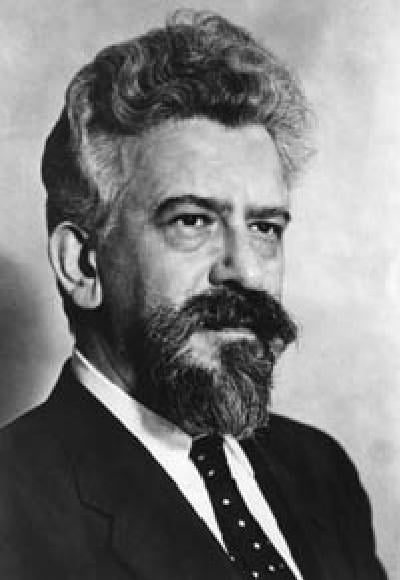
In his book The Prophets, our great Jewish theologian, Rabbi Abraham Joshua Heschel, the 20th-century rabbi, professor at the Jewish Theological Seminary, philosopher, and civil rights activist, and my father’s teacher, provides another insight into the prophetic process. He explains that “the prophet is a person, not a microphone.”
A prophet does not merely hear words and transcribe them like a stenographer.
Rather, Heschel writes, the prophet “speaks from the perspective of God as perceived from the perspective of his own situation.”
I love that.
The prophet speaks from the perspective of God, but as perceived through his own situation.
That means prophecy involves both God’s voice and the prophet’s life.
The prophet has to receive it, wrestle with it, interpret it, and then have the courage to speak it.
And maybe that means there is something sacred, or at least potentially sacred, in the act of inner speech.
Not all self-talk is holy.
As I was reminded in my car on the way to the State House.
Often, it is anxiety or criticism: Why am I late? Why are these roads impossible? Why did I not pick up my shoes from the shoemaker? Why is there oatmeal on my pants?
But maybe the goal is not to stop talking to ourselves.
Maybe the goal is to listen more carefully, filter out the noise, and find the voice of conscience.
The voice that says: Breathe. Show up. There are people who need protection. There are values that need defending.
Now, I don’t want to get carried away. I am not comparing my oatmeal-stained commute to Moses in the Tent of Meeting.
But our tradition teaches that God’s voice is not always heard from outside. Sometimes the work is to discern, from within all the noise, which voice is worthy of being followed.
That is what the prophets did.
They saw what others had learned not to see.
The prophet Nathan confronted King David.
The prophet Elijah confronted King Ahab.
Isaiah called us to seek justice and defend the vulnerable.
Amos taught: וְיִגַּל כַּמַּיִם מִשְׁפָּט וּצְדָקָה כְּנַחַל אֵיתָן, “Let justice roll down like waters, and righteousness like a mighty stream.”
That is prophecy. Not prediction. Not fortune-telling. Not being a microphone.
It is seeing the world through God’s concerns and God’s values and then speaking.
So yes, some of my self-talk on Thursday morning was not helpful.
But underneath it, I hope there was another voice saying: keep going, show up.
There are people whose dignity, whose lives are at stake.
There are sacred spaces that need to remain safe.
There are Jewish moral teachings that need to be preached in public.
And if you have to do that with a little oatmeal on your pants, then so be it.
May we quiet the voices that diminish us, strengthen the voices that call us to courage, and hear beneath all the chatter the Divine call to compassion, justice, kindness, and love.