Talks for Peace: Israel and Lebanon Navigate a New Path Forward
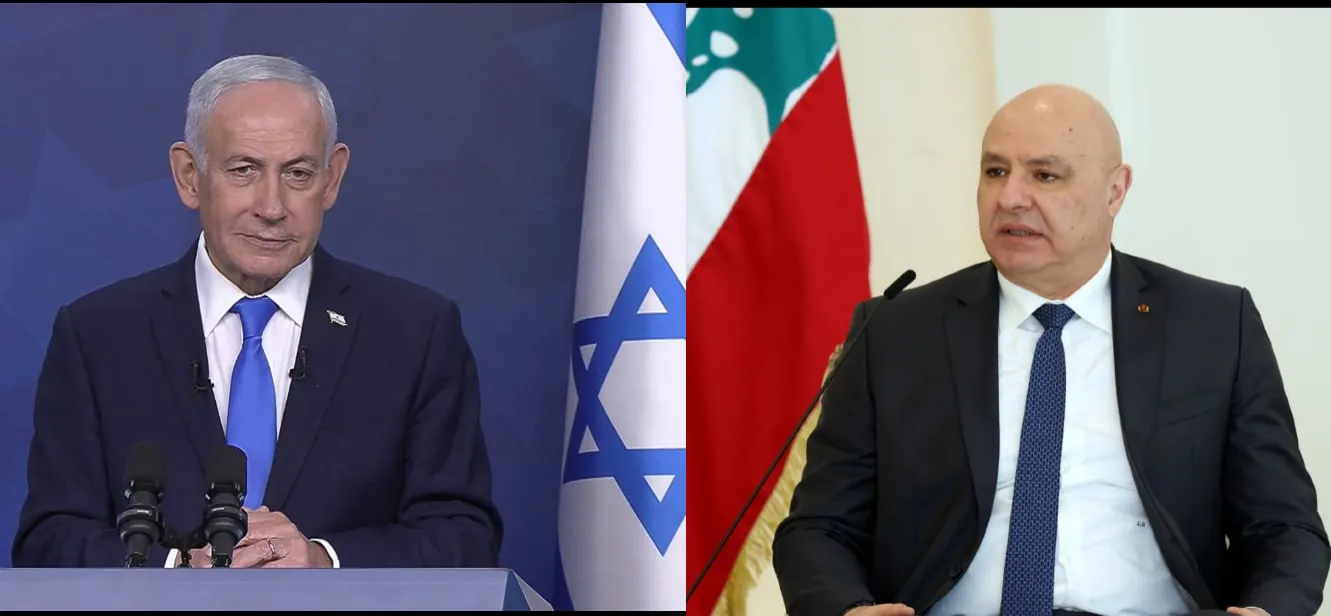
In a significant diplomatic development amid fragile regional tensions, Israeli Prime Minister Benjamin Netanyahu has authorized direct negotiations with Lebanon following repeated requests from Lebanese leadership. The focus of these talks will be on disarming Hezbollah and building peaceful ties between the two nations, with the first meeting scheduled for next week at the US State Department in Washington, DC.
PM Netanyahu framed the talks around two core objectives:
- The disarmament of Hezbollah (an Iran-backed militant group operating from Lebanese territory).
- The establishment of “historic sustainable peace” and normalized relations between Israel and Lebanon.
Israel has stressed that these negotiations do not imply an immediate ceasefire; military operations against Hezbollah are expected to persist in parallel.
Prime Minister Benjamin Netanyahu:
"In light of Lebanon's repeated requests to open direct negotiations with Israel, I instructed at the Government meeting yesterday to open direct negotiations with Lebanon as soon as possible.
1/2
— Prime Minister of Israel (@IsraeliPM) April 9, 2026
The negotiations will focus on the disarmament of Hezbollah and the establishing of peaceful relations between Israel and Lebanon.
Israel appreciates the call made today by the Prime Minister of Lebanon to demilitarize Beirut.
2/2
— Prime Minister of Israel (@IsraeliPM) April 9, 2026
This move comes days after a US-Iran two-week ceasefire (announced April 7–8, 2026) was mediated by Pakistan. A major point of contention in that deal was whether it extended to Lebanon and Hezbollah—leading to ongoing Israeli strikes in Lebanon and Iranian threats to reconsider the truce. The initiation of Israel-Lebanon talks is widely viewed as a potential de-escalation step and a “good omen” for broader Middle East stability, though Israel has explicitly stated there is no immediate ceasefire in Lebanon and strikes against Hezbollah targets will continue.
US officials, including Vice President JD Vance, clarified that the deal focused solely on direct US-Iran hostilities and did not constrain Israel’s actions against Hezbollah. Despite US pressure on Israel to scale back strikes (including reported calls from President Trump), Netanyahu’s government insisted on continuing operations to degrade Hezbollah’s capabilities
VICE PRESIDENT: ???????????????? If Iran wants to let this negotiation fall apart in a conflict where they were getting hammered over Lebanon, which has nothing to do with them and which the United States never once said was part of the ceasefire, that's ultimately their choice.
We think… pic.twitter.com/PrX3xshA6z
— Donald J Trump Posts TruthSocial (@TruthTrumpPost) April 8, 2026
Lebanese officials, including President Joseph Aoun and the prime minister, made repeated overtures for direct negotiations with Israel. These requests emphasized demilitarization efforts (such as in Beirut) and a diplomatic resolution to the hostilities. Netanyahu’s office explicitly acknowledged these approaches, stating that “in light of Lebanon’s repeated requests to open direct negotiations with Israel,” he instructed the Israeli cabinet on April 8-9, 2026, to proceed “as soon as possible.”
???? BREAKING: After discussions with President Trump, Israeli PM Netanyahu just began DIRECT negotiations to calm down attacks in Lebanon — Axios
This comes as Iran-U.S. negotiations are set for Saturday
Could be a good sign for the weekend ???? pic.twitter.com/4Cl4Amp8HX
— Eric Daugherty (@EricLDaugh) April 9, 2026
Despite the limitations, there’s been a significant shift. The choice to engage—albeit with caution—shows that everyone involved realizes the region can’t handle another long stretch of conflict. Dialogue, which had been pushed aside, is gradually re-entering the strategic discussions. In the meantime, Trump has urged Netanyahu to scale back strikes on Lebanon to facilitate negotiations with Iran, according to a US official who spoke to NBC.
???? Trump asked Netanyahu to ease strikes on Lebanon to help the success of negotiations with Iran, a U.S. official told NBC.
???? Iranian Deputy Foreign Minister Saeed Khatibzadeh said every vessel is free to cross the Strait of Hormuz after communicating with the Iranian… pic.twitter.com/Y1t4VJhlZo
— This Is Beirut (@ThisIsBeirut_) April 9, 2026
The backdrop to these talks underscores their importance. The US-Iran ceasefire, facilitated through Pakistan’s proactive diplomacy, created a rare pause in direct hostilities between two long-standing adversaries. More importantly, it demonstrated that even the most entrenched disputes can yield to patient negotiation when intermediaries are willing to bridge divides. While the agreement did not fully resolve the question of Lebanon, it opened diplomatic space—space that is now being tested through this new Israel-Lebanon track.
On the request of Prime Minister of Pakistan Muhammad Shehbaz Sharif and Field Marshal Syed Asim Munir, NI (M), HJ, Chief of Army Staff and Chief of Defence Forces of #Pakistan
????U.S. President Donald Trump suspends bombing #Iran#COAS #AsimMunir #ISPR pic.twitter.com/wvpPl26sXU
— Pakistan Armed Forces News ???????? (@PakistanFauj) April 7, 2026
For Lebanon, the stakes couldn’t be higher. After years of economic hardship, political division, and ongoing conflict, the country is finding it tough to fully assert its sovereignty. The Lebanese leadership’s push for direct talks shows a growing understanding that stability can’t just be handed over or postponed indefinitely. It needs to be actively negotiated, even when the circumstances are challenging.
Israel, for its part, enters these talks with clear security priorities. The emphasis on Hezbollah’s disarmament reflects long-standing concerns about cross-border threats and regional deterrence. While this objective is ambitious, placing it within a diplomatic framework—rather than pursuing it solely through military means—introduces the possibility of gradual, structured progress.
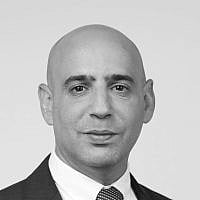
It’s heartening to witness a shift in Lebanon, with more voices advocating for a stronger focus on state authority. Fouad Makhzoumi, a Lebanese MP and candidate for prime minister, has openly supported negotiations and called for all weapons to be under state control. This signals a developing narrative: that true sovereignty and stability are linked. His viewpoint reflects a widespread desire among the Lebanese people for their nation to stop being a site for external disputes and to evolve into a self-sufficient state that can make its own decisions.
I call for a round of recognition for MP Fouad Makhzoumi who introduced the concept of a weapons-free Beirut and of direct talks with Israel.
The Lebanese government adopted both policies today. https://t.co/KeVo7izmj8— Carlos Abadi (@NewSamawal) April 9, 2026
There’s a growing consensus that Hezbollah isn’t a legitimate partner in deciding Lebanon’s future. They have no right to represent a population whose will they’ve ignored and whose country they’ve devastated. Instead of being part of negotiations, they should be held accountable for their actions and face the consequences for what they’ve done to the state, its sovereignty, and its citizens.
حزب الله ليس شريكاً في تقرير مصير لبنان ولا صاحب حق في الجلوس على طاولة تفاوض باسم شعبٍ صادر قراره ودمّر دولته.
مكانه ليس في التفاوض بل في المحاسبة والمساءلة والعقاب على كل ما ارتكبه بحق الدولة والسيادة والناس.
الدولة اللبنانية وحدها تمثّل اللبنانيين، وحدها تفاوض، ووحدها تقرّر… pic.twitter.com/LwVQslSInQ— Rita Boulos (@RitaBouloss) April 9, 2026
The United States stepping in as the host and facilitator really adds a significant layer to the situation. By gathering everyone in Washington, it’s not just about providing a space—it’s a clear message of ongoing commitment to guide the region towards de-escalation. This effort builds on the earlier diplomatic strides made through the US-Iran ceasefire and hints at a more cohesive strategy for tackling the intertwined conflicts.
That said, there are still hurdles to overcome. The lack of an immediate ceasefire in Lebanon means that talks will be happening while tensions remain high on the ground. Decades of distrust can’t just vanish after one round of discussions. Plus, the wider regional dynamics—especially Iran’s stance and Hezbollah’s involvement—will keep influencing how these conversations unfold.
???????????? BREAKING – Lebanese PM Nawaf Salam Calls for Immediate State Control:
“We must immediately start strengthening the state’s control over Beirut Governorate and restrict all weapons to the hands of the state only.”
A clear and firm call to disarm non-state actors and restore… pic.twitter.com/wmCEtPi4ec
— Political Pen (@politicalpen_) April 9, 2026
Diplomacy rarely leads to instant breakthroughs; it’s more about finding ways forward when it seems impossible. In this context, the discussions between Israel and Lebanon are a promising step ahead. They might not bring immediate peace, but they do offer something just as crucial: a structure for pursuing peace.
As the Middle East faces a series of overlapping crises, even the smallest progress is significant. The willingness of both Israel and Lebanon to seek a new direction—encouraged by international support and regional diplomacy—indicates that the desire for stability is becoming stronger than the urge to fight.
The end of Hezbollah is synonymous with the end of the Islamic Republic as a revolutionary project in the Levant and the Gulf. IRGC understands the stakes, as their chain of command was obliterated. This is why the discussion is happening. Israel is applying even more pressure on…
— Zineb Riboua (@zriboua) April 9, 2026
If this moment is approached with patience and political determination, it could be the start of a larger shift—where dialogue replaces escalation as the go-to response. That’s definitely a development worth recognizing and, with cautious optimism, hoping for.