

Tamar Dayan’s Ark: A salute to an Israeli scientist and hero
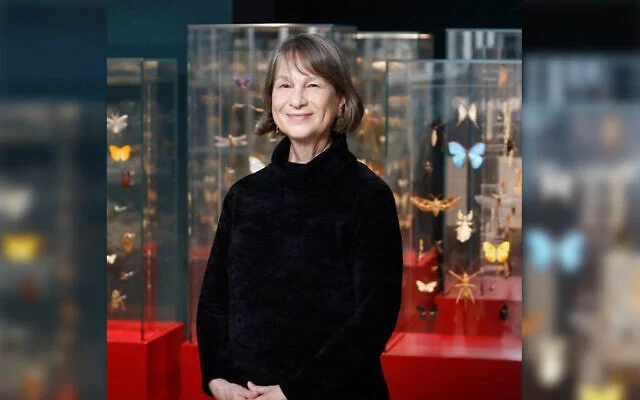
Many people, especially professors, like to talk about saving the natural world. Very very few actually build the institutions and capacity that make saving the planet’s ecological systems possible. Professor Tamar Dayan is one of them.
Last month Tamar stepped down as head of the Steinhardt Museum of Natural History at Tel Aviv University. As a colleague, an admirer, and an intermittent beneficiary of her wisdom – it seems appropriate to pause and briefly describe what she has done for ecological science; for preserving the many creatures with whom we share this land; and for the generations who will inherit this country’s embattled biodiversity.
I have known Tamar for many years. Like everyone in Israel’s environmental community, it did not take long to realize, that when she enters a room, the standards seem to rise. Professor Dayan is before all else, a scientist of international stature. She and her students have conducted innumerable studies in mammalian ecology, describing how competing species divide up the world, how communities of animals assemble and coexist, and how human beings reshape habitats.
Indeed, Tamar Dayan’s research helped resolve a long-standing ecological debate by demonstrating how competition among species can structure animal communities and influence the evolution of body size. Tamar also pioneered the study of time as an ecological resource, showing how differences in daily activity patterns enable species to coexist, an insight with important implications for understanding the effects of human disturbance and light pollution. It is not surprising that her publications have been cited in over 16,000 scientific articles by ecologists around the globe!
In a word, professor Dayan helped put Israeli ecology on the global scientific map, where its researchers continue to enjoy international stature, far beyond the size of their academic community and the local habitats that they studies. For this she was awarded a life achievement award in 2021 by Israel’s national Society of Ecology and Environmental Sciences.
Tamar could easily have spent a comfortable career cranking out additional publications and accumulating prizes. It is Israel’s good fortune that she wanted more.
That’s because Tamar Dayan never believed that science ends at the laboratory door. For as long as I have known her, she has been a fighter: polite, precise, relentless – not just for scientific excellence but for the rights of the natural world. Conservation organizations, like the Society for Protection of Nature in Israel have long relied on her. In planning debates, on public committees, in the protracted tug-of-wars between development pressures and open landscapes, hers has been one of the most credible and clearest of voices: Israel’s wild heritage is not a luxury to be traded away but a rare treasure that provides essential ecosystem services – which the state of Israel must value and preserve.
When I served in the Knesset member, I found myself occasionally in disagreement with her over some nuances in environmental legislation I was promoting. Let’s just say that I caught a glimpse of why she is such a formidable adversary! Tamar brings data where others bring slogans. She brings moral clarity where many others mumble excuses and rationalization. And she is very stubborn – in the best sense of the word!
If you want to know about an academic’s virtues or vices, just ask their graduate students. Nobody knows them better. Professor Dayan has groomed generations of them: ecologists, zoologists, conservation biologists, taxonomists – now scattered across Israel’s universities, government agencies, and environmental organizations. Everyone of them that I encouuntered over the years invariably speak about a formative teacher: demanding, generous, fiercely loyal. Devoted academic progeny is not something a professor can engineer. It must be earned, one doctoral student at a time. For most scholars, it is difficult to imagine a more enduring legacy.
But history will probably remember Tamar Dayan most for the museum she built. The Steinhardt Museum of Natural History: a gleaming, veritable “Noah’s Ark” now rises on the eastern edge of the Tel Aviv University campus. In July, 2018, Tamar Dayan’s vision became real, and the story of its creation deserves to be told in full.
It took some thirty years. Long before there was a building that could house them, there were collections: millions of specimens of the region’s mammals, birds, insects, fishes, and plants, patiently accumulated by devoted scientists over a century. They were scattered and largely forgotten in basements, corridors, and improvised storage rooms across the university. A less tenacious guardian would have let them languish and decay. Tamar understood that these drawers and boxes of taxidermy, skins, skulls and pinned butterflies were nothing less than the biological story of the Land of Israel. They offer an irreplaceable record that chronicles what lived here, where, when and how. Somehow, she managed to protect them, catalogue them, champion them, and most of all – refused to let institutional indifference throw them away.
Then she did what scientists are rarely able– and never want to do: she raised the money. With persistence that would humble any development officer, she assembled a coalition of supporters: foundations, ministries, the JNF and above all the American philanthropist Michael Steinhardt, whose transformative generosity gave the museum its home and its name – a grant that finally turned blueprints into a building.
And what a building it is: Designed as a grand ship now resting on land, the museum rises through five public exhibition levels – from floors 0 to 4 – above a breathtaking lobby and an elegant auditorium. When it opened its doors eight years ago as the first institution of its kind in the Middle East, safeguarding some 5.5 million specimens, it marked the fulfillment of a promise Tamar had made to herself, and to the country, decades earlier.
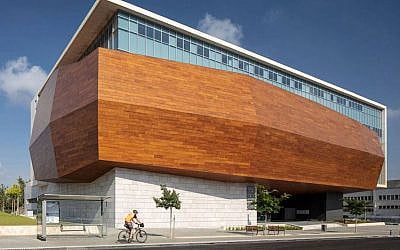 The Steinhardt Museum of Natural History: an ark to save Israel’s biological heritage that is not just a metaphor (courtesy, Steinhardt Museum of Natural History)
What has happened since vindicates the many years of Tamar’s persistence. Over a million visitors have streamed through the museum: tens of thousands of schoolchildren each year from Kiryat Shmona to Beersheba, religious and secular, Jewish and Arab (the museum exhibits are all tri-lingual), stand wide-eyed before the great bird migration display, the fabulous spiders or the gallery that shows, unflinchingly, what humanity is doing to the web of life across Israel.
The museum has become one of the country’s most important engines of environmental education, translating the abstract theories of biodiversity loss and conservation biology into encounters a seven-year-old can feel in her bones. It has become a tourist destination in its own right, drawing visitors from abroad and adding a jewel to Tel Aviv’s cultural crown. True to its founder’s character, the museum does not pretend to be neutral about the fate of the natural word: its exhibits, its public programming, and its scientists take sides for the hedgehog and the gazelle, for the coastal dunes and the disappearing streams, in the best tradition of engaged, values-based science.
Most consequentially, the museum that Tamar Dayan built also serves as a national research infrastructure in the fullest sense: High above the public galleries, on the upper floors, lie offices and laboratories where dozens of scientists conduct applied research about the natural world. (The museum’s scientific staff numbers 140 – in addition to 110 workers who keep the place running!) Several critical independent ecological initiatives make their home there. Israeli and international scientists use the museum’s collections every year, and its taxonomists provide the foundational knowledge on which the Nature and Parks Authority, the JNF, the planning system, and government ministries rely as they decide the fate of Israel’s remaining open spaces. It has quickly become the national hub for the conservation science that is so very important to the country’s ecological future. None of this existed, as an integrated institution, before Professor Dayan willed it into being.
And now Tamar has decided to step down as the museum’s leader. She leaves the institution she founded while still at the height of her powers… which is precisely why this moment matters. Institutional founders are not replaceable; and yet somehow, their creations must outlive them. Tel Aviv University now carries a weighty obligation: to ensure the survival of the museum’s scientific mission, its educational reach, its talented team of applied researchers, their myriad scientific studies – and its authoritative, independent, unapologetic voice for the natural world. The university needs to ensure that the exceptional qualities that Tamar breathed into Israel’s natural history museum – are preserved and strengthened. A project of this magnitude is not an asset on a balance sheet. It is a public trust, and the university must find a way, in structure as well as in spirit, to safeguard its integrity and vitality.
This article is not a eulogy. It is a salute to an extraordinary contribution made by an exceptional scientist. It is impossible to imagine that there will not be additional chapters in the ongoing book Tamar Dayan is writing about Israel’s natural world; Many more. But before she moves on to the next, it is well to express our appreciation:
The rabbis teach that a person who saves a single life saves an entire world. Tamar Dayan, it seems, has spent her career working to save all manner of life across our battered promised land. Her research, teaching and museum have made an invaluable contribution to preserving Israel’s remarkable biological heritage: from its largest predators to its smallest and most delicate living creatures.
All of these precious organisms matter. But they are increasingly vulnerable, threatened by the massive human footprint that the State of Israel has become. Professor Tamar Dayan has literally built an ark that can help carry them to safety. The rest of us, her colleagues and her country, owe her more gratitude than one column can hold: for the science, for the students, for the fights she never averted, and for the magnificent museum that will teach our grandchildren what a determined scientist, armed with a true vision for a better future can accomplish.