
Taming the Digital Golem: Spirituality and AI
Why Clergy Need to Stop Tiptoeing Around AI (and Start Using It Intentionally)
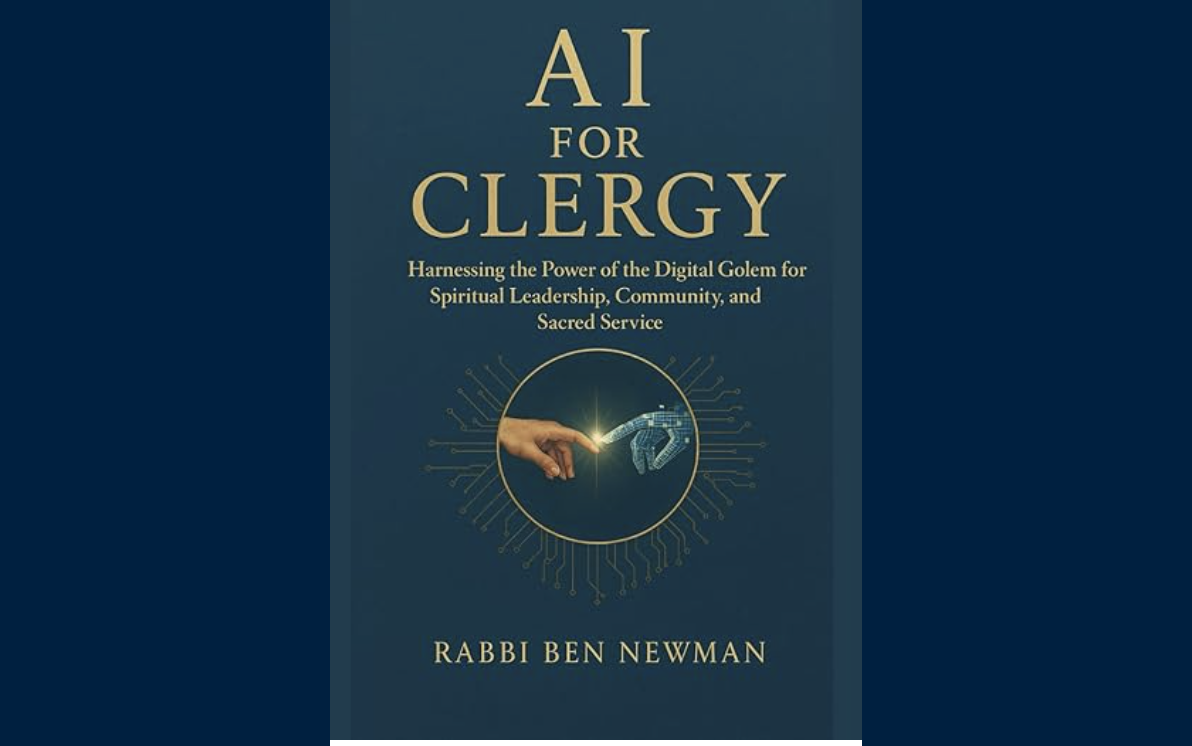
A few months ago, I published AI for Clergy, a book that grew out of a simple observation: nearly every rabbi, pastor, imam, and chaplain I meet is curious about artificial intelligence, but most are engaging with it like someone poking a suspicious casserole at a potluck. A little prod here, a little sniff there, and then the familiar refrain: “I’m not sure this is for me.”
Fair enough. Religion has been wrestling with new technologies for as long as we’ve been carving letters into stone. But AI isn’t just another shiny gadget. It’s a tool already shaping the psychic weather of the communities we serve. Pretending otherwise is like insisting the internet is a fad or that congregants aren’t secretly asking ChatGPT to write their wedding vows.
This moment isn’t about novelty. It’s about responsibility.
AI is Here — Whether We Want It or Not
I hear clergy tell me, “My congregants aren’t using this stuff.” Meanwhile, teens in confirmation class are generating midrash in seconds. Adults are drafting ethical wills with language models. B’nai mitzvah students are sneaking AI-generated divrei Torah into Google Docs like contraband comic books.
And people in real distress? They’re pouring their hearts into chat windows at 2 a.m., because the bot is awake when the rabbi isn’t.
That should make us sit up. Not because AI is replacing clergy — it isn’t — but because it has quietly become a pastoral interlocutor. If people are using AI to process grief, fear, doubt, or hope, then we owe it to them to understand the medium shaping their spiritual inner life.
Avoiding AI doesn’t protect our communities. It just leaves them navigating a powerful tool without guidance.
This Is a New Kind of Golem — And We Need to Shape It, Not Fear It
Our tradition already gave us a metaphor for this: the golem. A human-made being that can serve or mis-serve depending on intention, discipline, boundaries, and the clarity of the one who shapes it.
AI is a digital golem. It doesn’t have a soul, but it reflects ours back to us. It amplifies whatever we feed it. It can support connection or accelerate harm. The difference is not in the code — it’s in the human who directs it.
The question isn’t “Should clergy use AI?”
The real question is “What kind of spiritual leadership do we want to embody in an AI-shaped world?”
Three Ways Clergy Can Step In (Without Losing Their Humanity)
1. Use AI to reclaim time for the work only humans can do.
Every clergy member I know is overstretched. We carry sermons, pastoral care, lifecycle events, board politics, budgets, email avalanches, and the constant expectation to be wise, kind, and available.
AI won’t replace your humanity, but it can replace your Tuesday-night wrestling match with a blank Word document labeled “Funeral remarks.”
Let it draft a first pass. Then you bring the soul.
This is not cheating; it’s stewardship of your finite bandwidth.
2. Use AI to deepen—not flatten—sacred language.
In AI for Clergy, I talk about the “digital midrash” approach: you let the model give you five angles you wouldn’t have seen alone, then you refine, correct, expand.
It’s an accelerant for creativity, not a substitute for it.
A hammer can build a house or cave it in. Same tool, different intention.
3. Teach your community how to use AI ethically.
If clergy don’t talk about AI, someone else will — advertisers, influencers, conspiracy theorists, or the loudest tech bros in the room.
We don’t need to be computer scientists. We do need to be moral interpreters. We can help people ask the right questions:
- What does it mean to create with integrity?
- How do we disclose AI use in sacred spaces?
- How do we guard against bias?
- How do we avoid devaluing human relationship?
When clergy step into the conversation, the community gets a compass instead of chaos.
AI Won’t Replace Us — Unless We Pretend It Doesn’t Exist
The fear that AI will make clergy obsolete is understandable, but it misunderstands what clergy actually do.
AI can summarize the Talmud, but it cannot sit next to a teen who just lost a parent.
AI can suggest wedding vows, but it cannot look two trembling partners in the eye under a chuppah.
AI can generate a sermon outline, but it cannot stand at the bimah and speak from the cracked, honest places of a human heart.
If anything, AI throws our human value into sharper relief.
The danger isn’t replacement.
It’s irrelevance — if we refuse to engage with the tools shaping people’s spiritual lives.
We Are the First Generation of Clergy to Face This Moment
Future clergy will not remember a pre-AI world. They’ll inherit this terrain naturally. But we’re the bridge generation — the ones who get to help define the norms, write the guardrails, and shape the ethics.
We can curse the era we were born into, or we can do something more interesting: we can lead.
In the End, This Is a Spiritual Question
AI forces us to ask:
- What is uniquely human?
- What is the nature of wisdom?
- How do we show up for one another in the digital age?
These are not tech questions. They are theological, pastoral, ethical. They sit right in our wheelhouse.
So yes — clergy should engage with AI. Not because it’s trendy. Not because Silicon Valley wants us to. But because our communities already are, and they deserve leaders who won’t leave them wandering without guidance.
AI is a tool. A powerful one. The question is who will shape it — thoughtful spiritual leaders, or whoever shouts the loudest online.
I know which future I’d prefer.