Tawhid and that in which you Differed
Muslims say: “There is no god but Allah” and people should worship only him, rejecting idolatry and polytheism. Jews agree.
Allah sent tens of thousands of Prophets to all of the tribes, nations and kingdoms in the world; and 313 Messengers such as Noah, Abraham, Moses, David, Jesus, and Muhammad, who each brought to their believers a special sacred book. Jews can also agree to this.
Five messenger prophets received scriptures from Allah, notably the Pages of Abraham (now lost), the Torah of Moses, the Psalms of David, and the Gospel of Jesus. Most Muslim scholars in later generations claimed that the messages and books, had became corrupted or were lost. Jews and Christians strongly reject this slander because the Qur’an itself states: “So if you are in doubt, [O Muhammad], about that which We have revealed to you, then ask those who have been reading the Scripture before you (the Jews and Christians). The truth has certainly come to you from your Lord, so never be among the doubters.” (Qur’an 10:94)
Unlike the Biblical Yahweh (often misread as Jehovah), Allah has no personal name, and his traditional 99 names are really epithets. Muslims claim to totally reject anthropomorphic descriptions of Allah, yet the Qur’an sometimes describe Allah as speaking, sitting on a throne, and having a face, eyes and hands.
Allah is also the Master of the Day of Judgment, when the good, especially believers, will be sent to their heavenly reward, and the wicked, especially unbelievers, will be dispatched to hellfire. Jews and Christians also have traditions about end-of-days judgments, Armageddon, Gog—Magog and redemptive Messiahs.
The Plague of Justinian that killed many millions of people in the Near East and Europe, first appeared in the historical record in Egypt, before spreading throughout the Eastern Roman, or Byzantine, Empire. Yersinia pestis, the microbe that causes plague, was definitively linked as the pathogen to the Justinian Plague, marking the world’s first known pandemic (AD 541-700). Was Prophet Muhammad, who lived from 570-632, sent at this time (and not any other) to be a messenger of God’s mercy?
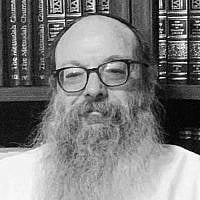
Prophet Muhammad was a messenger for all Pagan nations, and not just for Arabs or Muslims. I think of myself as a Reform Rabbi who is an Islamic Jew. Actually, I am an Islamic Jew i.e. a faithful Jew submitting to the will of God, because I am a Reform Rabbi.
As a Rabbi, I am faithful to the ongoing covenant that God made with Prophet Abraham the Hebrew, the first Islamic Hebrew (Genesis 14:13), and I submit to the covenant and its commandments that God made at Mount Sinai with Banu Israel, the people of Israel.
As a Reform Rabbi I believe that Jewish spiritual leaders should modify Jewish tradition as social and historical circumstances change and develop. I also believe we should not make religion difficult for people to practice by adding an increasing number of restrictions to the commandments we Jews received at Mount Sinai.
These are lessons that prophet Muhammad taught 12 centuries before the rise of Reform Judaism in the early 19th century Germany. Although most Jews today are no longer Orthodox, if the Jews of Muhammad’s time, had followed these teachings of prophet Muhammad, Reform Judaism would have started 1,400 years ago.
I believe that Muhammad was a prophet of Reform Judaism to the Orthodox Jews of his day; although he was 1,200 years ahead of his time. During the six centuries between the birth of Jesus and the arrival of Muhammad in Yathrib, the city of Jews (Medina), almost all Jews had became Orthodox Jews.
After the destruction of Jerusalem in the year 70 CE, the percentage of Jews living as minorities throughout the middle east, and in countries around the Mediterranean Sea, steadily rose higher and higher. In reaction to the danger of assimilation into the polytheistic majority, Orthodox Rabbis added many extra prohibitions to Jewish law and most Jews became increasingly strict in the observance of the laws of Shabbat and Kashrut (dietary restrictions).
Orthodox Rabbis did not follow the example of Muhammad as narrated by his wife ‘Aisha: Whenever Allah’s Apostle was given the choice of one of two matters, he would choose the easier of the two, as long as it was not sinful to do so, but if it was sinful to do so, he would not approach it. ‘Aisha also said: Whenever Allah’s Apostle ordered the Muslims to do something, he used to order them to do deeds which were easy for them to do.
Although the Torah of Moses prohibits adding to the commandments (Deuteronomy 4:2 and 13:1) over the centuries Orthodox Rabbis added many restrictions to the laws of prohibited activities under the theory of building a protective fence around the Torah’s laws. Also, whenever Orthodox Rabbis were in doubt if an animal had been slaughtered correctly according to Jewish law, or if one could eat a newly discovered species of bird, it was ruled prohibited.
They were not guided by Prophet Muhammad’s principle as narrated by Sa’d bin Abi Waqqas: The Prophet said, “The most sinful person among the Muslims is the one who asked about something which had not been prohibited, but was prohibited because of his asking.”
The Torah also teaches:”When a woman has a discharge, her discharge being blood from her body, do not come near her for seven days; she is taboo for her menstrual period.” (Leviticus 15:19) Orthodox Rabbis extended the period from seven to about twelve days and demanded no physical contact at all during that period. Prophet Muhammad supported the Torah’s ban on sex during a woman’s period, but opposed the additional restrictions enacted by Orthodox Rabbis.
As Thabit narrated it from Anas: “Among the Jews, when a woman menstruated, they did not dine with her, nor did they live with them in their houses (they slept in separate beds). The Companions asked The Apostle, and Allah, the Exalted revealed: ‘They ask you about menstruation; say it is a pollution, so keep away from woman during menstruation and do not approach until they are clean again.’ (Qur’an 2: 222). The Messenger of Allah said: ‘Do everything except intercourse’. (Orthodox) Jews heard that and said: This man does not want to leave anything we do without opposing us in it.”
Reform Rabbis today would advocate that a Jewish couple behave in a way much closer to that of Prophet Muhammad than to that of Orthodox Rabbis then or now.
Unlike Orthodox Rabbis, Reform Rabbis accept the doctrine of nullification, which teaches that one verse in scripture can nullify another, and that rulings can be changed due to changed circumstances. Prophet Muhammad provides an excellent example of this principle in the following account.
Prophet Muhammad originally told women not to visit graveyards, but toward the end of his life, he said to them: “I had told you not to visit graves; now I am telling you to visit them.” The reason was that Arabian women used to wail at graves. Prophet Muhammad wanted this practice to be stopped so, he banned women from visiting graves to start with. After sometime, when Muslim women were better aware of how Islam wants them to behave in different situations, he allowed them such visits.
In fact, Prophet Muhammad encouraged visiting graveyards because such a visit reminds the visitor of his or her own death and the fact that they would have to stand in front of God when their actions are reckoned to determine their reward or punishment. Scholars like Ibn Qudamah, of the Hanbali school of law, make it clear that since this is the purpose of visiting graveyards, both men and women need such visits.
The Orthodox Rabbis of the Talmud taught that “48 male prophets and 7 female prophets prophesied in Israel… Who were the 7 female prophets? Sarah, Miriam, Deborah, Hannah, Abigail, Hulda and Esther..”. (Talmud Megillah 14b). The Torah asserts that Miriam was a prophet (Exodus 15:20); and Numbers 12:2 quotes Miriam and Aaron as saying, “Has the Lord spoken only through Moses? Has He not spoken through us as well?”
Actually, Prophet Muhammad said that there were a much greater number of prophets than 55. It is narrated from Abu Dharr that one day he asked the Messenger of Allah: How many prophets are there in all? He replied: One hundred and twenty four thousand. He then asked: How many of them were messenger prophets? He replied: Three hundred thirteen from the above group. He asked: Who was the first of them? He replied: Adam…The first prophet among Bani Israel was Musa and the last of them was Isa and they were in all 600 (Jewish) prophets.” (Biharul Anwar, Vol. 11, Pg. 32)
The six hundred (Jewish) prophets that Prophet Muhammad was referring to included the many inspired poets who contributed to Prophet David’s Book of Psalms and Prophet Solomon’s Book of Proverbs; and the historians who preserved the words of many of dozens of Prophets including the unnamed ones.
Another important teaching of the Qur’an for people all over the world today, is that God chose not to create human beings as one nation and bestowed upon them free will to believe or not to believe. As it is written in the Qur’an [5.48] “For every one of you did We appoint a law and a way. If God had pleased He would have made you one people, but (He didn’t) that He might test you in what He gave you. Therefore compete with one another to hasten to virtuous deeds; for all return to God, so He will let you know (at Judgment Day) that in which you Differed.” And say,”We believe in the revelation which has come down to us, and in that which came down to you; Our Allah and your Allah is one…(Qur’an 29:46)
This is a wonderful further development of the teaching of the Biblical Prophet (Micah 4:5) that in the end of days—the Messianic Age—“All people will walk, each in the name of their own God, and we (Jews) shall walk in the name of the Lord our God forever.”
A Muslim is one who submits to the will of God and believes that God has sent thousands of different prophets to the many different peoples and languages of this world. As a Reform Rabbi I think that Muhammad was such a Prophet because I believe the Qur’an is as true for Muslims as the Torah is true for Jews.
If we all can live up to this ideal, that religious pluralism and mutual respect is the will of God, we will help fulfill the 2700 year old vision of Prophet Isaiah: “In that day there will be a highway from Egypt to Assyria. The Assyrians will go to Egypt, and the Egyptians to Assyria. The Egyptians and Assyrians will worship together. In that day Israel will join a three-party alliance with Egypt and Assyria, a blessing upon the heart. The LORD of Hosts will bless them saying, “Blessed be Egypt My people, Assyria My handiwork, and Israel My inheritance.”…(Isaiah 19:23-5)