


Teaching Resilience Through Torah
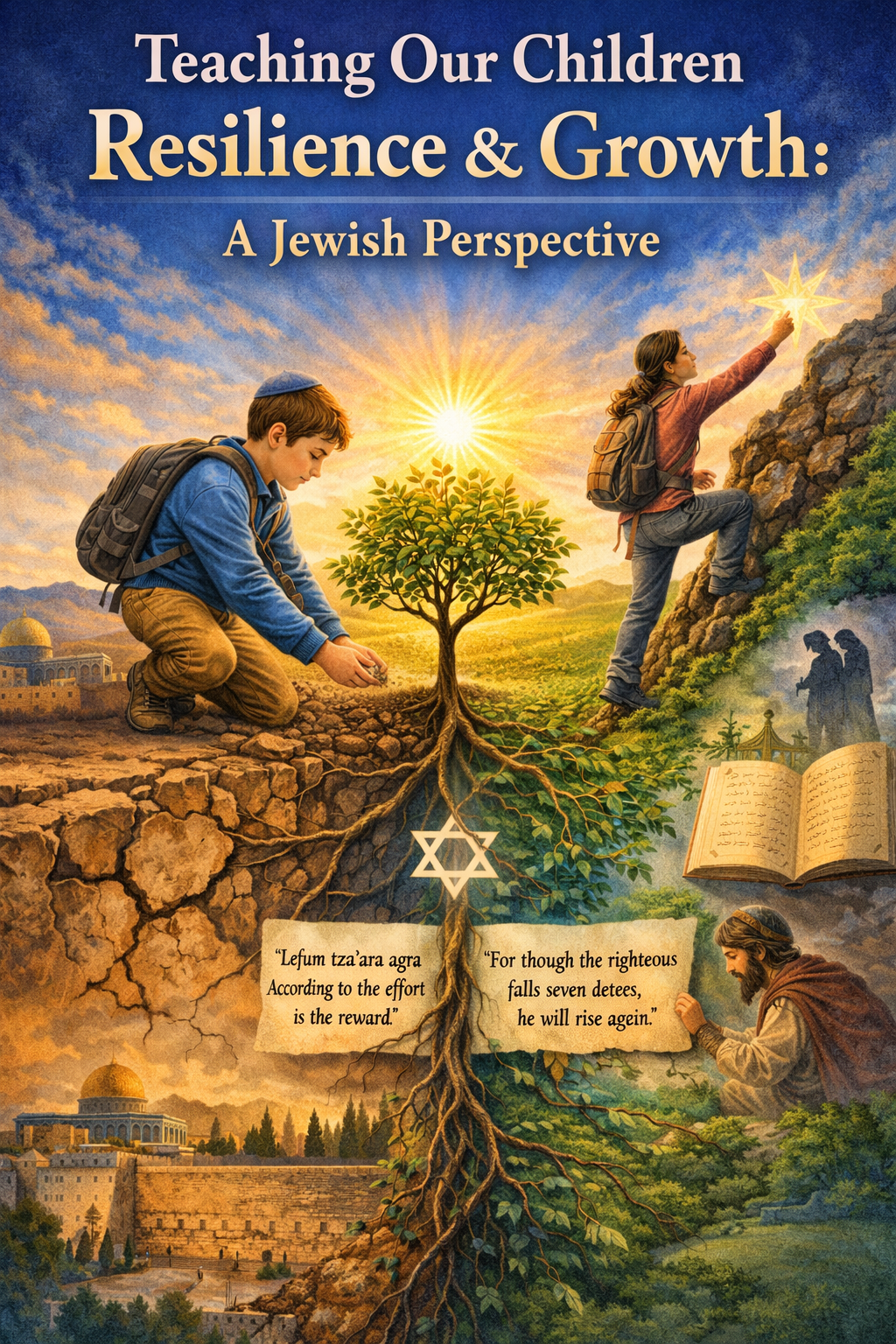
We are raising children in an era of unprecedented complexity. Our children are growing up in a world of constant comparison, instant gratification, social pressure, global uncertainty, and emotional overload. Anxiety and fragility have become increasingly common, even among children who appear outwardly successful. Against this backdrop, one of the most important qualities we must instill in our children is resilience, the ability to endure difficulty, recover from setbacks, and continue forward with strength and purpose.
Judaism has always been a tradition rooted in resilience. From the very beginning of our national story, struggle is presented not as an anomaly, but as a defining feature of Jewish growth. Yaakov Avinu is given the name Yisrael because he “struggled with God and with men and prevailed” (Bereishis 32:29). Jewish identity itself is formed through perseverance. This is not incidental. It is foundational.
Contemporary culture often teaches children that discomfort should be avoided and that challenges are signs of failure. The Torah teaches precisely the opposite. Growth emerges through effort and perseverance. The Mishnah teaches, “Lefum tza’ara agra,” according to the effort is the reward (Pirkei Avos 5:23). Difficulty is not a sign that something is wrong; it is often an indication that something meaningful is taking place.
When children struggle academically, socially, or emotionally, our instinct as parents and educators may be to remove the pain as quickly as possible. Compassion is essential, but overprotection can unintentionally deprive children of the very experiences that build inner strength. The Ramban explains that challenges are not meant to break a person, but to draw out hidden potential. When children learn that struggle is not a judgment on their worth, but a pathway to growth, they develop resilience that will serve them throughout life.
At the heart of Jewish resilience lies emunah and bitachon, faith and trust in Hashem. King David writes, “Cast your burden upon Hashem, and He will sustain you” (Tehillim 55:23). This verse does not promise a life free of difficulty. Rather, it assures us that we are never alone in our challenges. Teaching children bitachon does not mean telling them that everything will always work out the way they want. It means teaching them that even when life is difficult, Hashem remains present, guiding and strengthening them.
Rabbi Samson Raphael Hirsch explains that true bitachon is not the belief that hardship will disappear, but the confidence that hardship has meaning and can be endured. Children who internalize this understanding grow into adults who are emotionally grounded and spiritually resilient.
One of the most damaging messages children absorb today is the belief that failure defines them. Jewish wisdom teaches the opposite. King Shlomo writes, “For the righteous person falls seven times and rises” (Mishlei 24:16). Falling is not a flaw. It is part of becoming righteous. What defines a person is not the fall, but the willingness and ability to rise again.
Failure must therefore be normalized as part of growth. When children stumble, our role is not to shame or panic, but to help them reflect and learn. The Gemara teaches that Torah itself is acquired through repeated effort, struggle, and even forgetting (Eruvin 54b). If spiritual mastery requires setbacks, then life certainly does as well.
Children learn resilience less from what we tell them and more from what we model. They watch how we respond to stress, disappointment, uncertainty, and conflict. When parents approach difficulty with calm perseverance, honesty, and faith, children absorb those qualities naturally. When we acknowledge that something is hard yet express confidence that we can endure it, we teach resilience in the most authentic way.
Even Moshe Rabbeinu expressed fear, frustration, and self-doubt, yet he continued to lead. The Torah does not conceal the emotional struggles of its leaders because vulnerability combined with responsibility is the essence of resilience.
Resilience is not merely about toughness. It is about meaning, purpose, and connection. When children understand who they are, where they come from, and why their lives matter, they are better equipped to withstand life’s challenges. By grounding our children in Torah values of faith, effort, humility, and hope, we give them more than coping skills. We give them a spiritual inheritance that has sustained the Jewish people through exile, persecution, and renewal.
In a world that often feels fragile and uncertain, raising resilient children is not only wise parenting, but a sacred responsibility. Judaism, with its timeless wisdom, gives us the tools to do so with depth, dignity, and faith.