
What's in a Word? Synonyms in the Hebrew Language
Tears of Confusion – taarovet, mizug, dimua
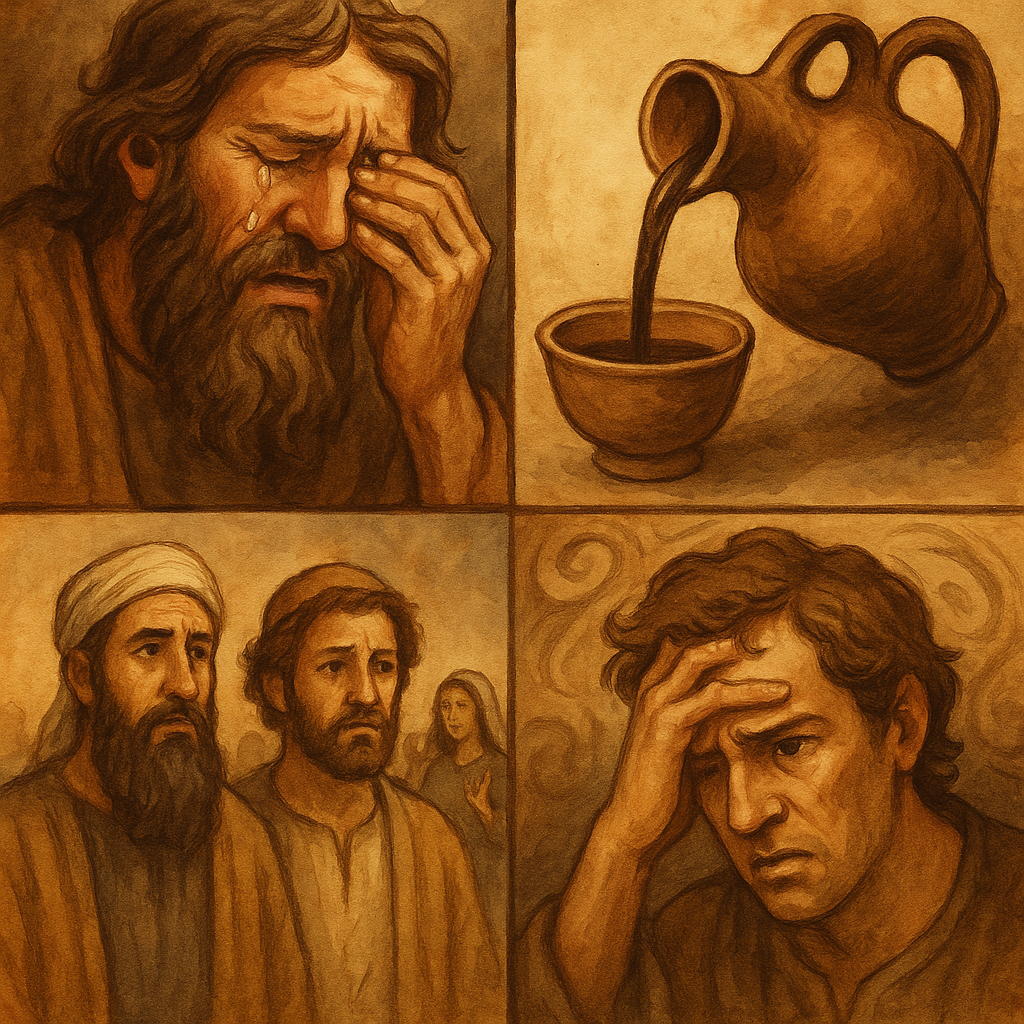
In this special essay written for the Tisha B’Av season, we briefly touch on various synonyms in Hebrew related to the concept of “mixing.” One of those words is also related to the word for “tears,” which leads us to considering at length why the words for “tears” and “mixing” should be related. Finally, we conclude the essay with a excurses on the topic of “crying” and how the Hebrew word for “crying” also relates to the concept of “mixing.”
The Semitic root AYIN-REISH-BET is quite versatile and holds a plethora of different meanings. For our purposes, it is significant to note that this root is used in both Biblical Hebrew (Prov. 14:10, 20:19, 24:21, Ps. 106:35, and Ezra 9:2) and Biblical Aramaic (Dan. 2:41, 2:43) to denote the act of “mixing” something into another thing. For example, when Ezra laments the intermarriage between Jews and other nations, he uses the word hitarvu (which is derived from the root in question), to denote the mixing of Jewish seed with non-Jewish seed (Ezra 9:2). Similarly, when the Psalmist criticizes the Jews for mixing in with the gentiles and learning from their idolatrous ways, he uses the word vayitarvu (Ps. 106:35). Other declensions of this root in the same sense include the words taarovet and irbuv (which refer to “mixtures”), as well as eiruv (“connection/mixture”). [For more about the various polysemous meanings that derive from the root AYIN-REISH-BET and how they might thematically relate to one common idea, see my earlier essays “Sweet and Pleasant” (Jan. 2018) “Out in the Wild” (May 2023)].
Another Hebrew term for “mixing” is mizug, which seemingly derives from the root MEM-ZAYIN-GIMMEL. Inflections of that particular root only occur once in the entire Hebrew Bible — in the noun mazeg (Song of Songs 7:3), which in context refers to “mixed wine.” That terminology is used more often in rabbinic literature, where it is used in Mishnaic Hebrew for the act of “mixing” a cup of wine. In ancient times, this entailed diluting that very strong beverage in water to dull its potency. For example, when the Mishnah outlines the structure of the Passover Seder, it consistently uses the phrase mazgu lo (“they mixed for him”) when referring to each of the Four Cups drunk on that special night (Pesachim 10:2, 10:4, 10:7). That phrase also appears in the context of a Nazirite’s vow (Nazir 2:3) and when teaching how to declare maaser (Demai 7:2). Other inflections of this term include mezigah (Shabbat 8:1), mozeg (Avodah Zarah 5:5), mozgin (Brachot 8:2), mazug (Negaim 1:2, Niddah 2:6-7), and limzog (Pesachim 7:13, Sukkah 2:9). Two original uses of these terms in Modern Hebrew are the phrase mezeg avir (which practically means “whether/climate,” but literally means “the mixing of air”) and mazgan (“air conditioner”).
Although I wrote above that these terms seemingly derive from the triliteral root MEM-ZAYIN-GIMMEL, as early as Menachem Ibn Saruk (who lived over 1000 years ago), it has been suggested that the root is actually ZAYIN-GIMMEL, with the initial MEM being radical to the root. The root ZAYIN-GIMMEL (zag) refers to either the “seed” or “skin” of a grape (see Nazir 6:2), but how this connects to mizug is not so clear. Rabbi Shlomo Pappenheim accounts for this connection by noting that mizug denotes a sort of “mixing” that entails pouring a drink from one vessel into another. When a fruit juice like wine is stored in a receptacle, that vessel serves as a stand-in for the natural skin of the fruit from whence the juice was extracted. Thus, the mizug represents something that takes the place of the zag (“skin”). Rabbi Yehudah Aryeh of Carpentras in Aholei Yehuda makes a similar point, noting that mizug preserves the taste of wine, just like the zag naturally does.
So far, we have two different terms for “mixing,” iruv and mizug. These two terms are not one-hundred percent synonymous, as Rabbi Shimon Dov Ber Analak of Shidlitz (1848–1907) points out that they refer to “mixing” in two slightly different contexts. He explains that iruv refers to “mixing up” dry objects (like the cases of intermarriage and assimilation noted above, where the admixture in question refers to people intermingling and mixing together), while mizug refers more specifically to “mixing” liquid ingredients together (like mixing wine with water).
A third term for “mixing” is dimua in Mishnaic Hebrew (Terumot 1:4, 3:1, 3:9, 4:7, 5:5-6, 9:4, Challah 1:4, 3:2, Orlah 2:4, 2:6, Demai 1:3, Shabbat 21:1, Chagigah 3:4, Gittin 5:4, Avodah Zarah 3:4, 4:7, Ohalot 16:4, Taharot 3:4). That term refers, for example, to a case in which one mixed terumah with other non-sanctified produce. Its root is the triliteral DALET-MEM-AYIN. This meaning of that Hebrew root does not seem to appear in the Bible, save for one possible exception discussed below.
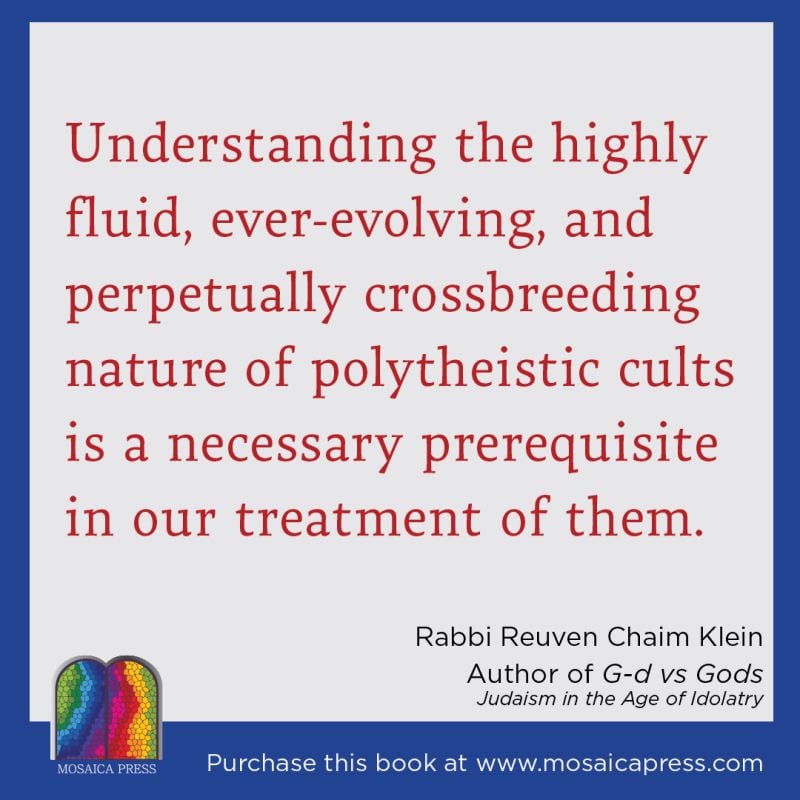 In Biblical Hebrew, the root DALET-MEM-AYIN appears eleven times in the noun dimah (“tear”) and its various inflections, plus another two times in the verb “to tear” (Jer. 13:17). That usage also occurs in the Mishnah (Sotah 7:8), as the word dimaot (“tears”) is used when relating that King Agrippa II (who lived during the Second Temple’s destruction) cried after reading the verse that a foreigner cannot be appointed as king over the Jewish People (Deut. 17:15). That root appears once more in the Bible when the Torah warns that one should not delay giving one’s dimah (Ex. 22:28), which is a reference to the agricultural tithe of terumah (see Temurah 4a and Mechilta to Ex. 22:28). How exactly dimah in this agricultural sense relates to the Biblical Hebrew word for “tears” and the Mishnaic Hebrew word for “mixing” has been the subject of much discussion.
In his commentary to the Torah, Rashi (to Ex. 22:28) admits that he does not know why the expression dimah relates specifically to terumah. However, elsewhere, Rashi (to Temurah 4a) writes that dimah refers specifically to terumah because there is a Halachah that if terumah produce got mixed into other produce, then the terumah is only nullified if there is 100 times more other produce. Otherwise, the entire lot must be treated like terumah (which may only be eaten by a Kohen who is ritually pure). This differs from the standard rules of nullifying mixtures, whereby the nullification occurs at a lower ratio of 1:2 or 1:60. Thus, Rashi understands that the term dimah refers to terumah because it invokes a special rule concerning when terumah “mixed” in to something else can be rendered null and void.
The Tosafists (to Temurah 4a) take umbrage with Rashi’s explanation because this rule that terumah is only nullified in a 1:100 admixture is only a rabbinic stringency and cannot account for why the Bible itself refers to terumah as dimah. Instead, the Tosafists explain that dimah — possibly by virtue of its association with “wet” tears — implies something “wet” and is used in reference to terumah because that tithe can be taken from produce when it is already a liquid (wine/oil), as opposed to other tithes which are supposed to be taken from dry produce at an earlier stage of production.
To defend Rashi, Rabbi Meir Posner (in Beit Meir to Even HaEzer §67) writes that it is possible that the Torah used the word dimah in anticipation of the future rabbinic decree that terumah can only be nullified in 1:100, even though in Biblical times that decree had not yet been enacted. This is reminiscent of the Talmud’s explanation of the Biblical Hebrew word almanah as an allusion to the future rabbinic enactment that a widow’s ketubah entitles her to a manah (=100 zuz) of compensation (see Ketubot 10b). Alternatively, Rashi (to Pesachim 44a) understands that the rule that terumah is only nullified in a 1:100 ratio is a Biblical law, and not just a later rabbinic enactment).
Menachem Ibn Saruk in Machberet Menachem also notes that dimah in Ex. 22:28 is related to dimah in the sense of “tear,” explaining that just as the latter refers to pristine liquids that descend from the eyes, so does the former refer to pristine liquid produce like wine or oil that is without sediment or pulp.
Rabbi Yonah Ibn Janach in his Sefer HaShorashim writes that the word dimah in the agricultural sense in Ex. 22:28 is simply an additional meaning of the root DALET-MEM-AYIN that is unrelated to the word dimah in the sense of “tear.” However, Ibn Ezra (to Ex. 22:28) and Radak in his Sefer HaShorashim explain that dimah in Ex. 22:28 refers to the liquid produce from which one is obligated to separate terumah, because those liquids come out of the press drip by drip, like the tears of a person. Meaning, when one squeezes a grape to produce wine or presses an olive to produce oil, the liquid does not gush out from the fruit all at once, but rather comes out drip by drip, which Radak explains resembles the way tears descend from the eyes of a person who is crying.
Nachmanides (to Ex. 22:28) also suggests that perhaps dimah in the agricultural sense is borrowed from dimah in the sense of “tear,” or that neither meaning is a borrowing from the other but that dimah refers in general to tear-like droplets, whether actual tears or drops of wine/oil. Maharal (Gur Aryeh to Ex. 22:28) explains that terumah is called dimah because it applies after the wine/oil has been “separated” from the fruit in a way that tears “separate” from one’s eyes.
Rabbi Yaakov Tzvi Mecklenburg (HaKtav VeHaKabbalah to Ex. 22:28) bridges these two meanings of the root DALET-MEM-AYIN by explaining that the core meaning of that root refers to the concept of “mixture,” as it more commonly does in Mishnaic Hebrew. Yet, the Biblical usage of this root in the sense of “tear” refers to the notion that tears descending from a person’s eyes serve as an external expression of the person’s inner perplexity and confusion. In other words, he understands dimaot as a way of showing externally how “mixed up” a person’s emotions and feelings are.
Rabbi Samson Raphael Hirsch (to Ex. 22:28) explains that the obligation to separate terumah only kicks in once the produce has been fully processed by man (as opposed to the obligation to bring bikkurim, which starts once the relevant fruits naturally ripen). Because of this, he explains that dimah in the sense of produce that requires tithing relates to the manmade nature of wine and oil which are not naturally-occurring substances, but rather must be manually extracted from the grape and olive. He notes that wine is poetically referred to as the “blood [dam] of grapes” (Gen. 49:11, Deut. 32:14), as by pressing the grape, man commits an act of violence to the fruit to extract its juice. He thus notes that wine and oil more generally derive from acts of man, and somehow uses that point to explain the word dimah. It is unclear whether Rabbi Hirsch meant to offer an etymological explanation, and if he did whether he saw the word dimah (with an AYIN) as etymologically-related to the word dam (without an AYIN).
Rabbi Hirsch (to Lev. 7:19, 11:43, Num. 18:29) further examines the etymology and meanings of the Hebrew root DALET-MEM-AYIN by comparing it to phonetically-similar roots like TET-MEM-AYIN (“to mix/assimilate”), TET-MEM-ALEPH (“impure”), TET-MEM-HEY (“lost/assimilated/destroyed”), and DALET-MEM-HEY (“resemble,” “quiet”) These comparisons are predicated on the interchangeability of the letters DALET and TET, as well as the letters AYIN, ALEPH, and HEY. He suggests that these words share a fundamental meaning related to the loss of identity and assimilation into another entity to varying degrees. When one entity is completely mixed into something else, this can cause its complete absorption and assimilation into another, resulting in the loss of its distinct identity. In some cases, this can lead to its total obliteration (tamiyon). Similarly, when something is said to “resemble” another thing or is “silenced,” it too is in some ways losing its unique identity.
Related Topics
Related Posts