Technion Trailblazers: Behind the Scenes of the AI Revolution
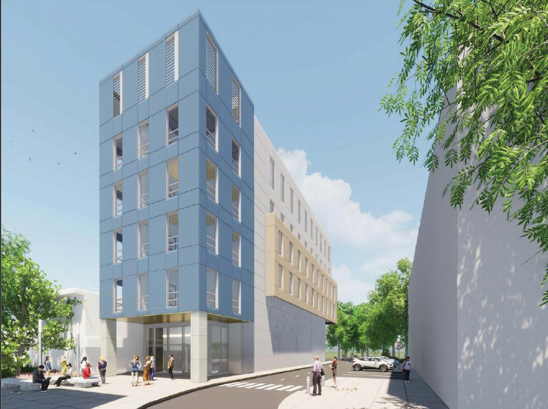
Artificial intelligence is here to stay, and the Technion – Israel Institute of Technology will be instrumental in shaping the way it impacts all facets of our lives, from the cars we drive to how scientists develop medicine. To meet that demand, the Martin and Grace Druan Rosman Performance Computing Data Center will serve as a new high-performance computing (HPC) hub on campus to ensure that the University is prepared for the demands of research, development, and innovation for years to come.
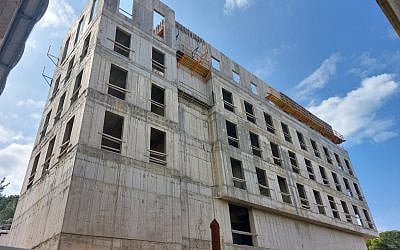
As it prepares to open its doors to students and faculty across campus next year, I spoke with Professor Ofer Strichman, vice chairman for computing, to learn more about the vital impact this new center will have not only on the Technion community, but also the global innovation sphere.
Michael: While I know this new HPC center will unlock a new capacity and efficiency for innovation for the Technion’s computer science students and faculty, are there implications for this new space across other sectors of research on campus?
Ofer: Certainly! In fact, HPC has existed at the Technion for over thirty years in some form, and this new center will be vital for almost all departments at the Technion to expand the capacity and ease of research. I know that when many people envision the actual process of scientific research or a science lab, they imagine scientists in white coats working with beakers and microscopes. While this trope still exists in part, it is outdated to think that this is how the majority of scientific research is conducted.
Over the last couple of decades, computerized models have replaced the lab as the preferred method of research for many scientists. At the Technion, for example, the majority of new faculty across all departments are computational scientists, meaning they require HPC to do their work. Faculty studying medicine, cyber security and cryptography, astrophysics, renewable energy, and more rely on HPC to unlock breakthroughs in these fields.
Michael: It’s so interesting to see the way we conduct research evolve over the years – I had no idea that so many researchers have left the traditional science lab behind. What has driven this shift?
Ofer: The shift has been fascinating because improvements in computing power and technology have enabled further refinement in those areas and constantly builds on itself. In the last decade in particular, scientists discovered that computations related to AI are accelerated rapidly if they are run on graphics processing units (GPUs) rather than central processing units (CPUs). That’s why we have seen such an extreme increase in innovation around large language models like ChatGPT and autonomous vehicles in the last couple of years. While HPC can facilitate computations aside from AI, researchers across several disciplines have found applications for AI in their work, making HPC a core pillar of their research. Discoveries driven by HPC are entirely dependent on the amount of computing power available. Endless breakthroughs are within reach as long as Technion researchers have access to the tools needed to uncover them.
Michael: How exactly does HPC work? What makes it so transformative for scientific innovation?
Ofer: We all have personal computers at home, and they are great for simple, everyday tasks like sending emails or using a spreadsheet. However, scientific research requires parallel computing – essentially, two or more computers working at the same time – to achieve a goal.
There are two kinds of parallelism in computing. The first simply saves lots of time by running analysis for multiple samples simultaneously, eliminating the time it would take to run the analysis one by one. However, the cores of these computers do not work together, they merely run alongside each other. The second kind of parallelism is much more interesting. Several cores run simultaneously, but they can also communicate with each other.
For example, if you’re a physicist and want to investigate how a set of stars interact with each other due to gravitational forces, you can try to perform the analysis with math. However, the calculation is so complex it may not be possible. Alternatively, you could use computers to simulate this set of stars, assigning each core to compute how a star would behave given the location of the other stars and your prediction of how they interact with each other in nature. If you run this simulation thousands of times, you can see how the entire system of stars behaves. If the computer model is precise, you should be able to observe the same interactions in nature. In other words, because each core – or “star” – communicates with each other in a way that is consistent with what we know about how nature behaves, the simulation as a whole gives us a picture that is similar to what we would observe through a telescope in the actual universe. While this consistency isn’t absolute proof that your model is correct, it is an indication of its accuracy. These types of simulations are essential for understanding phenomena in chemistry, biology, and several other fields.
Michael: It’s incredible to think of the potential that HPC will have on global innovation over the next several years, particularly with increasing access to AI. The possibilities seem endless, and almost too good to be true. What do you think the greatest challenge will be for the scientific community as computational research becomes standard?
Ofer: Funding is the largest obstacle to access for scientists. The new center on the Technion’s campus is a monumental step in the right direction to provide the space necessary to compete with similar universities around the world. Over the next several years, we will be focused on filling the new center with enough computing equipment to meet the needs of our scientists. We will have a few GPUs to start, given by the Rosman family, and we hope to keep growing. Staying competitive in science will always require more computing power.
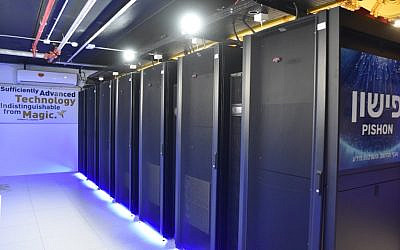
When it comes to high-performance computing, nonscientists may not always think about the actual physical space where these processes take place. The types of GPUs used in HPC can take up vast amounts of space, and they generate immense amounts of heat that constantly must be cooled. Tech giants like Google and Tesla have the infrastructure and capacity to have thousands of these GPUs, which is why they are leaders in AI right now.
Michael: Despite those limiting factors, it sounds like the Technion is well poised to be a formidable influence in the HPC world with this new center. Where do you see HPC having the greatest impact in the next few years?
Ofer: As we’ve discussed, the possibilities are truly endless. We’ll see incredible strides in drug development, new understandings about our universe, and more confidence in the safety and capabilities of self-driving vehicles. Ideally, one day models in biology will be so precise that we will be able to replicate every mechanism in the human body. We would have no need to test medicine on mice because the computer simulation would be so accurate. While we are still very far away from this reality, the field is moving in that direction.
Like other global superpowers, we also hope to see leaps and bounds in defense-related initiatives driven by HPC in the next several years. Collaboration across research groups and industry partners have always been a strength of the Technion in all sectors of scientific exploration, and I’m excited to see how those relationships develop at the new center to support the future longevity and safety of Israel.
Michael: I have no doubt that with the Technion at the helm of the future that Israel will always be in good hands. The AI revolution can feel nebulous and intangible but understanding the real-world physical demand for this technology and how it works makes the future all the more exciting. I cannot wait to see what the Rosman Performance Computing Data Center will bring to the table when it opens its doors next year.