
Tehran’s Endgame in Final Negotiations
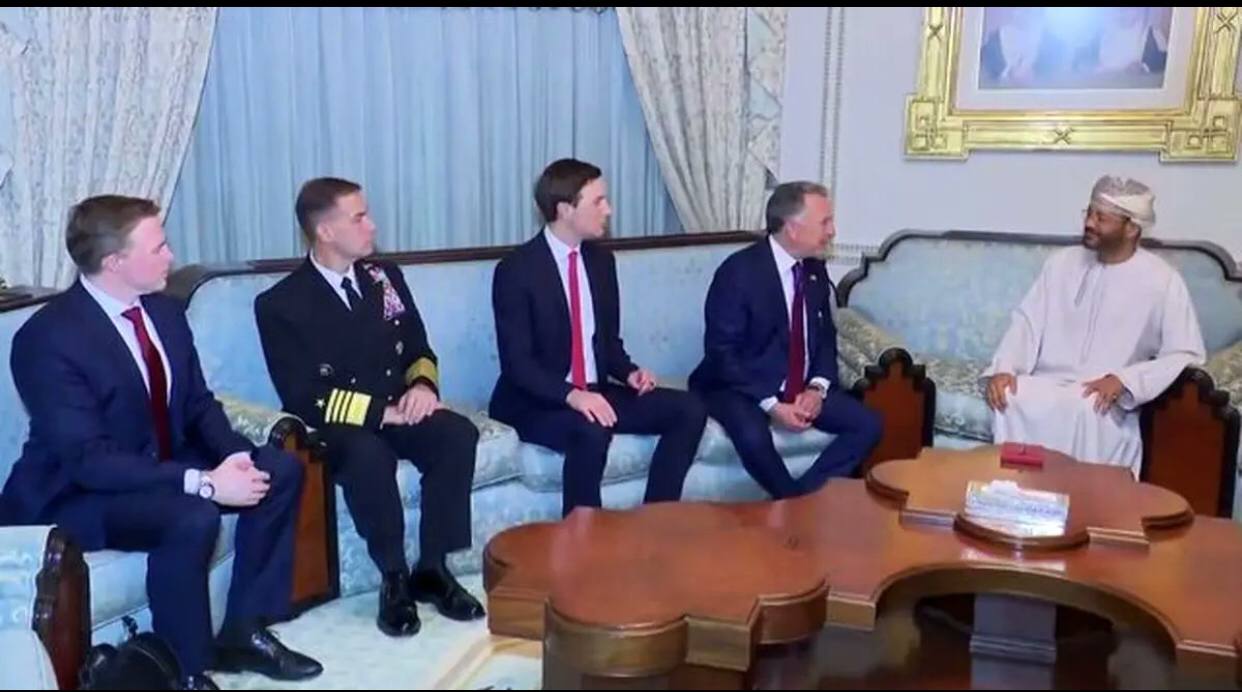
In recent weeks, official media outlets have reported the start of a new round of “negotiations” between the Islamic Republic and the United States talks, on the surface, appear focused on the nuclear file. Yet experience in diplomacy shows that decisive negotiations usually take shape not in the media spotlight, but through multilayered, non-public channels. What we are witnessing today, however, appears to be less a classic negotiation process and more a form of negotiation for surrender, a process aimed at preventing uncontrolled collapse and regional instability.
Over the past months, Iran has experienced a broad-based revolution that reflects a deep rupture between the ruling establishment and society. These developments, combined with mounting international pressure, have placed the Islamic Republic in a position where the continuation of its previous policies has become impossible. The United States and its allies have repeatedly emphasized that they prefer any political transformation in Iran to occur with minimal loss of human lives, placing their focus on the will of the people and on preventing their suppression.
Signs of this approach can be seen in the composition of negotiating delegations and the presence of senior military figures at certain diplomatic meetings. In the norms of international relations, the involvement of high-ranking military officials in such talks usually indicates that the issue has moved beyond negotiation and is gradually becoming centered on the surrender of the Islamic Republic’s ruling structure.
From a bargaining perspective, the Islamic Republic currently finds itself in a weak position. The country’s nuclear program has been damaged by recent confrontations, its missile deterrence capability is under question, and the regime’s network of proxy forces from Lebanon to Yemen has shifted into a defensive posture. Beyond this, the system is facing two fundamental crises that have stripped its ability to maneuver either militarily or diplomatically.
First: the crisis of political legitimacy
The recent revolution demonstrated that Iranian society no longer views the Islamic Republic as a representative of its will. During this uprising, protesters not only stated clearly what they rejected, but for the first time also openly articulated what they wanted. In this context, the name of Crown Prince Reza Pahlavi emerged among protesters as an alternative figure for leadership during a transitional period reflecting society’s deep yearning for a secular, democratic Iran, a goal for which it has paid a heavy price over many years.
From the standpoint of political rights, a government that lacks popular legitimacy cannot credibly represent its people in international negotiations with other states. This reality renders the regime incapable of concluding any lasting agreement, as any such arrangement ultimately requires acceptance by the people through democratic mechanisms.
Second: the crisis of trust
Numerous reports by human rights organizations regarding human casualties during the suppression of the recent revolution have severely damaged the Islamic Republic’s image as a trustworthy partner. Within the framework of international law and multilateral diplomacy, an extensive record of human rights violations directly undermines prospects for trust-building and long-term cooperation. For this reason, even some of Tehran’s traditional partners are now acting with far greater caution in their dealings with the regime.
On the economic front, signs of bankruptcy are unmistakable. Inflation exceeding ninety percent based on calculations by Professor Steve Hanke of Johns Hopkins University points to a full-scale economic collapse. This hyperinflation, combined with deep recession, declining purchasing power, astronomical currency prices, a sharp drop in investment, unchecked liquidity growth, and capital flight, all point to the emergence of an “endogenous economic catastrophe.” This situation cannot be explained solely by external sanctions; it is rooted in domestic distrust and systemic incompetence.
The European Union’s long-delayed decision to designate the Islamic Revolutionary Guard Corps as a terrorist organization represents a critical turning point. This move not only restricts the Islamic Republic’s financial and political interactions but also sends a clear message to other international actors that the era of negotiating with this regime has come to an end. The consequences of this decision have even become visible in other domains, including cryptocurrencies, whose prices have sharply declined in recent days.
Against this backdrop where multiple internal crises are tightening their grip on the regime, while escalating military threats and international sanctions have exhausted its capacity, a different scenario emerges regarding the true objective of these negotiations. This scenario suggests that the talks are, in fact, aimed at the regime’s surrender and the controlled relocation of its leaders to designated countries. The goal of such an approach is not political revenge, but the prevention of collapse, regional instability, and humanitarian crises. A managed transition is a preferable alternative to war and could facilitate the transfer of power from this system to a transitional government. This process could ultimately lead to the establishment of tribunals akin to Nuremberg to prosecute criminal leaders after the formation of a future government.
The Islamic Republic has now reached a point where its only choice lies between direct war with the United States and accepting a managed transition. Historical experience shows that regimes which remain inflexible in the face of simultaneous domestic and international pressure often encounter violent collapse and far heavier human costs. By contrast, accepting a controlled exit could at least from the perspective of international law reduce damage and help avoid future scenarios resembling those of Gaddafi or Saddam.