
A Moroccan Journalist
Tel Aviv celebrates what its neighbors criminalize
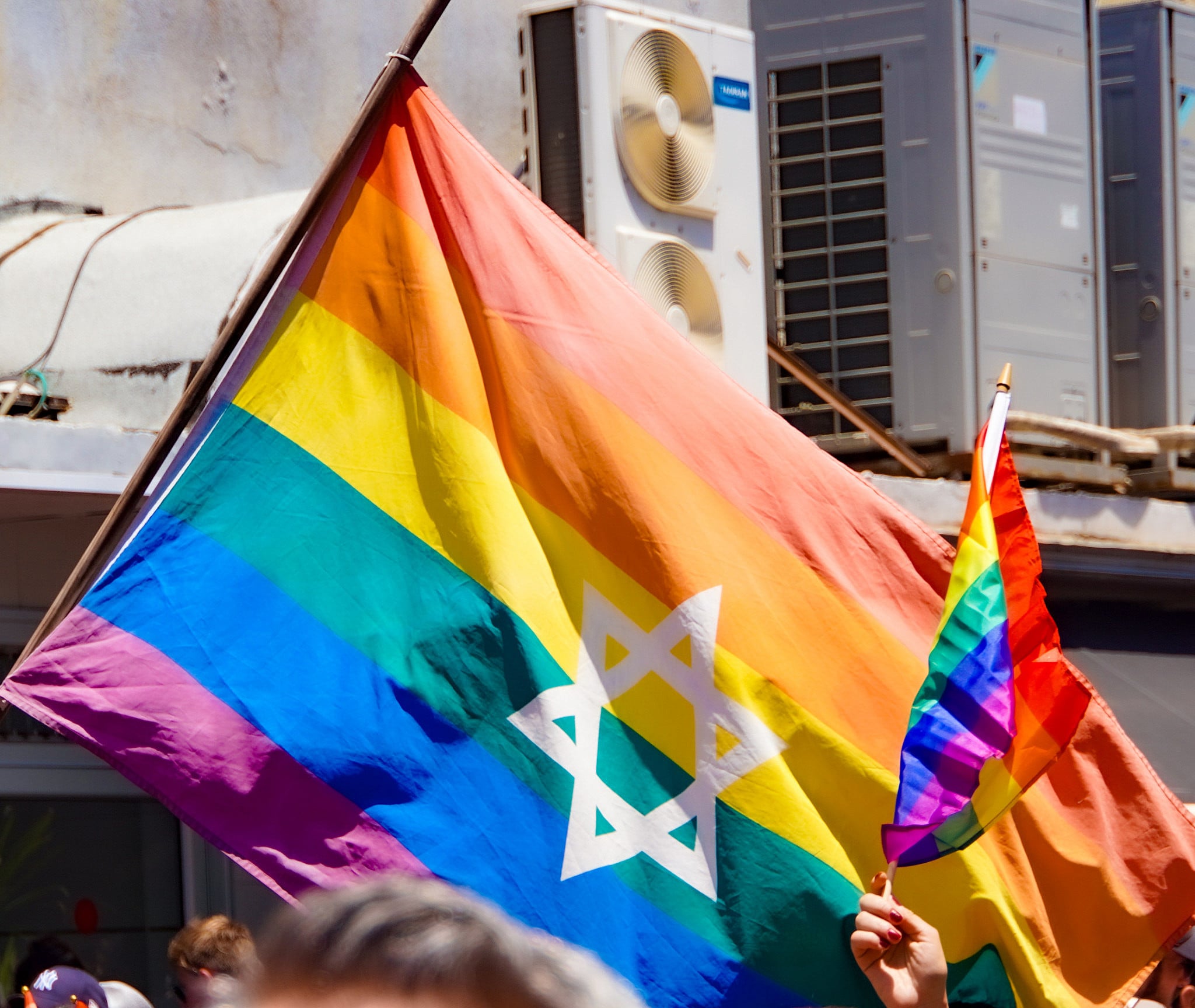
Tel Aviv Pride, 2019 – where rainbow flags and the Star of David meet in one of the region’s most visible displays of LGBTQ+ freedom. (Ted Eytan / Wikimedia Commons)
On June 12, a quarter-million bodies will press against the Mediterranean shoreline of Tel Aviv-Yafo for the 28th edition of what has calcified into the most consequential Pride procession in the Middle East – and, by any honest geopolitical metric, one of the most defiant public assemblies on the planet.
The parade, returning this year to its original beachfront format along the Shlomo Lahat Promenade after a hiatus forced by military operations, will snake southward through the city’s arterial boulevards before culminating at Charles Clore Park under the slogan “Vote with your feet.” It is a phrase that, when examined against the suffocating tableau of the wider region, reads less like a rallying cry and more like an indictment.
Because here is the arithmetic that much of the international commentariat refuses to perform: Israel operates as the sole sovereign entity between the Strait of Gibraltar and the Hindu Kush where LGBTQ+ individuals can march, convene, adopt children, serve openly in a national military, and seek legal redress against discrimination – all without risking flogging, incarceration, or state-sanctioned execution.
Across the region’s expanse, 12 jurisdictions still enshrine the death penalty for consensual same-sex conduct. In Iran, men face hanging. In Saudi Arabia, beheading. In Yemen, stoning. In Hamas-governed Gaza – mere kilometers from the Tel Aviv promenade – homosexuality is criminalized under a penal code inherited from the British Mandate era, and LGBTQ+ Palestinians endure imprisonment, extrajudicial violence, and the abhorrent, medieval, and unconscionable machinery of so-called “honor” retribution. The two only Palestinian LGBTQ+ organizations, Al Qaws and Aswat, operate not from Ramallah or Gaza City but from within Israel itself.
Critics – and they are legion – will invoke the term “pinkwashing,” that rhetorical sleight-of-hand suggesting Israel brandishes its LGBTQ+ protections as camouflage for other transgressions. The accusation is facile. Rights are not negated by the motives ascribed to their defenders.
A gay man in Tel Aviv does not forfeit his legal protections because an Arab polemicist dismisses his freedom as a Zionist concession engineered for Western consumption. The protections exist. The parade exists. The anti-discrimination statutes, the open military service since 1993 – a full 18 years before Washington dismantled “Don’t Ask, Don’t Tell” – the recognized civil partnerships, the adoption rights: these are not theatrical props. They are codified, adjudicated, enforceable realities.
What renders this Israeli exception all the more intellectually arresting is the theological terrain upon which it was constructed. Israel is an avowedly Jewish state. Orthodox rabbinical tradition harbors unambiguous prohibitions against homosexual conduct. And yet, the polity chose – through legislative evolution, judicial interpretation, and civic consensus – to disaggregate religious doctrine from civil governance in this domain.
This is precisely the distinction that eludes superficial observers who conflate a Jewish state’s theological inheritance with the theocratic absolutism of its neighbors. An Islamic republic and a Jewish democratic state do not operate on the same constitutional logic, the same jurisprudential architecture, or the same relationship between scripture and statute. To pretend otherwise is not analysis; it is intellectual sloth.
And here emerges the governance argument that discomfits so many. If the metric of legitimate stewardship over contested territory is the quality of life, the breadth of civil liberties, and the institutional capacity delivered to those who inhabit it, then Tel Aviv’s Pride parade becomes an exhibit – one among many, but a vivid one – in the evidentiary dossier.
Imagine, for a moment, Hamas exercising sovereign authority over this same Mediterranean littoral. The floats would be replaced by morality patrols. The rainbow banners would be confiscated as contraband of deviance. The revelers would be detained, interrogated, or worse. Palestinian governance under its current factional configuration would produce yet another Arab polity in the region’s long, dispiriting catalogue of states where individual liberty is subordinated to doctrinal rigidity – and the empirical record of that model, from Baghdad to Tripoli, requires no embellishment.
From a consequentialist ethics standpoint – the moral framework in which the rightness of governance is measured not by its proclaimed legitimacy but by the outcomes it delivers to those under its jurisdiction – Israel has proved, demonstrably and repeatedly, that it is the only actor in this region capable of producing a society where individual liberty is not a theological casualty.
None of this constitutes a blank absolution of Israel’s internal politics. Figures like Itamar Ben Gvir and the ultranationalist flank of the governing coalition represent tendencies that chafe against the very pluralism Tel Aviv’s Pride embodies.
Such friction, however, is the native condition of every functioning democracy – the permanent, unresolved tension between its liberal aspirations and its reactionary impulses. To mistake the Ben Gvir tendency for the totality of the Israeli state is an analytical error of the first order, no different from reducing American governance to its most extreme congressional caucus.
When 250,000 people march along the Tel Aviv waterfront this June, they will do so in a country surrounded by states that would imprison or execute them for the act of existing. That singular, undeniable, geographically astonishing fact deserves something rarer than applause. It deserves acknowledgment.
Related Topics
Related Posts