


Mathematics Teaching Professor, Author
Temple Beth El, Jefferson City, MO: Home for the Jewish Community since 1883
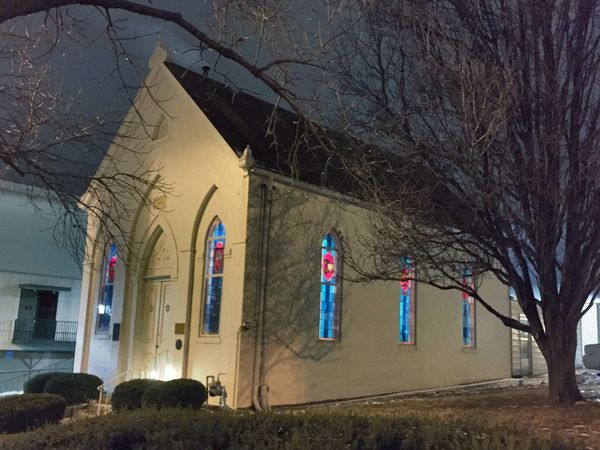
Temple Beth El (Source: Temple Beth El, Jefferson City, Missouri)
Temple Beth El is a historic synagogue building constructed in 1883 and is the oldest synagogue west of the Mississippi River in continuous use in the United States. Today, the congregation includes roughly 25 families, with members of all ages. Temple Beth El is affiliated with the Union for Reform Judaism.
As both a place of worship and a historic landmark, the synagogue represents more than a century of Jewish life in Jefferson City, reflecting the community’s long-standing traditions, resilience, and ongoing commitment to preserving its heritage.
I would like to thank the esteemed Gail Severance, Temple Beth El President, for her support of this article.
Synagogue
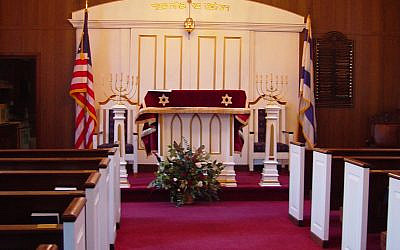
Temple Beth El in Jefferson City, Missouri, is recognized as the 13th oldest active synagogue in the United States still worshiping in its original building. The Jewish congregation of Jefferson City built the synagogue on the west side of Monroe Street between High and McCarty Streets in 1883. The building, measuring 38 by 25 feet (11.6 m × 7.6 m), was constructed of brick with cut-stone trim. Its neatly furnished interior included a Torah scroll handwritten on parchment. Today, Temple Beth El remains the oldest continuously operating synagogue in its original building west of the Mississippi River.
The Torah
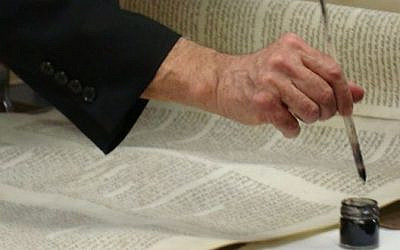
Temple Beth El is home to two historic Sefer Torah scrolls.
The congregation’s original Torah was placed in the synagogue by its founding members and dates to approximately 1815, making it more than 200 years old. The scroll was written in the German-Bohemian region of Central Europe, in an area that later became part of Czechoslovakia and is now within the Czech Republic.
A second Torah scroll, written in the early 1900s and originating from the Poland-Russia region, was acquired by the congregation in 1989 through funds provided by the estate of Gertrude Stein. Both Torah scrolls underwent professional restoration in 2010 by Rabbi Gedaliah Druin of Sofer On Site.
Today, both scrolls are considered kosher and remain in good condition despite their age. These treasured Torahs continue to serve the congregation, preserving a direct connection to more than two centuries of Jewish religious and cultural heritage.
Jewish Cemetery
The Jewish community of Jefferson City established its original Jewish cemetery in 1879. In the 1930s, the cemetery was relocated, and the remains of 29 individuals were respectfully moved to a newly dedicated Jewish cemetery. The original cemetery site remains an important part of the community’s history, and the fence that once enclosed the cemetery still stands as a reminder of its original location and the early Jewish settlers who helped build Jefferson City’s Jewish community.
Religious Life
Temple Beth El is a lay-led congregation with no resident rabbi. Shabbat services are held every Friday at 7:30 p.m. and are led by congregation members. Holiday services are observed throughout the year, and student rabbis often officiate during the High Holy Days. At age 13, youth join the congregation’s reader list and participate in leading services.
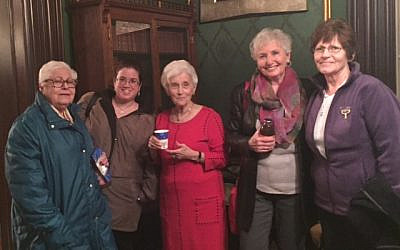
Congregational life includes potluck meals and activities sponsored by the Temple Beth El Sisterhood, such as book discussions and movie nights.
Through participation in the Jewish Community Legacy Project, members researched the synagogue’s history, recorded oral histories, and reviewed meeting minutes dating to the 1930s. These efforts preserved stories that might otherwise have been lost, including the experience of refugee Emanuel Ladenheim and his son Harry Ladenheim, whom the congregation helped settle in Jefferson City after their arrival from Vienna in 1939.
A guiding principle of the congregation is simple: if even one member wishes to keep the synagogue’s doors open, the doors will remain open.
Historical Background
In 1844, John Tyler was serving as the 10th President of the United States. That year, the presidential election resulted in the victory of James K. Polk, whose support for territorial expansion reflected the growing influence of Manifest Destiny—the belief that the United States was destined to expand across the North American continent. The nation, with a population of nearly 20 million, was largely rural and agricultural. As expansion accelerated, debates over whether new territories would permit slavery intensified, creating divisions that would eventually lead to the Civil War.
And in 1844, Jefferson City was a small but growing frontier capital on the south bank of the Missouri River, with a population of approximately 1,200 residents. As the state capital of Missouri, its economy revolved around government activity, river commerce, and local businesses. The city was home to a growing population of German immigrants and institutions such as the Missouri State Penitentiary, which had opened a decade earlier. Though modest in size, Jefferson City was developing into an important political and commercial center on Missouri’s frontier.
It was in this year, 1844, that the first known Jewish settler in Jefferson City was Morris Obermeyer, who established a mercantile business with his brothers, Louis Obermeyer, Simon Obermeyer, and Joseph Obermeyer. The Obermeyers became respected members of the community, and their business prospered.
When Morris Obermeyer died in 1876, his body was taken to St. Louis for burial. Shortly thereafter, nine Jewish men organized the Jefferson City Hebrew Cemetery Association. In 1879, they established the community’s first Jewish cemetery, Maple Grove, located in the 1300 block of East McCarty Street.
That same year, 1876, the Jewish community of Jefferson City organized a congregation named Congregation Beth El, meaning “House of God”, to serve and promote Reform Judaism in Jefferson City. This congregation would later become Temple Beth El, one of the oldest active synagogues worshiping in its original building in the United States.
It was in the next decade, 1882, that Congregation Beth El used $1,800 raised by the Hebrew Ladies Sewing Society to purchase a lot at 318 Monroe Street and build the synagogue in Jefferson City. The building was designed by prominent local architect Frank B. Miller, who later became one of the region’s most respected architects, designing notable structures including the Cole County Courthouse, Central Trust, and the original public library.
Which brings us to 1883.
In 1883, Chester A. Arthur was serving as President following the assassination of James A. Garfield. The nation was in the midst of the Gilded Age, marked by rapid industrialization, westward expansion, and major advances in transportation. One key development that year was the introduction of standardized continental time zones by railroads in the United States and Canada, bringing order to increasingly complex national rail networks.
In that same year, 1883, Jefferson City was a rapidly growing Midwestern capital. The city was undergoing key infrastructure, architectural, and community milestones while navigating a mix of government expansion and local tragedies, The Missouri Governor’s Mansion saw its first recorded death in 1883. Carrie Crittenden, the daughter of then-Governor Thomas Theodore Crittenden, passed away in the home. Her spirit is heavily tied to alleged local hauntings in the area.
It was in this year 1883 that Temple Beth El was constructed, becoming the oldest synagogue building west of the Mississippi River still in continuous use and among the oldest active synagogue buildings in the United States.
The congregation formally organized on September 13, 1883, adopting bylaws under the name Congregation Beth El of Jefferson City, Missouri, with “American Israelite” as its stated mode of worship. Minimum annual dues were set at $12, with additional assessments permitted.
The building was completed and dedicated in October 1883 in time for the High Holidays. Contemporary accounts described it as a “neat little edifice” built of brick and cut stone, costing about $1,800 including land and construction. The first services, led by E. Jonas Hochstadter, were described as solemn and impressive, featuring Reform practices including an organ and choir.
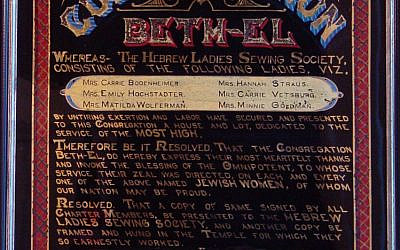
The plaque was placed in the sanctuary by the founding members thanking the Ladies of the Hebrew Sewing Society for their untiring efforts to raise the funds for the Temple. The women are listed with their first and last names which was quite unusual for the time. The plaque remains on display in the sanctuary to this day.
In the 1930s, the original Jewish cemetery in Jefferson City had to be relocated. The congregation arranged an agreement with Riverview Cemetery, and after obtaining proper approval, 29 graves were respectfully moved to the new burial site.
In 1934, the congregation raised funds to hire its first resident rabbi, Carl Schorr, who led services for about a year before leaving in 1937. Since then, the congregation has been lay-led with occasional visiting rabbis, and members, including youth over age 13, rotate leading Friday night Shabbat services.
On September 19, 1954, a statewide ceremony was held at Temple Beth El to mark the tercentenary, 300th anniversary, of Jewish settlement in the United States. Missouri Governor Phil Donnelly issued a proclamation recognizing the occasion, and visiting rabbis, including Rabbi Isserman of St. Louis, led services. In preparation, the sanctuary was renovated and expanded with a kitchen, social hall, and restroom facilities, replacing earlier basic amenities.
The congregation’s 75th anniversary was celebrated on October 20, 1957, with visiting rabbis from St. Joseph and Kansas City. President Julius Meyerhardt presented a history of the congregation, and the service included musical performances by local members accompanied by organist Carl Burkel.
Temple Beth El was listed on the National Register of Historic Places in 1976 as part of the Missouri State Capitol Historic District.
During the 2020 pandemic, the congregation adopted new technology, and Shabbat services began being offered both in person and via Zoom each Friday, allowing members who could not attend physically to participate remotely.
The history of Temple Beth El reflects the broader story of Jewish life in the American Midwest, rooted in perseverance, adaptation, and community continuity. From its founding in the 19th century through periods of migration, economic change, and shifting population, the congregation has remained active in its original historic building, maintaining traditions while adjusting to modern needs.
Through centuries-old Torah scrolls, lay-led worship, and community initiatives that preserve its history, Temple Beth El continues to serve as both a place of worship and a living archive of local Jewish heritage. Its survival into the present day, now supported by in-person and virtual participation, underscores a consistent commitment: preserving community, memory, and faith across generations.
Contact Information:
Temple Beth El, PO Box 1576, Jefferson City, MO 65102
Phone: 573-635-3088
Email: webmaster@templebethel-jc.org
Website: https://templebethel-jc.org/