


Mathematics Teaching Professor, Author
Temple Beth Or: 174 Years of Jewish Life in Montgomery, Alabama
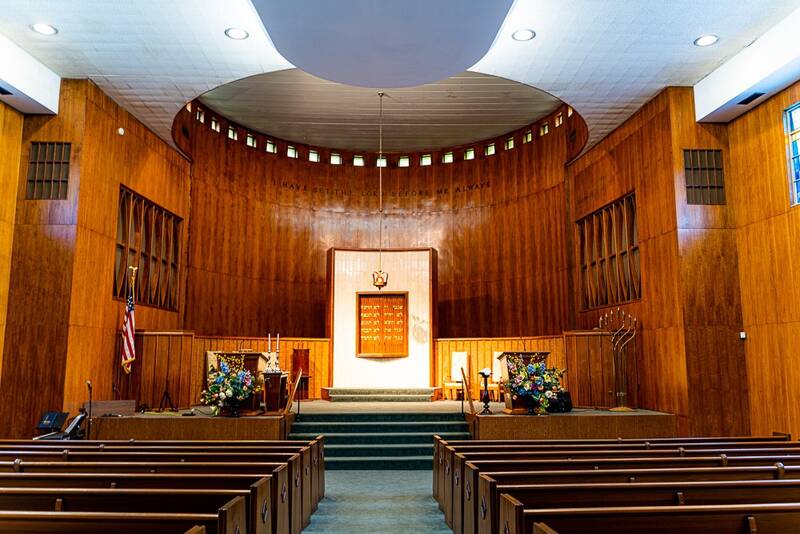
Temple Beth Or (Source: Temple Beth Or, Montgomery Alabama)
For 174 years, Temple Beth Or has been a vital part of Montgomery’s Jewish community, beginning with a small group of Jewish residents who came together in 1852. From its early days as Kahl Montgomery to its present home, the congregation has grown and evolved while remaining rooted in Jewish faith, tradition, education, and community. Today, Temple Beth Or continues that legacy by welcoming worshippers, educating new generations, celebrating Jewish life, and serving as a gathering place for the Montgomery community.
Religious Events
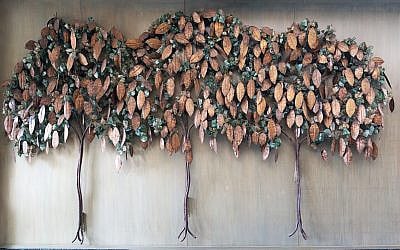
Temple Beth Or in Montgomery, Alabama, welcomes visitors to worship with its congregation, with all Shabbat services, holidays, and festivals open to everyone at no charge. Shabbat services are held every Friday evening throughout the year, usually at 6:00 p.m. With a Reform Jewish worship tradition dating to the 1870s, the congregation has used every edition of the Union Prayer Book, followed by Gates of Prayer and, since 2007, Mishkan T’filah, the standard siddur of Reform Judaism.
Music is an integral part of worship, with most Friday evening services led by, Rabbi Scott Looper and Cantorial soloist David Peden, while High Holy Days services feature a choir and pianist. Throughout the year, soloists accompanied by guitar or electronic keyboard may add a contemporary feel to worship, and Shabbat services almost invariably include a sermon. Services are enriched with monthly anniversary and birthday blessings and frequent visits from out-of-town youth groups and adult groups following the Freedom Trail creating an atmosphere of joy, community, and sanctity.
Life Cycle Events
Temple Beth Or observes Jewish life-cycle traditions from birth through adulthood. Temple Beth Or honors the full cycle of Jewish life and strengthens connections among individuals, families, and the community.
Education
Rabbi Elliot L. Stevens Kol Ami Religious School (RELSKARS) welcomes children from the local Jewish community and families connected to Maxwell Air Force Base. It’s mission is to strengthen students’ faith in God, love of Torah, connection to the Jewish people, and understanding of Jewish traditions and values. Since a 2008 merger between Temple Beth Or’s religious school and the school of Agudath Israel-Etz Ahayem, a Conservative congregation, the program has brought students together while allowing each congregation to maintain its own religious identity. Serving students from age three through confirmation, RELSKARS uses a curriculum developed by the Goldring Woldenberg Institute for Southern Jewish Life.
Temple Beth Or’s commitment to lifelong learning continues through its adult education programs. Courses explore a wide range of Jewish thought and contemporary issues, including Torah, Jewish history and interpretation, Musar and character development, ethics, and Jewish perspectives on current social questions. Programs may also bring together Jewish and Christian communities for shared study and discussion, reflecting the congregation’s commitment to learning, thoughtful dialogue, and deeper understanding.
Community
The Jews of Montgomery have had a significant role in developing many of Montgomery’s premier social service and cultural institutions. Some of these include founding United Way, the Sunshine Center, Greil Hospital, Jubilee Music Festival, Montgomery Museum of Fine Arts, Old Alabama Town, Leadership Montgomery and the Montgomery Symphony. There has even been leadership in governance beginning with the Mayor of Montgomery in 1875. Members of Temple Beth Or continue to be in leadership roles in many of the city’s top organizations.
The Temple Beth Or Sisterhood has been an important source of support and fellowship for the congregation since its founding in 1949. Created as a dedicated organization in addition to the Council of Jewish Women, the Sisterhood has enriched temple life through generations of dedicated members and leaders. Its contributions have included providing meals and receptions for special events, supporting youth programs and religious school, helping improve and equip the temple kitchen, and contributing furnishings and educational materials. Members have also beautified the temple through landscaping, needlework, tapestries, and handcrafted Torah covers. Through its service, creativity, and commitment, the Sisterhood continues to strengthen the Temple Beth Or community.
Temple Beth Or Men’s Club was established in 1927 and promotes fellowship, community involvement, and support for local charities through activities enjoyed by the congregation. Its programs include sports outings, service projects, guest speakers, and special events such as the annual Biscuits baseball game and a traditional Men’s Club Shabbat. The club hosts movie afternoons in the temple’s social hall, creating opportunities for fun, friendship, and community connection.
The Temple Beth Or L’Chaim League began with the Lucien S. Loeb Memorial Fund in 1985 and today welcomes adults age 50 and older, including members of Agudath Israel Etz Ahayem. Serving the wider Montgomery Jewish community, the league offers social activities, educational programs, outings, visits to homebound seniors, and community service projects.
The Jewish Food Festival, begun in 2005, started a new community outreach that has grown each year and is a favorite in the city. Members spend months preparing delicious foods and pastries for a festival which opens the Temple to the community. In addition to the food, there has been a treasure market with items donated by members of the congregation to be sold at very reasonable prices. Sanctuary tours are given. There has been wide community support from this event. Funds raised during the festival fund various projects during the year. This past year an Art Fair replaced the Treasure Market, to great success.
Joint Thanksgiving Service began in 1896. That year First United Methodist Church and Temple Beth Or began the tradition of gathering a few days before Thanksgiving each year to give thanks together. It has since grown to include the Episcopal Church of the Ascencion. Each year the service rotates so that every 3 years it has taken place in each house of worship. It is almost always a full sanctuary followed by a beautiful reception.
Temple Beth Or welcomes all who wish to worship, learn, and connect with the community. The congregation offers a weekly newsletter, special programs, and Basic Judaism classes for members and visitors interested in learning more about Judaism or exploring conversion. The Temple views conversion as a personal journey developed through worship, study, and participation in Jewish community life.
Historical Backgrounds
Jewish history in Alabama dates to the 1700s, when individual traders and settlers began arriving under French colonial rule. Jewish traders were present in the Mobile area as early as 1724, although French colonial laws at times restricted non-Catholic residents. Abraham Mordecai, widely recognized as Alabama’s earliest known resident of Jewish descent, arrived in the region in 1785 and settled near present-day Montgomery, where he established himself as a trader.
A more permanent Jewish community developed in Montgomery during the 1830s and 1840s as Bavarian and German-speaking immigrants arrived in growing numbers. As Montgomery became a major cotton center, Jewish merchants played an active role in the local economy. From this small but committed Jewish population grew the vision of a congregation that would provide a place for religious expression and community life. Through wars, economic challenges, droughts, prosperity, and social change, the congregation has continued to serve Montgomery’s Jewish community while honoring its history and looking toward the future.
In 1846, a small group of Montgomery Jews organized Chevra Mevacher Cholim, a Sick and Burial Society created to care for the sick and provide proper burial for the deceased. Members took turns carrying out these responsibilities and ensuring that Jewish traditions were observed. The organization also held services on Friday evenings, Saturday mornings, and the High Holy Days.
Early services followed Orthodox traditions, with men and women seated separately and men wearing head coverings and tefillin during prayer. High Holy Days services attracted not only Jewish residents but also Christian neighbors, some traveling from communities such as Selma and Tuskegee. This spirit of friendship and mutual respect between Montgomery’s Jewish and non-Jewish communities became an important part of the city’s history.
Which brings us to 1852.
In 1852, the United States was undergoing significant political, cultural, and economic change as the nation debated slavery and westward expansion. The country had 31 states, with Millard Fillmore serving as president until Franklin Pierce was elected in November. That year saw the publication of Harriet Beecher Stowe’s influential anti-slavery novel Uncle Tom’s Cabin and Frederick Douglass’s powerful address, “What to the Slave is the Fourth of July?” Henry Wells and William G. Fargo also established Wells Fargo & Co., reflecting the rapid economic growth associated with the nation’s westward expansion and the California Gold Rush.
In 1852, Alabama strengthened its legal system of slavery through the Alabama Slave Code, which reinforced the institution of chattel slavery and imposed additional restrictions on enslaved and free African Americans. In Montgomery that same year, the city’s Black religious community established what became Old Ship AME Zion Church, recognized as Montgomery’s oldest Black congregation. These developments reflected the sharply contrasting experiences and institutions that shaped Alabama society in the years before the Civil War.
It was in that year, 1852, that Temple Beth Or had its beginnings, just 35 years after Alabama was organized as a territory and less than a decade before the Civil War began. Although Montgomery’s Jewish community was still small, its founders recognized the need to strengthen Jewish life and formally established a congregation, Kahl Montgomery. With the help of a $2,000 bequest from Judah Turro of New Orleans, the congregation purchased land and, in 1862, completed a temple that was later named Beth Or, meaning “House of Light.” Located in downtown Montgomery at the corner of Church Street and Catoma Street, the historic building is listed on the National Register of Historic Places and still stands today.
By 1870, Kahl Montgomery had grown considerably, and changes in worship continued. Men and women began sitting together, and in 1874, after considerable discussion, the congregation adopted a Reform ritual modeled after Temple Emanu-El of New York. This significant change reflected the vision, courage, and commitment of the congregation’s early members, qualities that continue among Temple Beth Or members today, including many direct descendants of the original founders.
As Montgomery’s Jewish population grew, the congregation decided to build a larger house of worship. On June 6, 1902, a new temple at the corner of Sayre and Clayton Streets was dedicated. Rabbi Eugene Blachschleger became rabbi in 1933, and during the war years, the temple welcomed servicemen and women stationed at nearby military bases. In 1949, the Temple Beth Or Sisterhood was established with 197 members, becoming an important part of congregational life.
Continued growth led Temple Beth Or to build its current home in Montgomery’s historic Old Cloverdale neighborhood, dedicated in 1961 at 2246 Narrow Lane Road. Rabbi David A. Baylinson served from 1965 to 1994, during which Bar and Bat Mitzvah ceremonies were reintroduced and new Reform prayer books adopted. Later rabbis continued the congregation’s spiritual leadership and community outreach, including Rabbi Elliot L. Stevens, who served from 2007 until his death in 2017, and since 2018, Rabbi Scott Looper.
Today, Temple Beth Or stands as a lasting part of Montgomery’s Jewish heritage, carrying forward a tradition that began in 1852. Through worship, education, life-cycle celebrations, community service, and outreach, the congregation continues to connect generations to Jewish faith, culture, and community. Its long history reflects the dedication of those who built and sustained it, while its welcoming spirit and commitment to learning ensure that Temple Beth Or remains a vibrant part of Montgomery’s future.
Contact Information:
Temple Beth Or, 2246 Narrow Lane Road, Montgomery, AL 36106
Phone: (334)262-3314
Email: rabbisl18@templebethor.net
Website: https://www.templebethor.net/