


Mathematics Teaching Professor, Author
Temple B’nai Israel: A Century of Jewish Life in Oklahoma City
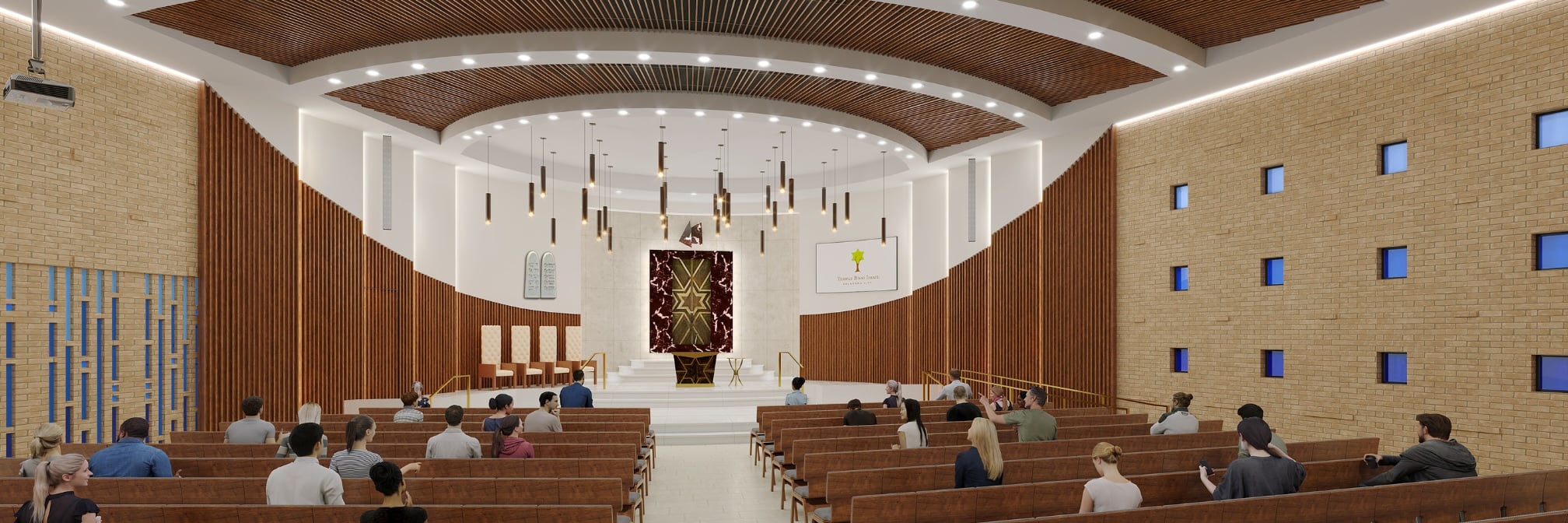
Interior of Temple B'nai Israel (Source: Temple B'nai Israel of Oklahoma City)
Temple B’nai Israel is special because it is a big-tent congregation. Its members come from a wide range of backgrounds, levels of religious observance, and personal practices, yet the congregation has developed a strong sense of community and mutual respect. A culture of curiosity and non-judgment allows members to appreciate their differences while finding common ground through shared Jewish values and experiences.
The congregation’s welcoming approach also extends to converts, many of whom take on meaningful volunteer roles and serve on the Board of Trustees. This spirit of inclusion and belonging has been especially meaningful to families who have found a home within the Temple community.
I would like to thank the esteemed Rabbi Vered L. Harris, RJE Temple B’nai Israel and James M. Branum, Attorney at Law for their support.
Synagogue
The current building of Temple B’nai Israel in Oklahoma City was constructed in 1955 in a modern architectural style and was designed by architect Norman Berlowitz. Over the years, the building has undergone several expansions to accommodate the growing needs of the congregation. In 1962, additional Sunday school classrooms and Krouch Hall were added, followed by a gymnasium in 2000 and a chapel addition in 2004.
Today, the temple includes a main sanctuary, fellowship hall, classrooms, offices, a library, Henderson Family Activity Center, and the Esther Greenberg Chapel. The fellowship hall can also serve as overflow seating during High Holy Day services. Throughout the building, various works of art and visual displays reflect the congregation’s history and Jewish heritage. The temple sits on an 8.77-acre campus that also features a pool and playground.
The congregation currently cares for five Torah scrolls, including the recently restored Bendorf Torah. This scroll has a particularly meaningful history, having been rescued from a burning synagogue in Jugenheim, Germany, before eventually making its way to the United States. Its preservation adds an important connection between Temple B’nai Israel and the broader history of Jewish communities in Europe and America.
Religious Events
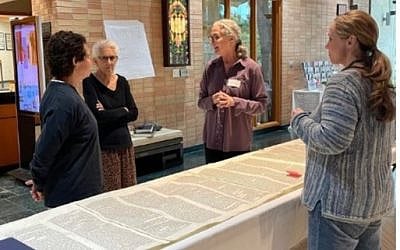
At Temple B’nai Israel, Shabbat is a special and sacred time for the community to come together through prayer, learning, music, and fellowship. The congregation emphasizes making Shabbat distinct from the rest of the week through meaningful programming and worship services.
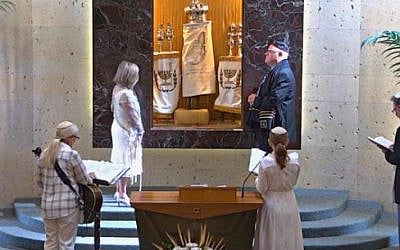
Weekly Shabbat services are held every Friday evening at 7:00 PM and serve as a meaningful highlight of the week at the Temple. The service typically lasts between 75 and 90 minutes and includes candle lighting, musical Kabbalat Shabbat, evening prayers, and a brief Torah service featuring a d’var Torah, or sermon. Through prayer, music, and reflection, the service provides an opportunity for members of the congregation to welcome Shabbat together and connect with one another as a community.
Preparing for the High Holy Days, Days of Awe, begins during the month of Elul, an important time of spiritual preparation at Temple B’nai Israel. During this month, the congregation uses Mishkan HaLev during Friday evening services, sounds the shofar, and offers educational and family programs focused on the upcoming High Holy Days. Before Rosh HaShanah, the community gathers for a S’lichot service to begin prayers of repentance and spiritual preparation.
Rosh HaShanah, the beginning of the Jewish year, is a time for both celebration and reflection. Temple B’nai Israel holds evening and morning services featuring the shofar, teachings from the Rabbi, prayer, and music. The Temple also offers family worship and an outdoor Tashlich service, along with community celebrations such as the Sisterhood’s Best in the West Oneg and the Brotherhood’s Covered Dish Luncheon.
Yom Kippur, the Day of Atonement, is observed through fasting, repentance, and prayer. The holiday begins with Kol Nidrei and continues with morning and afternoon services, Yizkor, educational opportunities, and the closing N’eilah service.
Sukkot and Sh’mini Atzeret/Simchat Torah are joyful holidays that bring the community together for celebrations in the Sukkah, dancing with the Torah, and opportunities to see the Temple’s five Torah scrolls. The festival concludes with a Yizkor service and the dedication of new memorial plaques.
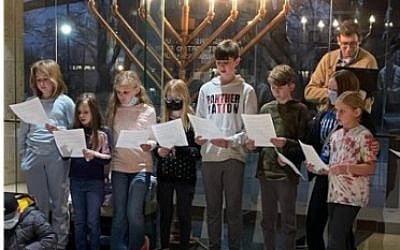
Holidays and festivals at Temple B’nai Israel are times for tradition, prayer, music, learning, and community. The Temple offers special worship services, including festival minyanim, evening services, and Yizkor prayers on several major holidays.
Festival programs provide opportunities to celebrate Jewish traditions and connect with others. Activities include Hanukkah celebrations, Sukkot gatherings, Passover Seders, Shavuot programs, Purim events, and Simchat Torah activities.
Holidays at home are also supported through resources and activities that help members continue Jewish traditions beyond the Temple, including Hanukkah candle-lighting, Passover preparation, and Purim gift-giving and charity.
Temple B’nai Israel recognizes lifecycle events as important moments in Jewish life, offering guidance and support from birth through the end of life. For births, Rabbi Harris officiates at baby namings and Brit Milah. B’nai Mitzvah students prepare through Religious and Hebrew School before working with the Rabbi and Hebrew tutor to read Torah and lead worship. The Temple also celebrates educational milestones through consecration and confirmation.
For marriage, Rabbi Harris officiates weddings for Temple members and offers premarital counseling, with the Chapel, Sanctuary, and Temple grounds available for ceremonies. Those interested in conversion are welcomed to participate in Temple services and programs, complete an Introduction to Judaism course, and study with the Rabbi. At the end of life, the Temple provides support with funeral arrangements and maintains sections of two cemeteries and memorial plaques within the Temple.
Education
Temple B’nai Israel values Torah Lishmah, or lifelong learning, and offers a variety of adult education opportunities through classes, travel, and special programs. Meaning and Mussar takes place on the first Saturday of each month, when Rabbi Harris leads a discussion on the weekly Haftarah and Mussar, focusing on applying Jewish ethics to everyday life.
The Temple also offers Introduction to Judaism, which explores Reform Jewish beliefs, traditions, history, texts, and community, as well as Adult Hebrew courses for Temple members. Throughout the year, special educational programs connected to festivals, holidays, and community events provide additional opportunities for adults to learn and engage with Jewish life.
Temple B’nai Israel’s Sunday School helps students develop knowledge of Jewish texts, mitzvot, history, traditions, values, and culture through engaging, hands-on learning. The program serves students from Pre-K through 10th grade and encourages a love of Judaism, a sense of belonging, and connection to the community.
The program provides age-appropriate learning through projects, Jewish texts, discussions, music, art, stories, games, and crafts. Younger students explore Judaism through play and creative activities, while older students are encouraged to ask questions, discuss texts, and connect Jewish teachings to their own lives. Students also participate in community service projects and events throughout the year.
The Sunday School curriculum follows a three-year cycle that focuses on Torah, Nevi’im (Prophets), and Ketuvim (Writings). Through these texts, students explore Torah, Avodah (worship), and G’milut Chasadim (acts of loving-kindness), while learning about biblical figures, prayer, mitzvot, holidays, Mussar, Jewish music, and other important aspects of Jewish life.
Temple B’nai Israel’s Hebrew School develops students’ Hebrew decoding skills, vocabulary, and familiarity with the siddur while using Hebrew as a way to explore Jewish holidays, texts, culture, and prayer. Meeting every Sunday afternoon, the program serves students from 3rd grade through B’nai Mitzvah and prepares them for meaningful participation in Jewish prayer and observance. Through interactive lessons, games, and practice, students build Hebrew skills while learning the meaning behind the prayers they encounter in the siddur.
Temple B’nai Israel’s Erna Krouch Preschool is the oldest continuously operating preschool in Oklahoma City. The preschool moved to its current location in 1955 and was named after Erna Krouch, who dreamed of creating a welcoming environment for children of all races, faiths, and backgrounds. The preschool continues this tradition by providing a safe and nurturing environment that encourages creativity, exploration, confidence, and self-esteem. Serving children ages 2 through Pre-K, the program first welcomes children from the Jewish community before opening enrollment to the wider community on a first-come, first-served basis.
Library
Temple B’nai Israel’s Library supports learners of all ages with more than 5,000 titles across its collections of books, DVDs, and periodicals. Temple members can visit the library or browse its online catalog, with most materials available for checkout, including children’s and young adult books, novels, and nonfiction.
The library also has an extensive reference collection, including the Talmud Bavli, Zohar, Mishna, Mishneh Torah, Encyclopedia Judaica, TaNaKh translations, Hebrew dictionaries, and commentaries. These materials are available for in-library use only. The adjacent children’s library offers age-appropriate materials from birth through B’nai Mitzvah, including collections on Jewish holidays, Hebrew, Israel, and more.
Community
Temple B’nai Israel’s Brotherhood supports members and the wider Temple community through a variety of social, religious, and community events throughout the year. Activities include Brotherhood breakfasts, Brotherhood Shabbat, the Thanksgiving Turkey Bowl, Super Bowl Pizza Party, golf tournaments, and family events. The Brotherhood also provides gifts to B’nai Mitzvah students and participates in community mitzvah projects.
Temple B’nai Israel’s Sisterhood, founded in 1906, brings women together through service, social events, and community involvement. Over the years, Sisterhood projects such as the mitzvah committee, Shabbat dinners, and the Rosh HaShanah “Best in the West” Oneg have become important parts of Temple life. Sisterhood also supports the Temple through its Gift Shop, scholarships, student gifts, charitable giving, and two dedicated funds, while creating opportunities for friendship and connection.
Youth and family programs at Temple B’nai Israel provide opportunities for children and families to worship, learn, celebrate, and build community together. Programs include monthly Torah Tots, family worship during the High Holy Days, holiday celebrations, and community events such as First Fridays for Families, Jr. OKATY, and OKATY. Students from PreK through 10th grade can participate in Sunday School, while older students can join Hebrew School and youth groups such as Jr. OKATY for grades 6 to 8 and OKATY for grades 9 to 12.
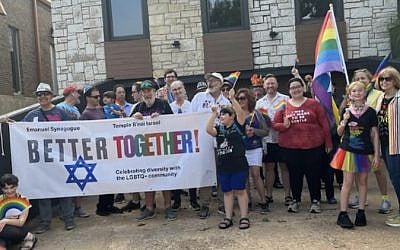
The Social Action Committee at Temple B’nai Israel engages in projects that support the local community and promote Jewish values. Guided by the principle of Tikkun Olam, or repairing the world, the committee participates in service projects, community and interfaith events, and efforts that provide time and resources to help create a more just and compassionate world.
Historical Backgrounds
Jewish settlers began arriving in Oklahoma and Indian Territory as early as 1875.
In 1889 the United States had two presidents, Grover Cleveland until March 4 and Benjamin Harrison afterward, while the number of states increased from 38 to 42 by the end of the year. The country was rapidly industrializing and expanding westward, with growing populations, new statehoods, and major changes taking place across the nation.
It was on April 22, 1889, thousands of settlers rushed into the newly opened Oklahoma Territory to claim homestead land, marking a major turning point in the development of the region. By August 1889, Oklahoma City had a population of approximately 4,000, including ten Jewish men.
Fourteen years later, in May 1903, the Reform congregation Temple B’nai Israel was established. Rabbi Joseph Blatt assumed leadership in 1906 and served the congregation for 40 years, until his retirement in 1946.
The cornerstone of Temple B’nai Israel’s first house of worship at 50 Broadway Circle was laid in 1907, the same year Oklahoma became the 46th state. By 1925, membership had grown to more than 160 families, and the building had become overcrowded. In 1926, construction began on an adjoining Temple Center, which provided space for the Sunday School, kitchen, offices, lounge, and auditorium. The following years brought major challenges as the Great Depression and Dust Bowl affected Oklahoma. At the same time, the discovery of oil in the Oklahoma City and Seminole fields transformed the state’s economy.
World War II also brought significant changes to the Temple community. After the sinking of the USS Oklahoma at Pearl Harbor in 1941, many members of the Temple Men’s Club entered military service. During this period, Tinker Field became a major aircraft repair facility, while Oklahoma City continued to grow. In 1946, Rabbi Joseph Levenson became Temple B’nai Israel’s leader following Rabbi Blatt’s death. During Rabbi Levenson’s 30 years of service, the Temple bulletin was established, Bar Mitzvah was approved, and the youth group joined NFTY.
As membership reached 250 families, the congregation needed a larger facility. Land was donated by Erna and Julius Krouch, and construction began at 4901 North Pennsylvania in 1954. The new Temple was dedicated in 1955, with additional Sunday School rooms and Krouch Hall added in 1962. After a tornado severely damaged the building in 1970, the Temple was rebuilt with support from local churches.
In 1976, Rabbi Levenson retired and Rabbi A. David Packman became spiritual leader. During his 28 years of service, the Temple expanded its educational, youth, and interfaith programs and developed long-standing partnerships with organizations such as the NAACP. Membership grew to more than 400 families, and the Temple facilities continued to be modernized and expanded. Rabbi Packman was succeeded by Rabbi Barry Cohen in 2004, who emphasized youth involvement in the congregation and Reform movement. On July 1, 2012, Rabbi Vered Harris became the Temple’s fifth rabbi, continuing its long tradition of religious leadership and community involvement.
Today, Temple B’nai Israel continues to build on more than a century of Jewish life in Oklahoma City. From its early beginnings in 1903 to its current programs, worship, education, and community involvement, the Temple has remained a place where Jewish traditions are preserved while adapting to the needs of each generation. Its history reflects not only the growth of the congregation, but also its lasting commitment to faith, learning, community, and service. As Temple B’nai Israel looks toward the future, it continues to welcome new generations and strengthen its role in the Jewish and broader Oklahoma City community.
Contact Information:
Temple B’nai Israel, 4901 N Pennsylvania Ave, Oklahoma City, OK 73112
Phone: (405) 848-0965
Email: tbi@thetempleokc.org
Website: https://www.thetempleokc.org/