

Mathematics Teaching Professor, Author
Temple Emanu-El-Beth Sholom, Quebec, the oldest reform synagogue in Canada
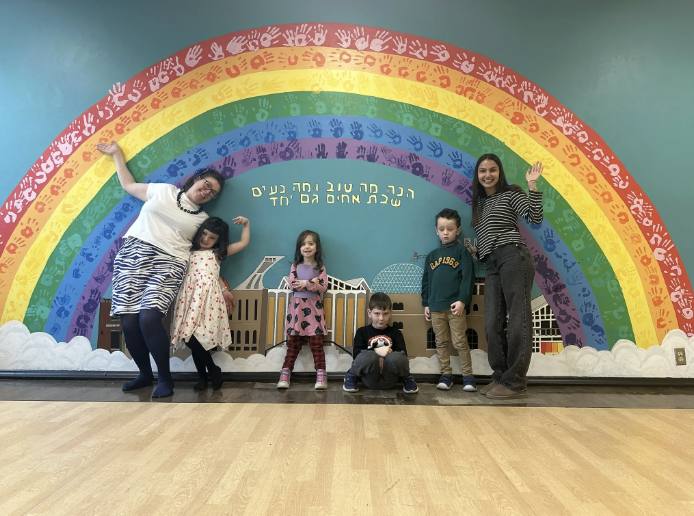
Torah School (Source: Temple Emanu-El-Beth Sholom, West Westmount, Quebec Canada)
Located in Westmount, Quebec, Temple Emanu-El-Beth Sholom holds the distinction of being the oldest Reform synagogue in Canada, dating back to 1883. Today, the temple remains vibrant and dedicated to drawing on Jewish wisdom to nourish a deeply spiritual, educational, and cultural community. Guided by a dynamic, progressive philosophy, the congregation embraces change across generations while valuing accessibility, diversity, and complete inclusion for Jews by birth, Jews by choice, and all those who support them.
I would like to thank Executive Director Chad Lubelsky for his support of this article.
Synagogue
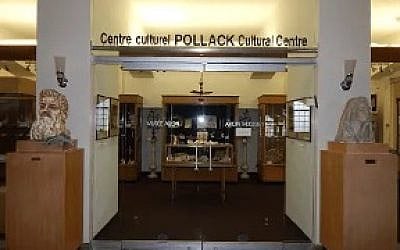
Following a 1957 fire, Max W. Roth redesigned Temple Emanu-El-Beth Sholom in 1959 as a modernist masterpiece, replacing a 1911 Byzantine Revival structure. The new, unified design features a steel-framed, folded-plate roof echoing biblical tents, with clerestory windows illuminating the sanctuary and a layout integrating spaces for prayer, learning, and gathering.
Culture and Religious Life
Temple Emanu-El-Beth Sholom fosters a deeply interconnected community through a rich variety of engagement opportunities tailored for all ages and backgrounds. Beyond its foundational Introduction to Judaism courses and progressive Torah School, the temple hosts an active Youth Group (MoFTY) and a dedicated Working Groups. Deeply committed to the value of Tikkun Olam (repairing the world), the congregation also channels its passion for civic duty through energetic social action and volunteering committees, transforming the synagogue into a central hub for local outreach and meaningful community service.
Temple’s Aron Museum
The Aron Museum at Temple Emanu-El-Beth Sholom houses one of Canada’s most significant collections of Judaica, featuring over 300 outstanding examples of global ceremonial art. Founded on May 22, 1953, with a foundational gift of five rare artifacts from Anna and Josef Aron, including a late 19th-century Rothschild family silver Hanukkah menorah, an 1866 Viennese Passover Seder tray, a 19th-century German circumcision cup, and two 19th-century Kurdistani Kabbalistic amulets, the museum has grown through continuous legacy and community support.
Today, its diverse exhibit spans centuries of Jewish heritage, showcasing exceptional pieces such as a parchment Megillat Esther from Istanbul, Yemeni shofars, a Bessarabian silver shiviti, a 1794 Amsterdam Passover Haggadah, and two 4th-century C.E. Roman-style glass vials discovered in Judea.
Torah School
The Torah School at Temple Emanu-El-Beth Sholom provides a progressive, multi-stage education that builds Jewish identity, literacy, and community from early childhood through adolescence. The program starts with Junior Torah School (ages 4–5), introducing heritage through music, arts, and stories, before transitioning into Grades 1–6, where students explore Bible history, Jewish values, and sequential Hebrew reading.
Grade 7 transitions into the comprehensive B. Mitzvah program, which emphasizes communal responsibility and collaborative Torah study over simple ceremonial rehearsal, while offering an accelerated “Mechina” class for Grade 6 newcomers. Post-B. Mitzvah students in Grades 8–9 remain deeply engaged through the MoFTY youth group and a two-year Confirmation program focused on ethics and modern identity, ultimately culminating in a Shavuot ceremony where they transition into active classroom teaching assistants
Adult Education
Beyond its religious and educational programming, Temple Emanu-El-Beth Sholom functions as a diverse, fully inclusive community that warmly welcomes individuals of all ages, abilities, sexual orientations, and family configurations. Guided by literary recommendations from Rabbi Grushcow, the temple offers robust adult education, including customized Modern Hebrew courses that build conversational fluency through Israeli music, media, and current events.
It also hosts a 12-week Introduction to Judaism course, which serves as both a survey of Jewish history, practice, and belief for Jews by birth, and a foundational requirement for those navigating major lifecycle milestones, such as interfaith marriage, conversions, baby namings, weddings, and mourning rituals, under the temple’s inclusive auspices
Historical Background
In 1760, Montreal was a walled colonial fur-trading hub that was abruptly transformed into a British military territory, marking the pivotal end of French rule in North America. Enclosed by stone fortifications, the tight-knit grid of wooden and stone buildings in what is now Old Montreal was home to a dense population of about 5,000 residents.
It was during these times, the early 1760s, that Jewish merchants and soldiers attached to the British army arrived in the early 1760s, including Aaron Hart, who is widely considered the father of Canadian Jewry. By 1768, these early pioneers formally established Canada’s first Jewish congregation, the Spanish and Portuguese Congregation Shearith Israel, though the local community remained relatively small until massive waves of Eastern European immigrants fleeing persecution arrived in the 1880s.
The origins of the Temple Emanu-El-Beth Sholom congregation in West Westmount, Quebec harkens date back to 1882, when progressive trustees broke away from Montreal’s only two existing Orthodox synagogues, Shearith Israel and the St. Constant Street Synagogue (now Shaar Hashomayim), to found Temple Emanuel. Driven by the new ideas of Reform” brought from the United States by their first minister, Rabbi Samuel Marks, this historic moment was notable enough to be documented internationally in the May 2, 1884 issue of the Hebrew-language Russian newspaper Hamelitz. After initially gathering at Zion Church’s Albert Hall, the congregation built its first dedicated sanctuary at Cypress and Stanley streets in 1892.
Continued growth led to a new Byzantine Revival style sanctuary in Westmount at Elm and Sherbrooke streets, dedicated in September 1911. Built for $65,000 on land donated by Sir Mortimer Davis, this landmark structure underwent extensive expansion over the decades, adding school facilities to the west in 1941 and the modern “Greater Emanu-El” eastward expansion in 1957. The 1957 expansion doubled the sanctuary size, allowing the temple to occupy the entire block between Wood and Elm avenues.
Tragically, just months after the expansion’s dedication, the original 1911 structure burned to the ground in December 1957. Reconstruction began immediately, resulting in a fully modern facility completed in 1959 and officially dedicated on April 22, 1960, under the leadership of Dr. Harry J. Stern.
The community expanded further when large groups of Holocaust survivors arrived in the late 1940s, followed by French-speaking Mizrahi and Sephardic Jews from North Africa in the mid-20th century. To serve this growing liberal Jewish population, Temple Beth Sholom (formed in 1953) merged with Temple Emanu-El in 1980, creating the present-day Temple Emanu-El-Beth Sholom congregation.
Temple Emanu-El-Beth Sholom of Westmount, Quebec, as Canada’s oldest Reform congregation, serves as a vibrant, enduring testament to the evolution of Canadian Reform Judaism through its history of adaptation, diverse community integration, and dedication to social justice. By blending rich heritage with inclusive, modern practice, the institution continues to serve as a spiritual home committed to Tikkun Olam.
Contact Information:
Temple Emanu-El-Beth Sholom, 4100 Sherbrooke Street West Westmount, Quebec H3Z 1A5
Phone: 514-937-3575
Email: support@templemontreal.ca
Website: https://templemontreal.ca/