


Mathematics Teaching Professor, Author
Temple Emanuel of Gastonia, NC: A Historic Jewish Congregation in the Carolinas
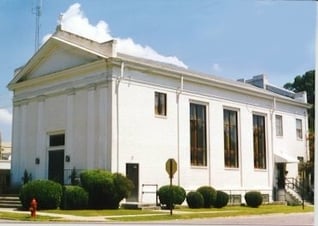
Temple Emanuel, Gastonia, North Carolina (Source: Temple Emanuel, Gastonia, North Carolina)
Founded in 1913 and located at 320 South Street in Gastonia, North Carolina, Temple Emanuel is one of the oldest synagogues in the South outside a major metropolitan area. It stands as a lasting symbol of Jewish life, resilience, and community in the region.
Temple Emanuel extends an unconditional welcome to all, regardless of Jewish background or level of observance. The congregation embraces diversity, including interfaith families, people of color, and Jews from Hispanic and other cultural backgrounds, and remains committed to supporting members who are experiencing economic hardship.
Religious Life
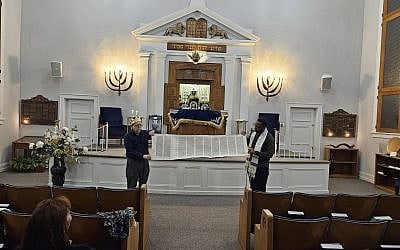
Temple Emanuel also hosts a variety of meaningful religious events throughout the year, including a Sukkot celebration, Hanukkah party, Tu B’Shevat Seder, Purim festivities in Charlotte, a Shabbaton weekend, and a community Pesach Seder.
Among the Religious School’s most cherished experiences are its seasonal gatherings and off-site programs, such as a Sukkot family dinner under the sukkah, a Hanukkah celebration, Tu B’Shevat Seder, Purim party at the JCC in Charlotte and Pesach Seder.
Culture

The synagogue’s Religious School has earned a strong reputation and is a key reason many new families are joining Temple Emanuel. Students thrive in a nurturing, engaging environment where they learn the Hebrew alphabet, develop reading and writing skills, and prepare for Bar and Bat Mitzvah. Younger students begin with the Aleph-Bet, vowels, and foundational Hebrew literacy, while more advanced students build fluency and confidence in reading and writing Hebrew.
Along the way, students study Torah and Haftarah tropes, learning to chant their parshas as well as additional Friday night and Saturday morning prayers they may choose to lead. A dedicated tutor works individually with all Bar and Bat Mitzvah students before or after school for a full year leading up to their B’nai Mitzvah.
The program fosters an authentic and joyous atmosphere where students are encouraged to discover their Jewish identity, feel inspired in Hebrew and Tefillah, and experience a deep connection to Jewish traditions, customs, culture, and holidays within a warm and supportive community.
Historical Background
Nine years after the end of the Civil War, in 1874, during President Ulysses S. Grant’s administration, the United States was navigating the final years of Reconstruction alongside the economic strain of the Panic of 1873. The nation was also experiencing rapid change, marked by western expansion, environmental challenges, and major cultural and political shifts.
That same year, Atlanta newspaper editor Henry W. Grady introduced the term “New South,” urging the region to move beyond its agrarian past and embrace a future built on industry, including factories, mills, and mining. Just a few years later, in 1877, Gastonia was incorporated. Its location at the junction of two major railroads positioned it for growth, and it soon developed into a regional manufacturing center.
During the late 19th century, Jewish families began settling in Gastonia. Among them was David Lebovitz, a 19 year old immigrant who arrived from Russia via Baltimore. In 1892, he opened a dry goods store, later marrying Lena Schultz in 1900. Together they raised six daughters, and their eldest, Tena, born in 1901, became the first Jewish child born in Gastonia.
In the early 1900s, more Jewish families were drawn to Gastonia by its growing textile industry. Some became mill owners, while others established themselves as merchants, contributing to the city’s economic and social fabric.
At first, Jewish residents had no local synagogue and traveled to Charlotte for services. As the community grew, they began gathering in private homes, and by 1910, services were being held in rented spaces such as empty storefronts and public halls.
In 1912, David Lebovitz and Harry Schneider began raising funds to establish a permanent synagogue, laying the groundwork for what would become Temple Emanuel.
Which brings us to 1913.
In 1913, under President Woodrow Wilson, the United States was a rapidly modernizing nation entering the Progressive Era, marked by accelerating industrial growth, urban expansion, and major technological change. North Carolina was also transforming, shifting from an agrarian economy toward industrialization, while Gastonia was emerging as a booming railroad junction and textile center, soon to be known as the “Combed Yarn Capital of the World.”
It was that year, 1913, that amid this period of rapid change, the Jewish families of Gastonia formally organized the Hebrew Congregation of Gastonia, marking a defining milestone in the community’s development. Led by early community figures such as David Lebovitz, the congregation’s founding reflected both the growth of Jewish life in the region and the need for a permanent spiritual home. This organization became the foundation of what would later be known as Temple Emanuel.
Over the next decade, the Jewish population of Gastonia continued to grow, strengthening the congregation and its communal life. In 1929, Temple Emanuel dedicated its synagogue building on South Street, establishing a permanent home and a visible symbol of Jewish presence in the city. The building, equal in size and stature to established local churches and proudly topped by a Star of David, stood as a statement of Jewish continuity and resilience during an era marked by widespread antisemitism in parts of American society.
Almost as soon as the building was completed, the Great Depression began, bringing severe economic hardship. The congregation faced the real possibility of losing its home, but the synagogue was preserved through the determination of pioneering Jewish families who contributed their time, labor, and limited financial resources to sustain it through those difficult years.
On February 11, 1958, Temple Emanuel was targeted in a violent attack when unidentified assailants planted 30 sticks of dynamite at the synagogue. The bombing attempt failed when the fuse burned out prematurely, preventing destruction. This incident was part of a broader pattern of synagogue bombings across the American South in the 1950s carried out by white supremacists targeting Jewish institutions associated with support for civil rights and racial integration.
Today, Temple Emanuel in Gastonia, North Carolina, remains a vibrant and growing congregation. More than a historic institution, it continues as a thriving Southern Jewish community with a rich past and a dynamic future.
Contact Information:
Temple Emanuel, 320 S, South St., Gastonia, North Carolina 28052
Phone: (704) 865-1541
Email: info@tegastonia.org
Website: https://tegastonia.org/