
Mathematics Teaching Professor, Author
Temple Israel of Paducah: A Legacy of Jewish Life in Kentucky
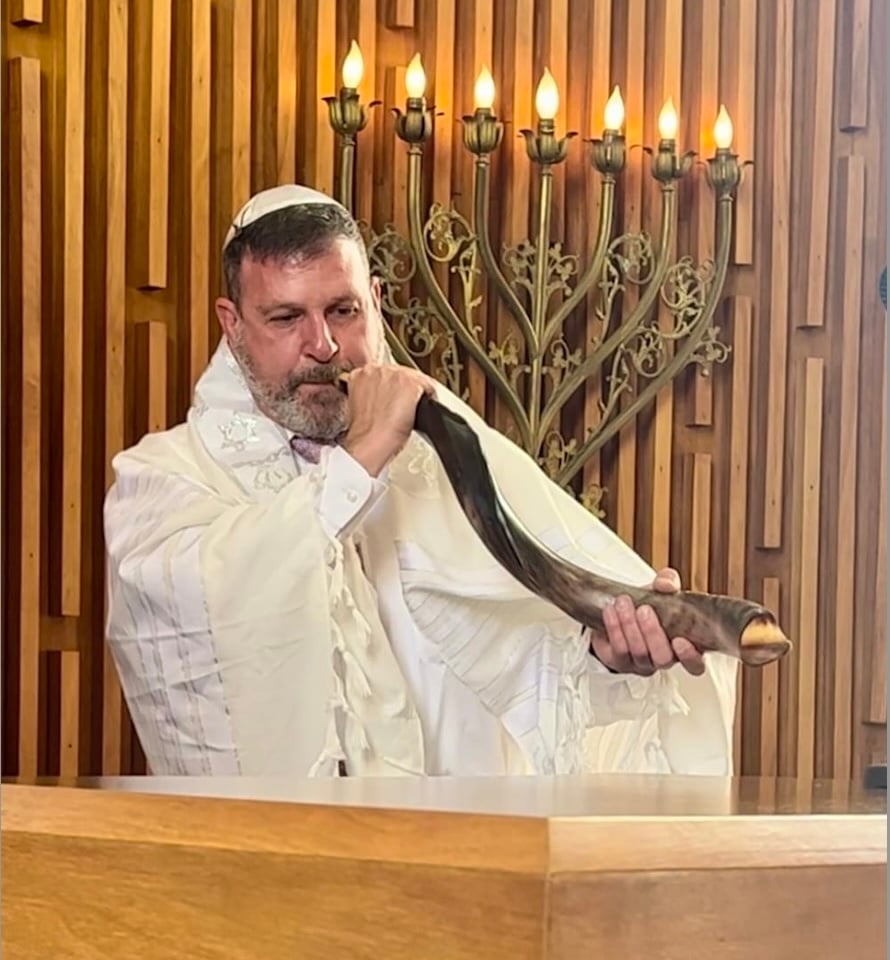
Yom Kippur Concluding Service, September 2023 (Source: Temple Israel of Paducah, Kentucky)
Temple Israel is a Reform Jewish congregation and synagogue located in Paducah, Kentucky, with a history dating back to the nineteenth century. Its membership includes families with deep roots in the community as well as newer residents, reflecting the congregation’s enduring role in the region’s religious and cultural life.
Over the past ten years, Temple Israel has maintained a steady membership of approximately 30 households. Although it does not have a permanent rabbi, student rabbis from Hebrew Union College in Cincinnati supported the congregation between 1988 through 2024, leading worship services and providing religious education. More recently, part-time rabbis and a lay service leader have been involved.
Although Temple Israel is a Reform synagogue, its members also come from Conservative and Orthodox backgrounds, thus offering a range of Jewish traditions and practices. Throughout its history, religious programs, and community involvement, Temple Israel continues to preserve Jewish heritage and foster interfaith connections across western Kentucky and neighboring states.
I would like to thank the esteemed Fred Allen for his guidance.
Synagogue
Temple Israel of Paducah, Kentucky, has a history dating to the nineteenth century. In 1893, the congregation changed its name from Bene Yeshurum to Temple Israel and constructed an elaborate Moorish Revival-style synagogue at the corner of Broadway and Seventh Street. Designed by architect Brinton B. Davis, who later designed the original buildings of Western Kentucky University, the synagogue featured a central tower flanked by two minarets, each topped with a large onion dome. The domes were removed in the early 1930s. Other distinctive architectural features included an oriel window on the front of the tower, three tiers of horseshoe-shaped windows, and a tripartite entrance with columns and horseshoe arches, topped by another tier of horseshoe windows. The historic Broadway synagogue was demolished in 1963.
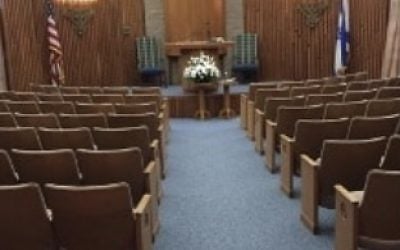
Today, Temple Israel serves the Jewish community of Paducah through its worship services, educational programs, and community activities. Its facilities include a sanctuary with seating for 100 people, a social hall, religious school classrooms, and a lounge. The congregation supported full-time rabbis until 1992. Since then, it has welcomed student rabbis from Hebrew Union College in Cincinnati to lead Shabbat and holiday services, oversee life-cycle events, conduct adult Torah study, offer children’s programs, and assist individuals pursuing conversion to Judaism. Through these programs and traditions, Temple Israel continues to sustain Jewish religious life and community connections in Paducah.
Religious Events
Temple Israel welcomes members and friends of the congregation to participate in its religious services, educational programs, and community events throughout the year. The congregation observes Shabbat and celebrates major Jewish holidays, including Rosh Hashanah, Yom Kippur, Sukkot, Hanukkah, Purim, and Passover. Special gatherings, such as the Hanukkah party and Passover Seder, provide opportunities for congregants and friends to share traditions, strengthen community bonds, and celebrate Jewish faith and heritage. Through its worship services and holiday observances, Temple Israel continues to foster a welcoming environment for Jewish religious and cultural life in Paducah.
Learning
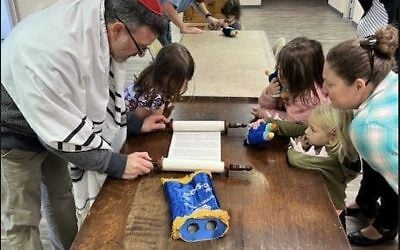
Temple Israel of Paducah, Kentucky, offers a variety of educational opportunities that encourage congregants to deepen their understanding of Jewish faith, scripture, and traditions. The congregation provides a weekly Torah commentary inspired by the d’var Torah, meaning “a word of Torah,” a talk or essay based on the parashah, or weekly Torah portion. Resources include Student Rabbi, My Jewish Learning, On the Other Hand, URJ Torah Study, and Women of Reform Judaism.
Adult education at Temple Israel includes Torah Study, in which participants examine the parashat ha-shavua, or weekly Torah portion, and compare scriptural texts with classical and contemporary commentaries. The congregation also offers an Introduction to Judaism class designed for individuals considering conversion, those in interfaith relationships, and people interested in reconnecting with their Jewish heritage. In addition, Temple Israel’s Shul School welcomes families with young children on Sunday mornings for activities such as crafts, songs, stories, and games. Through these programs, Temple Israel promotes lifelong learning and provides opportunities for individuals and families to explore Jewish teachings, traditions, and community life.
Sisterhood
The women of Temple Israel’s Sisterhood have played an essential role in shaping the congregation’s religious, cultural, and community life since its early years in Paducah, Kentucky. Through fundraising efforts, bake sales, musical programs, teas, and the sale of handmade goods, they helped finance the congregation’s houses of worship, support religious education, and provide for the needs of Jewish families. By 1914, the women had formally organized as the Sisterhood and joined the Federation of Temple Sisterhoods, continuing their commitment to the congregation and the wider community.
The Sisterhood remained instrumental in the development of Temple Israel’s new home at 28th Street and Monroe Street, pledging to furnish the kitchen, provide food-service equipment, and help complete the auditorium. Its members also supported holiday celebrations, Shabbat gatherings, community dinners, and charitable initiatives. On April 7, 1963, the congregation’s Torahs were carried into the new building, marking an important milestone in Temple Israel’s history. Through generations of dedication, the Sisterhood has helped preserve Jewish traditions, strengthen congregational life, and sustain Temple Israel’s lasting presence in Paducah.
Cemetery
The Temple Israel Jewish Cemetery, located on Highway 45 (Lone Oak Road), approximately three miles south of Paducah, Kentucky, toward Mayfield, has served the local Jewish community since the 1850s. With more than 400 gravesites, the well-maintained cemetery is an important historical landmark preserving the legacy of generations of Jewish residents in western Kentucky and surrounding communities. Enclosed by a low wrought-iron fence, it features closely arranged graves, large monuments, and historic mausoleums, including the Friedman-Keiler mausoleum, reflecting the family’s economic prominence.
The cemetery’s gravestones offer insight into the heritage of early Jewish settlers, many of whom came from southern Germany or neighboring communities. Older markers feature inscriptions in German, Hebrew, and Yiddish, along with Victorian decorative motifs such as sleeping lambs. Around 1900, some families built large mausoleums, while others chose simpler, flat stone markers engraved with names and dates. More recent headstones incorporate Hebrew inscriptions and Jewish symbols, illustrating changing burial traditions while preserving the memory of Paducah’s Jewish community across generations.
Historical Backgrounds
Jewish settlers first arrived in Kentucky in the early nineteenth century, with records indicating the presence of individual Jewish residents as early as 1814. Among the earliest were two brothers named Heymann, or Hyman, who reportedly came from Berlin. Other early Jewish settlers included Benjamin Gratz, who moved to Lexington in 1819, and Henry Hyman, who opened a tavern in Louisville in 1826. These early arrivals helped establish the foundations of Jewish life in Kentucky, paving the way for the growth of Jewish communities, congregations, and cultural institutions throughout the state.
Jewish settlers first arrived in Paducah, Kentucky, during the 1840s. Among the earliest Jewish residents were Morris Uri, Abraham Uri, D. Lowenstein, and Leopold Klaw, who established small merchandise stores along Front Street. The arrival of the railroad in the 1850s encouraged further Jewish immigration to the area, as newcomers pursued opportunities in river trade and retail. By 1859, Jewish residents had established 11 Jewish-owned businesses, reflecting the growing presence of the community in Paducah’s commercial life.
That same year, in 1859, the Jewish community established the Chevra Yeshurun Burial Society, securing a dedicated burial ground for Jewish residents and their descendants. The society marked an important milestone in the development of a permanent Jewish community in Paducah, demonstrating the settlers’ commitment to preserving their religious traditions and providing for future generations. These early efforts laid the foundation for the establishment of a synagogue and the continued growth of Jewish religious and communal life in the city.
The Civil War disrupted the religious life of Paducah’s Jewish community, and although the Chevra Yeshurum Burial Society was founded in 1859, it was not formally chartered until 1864.
Which brings us to 1864.
In 1864, the United States was in the fourth year of the American Civil War, a conflict that deeply divided the nation. Abraham Lincoln served as president, while 36 states were recognized as part of the Union, although 11 Southern states had seceded and formed the Confederate States of America. These Confederate states did not participate in the 1864 presidential election. The year was marked by some of the war’s bloodiest battles, including the Overland Campaign in Virginia, in which Union General Ulysses S. Grant led his forces against Confederate General Robert E. Lee. Amid widespread military conflict and political uncertainty, communities throughout the country continued to navigate the social and economic consequences of the war.
In 1864, Kentucky was a deeply divided border state during the American Civil War, experiencing guerrilla warfare, political tensions, and significant social changes. Although Kentucky remained in the Union, divided loyalties among its residents contributed to ongoing conflict and instability. That year, enslaved African American men in Kentucky were permitted to enlist in the Union Army under federal military policies, with military service offering a path to freedom. These developments transformed local communities and contributed to the broader struggle over slavery, emancipation, and the future of the United States.
In 1864, Paducah, Kentucky, was an important Union military stronghold on the Ohio River during the American Civil War. On March 25, 1864, Confederate Major General Nathan Bedford Forrest led a cavalry raid on the city as part of a campaign to disrupt Union operations and capture military supplies. Union forces, including African American troops, defended the city against the Confederate attack. Although Confederate forces achieved success during the raid, Union troops maintained control of key defensive positions. The Battle of Paducah reflected the strategic importance of western Kentucky and the intense military conflict that continued to affect the region throughout the war.
The organized Jewish community in Paducah, Kentucky, dates back to that year 1864, when the Chevra Yeshurum Burial Society was formally chartered to serve the community’s burial needs. In 1868, local Jews began gathering for High Holiday services on the third floor of Mangold Livingston’s dry goods store, inviting a traveling religious reader to lead prayers and auctioning seats to cover his expenses. These gatherings continued through 1870. That same year, the establishment of a B’nai B’rith lodge with 27 charter members helped inspire the formation of a permanent Jewish congregation.
In 1871, the burial society amended its charter to include religious worship, establishing Kehillah Kodesh Bene Yeshurum, meaning “Holy Community of the People of Righteousness.” Under its first president, Meyer Lieber, the congregation purchased land on South Fifth Street and built a modest two-story frame synagogue, dedicated in September 1871. The ceremony featured a Torah procession attended by Mayor J. W. Sauner, city council members, and other local residents. Leon Leopold became the congregation’s first spiritual leader and Sunday school teacher. Although members debated traditional and Reform practices, the congregation adopted mixed-gender seating, an organ, and a mixed-gender choir, reflecting its growing Reform identity.
In 1872, six children participated in its first confirmation ceremony. The following year, the congregation became a charter member of the Union of American Hebrew Congregations, now known as the Union for Reform Judaism, strengthening its connection to the broader Reform Jewish movement.
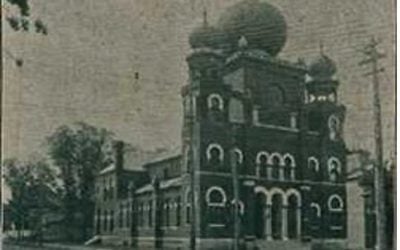
In 1893, the congregation constructed a new synagogue at the southeast corner of Seventh Street and Broadway in Paducah, Kentucky, and adopted the name Temple Israel.
By 1894, Paducah’s Jewish community had established a strong presence in the city’s commercial life, with at least 31 Jewish-owned businesses operating throughout the area. Approximately one-third specialized in clothing and dry goods, while others contributed to the local economy through manufacturing, producing items such as cigars, mineral water, candy, saddles, and harnesses. Three additional businesses operated as grocery or confectionery stores, reflecting the diversity of Jewish entrepreneurship in Paducah during the late nineteenth century.
By 1918, all three of Paducah’s whiskey distilleries were Jewish-owned, but Prohibition led to the closure of two, shifting Jewish business activity toward clothing and dry goods. Jewish residents also shaped civic life, with Govriel Rosenthal helping establish Paducah Junior College and businessman Sam Sloan earning the title “Mr. Paducah.”
After World War II, Jewish-owned stores such as Finkel’s Fair Store remained prominent, but suburban shopping and migration contributed to business closures and a declining Jewish population. Despite these challenges, Temple Israel has continued to serve the community through volunteer leadership, student rabbis, religious education, charitable work, and interfaith partnerships, preserving Jewish heritage in Paducah.
The original Temple Israel synagogue, built in 1893 at the southeast corner of Seventh Street and Broadway in Paducah that served the congregation for nearly 70 years was replaced in May of 1963 by a new synagogue at the southeast corner of Madison Street and Joe Clifton Drive. At the time, the congregation had approximately 75 members, including families and individuals, and a full-time rabbi.
After more than 130 years, Temple Israel of Paducah, Kentucky, remains a vital presence in the region, preserving its Jewish heritage and traditions. Serving members across western Kentucky and neighboring states, the congregation continues to provide opportunities for worship, education, and community engagement.
Looking ahead, Temple Israel strives to become a regional center for Reform Judaism, sustaining its synagogue and cemetery while expanding membership and religious programming. Through volunteer leadership, interfaith partnerships, Holocaust education, and efforts to combat antisemitism, the congregation remains committed to preserving its legacy and ensuring a vibrant future for Jewish life in the region.
Contact Information:
Temple Israel, 330 Joe Clifton Drive, Paducah, Kentucky
Phone: 270-442-4104
Email: templeisraelky@gmail.com
Website: https://templeisraelky.org/
Related Topics