

Terror talks: chocolate appeasement.
There was a time in American, where the phrase “We do not negotiate with terrorists” was commonplace. This was not merely a moral stance; it was a deeply considered and carefully crafted strategy. There is nothing good to be gained in negotiating with terrorists. If they were reasonable, they would never resort to terror. Terror is the tool of those who have rejected the rules of civilised society and seek to impose their demands through fear and bloodshed. Negotiating with such people not only grants them legitimacy but sends a clear message: violence works.
Negotiation is fundamentally a process of give and take. Any concession granted to terrorists strengthens them and increases their incentive to continue and escalate terrorism. When a terrorist group sees that hostage-taking, bombings or missile attacks can yield concessions, why would it abandon the method? This simple yet powerful logic underpinned the old American policy that has now been forgotten in some circles.
History is full of lessons showing how negotiations with terrorist dictators ends in disaster. Talks with Saddam Hussein in the 1990s and beyond failed to curb his ambitions; he continued his weapons programs and internal repression until he was finally stopped by military force. Gaddafi, after negotiations and agreements that lulled the West into a false sense of security, remained a supporter of terrorist groups, and his regime collapsed only through revolution and intervention. The most famous example remains Neville Chamberlain’s negotiations with Adolf Hitler at Munich in 1938. The policy of “appeasement,” by granting concessions to Hitler, not only failed to delay war but made it more inevitable and far bloodier. Hitler grew stronger, his ambitions expanded, and Europe paid a heavy price.
For some time now, the United States and some of its allies have been repeating this same historical mistake: negotiating with terrorists. The result? The Islamic Republic has grown bolder. It has expanded its terror network across the Middle East from Hezbollah and Hamas to proxy groups in Yemen and Iraq while accelerating its missile and drone programs. Diplomatic and economic concessions sometimes granted in the name of “diplomacy” have provided the regime with more resources to expand its machinery of terror and domestic repression, including the elimination of opponents through executions under the pretext of wartime conditions.
The same pattern has been repeated in Afghanistan, Syria and Russia. Handing Afghanistan to the Taliban after two decades of military presence brought no stability; instead it created a safe haven for extremist groups that will sooner or later threaten the West. In Syria, giving space with Turkish President Erdogan’s assistance to figures such as Jolani and affiliated groups increases the risk of further Islamisation of the region. In Ukraine, negotiations with Putin’s terror state yielded nothing. These mistakes could ultimately lead to the expansion of radical Islamist influence worldwide and directly threaten Western civilisation. The Taliban and their like are not peaceful partners but carriers of an ideology that rejects freedom, women’s rights and pluralism.
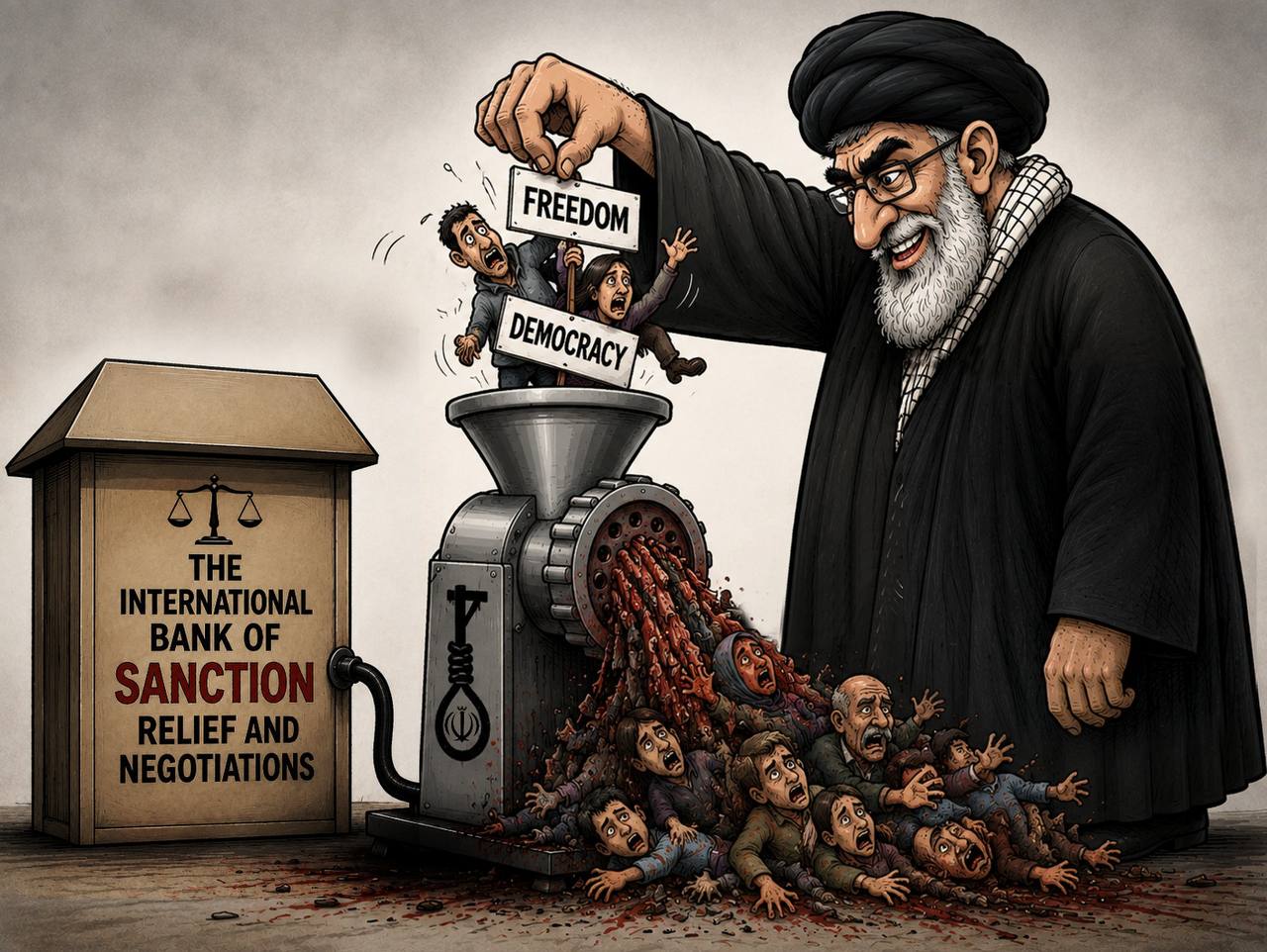
The case of the Islamic Republic is exactly the same. By repeating failed policies and handing out chocolate prizes in the hope of illusory results from negotiations with this terrorist regime, the Western world only strengthens the meat-grinder of killing and terrorism, a machine that, according to President Trump, killed fifty-two thousand Iranians in just two days.
Every round of negotiation is used by the regime for further repression, enrichment and influence in Western societies while it buys time to rebuild itself. Look at the impact of these policies inside the West itself: in the streets of London, New York and Michigan, antisemitism and lawlessness have become the norm.
Protests supported by figures such as Hassan Piker, who openly chant eliminationist slogans, are no longer marginal phenomena. Look at Minnesota and the streets of Europe, where, under the pretext of establishing a Palestinian state, Nazi-style antisemitism is practiced, and Western governments have hesitated in their response. But it does not end with antisemitism.
This trend is eroding the foundations of Western civilisation: values such as freedom of speech, equality before the law, secularism and individual rights. What do you think the consequence of the collapse of Western civilisation would be? A return to the Middle Ages, darkness, superstition, repression and a modern form of cave-dwelling, where power belongs to those who can intimidate and kill the most. A striking example is the proposal to appoint the Islamic Republic as a human-rights official at the United Nations, a regime that lacks legitimacy even inside Iran, that has machine-gunned nearly one hundred thousand people in mass protests and that executes young protesters in public to this day. This policy is exactly like a homeowner calling the police only for the police to arrest the homeowner instead of the thief and then sit down to talk and compromise with the thief. It is no wonder that the Iranian people feel betrayed with some American and Western politicians.
Meanwhile, China and Russia, which stand behind many of these terrorist regimes, are not neutral spectators. When the West weakens itself through fruitless negotiations and concessions and retreats in the face of challenges, they will certainly be the winners. Their economic, military and political influence will expand into the vacuum of Western power and reshape the global order in their favour. The West’s failure against state terrorism is a victory for its strategic rivals.
Conclusion
Some argue, citing the death of soldiers or rising gasoline prices, that we must negotiate with terrorists. This is precisely the real meaning of surrender and losing the war without fighting. This logic loses the war before it begins. Terrorists and their backers understand only the language of force. Negotiating with terrorists is an invitation to continue violence. History has shown that retreating before evil only makes it larger. If the West wishes to preserve its civilisation, it must return to the old principle and to the fundamental values of democracy for which thousands of lives were sacrificed, not to negotiations with terrorists who, by abusing the freedoms of Western societies, act like an autoimmune attack by the body’s own defence system.
It should support the freedom-seeking people who have risen by the millions in Iran for civilisational values and who are genuine supporters of Western democratic and secular principles. Otherwise, every concession, every theatrical dialogue, every illusory hope and every temporary lifting of sanctions only strengthens the meat-grinder of killing inside Iran! The cost will eventually reach the democratic structures of Western countries as well. A powerful confrontation with will and determination, not concessions and temporary sanctions relief, is the way to contain terrorism.