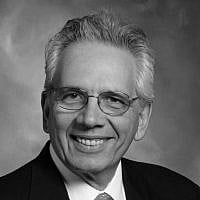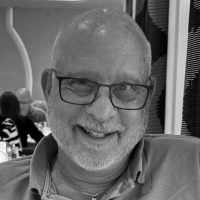
Shaarey Tphiloh's rabbi, sharing views from Israel
The Angel from Worcester
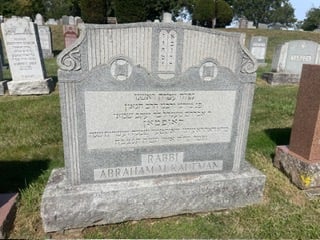
Grave in Worcester of Rabbi Abraham Kaufman, z"l
How prayers at Ancestors’ Graves Opened the Way to an Astonishing Encounter
“Do you mean you met Elijah the Prophet?”
I was giving a sermon at a shtiebel by my brother Baruch’s home in Brooklyn near Bedford-Stuyvesant and Crown Heights. They warned me not to discuss politics, so I told the audience a true story. I once encountered an angel or a spiritual being of some sort.
When I said this, the people sitting there in shul gave me skeptical looks. One raised a suspicious eyebrow. Others made pained faces. A guy in the third row called out: “Was it Eliyahu Hanavi?”
“Maybe.” I said. “Maybe, because there’s no other way to explain what happened.”
If there is no rational explanation, I think it’s perfectly reasonable to consider that a supernatural phenomenon took place. What happened to me was inconceivable, so the most likely explanation was that it was either Elijah the Prophet or a different being that God sent. My story takes place in a cemetery in Worcester, Massachusetts on the eve of Rosh Hashana 5786.
Just to provide some background, we know that there is a long-standing custom for Jews to go to cemeteries to visit the graves of loved ones or great sages before the Jewish New Year.
In fact, the Talmud has an incredible story about this. Long ago, in a year of famine, a man was out shopping before Rosh Hashana when he came across a poor person who was in need of food. The man gave the poor person all his money instead of buying the things on his shopping list. When he returned home, his wife asked him about her shopping list and saw that he had bought nothing that she had requested. She was furious. Where’s the gefilte fish? When his wife heard that he had given their money to the poor, she threw him out of the house. With nowhere to go, the man went to the cemetery that night.
In the cemetery, the pious man heard the spirits of dead people talking above their graves. The spirits discussed the events of this world, and they had specific knowledge of what happened and what would happen. The man listened attentively. The soul above one grave discussed how there would be a terrible storm in the first planting season that would destroy all the crops. Those farmers who waited for the second planting season would be successful. After hearing this, later that year – and after his wife let him back into his home – the man waited until the second season to plant his crops, and he was successful.
The story is from Berachot 18b. There are other stories of figures who visit cemeteries before Rosh Hashana. In Sotah 34b we are told that Caleb went to the Cave of Machpela in Hebron before the biblical journey of the spies. In the summer months, before their mission, Caleb prayed at the graves of his ancestors to help him on that escapade.
We realize that in our tradition great spiritual events happen in the cemetery before Rosh Hashanah. In the Hebrew month of Elul, divine blessing comes into the world with the power to affect us all. A window opens to the world above. For this reason, we may visit the graves of loved ones or ancestors to appeal to their souls to assist us before God. This has been the custom for many centuries. Indeed, in his glosses on the Shulchan Aruch (581:4) Rabbi Moshe Isserles of sixteenth-century Krakow writes that on the eve of Rosh Hashanah: “there is the custom to go to the graves and pray there.”
With this in mind, last year, I visited the grave of Rabbi Avraham Kaufman and his wife Mania in Worcester, MA. Rabbi Kaufman was the rabbi in Worcester until 1948. He was my wife’s great-grandfather and the last time I had prayed at his grave before my marriage, my prayerful wish came true. This time I had a specific need when I prayed at their graves. I was headed to the High Holiday services to be the rabbi of the Shaarey Tphiloh shul in Portland, Maine. I needed help with a minyan, because our shul was struggling with attendance. We were founded as an Orthodox shul in 1904 and there are not so many Jews who identify as Orthodox left in Maine. I whispered a prayer for Rav Avraham and Mania Kaufman – may their souls be elevated before the Eternal Most High: “Please, can you please send us some folks to ensure a minyan on Rosh Hashanah and Yom Kippur?”
A miracle happened! That year there was a minyan for all the services of Rosh Hashanah and even through Yom Kippur. I was dumbfounded by the terrific turnout for services. But the holidays were not over. When it came time for the final mincha of Yom Kippur, people were missing. Were they exhausted from the fast? The clock was ticking. The sun was going down. I looked at the sanctuary. We had only nine men. I counted them once, and then again and again … still nine. I shut my eyes, and then opened them, and then BEHOLD a vision appeared: was it a man? It was someone I had never seen before. “Shalom Aleichem!” I cried and ran to greet him. Everyone rose and looked at him, and no one had ever seen him before. “Where are you from?” I asked him. He answered.
WORCESTER.
My heart stopped. I looked intently at the man’s face, and there were two eyes a nose and a mouth, but in mystical teachings there is also a hidden four-letter name of God beneath our physical countenance. There was a divine image before me as clear as the light of day. Our shul had been saved. My Lord, where in the universe had he come from? The only explanation was that he was Elijah the Prophet.
My teacher Rabbi David Ebner of blessed memory wrote a poem about Elijah in his work, “The Library of Everything: Poems and Torah Commentaries.” Rav Ebner was the spiritual guide for many years at Eretz Hatzvi, and my friend Alan Levenson quoted his poem, “Have You Yearned for Salvation” this past Shabbat at a talk in Rav Ebner’s memory.
We “who know that Elijah will drink their wine, who still swear like children that a spirit moved across the dining room and brushed against them, who see that there is a little less wine in his cup … [we] are still waiting, waiting to hear his great shofar.”
We know that Elijah will redeem us and next year will be in Jerusalem.
In conclusion, I was absolutely convinced that I saw Elijah on Yom Kippur last year. But then a funny, unexpected thing happened. I was teaching a zoom Torah class, and the man who was meant to be Elijah showed up on the Zoom. Then he showed up on another zoom and another zoom. He wasn’t Elijah. He turned out to be a real person, and maybe this year he will come to shul with a reserved place instead of as a surprising angel.
The message for me as we approach the High Holidays is that we can look for spiritual salvation from above. But just as important as our faith in miracles and legends as the High Holidays approach is to realize that we must have faith in people. All people carry the spark of God within them.
Elijah blows the horn of salvation but the horn is principally meant to remind us to open our hearts and forgive others for their wrongdoings. We ask others to forgive us for our wrongs to them. The redemption comes when we realize that God’s image is within us all, and we can find greater salvation through recognition of the sparks and light in our friends than through a supernatural messenger.
I have no doubts that the souls of our loved ones can intervene with God for us in this world. Whether we find ourselves in Worcester, Portland, or Crown Heights, God is listening. The supernatural is possible. Sometimes, however, the miracles we need most may be revealed to us in the most natural way through our friends and neighbors near to us.
Shana tova!
Related Topics