
A Liberal Atheist Who Supports and Studies Israel
The Antizionist Who Acquitted Israel: One of 36 Who Changed Their Minds
Made by Author
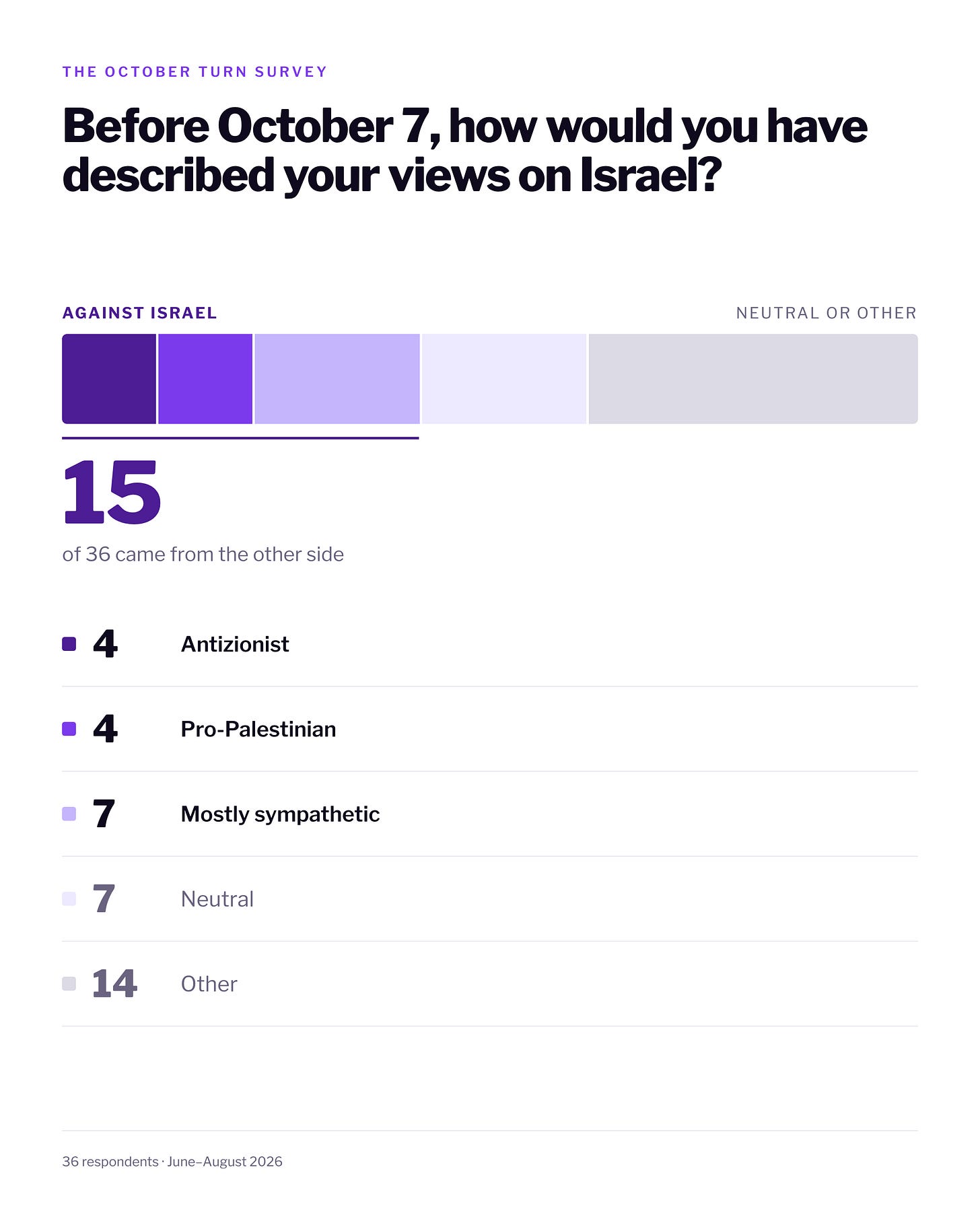
 In June of this year, I put a question to strangers: Did October 7th change your views about Israel? I asked because it had changed mine. I once held views of Israel I no longer subscribe to. I viewed Zionists, for instance, as racist, colonial, and supremacist. I now consider myself among their number.
After witnessing the world shift on October 7, I began doubting what I’d learned in my graduate studies. Added to that, a close friend of mine went through what many Jews describe—the extended pressure to denounce Israel, friends turning on them, a vetting to determine if they’re a “good one,” along with an almost universal experience of being deemed genocidal, child-killing, and racist.
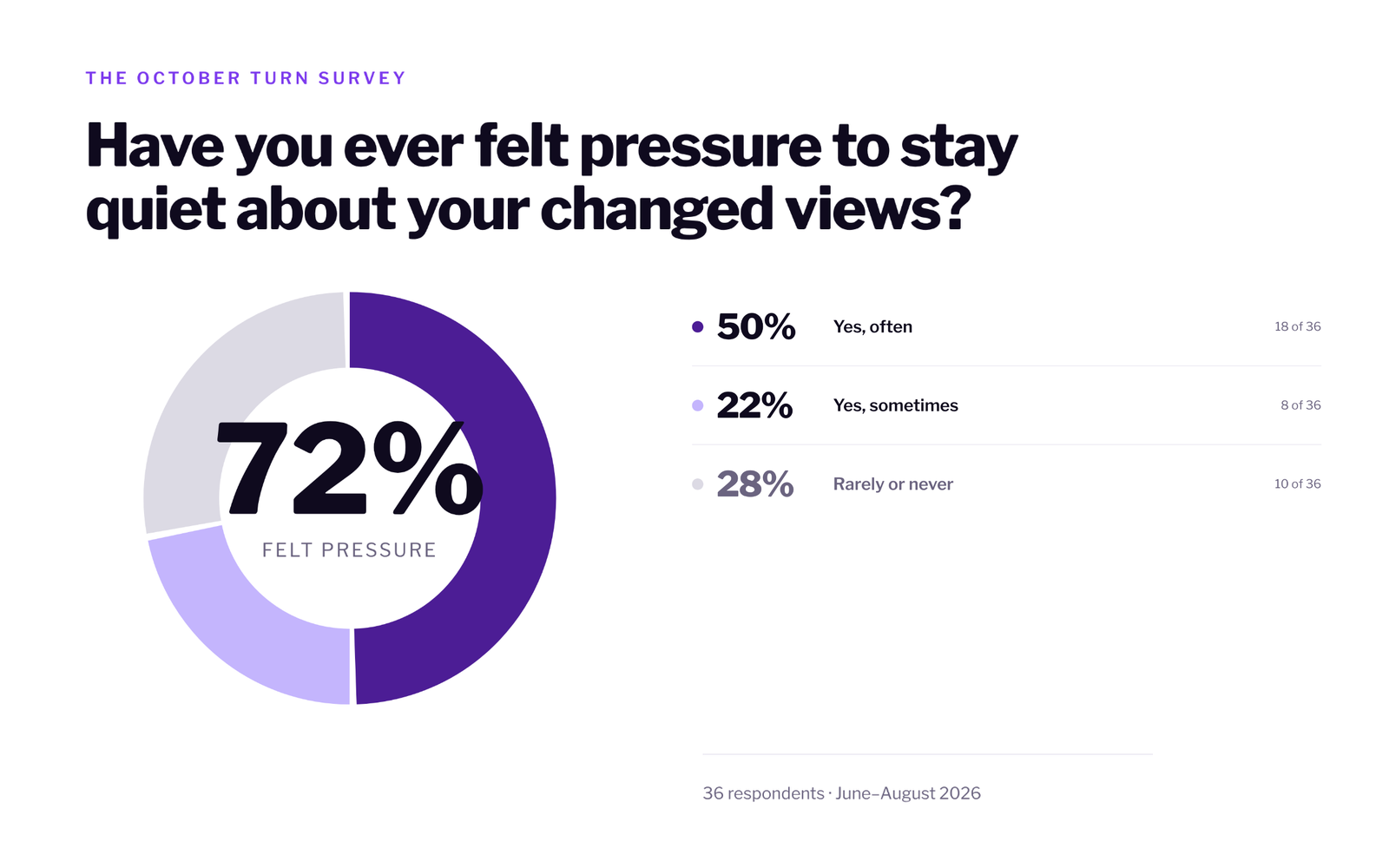
More often than not, the depictions I received were of people moving towards antizionism, not away from it. Having witnessed the utter hypocrisy of the left and leaving, I wanted to know whether I was alone.
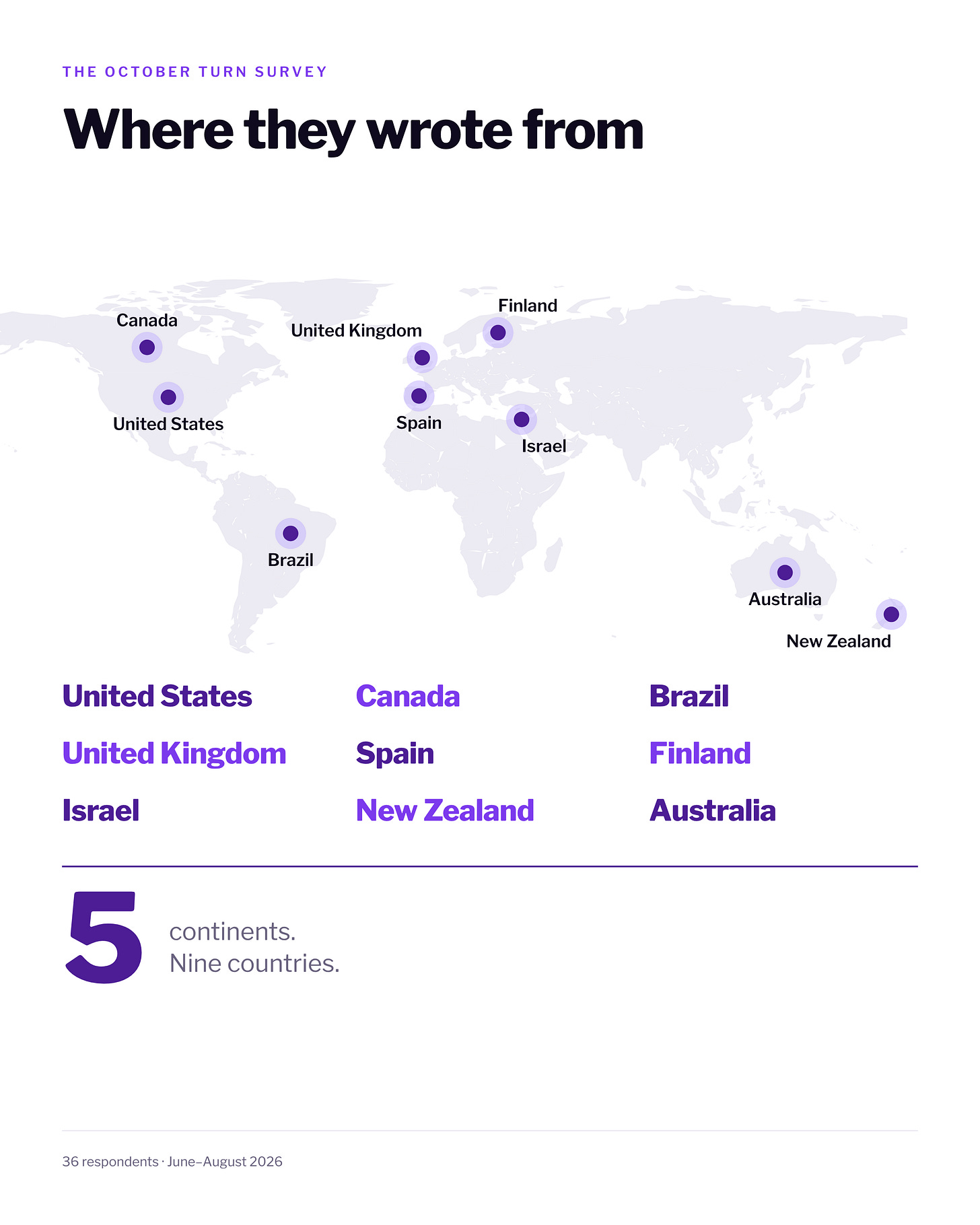
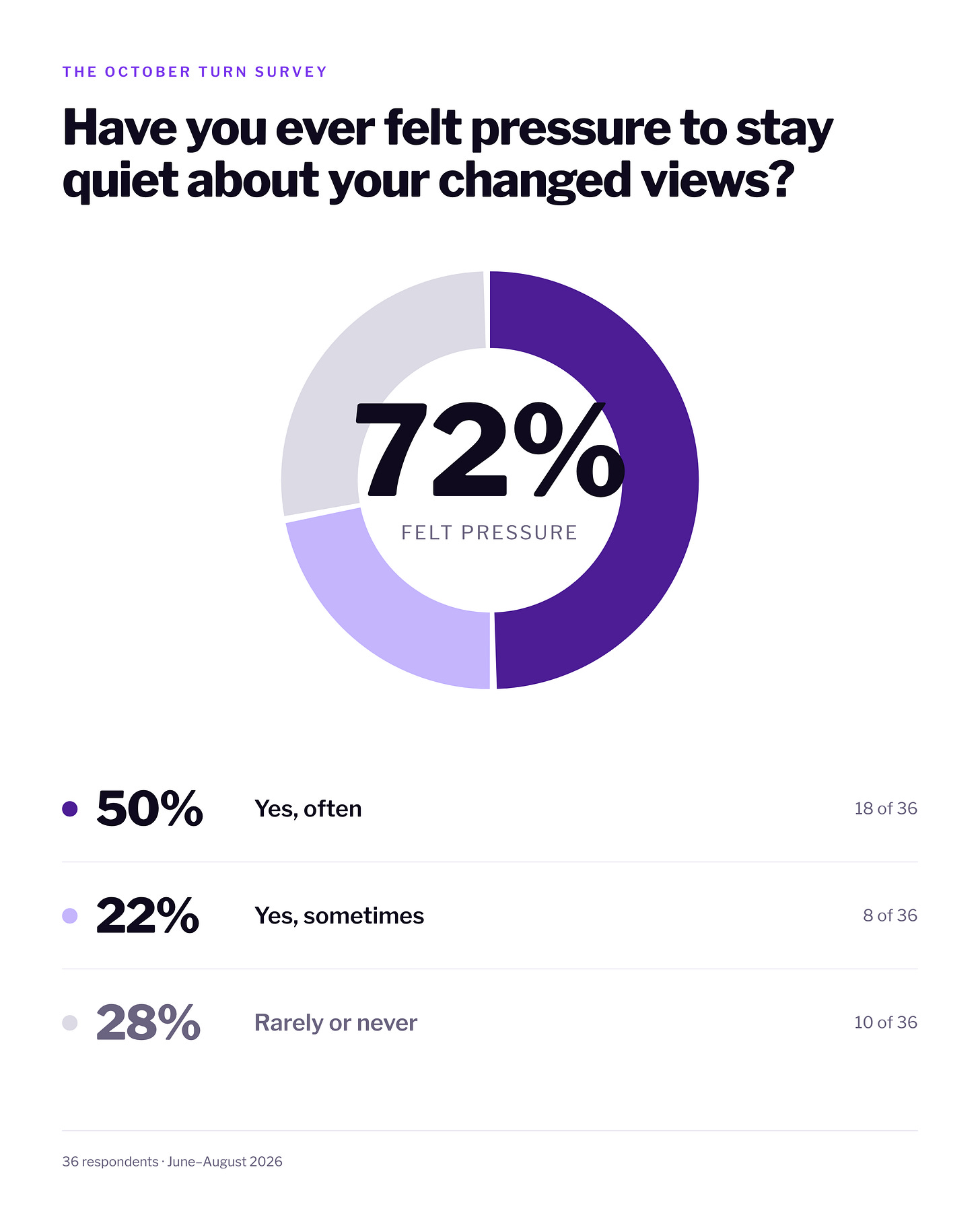
36 people wrote back, from Spain to Australia, and I conducted long-form interviews with over 10 of them. What they provided, I will share in three parts. A man who set out to prosecute Israel lost his own case. The many who changed their minds and remain anonymous. And the others, in their own words.
Each of them started where I did, alone with a question after October 7.
 This man had been to the marches. He’d felt the protests and the chants and the slogans and the calls. This time, he was in a crowd of thousands. He heard something he was unfamiliar with: “From water to water, Palestine is Arab”; “We don’t want no 2-state, we want 48”; “Settlers, go home. Palestine is ours alone.”
He’d never felt this way at a rally before. Something happened inside of him. An epiphany of sorts. “It made me realize I was a dupe,” he recalls. In that moment of thousands, he may as well have been the only one there.
He provided me with a single ask, to keep his name off the page.
Years before, in college, he had a friend who was Palestinian Israeli, and he watched Israel’s promoters take cheap shots and display what felt like open contempt. He heard one of them say over dinner, “It’s not a wall, it’s a fence.” That was enough for him to realize which side he preferred.
Back then, he read books that lined the antizionist canon, including Ilan Pappé, whom he now describes as “the David Irving of this whole industry.” He used to read Mondoweiss as well, which he quips “is just a hate site now.”
Even in the heyday of his ardent antizionism, the books he was reading provided him doubts. An antizionist history of the occupation described Gaza and the West Bank in implausible and unrealistic ways. This depiction lodged, he reports, “like shrapnel in my mind.”
He once brought John Mearsheimer to speak, and afterward, the invited guest told him and a few others, “See, the Jews got it right. If you want to stop being killed, you get yourself a state.” He now offers this as “food for those who deny the same thing now.”
 When October 7 happened, he reports being horrified in two different ways. One, by the attack itself, and second, by the people around him, activists and others on the left who had “jocularly ‘they deserved it’ attitudes.” He felt surrounded by strangers, “people I realized I didn’t really know, whose moral compass had suddenly broken.”
After the massacre, he went looking for a reason to blame Israel. He assumed Gaza was so utterly wretched it had to explode, a place he describes as “a reactor of human suffering.” But what he studied didn’t square. Hamas was negotiating gas deals with Israel weeks before. Qatar was sending aid, and Gaza had resorts and public jobs. He heard Norman Finkelstein, a speaker he once assisted at an event, claim all of Gaza’s water was poisoned. “How did he think they weren’t all dying of thirst and poisoning?” he asked himself.
He watched friends make excuses for the attack. He saw them bend and twist and contort while growing angrier. They were becoming more hateful. People don’t want to believe the attackers simply despise Jews. So, he says, people need some “more empathetic reasons” that are “invented or supplied.”
You wouldn’t suspect it from hearing what I’ve said, but this man is a lawyer. So, when those doubts started to press against the pieces that make us question our beliefs and identity, he did what he was trained to do: he built a case. Step by step, he made timelines of Gaza. In a long Google Doc, with sources and citations, he set out to prove his position right.
While building his case against Israel, he became convinced of its innocence.
October 7th has a way of changing you. The attorney is not immune to this. He says that one of the first things that convinced him that his views were off was “how well equipped the Nukhba Force guys were.” He says, “I could see how they didn’t hesitate to kill anyone they came across.” He had watched the footage. He read documents recovered from inside Gaza, which called for the liberating of the land from “the usurpers.” Plans, he notes, found on Hamas fighters in 2022. “They want to destroy a country and society and believe it will mean something ineffable.”
He joined opposing ends of Jew-hatred in a single capture. On one end, the Turner Diaries, a neo-Nazi conspiracy novel the far right still romanticizes, in which the author imagines Israel destroyed by a nuclear attack and its borders overrun by terrorists. On the other, Mohammed Deif, an Arab jihadist its author would have loathed, announcing Al-Aqsa Flood on the morning of October 7th, rebroadcast shortly after on Al Jazeera.
Somehow, these two agree on only one thing: their hatred of Jews. He calls it a pathological fantasy that’s “plainly genocidal.”
Some of the evidence he found was from the antizionist left, ones who cheer-leaded and praised the attacks. Jon Elmer, a journalist of that ilk, posted Hamas’ videos of their booby-trapped buildings and tunnels, extolling them.
He recalls noticing the symbols used in antizionism. The red triangle, for instance, the way Hamas marks their targets, used as an ornament of solidarity. But to him, “the red triangle is a simple racist death threat like the burning cross.” The old Arab Liberation Army symbol from 1947 to 1948 was a knife stabbing a Star of David.
He poses to everyone a thought experiment about the Mediterranean state of Greece: Imagine someone says that they don’t hate Greek people, they’re just “anti-Hellenist.” They tell you that Greece is an invention on Turkish soil. What would your feelings be? How might you respond? “Hating a country is weird,” he notes. “It’s obsessive, wrong.”
Then came the Al-Ahli Hospital debacle. The death toll was announced in the hundreds. Israel kills 500 in hospital attack. “The number of people they claimed had died simply wasn’t true.” If a hospital would go along with it, he couldn’t trust the next number.
He began reading books he had never read before. He read one by historian Jeffrey Herf. After reading them he realized “antizionism is not a left-wing cause. It is reactionary.” To make sure of this newfound conviction, he went back and reread all the books that had previously inspired his take on Israel.
He says he found them “a tissue of distortions, poor scholarship, and willful blindness.”
The social cost of this change was felt close to home. He had to cut off people he once respected, and relationships with his family and friends became strained. To him, it was not a grievous loss, and it hadn’t cost him much because he broke off the relationships instead of “the other way around.”
 To those he used to march beside and chant with, he has a new admonition. He would tell them, “You may think you are marching in lockstep with your beliefs in human rights, but you are being marched lockstep in the opposite direction.” He says they “don’t need to give up anything but the illusion.”
If only it were that simple.
He still believes in a proper criticism of Israeli policy. A healthy democratic balance, but not by just anyone, and not right now. He says, “one must disavow antizionism to earn the right to fairly criticize.” I could not agree more.
This Doctor of Jurisprudence asked for his name to stay off his story. He says he wants to engage the people he used to protest with. “I am hoping to reach both people I knew involved in antizionism and people I feel I shunned, didn’t listen to, and excluded over the years.”
It’s not fear which keeps him anonymous. It’s hope. And I, for one, love that. He signs his emails, “No Nazis, No Anzis.” A clever phrase I won’t mind appropriating.
He’s the only one out of the 36 who keeps his name hidden out of hope. The rest have another reason.
Original post here.
Related Topics