
The Art of Disagreement

We are living through an age in which disagreement is constant and highly visible. A few minutes online is enough to reveal the scale of it: strong opinions delivered with urgency, counter-positions framed as moral necessities, and little patience for hesitation. The atmosphere suggests that division itself is the central problem.
But disagreement, in itself, is not a sign of decay. Civilisations that have taken ideas seriously have always argued. Athenian democracy depended on it. Rabbinic Judaism elevated it. The Talmud preserves layered disputes across generations, often recording minority opinions alongside majority rulings, as if to signal that dissent has enduring value. The assumption behind this preservation was that truth is not fragile; it can withstand examination and even benefit from sustained challenge.

I write this as someone still early in learning about Judaism and the breadth of Jewish thought. Having only recently discovered my own Jewish ancestry, I approach these traditions cautiously. I am still finding my way through them. What has stood out to me so far is how central structured debate has been within Jewish scholarship, and how disagreement has been recorded rather than erased.
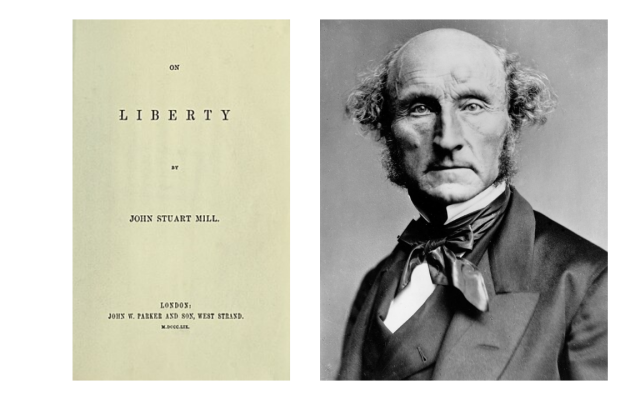
John Stuart Mill made much the same point in On Liberty. Even an incorrect opinion, he argued, has utility, because it forces prevailing views to defend themselves. A belief that is never tested becomes inert. Disagreement, in that older understanding, was not an inconvenience but an instrument of refinement.
What has shifted in our own time is not the existence of disagreement but its function. Argument increasingly serves as a marker of identity rather than a search for clarity. Positions are adopted not only because they are considered persuasive but because they locate the speaker within a moral community. When identity and opinion fuse in this way, disagreement ceases to feel like intellectual friction and begins to feel like personal threat. Or as American author and academic, Arthur C. Brooks has called it: an “ego threat”, where repudiating my political position can feel like a rejection of me.
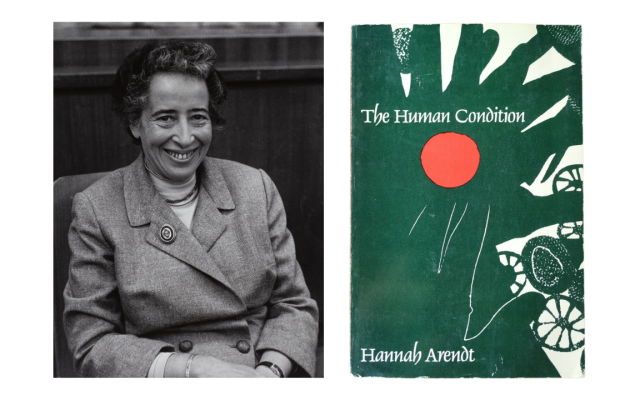
Hannah Arendt warned that modern societies risk drifting into thoughtlessness, by which she meant not stupidity but the surrender of independent judgment to collective currents. In The Human Condition, she was concerned that large systems — bureaucratic, technological, ideological — would encourage people to stop thinking in a serious and self-reflective way. Under such conditions, disagreement no longer sharpens understanding; it reinforces alignment. One argues not to test a claim but to signal loyalty.
Digital culture amplifies this tendency. Its speed rewards immediacy over reflection, and certainty over nuance. Positions harden quickly, partly because there is little space for the slow work of qualification and revision. In that environment, disagreement becomes a performance, calibrated for reaction rather than understanding.
Jewish intellectual tradition draws an important distinction that remains relevant here. The Talmud speaks of machloket l’shem shamayim — disagreement for the sake of heaven. This form of argument was often vigorous and uncompromising, yet it was oriented toward clarification rather than humiliation.
Pluralistic societies require the ability to disagree. This does not mean that all positions are equally sound or that boundaries should not be drawn. Some ideas are destructive and must be resisted.
However, when every disagreement is treated as a moral emergency, public life becomes permanently overheated. Recovering a wiser approach to disagreement will make division manageable.