
The art of the deal. Is Gaza another smoke screen for Netanyahu & Trump?
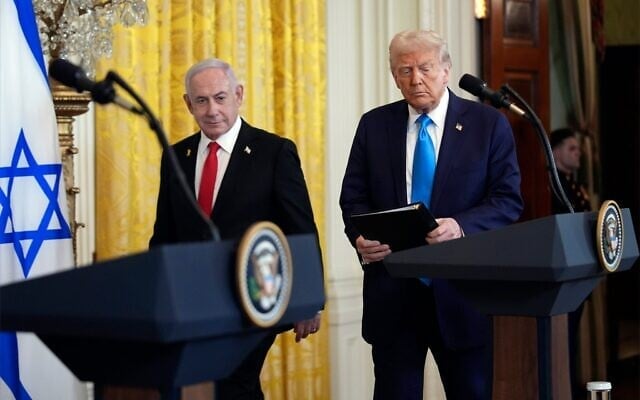
The headlines suggest a breakthrough. Trump has muscled both sides toward a Gaza agreement – Netanyahu appears cornered by American pressure, Hamas has reportedly accepted the terms, and negotiators are ironing out “final details.” But don’t buy the suits yet. We’ve been “close” before, many times. If this deal happens, it would be great news: an end to the war, no more casualties and release of all the remaining hostages.
Yet while diplomats fine-tune peace language, a massive wave of American KC-135 refueling tankers has positioned itself at Al Udeid Air Base in Qatar. Iran mobilizes in response. Major General Abdol Rahim Mousavi declares forces at “full readiness for possible future conflict.” In the very near future.
Perhaps the deal is real. Or perhaps we’re watching an elaborate performance designed to clear the Gaza stage for a far more ambitious act: against Iran.
We’ve Seen This Before. Earlier this year, Trump staged a similar theater act: 1. Impatience with Netanyahu; 2. A publicized Gulf visit playing Arab nations against Israel, projected distance from Jerusalem. The performance was convincing. As we foresaw the last time, “he is playing a role-as the actor that he is-in a scheme that will probably end in military action against Iran”. Exactly what happened. The tension was a smoke screen.
Now Trump runs the identical playbook. He forced Netanyahu to apologize to Qatar and published photographs from their call – seeming public humiliation. But June’s pattern teaches the opposite: Trump’s theatrical distance from Netanyahu might signal their deepest coordination. Open-source intelligence confirms the current tanker deployment scale hasn’t been seen since June – when it preceded US strikes on Iran’s nuclear facilities.
The Trade
After two years of Gaza warfare, Netanyahu faces battered public support and looming elections. Gaza withdrawal offers no political salvation. But June’s Iran strike demonstrated something crucial: Tehran confrontation energizes his base, rallies his far-right coalition, positions him as Israel’s “indispensable protector.” One strike wasn’t enough. He needs another round.
Enter Trump, eager for a Middle East legacy. His vow that “Iran cannot have a nuclear weapon” drives regional deployments. The Gaza deal functions less as resolution than tactical pivot. For Netanyahu, ending Gaza provides another chance to realign Trump on Iran. For Trump, Netanyahu’s “reasonableness” provides cover to greenlight the next operation.
But Netanyahu will need a good reason to attack Iran again. While his far-right partners press for formal sovereignty of the West Bank, Netanyahu is not in a rush to block their aspirations. Annexation carries enormous “flames” potential to rally hardliners and inflame the region instantly. With elections looming, a dramatic West Bank move provides an immediate crisis that will push Iran to do something, even send more missiles from their proxy in Yemen – and justification for Iran strikes under the pretext of responding to heightened instability.
Trump’s Qatar humiliation of Netanyahu is the tell, not the constraint. Gulf theatrics in early 2025 preceded June’s Iran strike. Now the Qatar performance might precede round two. The art of the deal becomes the art of brinkmanship. Netanyahu trades one war for another – pivoting from Gaza to Tehran, using West Bank annexation as the match.
In the past few weeks, MAGA’s influential figures such as Steve Bannon and Tucker Carlson have been outspoken about Israel’s role in pulling the US into wars and the billions the US is spending on security and weaponry for Israel, raising awareness among the MAGA crowd against involvement with Israel. This is probably the main opposition to another round with Iran. But even the numbers and power of MAGA will not deter Netanyahu.
When Trump appears most frustrated with Netanyahu, watch most carefully. We’ve seen this performance before. The second act may be far more explosive than the first.