

The Battle for the Tomb of the Prophets
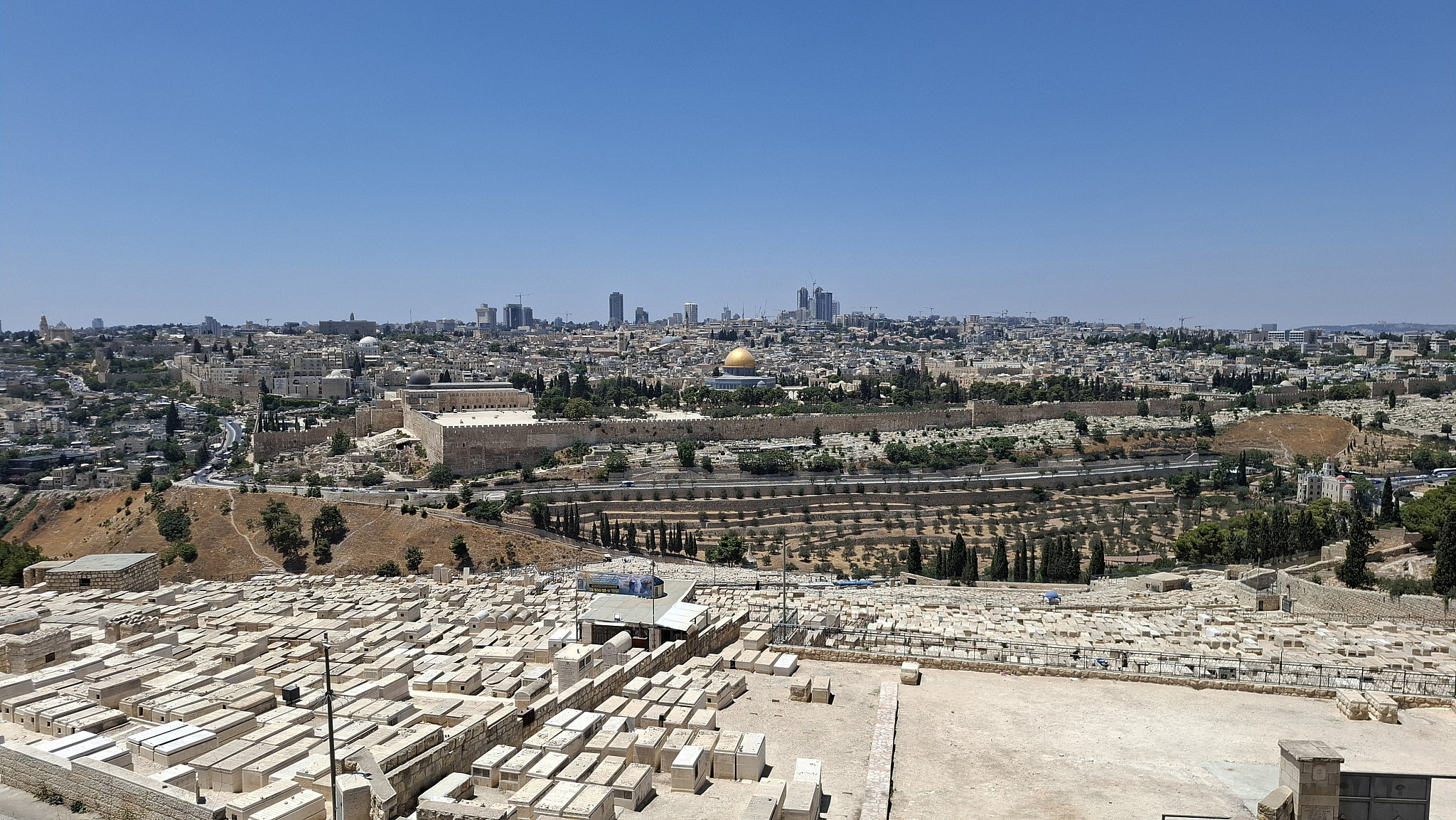
On the Mount of Olives, the final resting place of our prophets was nearly overtaken by foreign symbols — until determined Jews stood up to protect it.
(Chaim Frankenhuis)
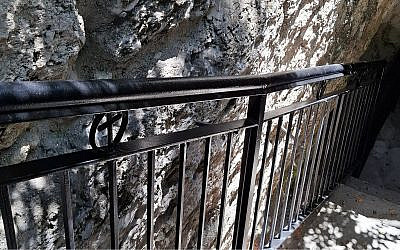
The tomb of the Jewish prophets Chagai, Zecharia, and Malachi on the Mount of Olives in Jerusalem recently had its handrails upgraded with Christian crosses, under the approval of the monk representing ROCOR (the Russian Orthodox Church Outside Russia). This unauthorized construction was carried out without the approval of the Israel Antiquities Authority or any governmental body, and it clearly violates the 1967 Protection of Holy Sites Law, which forbids desecration or violation of holy sites.
(Chaim Frankenhuis)
Turning a blind eye to foreign religions overtaking Jewish holy sites will only result in this happening on a much larger scale at places like the Cave of the Patriarchs, the Temple Mount, and Joseph’s Tomb. All religions are welcome to visit these sites, but we must keep a Jewish site Jewish — just like no one would place a Christian cross on the Kaaba in Mecca or a Star of David in the Church of the Holy Sepulchre.
After much advocating, pressure, and visits, we returned to the site and found that the crosses had been removed. This is a tremendous success.
But the struggle is not over. The church did not fully remove the Christian symbols — instead, the crosses were replaced with several Chi-Rho emblems. This emblem, formed from the first two letters of “Christ” in Greek, is less familiar to most Jews but no less a Christian symbol. It could not have been accidental. It was clearly an attempt to calm the Jewish outcry while keeping the site marked with a Christian sign, hoping most would not recognize it.
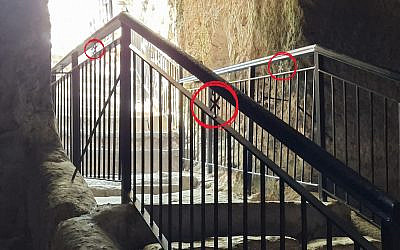
(Chaim Frankenhuis)
This problem is not new. The Tomb of the Prophets was purchased by the Russian Orthodox Church in 1882. In 1890, the Russians attempted to turn these Jewish tombs into a church. The Jews protested, and the Ottoman court ruled that the transaction was binding but conditioned on the Russians’ vow not to display Christian symbols or icons at the site.
It is only thanks to the tireless efforts of activists from Jews United that these crosses were removed and the issue brought to light. But the work is not finished. We owe it to our prophets — and to future generations — to preserve their resting place as a Jewish site, free of foreign symbols, open for all who wish to honor their memory.