


The billions of shekels languishing in Palestinian bank vaults
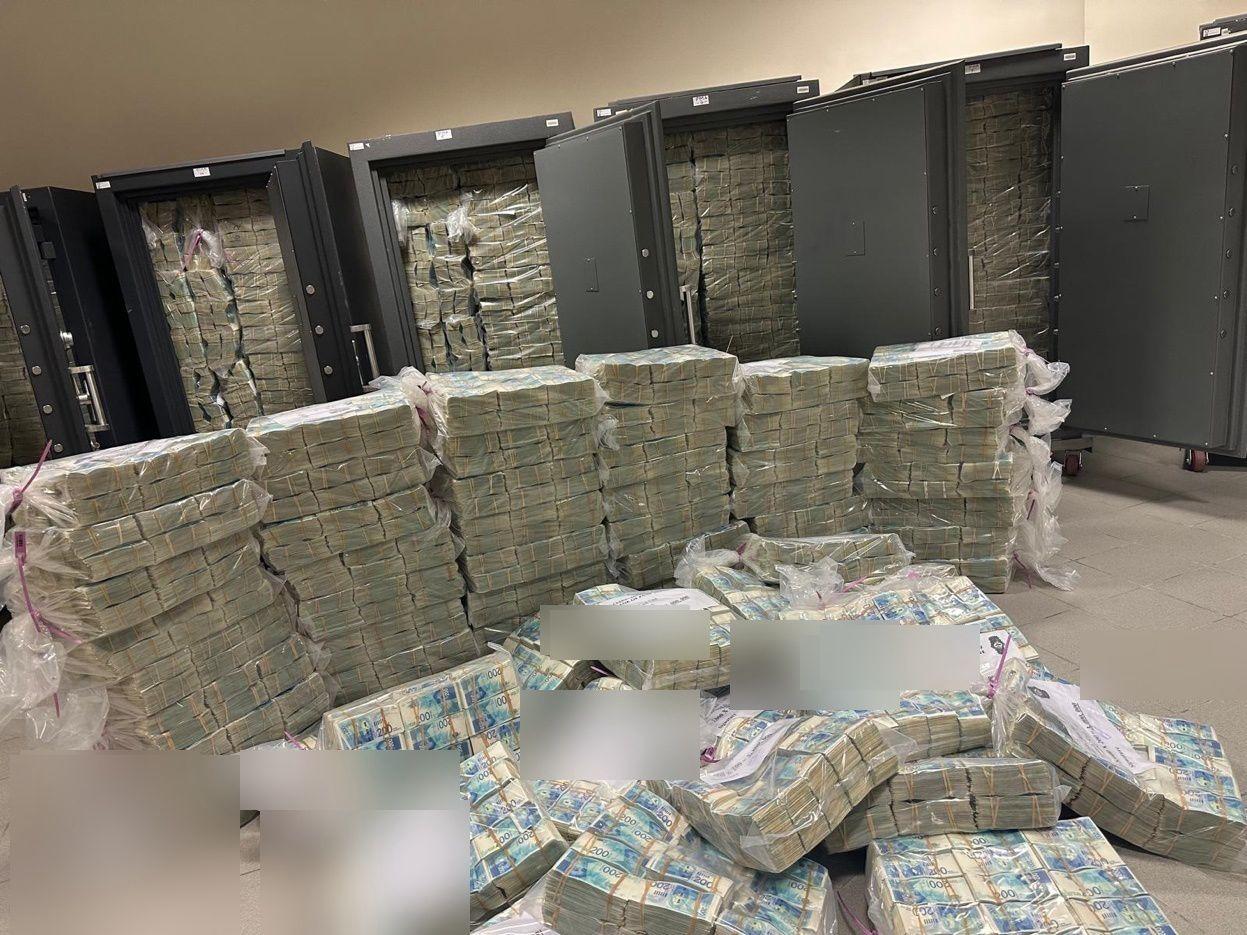
Israel is facing a preventable security problem of its own making. Roughly NIS 17 billion ($5.5 billion) in Israeli banknotes sit trapped inside Palestinian bank vaults across the West Bank. That money cannot be lent, invested or used to pay Israeli suppliers. It is effectively frozen outside the financial system.
During my time as United States ambassador to Israel, I heard Israelis and Palestinians describe this same problem from opposite sides of the table. The Palestinians spoke of vaults overflowing with shekel notes they could not move, lend or spend. The Israelis spoke of legal and compliance risks. Both were right. And both were describing a situation that, left unresolved, makes Israel less safe.
How we got here
Under the 1994 Paris Protocol, the Palestinian economy was built around the Israeli shekel. Palestinians use it every day – they earn it, spend it, and save it. But because it is Israel’s currency, Palestinian banks cannot simply return excess cash to the Bank of Israel on their own. Instead, they can return physical shekels only through two Israeli banks – Bank Hapoalim and Israel Discount Bank – which operate under a Finance Ministry indemnity waiver.
For years, this system worked tolerably. The waiver was renewed annually. Cash flowed back. Trade continued. When the banking channel works, Israeli businesses get paid on time, Palestinian firms can import and grow, and both governments collect tax revenue.
But the system has now broken down – and the consequences cascade across both sides of the Green Line. The repatriation cap (the amount the Bank of Israel will allow to be deposited) – currently around NIS 4.5 billion per quarter – covers barely half of what is needed. The result is a growing mountain of unusable cash and a banking sector being slowly strangled.
To put it plainly: you cannot wire physical banknotes, invest vault cash, use it to pay an Israeli supplier’s invoice, or to fund a mortgage, or extend credit to a small business. The shekels are not merely idle; their value lies dormant while they remain trapped in vaults.
Money is valuable not because it piles up in vaults but because it moves.
When cash cannot enter the banking system, businesses can’t borrow against it, banks can’t lend it, and commerce slows for both sides. It is as if $5.5 billion had been removed from the Palestinian economy entirely – except the banknotes are still there, taking up space, costing money to insure, and doing nothing.
Israel’s recent decision to cancel the indemnity waiver entirely – framed publicly as retaliation for the Palestinian Authority’s international advocacy – has transformed a chronic problem into an acute crisis.
Why Israelis should care
I am not naïve about Israel’s security concerns. I spent two years immersed in them, and I understand why they shape Israeli policy. Israel is right to be concerned that allowing these banking transfers could facilitate money laundering or the financing of terrorism.
But the critical question is whether the current policy – severing the banking channel and trapping billions in physical cash outside the financial system – actually addresses those concerns. The answer, from every credible analyst who has examined this question, is no. It makes them worse.
When cash cannot flow through regulated banking channels, it flows through unregulated ones. Money changers, informal hawala networks, and cash couriers are far harder to monitor than wire transfers between supervised banks. The IMF, the FATF, and the World Bank have all concluded that de-banking does not reduce illicit finance risk – it drives transactions underground where they become invisible to both Israeli and Palestinian regulators.
In short, the security rationale for restricting shekel repatriation is real in origin but self-defeating in practice. The cure is worse than the disease.
No one is asking Israeli banks to operate blind. But the current policy is making Israel less safe. Here is why.
First, the Palestinian Authority was Israel’s third-largest export market in 2022. Some 53 billion shekels were exchanged through Palestinian banks in 2023 alone. Construction firms, food exporters, fuel suppliers and technology companies depend on Palestinian purchasing power. When Palestinian banks cannot process payments, they can’t pay bills in wheelbarrows of shekels. Israeli vendors do not get paid. This is not an abstraction. It is hitting Israeli balance sheets today.
Related: The West Bank economy runs on shekels. So why aren’t Palestinian banks accepting them
Second, Israel has a profound interest in a Palestinian Authority that is capable of governing. Economic collapse undermines the PA’s legitimacy, weakens its institutions, and makes continued security cooperation harder to sustain. Israel’s own security establishment understands this. The IDF, Shin Bet and Mossad have all reportedly opposed the cancellation of the waiver, warning that Palestinian economic collapse would lead to increased violence, the end of PA security cooperation, and exploitation by Hamas. When I served as ambassador, bipartisan consensus in Washington held that a functioning Palestinian economy was a prerequisite for Israeli security – not a concession to it. That logic has not changed.
Third, trapping billions of shekels outside the banking system creates exactly the unregulated, opaque financial environment that makes terrorism financing harder to detect and prevent. Every analyst who has examined this issue – from the International Crisis Group to the Atlantic Council to the World Bank – has reached the same conclusion: financial isolation does not reduce the risk of terror financing. It increases it.
The opportunity
Now consider the upside. The World Bank identified this liquidity trap explicitly in September 2025. Unlocking the NIS 17 billion is not a humanitarian gesture. It is an economic recovery opportunity – one that requires no new foreign aid, no new budgetary commitments, and no new international architecture. It simply requires Israel to accept back its own currency.
The potential returns for the Palestinian economy are substantial: an estimated $1.5-2.5 billion in annual GDP recovery from restored economic velocity, $250 million in recovered annual banking income, and the creation of tens of thousands of private-sector jobs over three years in an economy where unemployment currently exceeds 50 percent.
That economic recovery would also make Israel more secure.
What needs to happen
The ask is straightforward. Israel should reinstate the indemnity waiver on a multi-year basis – not in precarious 30-day or two-week extensions that keep the entire Palestinian financial system in permanent uncertainty. And Israel should raise the quarterly shekel repatriation cap to match actual volumes, allowing Palestinian banks to return the physical currency that is, after all, Israel’s own legal tender.
The United States, the G7, and the IMF have all called for exactly this. If Israel requires a third-party audit or assurance, the G7 and Palestinian Monetary Authority have a history of working with the US and UK Treasuries on a review of their banking regime – a process that, once complete, will help replace suspicion with evidence.
I understand the political dynamics inside the current coalition. I understand that some voices in Israel’s government view the PA’s collapse as a feature, not a bug. But I also know – from hundreds of conversations during my ambassadorship and since – that the overwhelming majority of Israel’s security professionals, its business community, and its international partners recognize that economic warfare against the West Bank is a strategic miscalculation of the highest order.
October 7th taught Israel many things. One of them should be this: ungoverned, desperate populations on your border are not a source of security. They are a source of threat. The shekel repatriation crisis is solvable. It requires no new treaties, no territorial concessions, no diplomatic breakthroughs. It requires Israel to let its own currency flow home.