
B’Yachad candidate for Knesset and a biotech executive
The binary war
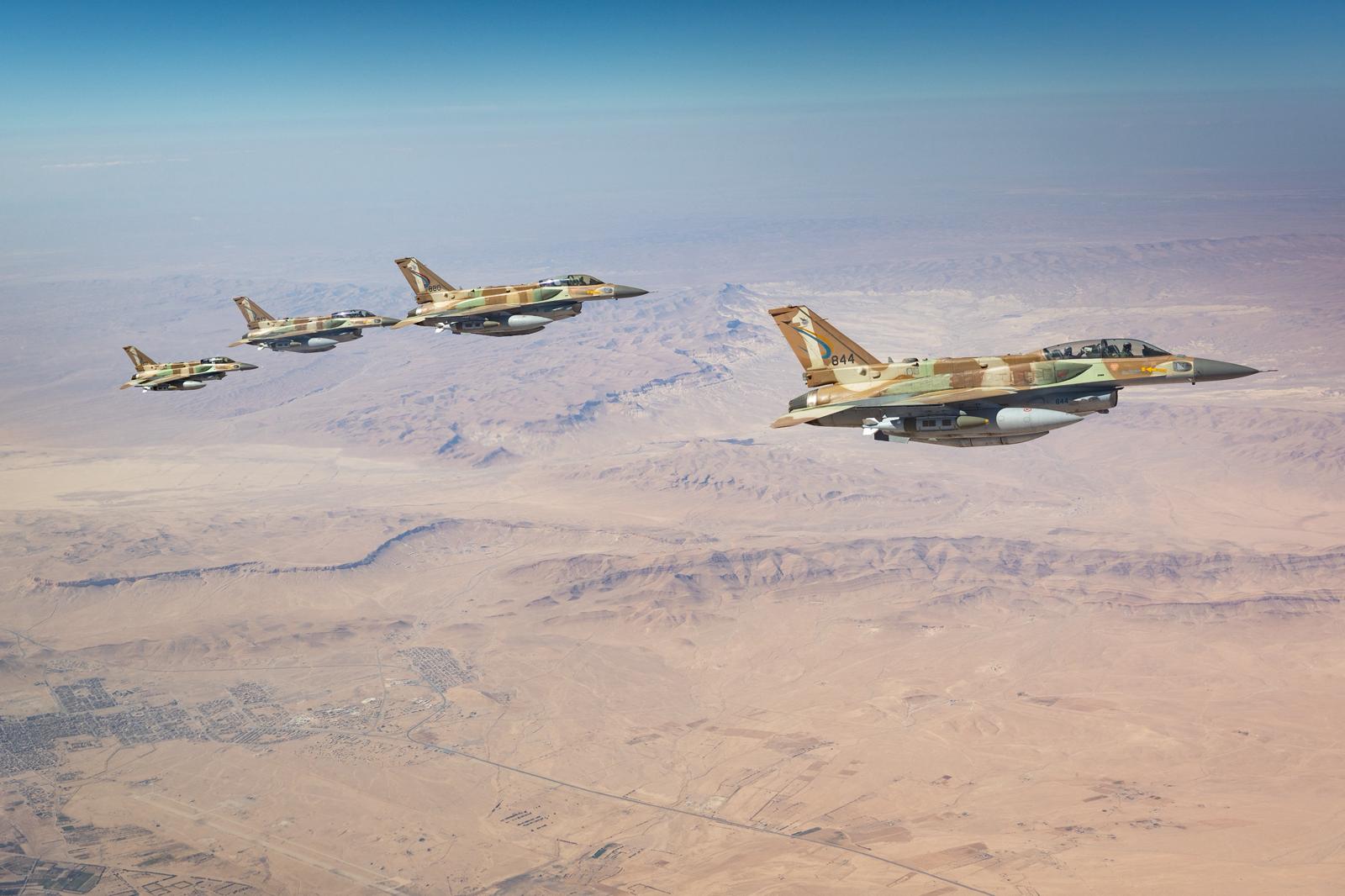
IAF F-16i fighter jets fly to Iran to carry out strikes, in a handout photo published on March 4, 2026. (Israel Defense Forces)
Some wars allow for partial victories. This war does not.
The conflict between Israel, the United States and the Islamic Republic of Iran may appear complex, with many possible objectives and many potential outcomes. But beneath that complexity lies a far simpler strategic reality.
This is a binary war: either the regime in Tehran survives this confrontation largely intact and the broader conflict continues indefinitely, or it is dealt a decisive blow, the regime collapses, and the conflict ends.
Everything else lies somewhere in between: damaged nuclear facilities, disrupted missile programs, weakened military and leadership structures, temporary deterrence. These outcomes may be significant, even impressive. But partial achievements rarely resolve conflicts of this scale.
The strategic problem confronting Israel and its allies is not merely Iran’s nuclear program or its missile arsenal. It is the regime that has spent decades constructing those capabilities while simultaneously financing militias across the region and openly declaring its hostility toward Israel and the Western order.
Facilities can be rebuilt. Weapons programs can be restarted. Military doctrines can evolve. But the regime determines the direction in which they move. As long as the head of the octopus remains intact, its tentacles will eventually grow back.
If the Islamic Republic remains committed to the strategic project it has pursued for decades of destruction of Israel and death to the United States and the West, any military campaign that leaves that regime intact risks becoming a pause rather than a resolution. Israel has seen this pattern before, in Gaza and in Lebanon, where successive wars imposed real costs to our enemies but left the underlying conflict unresolved.
Over the past two decades Israel has repeatedly demonstrated its ability to impose severe military costs on Hamas. Each confrontation restored a measure of deterrence and temporarily weakened the organization. Yet the underlying strategic reality remained unchanged, and the threat rebuilt itself until October 7 exposed the devastating limits of that cycle.
A similar pattern has characterized Israel’s long confrontation with Hezbollah. Successive conflicts degraded its capabilities and produced periods of relative quiet, but they did not remove the strategic challenge it posed. The organization endured, adapted and rearmed, as we are seeing again today.
The Islamic Republic has demonstrated an extraordinary capacity for endurance. It has survived decades of sanctions, isolation, economic pressure and internal unrest while continuing to pursue its long-term strategic goals.
The Israeli public has shown remarkable resilience throughout this confrontation. Families, communities and the home front understand that wars of this magnitude demand endurance. That resilience matters, because a war with stakes of this scale can only succeed if the society fighting it understands what is required to see it through.
Which is precisely why this war cannot end the way previous confrontations with Hamas, Hezbollah, or indeed Iran have done. Temporary degradation against those adversaries produced cycles of conflict that returned again and again. Accepting a perpetual cycle against Iran would mean accepting a permanent regional contest with a regime committed to rebuilding the very capabilities this war seeks to destroy.
That cannot honestly be called victory.
Victory in a conflict of this scale means something more fundamental: that the political and ideological engine no longer has the power to pursue the project that created it. Anything less leaves the underlying conflict intact, waiting to emerge again.
Which is why the central question in this binary war is not how much damage can be inflicted and how long we keep them down, but what is allowed to survive intact. If the regime that built this system survives, it will rebuild the system itself. And the next war will only be a matter of time.
Related Topics
Related Posts