

The Black-Jewish Partnership that Offers a Blueprint for Healing Collective Trauma
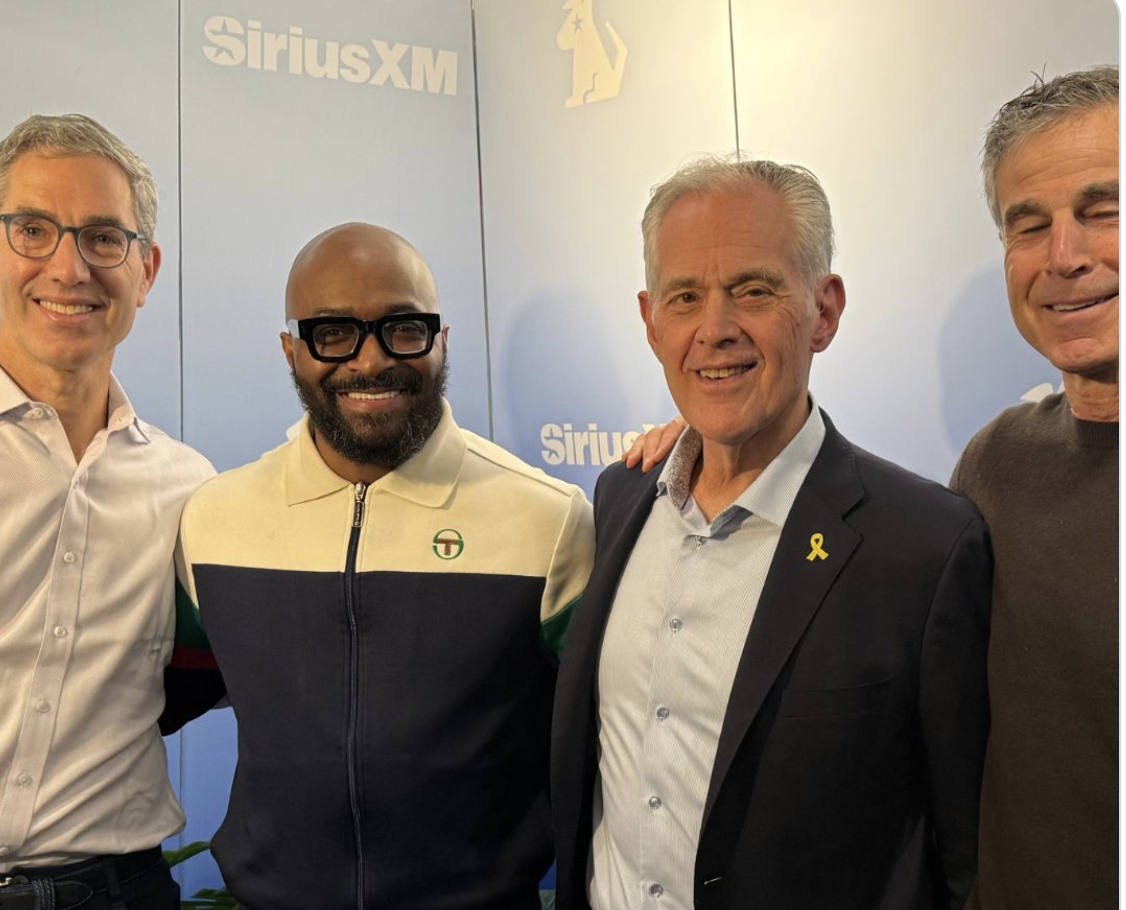
Martin Luther King Jr. Day serves as a reminder of the “Beloved Community.” It’s Dr. King’s vision of a society rooted in justice, equal opportunity, and love for one’s neighbor. It reminded me of the recent Common Faith podcast episode hosted by Rabbi Elliot Cosgrove and Jon Frankel where Rabbi Michael Siegel of Anshe Emet Synagogue and Pastor Chris Harris of Bright Star Church were interviewed. Their conversation, “Building Bridges: How Black and Jewish Communities Found Common Ground,” serves as an impressive example of how communities can come together to help each other.
Their partnership evolved from a single lunch meeting fourteen years ago into a national model for faith-based healing. Their dialogue provides tangible proof that when communities move beyond the optics of solidarity and into the difficult work of shared trauma, the result is the literal saving of lives.
The Scaffolding of Resilience
During the podcast, Pastor Harris describes a revelation he experienced while visiting Israel and observing the psychological support NATAL provides to terror victims and soldiers. He did not see a clinical program tailored for a foreign land, but a blueprint for his own community on Chicago’s South Side, which was reeling from the daily trauma of urban violence. As he noted, “I didn’t see NATAL as the solution, I saw NATAL as the scaffolding to help us to build what we needed for our own people.”
This concept of “scaffolding” is essential to a model of sustainable community growth. It suggests that support is not a gift to be handed down, but a structure to be built through collective effort. By adapting the NATAL model, an Israeli framework born from the necessity of treating war and terror-related PTSD, to the specific needs of Chicago, Pastor Harris and Rabbi Siegel demonstrated that the language of trauma is universal. Together, they established the Urban Resilience Network (TURN), embedding trauma-informed care into the social fabric of the neighborhood, from local schools to healthcare providers.
Facing the “Healer’s Trauma” First
A profound realization discussed by these leaders is the prerequisite for those entering this mission of healing. In the NATAL model, a caregiver cannot effectively reach others until they have first addressed their own internal wounds. Reflecting on the training sessions held for Chicago’s Black faith leaders, Rabbi Siegel observed a stunning, albeit difficult, truth: “Before you can help someone else with their trauma, you must face your own.”
This requirement represents an act of humility. While “building bridges” is often viewed as an outward activity, the strongest connection between Chicago’s Black and Jewish communities was built through intensive internal work. Pastor Harris spoke candidly about his own experience during the rigorous training, admitting that the process left him “balled up into a fetal position” as he finally confronted his own suppressed trauma.
The Power of Data and Collective Success
Interfaith dialogue is frequently dismissed as a collection of well-meaning sentiments that lack measurable substance. However, the partnership between Bright Star and NATAL offers data-driven results. Through the creation of a 24-hour trauma helpline that has served over 70,000 people, the impact, as tracked by the University of Chicago, is impressive.
The implementation of these trauma-informed strategies has contributed to a 17% reduction in shootings, a 10% reduction in robberies, and a 14% reduction in assaults in the area. These figures represent lives protected, families kept whole, and a community finally beginning to breathe again.
Pastor Harris poses a question that should resonate with every leader: “How do we stop this vicious cycle of violence?” The answer he suggests is not in rhetoric, but in the provision of immediate “emotional first aid” to the families of both victims and perpetrators. By treating trauma as a public health crisis, they began to “stop the bleeding” of generational pain.
A Labor Together
As we honor MLK Jr. Day, it is vital to remember that a vision of a unified community is a continuous “labor together.” It requires what Rabbi Siegel describes as the “sacred responsibility of leadership” which is the courage to step out of one’s familiar environment and into the suffering of another.
In Israel, NATAL continues to treat the generational trauma of a nation, with young adults now comprising nearly half of those seeking urgent psychological care. In Chicago, TURN remains a lifeline for those navigating the shadows of urban conflict. These two missions are fundamentally linked.
Dr. King once noted that humanity is “caught in an inescapable network of mutuality, tied in a single garment of destiny.” Listening to Rabbi Siegel and Pastor Harris on Rabbi Cosgrove’s podcast, it is evident that they have woven a significant piece of that garment. They have shown that when spiritual leaders listen, learn, and labor together, real change is real.