Senior Rabbi at Temple Sholom, Vancouver BC Canada
The Bones of Joseph and Our Unfinished Redemption
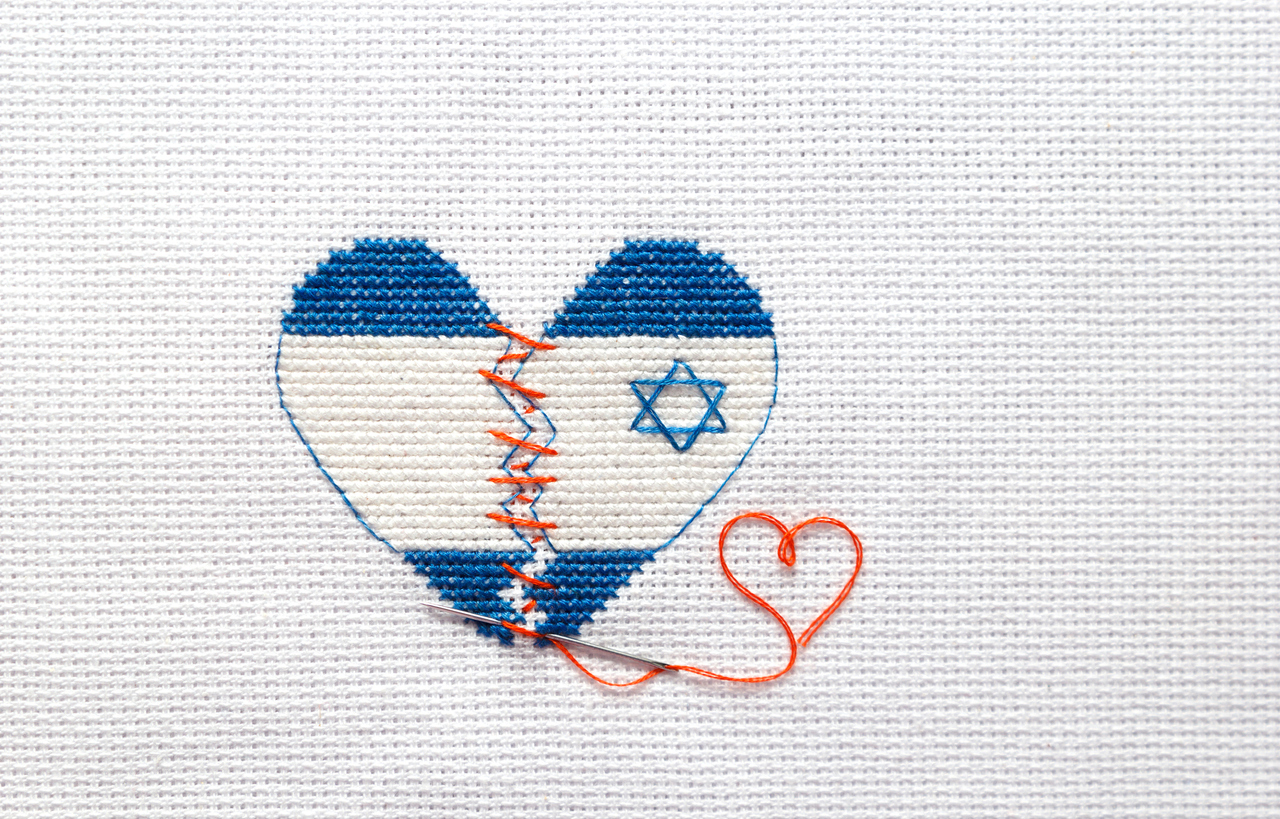
Heal a broken heart
Yesterday, my wife and I celebrated a milestone—our 20th wedding anniversary. It was a moment of deep gratitude, not just for the years we’ve shared but for the simple, profound joy of having all our children home.
Our oldest is on break from University, our two other children both had evenings free from their own obligations and I didn’t have any meetings. We had dinner, watched the hockey game (we live in Canada) and forced our kids to watch a slide show that my wife made to document 20 years of marriage.
There is something about that feeling—a house filled, a table complete—that settles the soul.
I think every parent knows this truth instinctively: you’re never really at peace until all your children are home.
Rabbi Aryeh Levin, known doubly as the “Father of Prisoners” for his visits to members of the Jewish underground imprisoned in the Central Prison of Jerusalem in the Russian Compound during the British Mandate. And as the “Tzadik of Jerusalem” for his work on behalf of the poor and the sick once told a grieving mother whose son’s body had been left behind in war, “We are never truly at peace until all our children are home.” His words carried the weight of our tradition—of Moses carrying Joseph’s bones out of Egypt, of Israel’s commitment to bringing every soldier home, of our obligation today to those still held in Gaza, both the living and the murdered.
Because just as a family is not whole when even one child is missing, our people are not whole while our brothers and sisters remain in captivity.
A few weeks ago in the Torah, we read of Moses making a choice in the midst of the chaos of the Exodus—not just to lead his people forward, but to look back and ensure that Joseph was brought home. Our redemption was incomplete without it.
In Exodus 13:19, as the Israelites flee Egypt in haste, we read:
“Moses took with him the bones of Joseph, who had exacted an oath from the children of Israel, saying, ‘God will surely take notice of you, and you shall carry up my bones from here with you.’”
Joseph, the viceroy of Egypt, had died hundreds of years earlier. Though he was revered in Egypt, he never saw it as his true home. He made his family promise that when redemption came, when God remembered His people, they would take his remains with them—to be laid to rest in the land that was truly his.
What a striking moment. The Israelites were leaving in haste, barely grabbing their own essentials. They did not even have time to let their bread rise. And yet, Moses does not forget the bones of Joseph. Redemption would be incomplete if Joseph were left behind. No matter how long he had been gone, no matter how deep the exile, bringing him home was an obligation that could not be forsaken.
As we gathered in our home last night, surrounded by love; warm and safe; bellies full and rejoicing in the simple joy of normalcy that seems increasingly elusive and precious as our children become more and more independent, I thought of all the families that have been shattered by this war. In Israel and in Gaza, every family built on love cherishes such moments together. That’s not a Jewish thing, it’s a human thing.
And I thought particularly of the Bibas Family. The father, Yarden, just days before redeemed from captivity, waiting with fading hope for his wife and children. Learning with the rest of the world that like the bones of Joseph it would be their bodies that would be returned, their lives had been forever taken by the most inhumane. And then with horror, that Hamas in their unfathomable cruelty had stolen even that solace too, withholding the body of his wife, the boy’s mother Shiri from returning to her final rest with them, to lay once more by their side. There are no words that can explain such depravity. Our last images were of them enveloped in her sheltering arms, when were they separated? Did she ever hold or see them again? The allusions to all of the worst images of the Shoah are like a knife in our heart. Some monster ripped those babies from their mother’s loving arms.
We are living in a time of deep anguish, it’s not new to our people, but it is new to our generation of Jews. We find ourselves still waiting for redemption. Since October 7th, we have been haunted by the kidnapping of so many of our people—some of whom were brutally murdered and whose bodies remain in captivity in Gaza. Their return is not only a political demand; it is a sacred obligation. Their souls cry out to us, just as Joseph’s bones cried out to Moses.
In Jewish tradition, kavod hamet, honoring the dead, is one of the greatest mitzvot. It is a mitzvah that cannot be repaid, a pure act of love and respect. We do not abandon our dead. Even when it is painful, even when it seems impossible, we bring them home.
The Midrash tells us that while the Israelites were hurriedly gathering gold and silver from the Egyptians, Moses was searching for Joseph’s remains. He refused to let Joseph be forgotten, even in a moment of crisis.
Add to the list of impossible things we must be, become and endure, we are called upon in this moment to be like Moses.
While the world moves on, while leaders weigh political costs, while attention fades, while terrorists continue to terrorize in ever more incomprehensible ways we cannot stop demanding the return of Shiri and all those who have been taken. Their burial in the land of Israel is not only a national duty—it is a Jewish imperative, a mitzvah that connects us across generations, from the time of Moses to today.
The story of Joseph’s bones does not end in the wilderness. Later on in the Hebrew Bible in the book of Joshua, we learn that when the Israelites finally reach the land, they fulfill their promise:
“And the bones of Joseph, which the Israelites had brought up from Egypt, they buried in Shechem, in the portion of the field that Jacob had bought.” (Joshua 24:32)
It took 40 years, but Joseph was finally laid to rest where he belonged.
I pray that it does not take 40 years for us to bring Shiri, and all those still held captive, back to the land of their people. But like Moses, we will not forget them. Like Moses, we will carry their memory. And like Moses, we will not rest until we can bring them home.
Because our redemption—like the Exodus itself—remains incomplete until we do.
Am Yisrael Chai.
Related Topics
Related Posts