It was the middle of the night. I was around eight years old. When I could not sleep, I would go downstairs. I knew my father would be awake, sitting silently on the couch in the dark. He would ask me what kept me up. I was afraid he was going to die. I always immersed myself in the daily newspapers and read everything, even the obits. In those days, many men in their fifties appeared in those columns. Heart attacks were common among men in that age group.
My father’s response was that eventually everyone would die. Even Moses, King David, and Abraham eventually passed on. My eight-year-old mind never knew how to rebut that. Nevertheless, I fell asleep on that couch shortly thereafter.
This Shabbat marks the anniversary of my reciting my Bar Mitzvah parsha fifty-seven years ago. It is also a time when Jews around the world begin the yearly cycle of reading the Torah, starting with my Bar Mitzvah parsha, Bereishet, Genesis.
I loved leyning (chanting) this parsha, or Torah portion, during the years following my Bar Mitzvah. I especially loved leyning it on Simchat Torah, the holiday just days before Shabbat Bereishet, when the honor of the first reading from Genesis was given to the Chatan Bereishet, and spirited dancing and singing enveloped this aliyah.
Beautiful memories, but for decades, I had stopped leyning this Shabbat Torah portion. Life has a way of changing our direction—and us.
This year, a local synagogue hired me to lead Shabbat services. They are without a rabbi and cantor, so I assumed both responsibilities.
It is a beautiful synagogue in that many congregants offer to lead various parts of the Shabbat services, including leyning from the Torah.
This Shabbat, because my Bar Mitzvah portion is being read, I will be leyning the entire parsha for the first time in decades. I am thrilled.
In reviewing the Jewish calendar, I noticed something else fascinating. This year marks the completion of three nineteen-year cycles since my Bar Mitzvah. The Jewish calendar follows a nineteen-year pattern, known as the Metonic cycle, that keeps its lunar months aligned with the solar year. Fifty-seven years: three nineteen-year cycles.
It is not a coincidence. This is Hashgacha Pratit (Divine Providence). Ten years ago, I would have been skeptical about the concept of Hashgacha Pratit and would have simply attributed it to coincidence.
Things change as one ages.
I was given a chance this year to leyn after completing this third nineteen-year cycle. Nineteen years from now, I will be eighty-nine years old. Who knows if I will be around. Odds are, actuarially speaking, this Shabbat will be my last chance to leyn my Bar Mitzvah parsha during such a milestone.
And that’s OK.
As we begin the year anew by reading the first portion of the Torah, I am also confronting my mortality. As we read about the creation of the Earth and all living things, our mortality comes into play.
My father thought about his life, having been born in Tsarist Russia and survived the Shoah. As I enter this last chapter, it is only natural to think about my own mortality…
…and to live life to the fullest and to give it meaning.

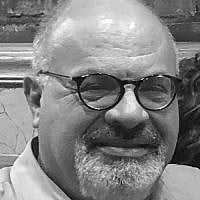
Saul Chapnick was raised in an Orthodox home with deep familial Hasidic roots. Educated in yeshiva and later earning a Master of Social Work degree from Yeshiva University's Wurzweiler School of Social Work, Saul has continued throughout his life to embrace Jewish learning in many settings—from studying at Hebrew Union College–Jewish Institute of Religion to maintaining a weekly chavruta for ongoing Torah study. His lifelong journey has given him a deep appreciation for richness of Jewish tradition across the spectrum of Jewish life.
For more than thirty-five years, Saul has devoted himself to the study of Jewish history, with a particular focus on Jewish life in interwar Eastern Europe. Inspired by the mitzvah of Zachor (to remember), he has explored both the extraordinary vibrancy of the Jewish world that was destroyed in the Shoah and the enduring questions of Jewish memory, continuity, and identity. Through extensive travel, archival research, and conversations with survivors, scholars, communal leaders, and public figures, he has sought to understand not only what was lost, but also what those vanished communities continue to teach us today.
His writing explores the intersection of Jewish history, personal memory, Israel, and contemporary Jewish life, seeking to connect the voices of the past with the challenges of the present.
A gifted storyteller and engaging speaker, Saul has lectured throughout the United States and abroad on Jewish history, Yiddish language and culture, modern Poland, Israel, and post-Holocaust Jewish identity. His presentations blend scholarship with personal experience, inviting audiences to explore the enduring relevance of Jewish history to contemporary Jewish life. He has also prepared adult participants of the March of the Living by providing historical and cultural context that deepens their understanding of both Poland's Jewish past and its emerging Jewish present.
Saul is the author of a widely read weekly Substack newsletter and a contributor to The Times of Israel, where he reflects on Jewish life, history, Israel, memory, and current events. His essays weave together personal experience, historical research, and contemporary issues, encouraging readers to reflect on the challenges and opportunities facing the Jewish people today.
For the past thirteen years, Saul has served as the Substitute Chaplain through the Greater Miami Jewish Federation Chaplaincy Program at Miami Jewish Health. During rabbinic transitions, he has served as the community's interim spiritual leader, leading Shabbat and holiday services, reading Torah, delivering Divrei Torah, teaching adult education classes and study groups, and providing pastoral care to residents and their families.
Professionally, Saul brings more than two decades of executive leadership in healthcare and human services. He specialized in turning around distressed assisted living and memory care communities by rebuilding staff morale, restoring occupancy, improving quality of care, ensuring regulatory compliance, and returning organizations to financial stability. Today, he draws upon that experience as an expert witness in legal matters involving senior care, assisted living, and long-term care communities.
Whether teaching Torah, leading prayer, writing, or speaking, Saul believes that Judaism is best experienced through learning, storytelling, meaningful relationships, and a deep respect for every individual's Jewish journey.
At the same time, Chapnick has witnessed a limited reawakening of Jewish life in his family’s ancestral homeland of Poland. He has spoken at numerous venues on the contemporary relevance of Yiddish and Yiddish culture, the significance of the 19th- and 20th-century Jewish world to modern life, and the shaping of post-Holocaust Jewish identity. He also prepares adult participants of the March of the Living to engage meaningfully with modern-day Jewish Poland.
Chapnick shares his insights and reflections in weekly blogs on https://saulchapnick.substack.com, where readers are welcome to subscribe.