
The Boy In The Bar Never Questioned Hashem
I grew up inside, so nobody needs to sell me on it. The meals that show up after a birth. The loan with no interest and no questions asked. The chevra kadisha. The man you barely know who finds your son a job. Nobody builds that by accident.
But here’s a question we never ask. Something that valuable, how does it protect itself? Anything worth that much attracts people who want the benefits without paying for them. So a community like ours needs a way to know who’s really in.
And the strongest test anyone ever came up with is a rule you can’t question. Think about it. A rule with a reason, anyone can follow. They’re just following the reason. A rule with no reason, kept anyway, proves everything. It proves you accepted that the logic is above you. You will never be the authority above the authority. And before anyone gets offended, I’m not calling that a flaw. That’s the system working, and the tradition isn’t shy about it. Chukim aren’t the embarrassing part of Torah. We call them the crown.
Hold that. Now let me tell you about a boy. You know him. Every family has one.
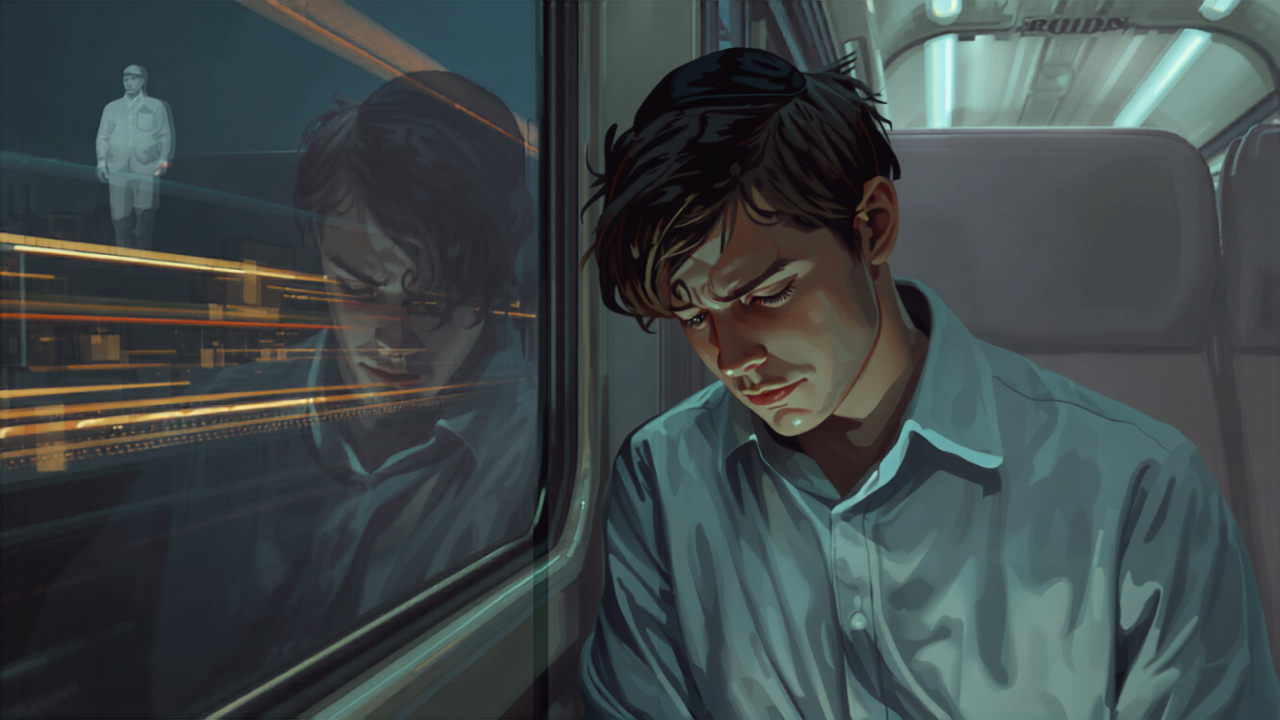
He’s twenty-six. Motzei Shabbos he tells his mother he’s going out with friends, and it’s true. Religious friends, just modern. They take the train into the city. There’s a club. For a few hours everything is loud and fast and he feels more awake than he’s felt all week.
Now, what this boy is not. He’s not a kofer. He didn’t read the wrong book. He has never once questioned Hashem. Not at nine, not now. The emunah went in before language did. On Yom Kippur he means every word. Some years he cries.
He has a script for the city, and you know the script, because we’ve all heard a version of it. It’s fine for now. Not when I’m married. By then I’ll be good.
Except the years pass. The wedding gets closer, or it happens. And the pull doesn’t shrink, because it was never a phase. So now he’s living in two halves that don’t touch, and the hatred he carries for himself, I’ve seen it up close, and it’s not what you think. It’s not guilt. It’s worse.
The question that eats him at two in the morning is actually a good kushya. Everyone got the same rules. Everyone was warned about the same city. Everyone else manages. So why is the pull so much bigger in me?
And the community has one answer on the shelf. You’ve heard it given. Your yetzer hara is bigger because your reward will be bigger. The greater the struggle, the greater the schar.
Look at that answer for a second. Really look at it. The reward is in the next world. You can’t check it. Asking for proof is itself a failure of emunah. So the claim can never be tested, and testing it makes you worse, and doubting it makes you worse, and every road leads back to the same address: I’m evil, and the answer is to double down on the exact thing that’s crushing me.
A boy who spent his whole life in shakla v’tarya, trained to demand a source, to flip every sevara, gets handed exactly one claim that’s built so no question can touch it. One. And it’s aimed at his own soul.
There is one question that opens the trap, and it’s the one he was raised to treat as off-limits. And no, it’s not “is the Torah true.” The Torah is true. That’s not on the table, not here, not ever, and if that’s what you came to fight about, you’re reading the wrong article. The question is smaller, and it’s allowed. This specific fence. Where did it come from? Who built it, when, against what?
Because the fences have a history, and the history explains him.
The Morocco my family comes from was, by today’s yeshivish standard, loose. Self-governed, our own courts, our own rhythm, and a practice with a lot more give in it than what we now call frum. Not because they were weaker Jews. Because there was no exit. A Jew there couldn’t stop being a Jew. Conversion was social death. Citizenship didn’t exist. Your heritage was written on your whole life. When nobody can leave, you don’t need high walls.
Then the modern world opened the door. Citizenship stopped caring about heritage. A Jew could blend, move, disappear. And the walls went up fast. More stringency. More visible difference. Dress built so a man can’t blend into a street. The walls are highest exactly where the doors are most open. Which is why the highest walls in our history are standing right now, in the diaspora, three train stops from the most open door on earth.
Now put the boy back in the picture. He isn’t failing Sinai. He’s failing a fence that was built for a door that opened two hundred years ago. And that fence was calibrated for one kind of nervous system, because the men who built it had no way of knowing there was another kind.
So let me tell you what’s actually in his head, because we can describe it now, and it’s not a yetzer.
It’s called ADHD, and forget what you think that word means, because it’s not a discipline problem. It’s a dopamine problem. Dopamine is the chemical that makes effort feel worth starting, and in this brain it releases differently. Scheduled things, repeated things, obligatory things barely register. The signal is too quiet to turn the engine over. New things, intense things, immediate things come through loud. So for this brain, routine isn’t grounding, it’s starvation, and novelty isn’t indulgence, it’s fuel. That’s the boy who couldn’t sit through fifteen minutes of davening and then disappeared into one sugya for four hours. The engine was never broken. It doesn’t start for schedule. No matter how holy the schedule. No matter how much he believes, and he believes.
Now put that engine inside the most repetition-heavy, schedule-locked way of life on earth, three train stops from the loudest dopamine source ever built, and tell me the pull in him should be the same size as the pull in the boy sitting next to him.
So he was right, this whole time. The pull really is bigger in him. The same restriction costs him more to keep and the same temptation is louder. He measured correctly his whole life. He was just handed the wrong cause. It’s not your yetzer hara. It’s your brain.
Now the fences, and I want to say this part carefully, because it protects both sides. The fences are legitimate. It’s in the first Mishna of Pirkei Avot: asu seyag laTorah, make a fence for the Torah. The rabbis were told to build protection, and they built it, and it worked, and we’re alive because it worked. But the fence is not the Torah.
Two different things, merged over so many generations that nobody can see the seam anymore, so that a boy who trips on the fence believes he fell off Sinai. And to be clear, none of this is an excuse to break them. I’m not handing anyone a heter. It’s an explanation. An explanation for suffering inside a system that is closed on purpose, a system where even I don’t have the authority to question. But a brain isn’t a psak. A brain I have the authority to explain.
And here’s why the explanation matters more than anything else in this article. The need for variety doesn’t go away. It’s hardware. But a need you understand can be fed on purpose. There are ways to give this nervous system its novelty and its intensity that don’t cost a boy his family, his neshama, or his self-respect, and every single one of them becomes available at the same moment: the moment he finally knows what the pull is. Right now these boys have the whole sequence backwards. They don’t understand the pull, so they hate themselves for it, and the hatred is exactly what opens the door, because shame doesn’t build restraint. Shame builds secrecy, and secrecy is where the pull lives. First he hates himself, then he allows it.
Every time, in that order.
Flip the order. Remove the shame, hand him the real explanation, and for the first time in his life he’s standing in front of the pull with a choice instead of a verdict. That’s when it can be steered somewhere that doesn’t destroy him. Not before.
Understanding first. Everything else second.
We know these boys. Everyone at your table can name one. And we hold what we know the same way they hold the second phone. Quietly. He’s going through something. He’ll settle down when he marries. They hide their nights from us. We hide them from ourselves.
I grew up watching this. Boys in and out of the door for years, tzitzit and clubs, teshuva and relapse, and the self-blame in them wasn’t regret. It was hatred, at themselves, in the name of God. Those boys are the men in my office now. And I finally have the thing nobody had when we were young.
It’s not your yetzer hara. It’s your brain. He was loyal the entire time. Tell him.
Karine Spiess, LMHC, is a licensed mental health counselor and Author of the “The Stuck Point” Sulf.org. She grew up in a religious Sephardic community and works with late-diagnosed neurodivergent community.