


The Bus Stop Battlefield: My Body Is Not Your Theology
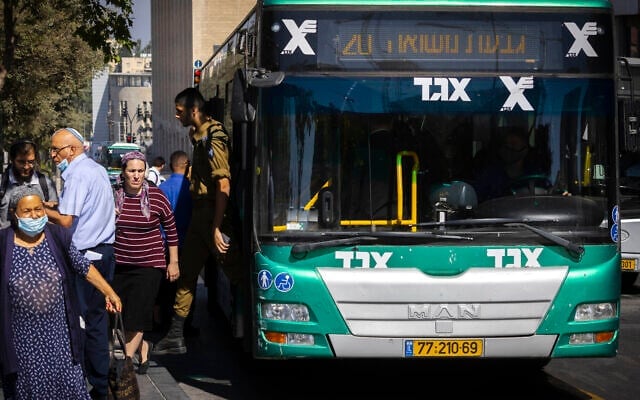
We are living in a moment where the promise of Israeli democracy is being suffocated, not just by external threats, but by a slow-motion rot from within. Last week, in the Haifa suburb of Nesher, Tal Kostika—a pregnant woman—was labeled a “whore” by an elderly religious man because she dared to exist in public while wearing a tank top and leggings. He didn’t just shout slurs; he physically elbowed her in the stomach and spat on her.
This wasn’t merely an act of a disgruntled individual; it was a symptom of an emboldened, radical ideology that has found its home in the halls of power. Under the current Netanyahu-led coalition, we are witnessing a normalization of extremism that treats the public sphere as a private domain for the ultra-conservative gaze. When a woman cannot board a public bus without fearing for her safety, the state has failed its primary obligation to its citizens.
The Erasure of Public Space
What happened to Tal is the sharp, violent edge of a policy of “gender exclusion” that has been simmering for years. Legal experts like those at the Israel Women’s Network have rightly identified this as a concerted effort to push women out of the public eye. When a transit company like Egged responds by saying the assault happened “at the station” and is “not their responsibility,” they are complicit in this erasure. They are telling women that their safety is conditional, subject to the whims of whoever feels empowered enough to enforce a extremist code of modesty.
This is the logical endpoint of a political environment where radical cabinet members openly signal that secular, liberal values—and the women who embody them—are obstacles to their vision of the state. When the leadership prioritizes religious coercion over civil equality, it sends a green light to fanatics: your intolerance is not just tolerated; it is shielded.
From Rhetoric to Bodily Autonomy
Let’s be clear: this is not about “religious sensitivity.” It is about power. It is about the radicalization of a society where women’s bodies are treated as political battlegrounds. While our government obsesses over legal overhauls and security theater, real, everyday security for the most vulnerable among us—women, the LGBT community, and secular youth—is evaporating.
If you are a young woman in Israel today, you are being told that your existence is an provocation. You are being told that if you wear a tank top, you are inviting violence. This is the hallmark of a failing democracy: when the state abdicates its responsibility to protect the individual’s right to live, move, and dress as they please, the social contract is shredded.
The Silence of the Bystanders
The most chilling part of Tal’s story isn’t just the attacker; it’s the institutional inertia. When the bus driver refused to intervene, citing that he “wasn’t interested” and had to keep moving, he became a symbol of a society that has decided looking away is safer than standing up. We have become a society of professional bystanders.
We are constantly told that Israel is the “only democracy in the Middle East.” But a democracy cannot survive if its public transport requires a dress code dictated by religious extremism. It cannot survive if the government is more interested in satisfying radical coalition partners than in protecting the autonomy of its female citizens.
A Call for Reckoning
We are at a crossroads. As a feminist, as a journalist, and as someone who refuses to watch the light go out in this country, I am tired of being told to “stay strong.” I don’t want to be strong; I want to be safe. I want to live in a country where a pregnant woman is not forced to fear for her fetus because she offended someone’s narrow, antiquated view of modesty.
The radicalization we see in the cabinet is leaking into the streets. It is manifesting in the bus stations, the schools, and the workplaces. If we do not stop this now—if we do not demand that our leaders prioritize the rights of all citizens over the whims of the ultra-conservative minority—we will wake up to a reality where the public sphere is no longer a place for us.
Tal’s trauma is our collective warning. Our bodies are not for you to police. Our buses are not for you to segregate. And our democracy is not for you to dismantle. We aren’t going anywhere.