Evaluating Sustainable Wellness Hospitality
The Butterfly Effect: A Family Stay in Old Akko, From a Stone Kitchen to a 33-Meter Wall
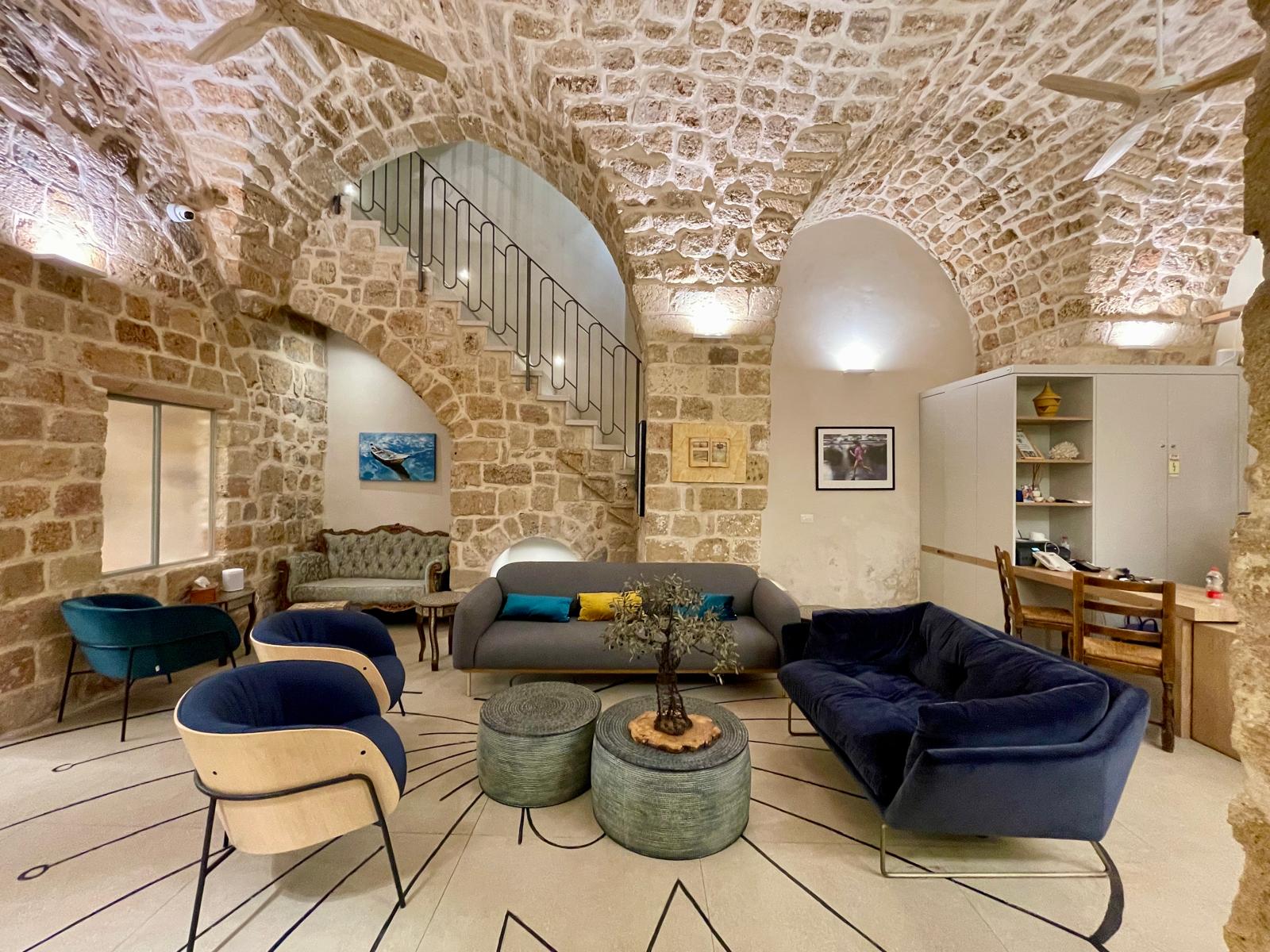
Photo credit: Noam Bedein (unless mentioned otherwise)
Beit Elfarasha: A Butterfly House in the Heart of Old Akko
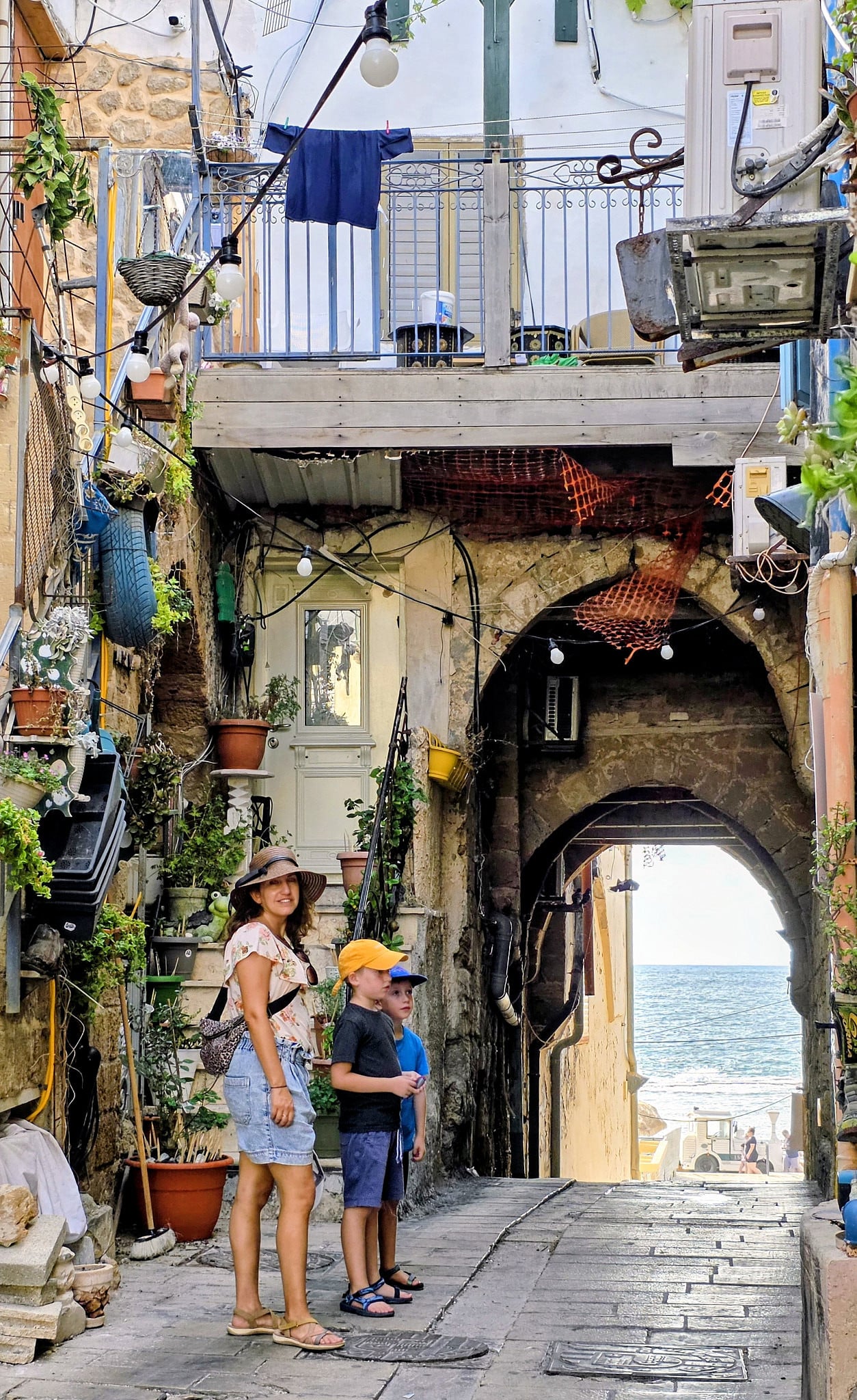
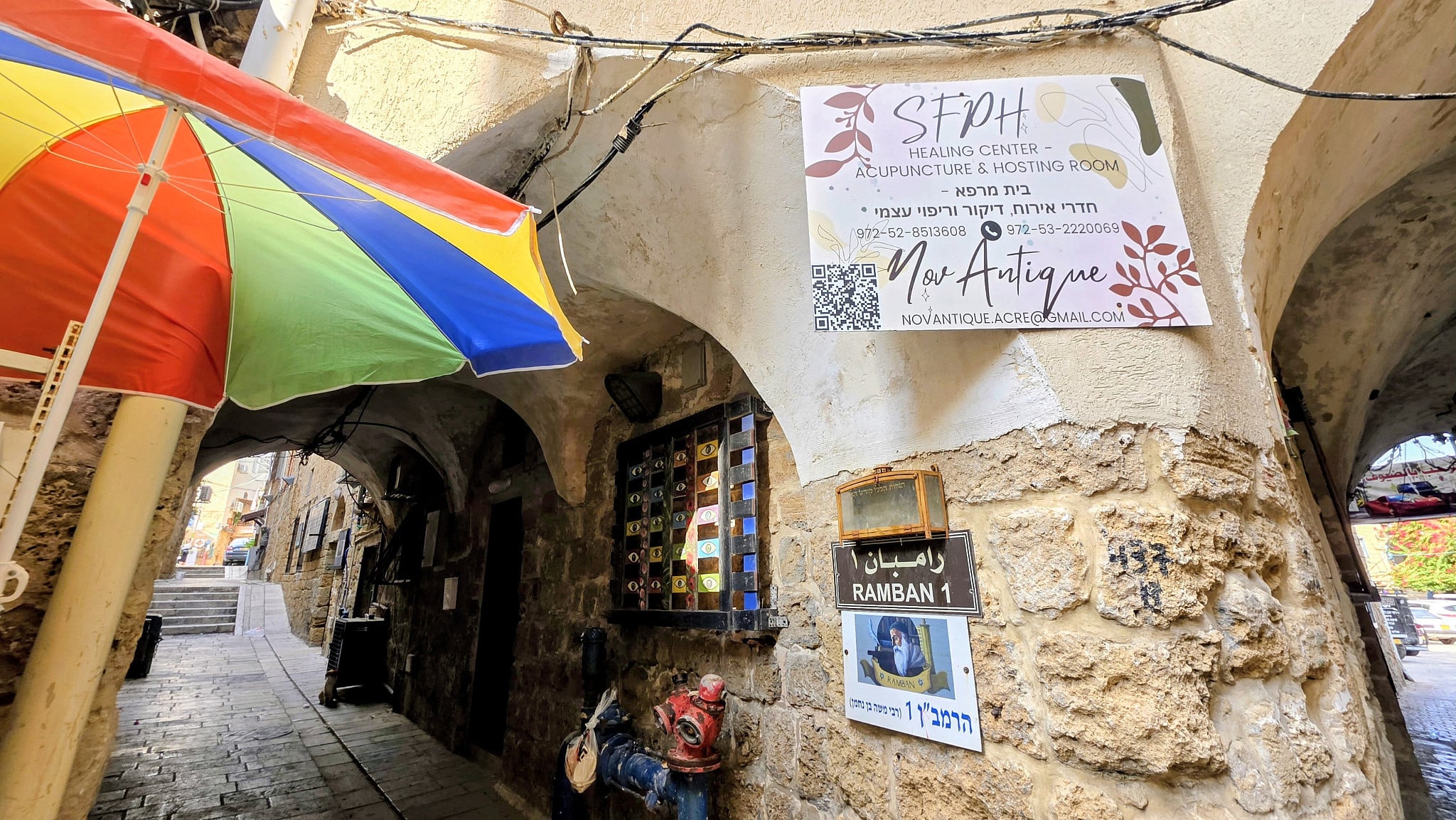
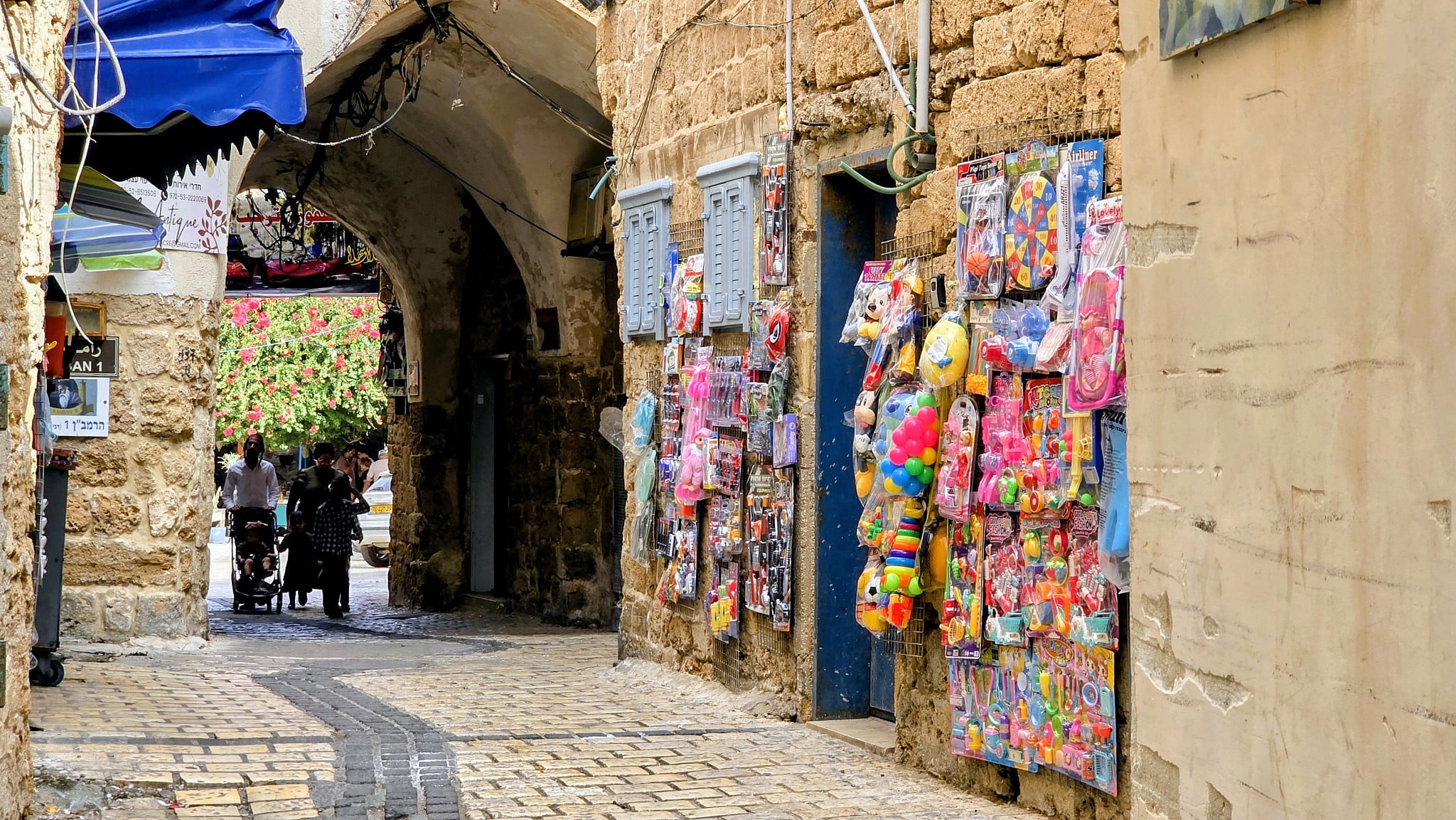
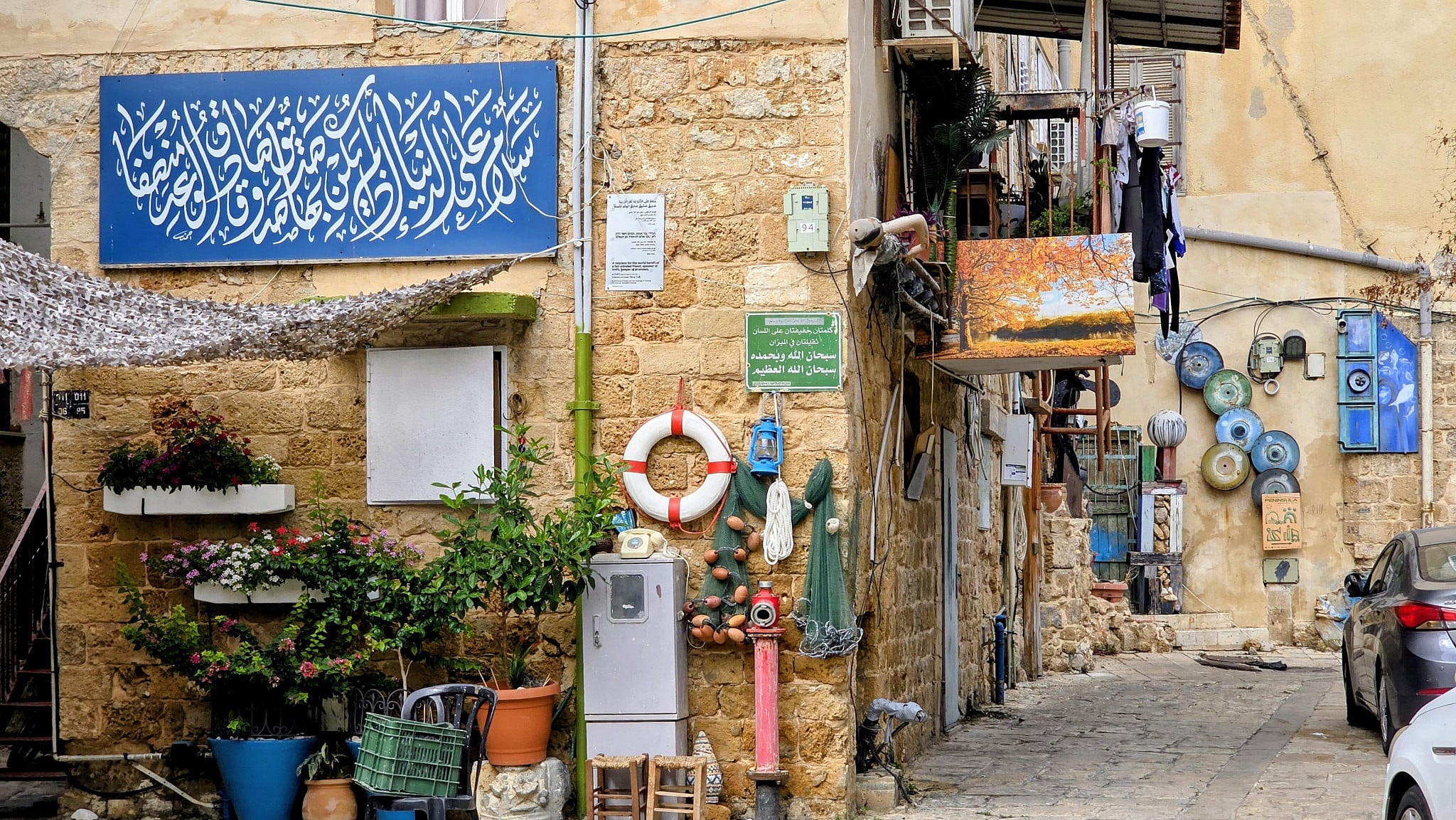
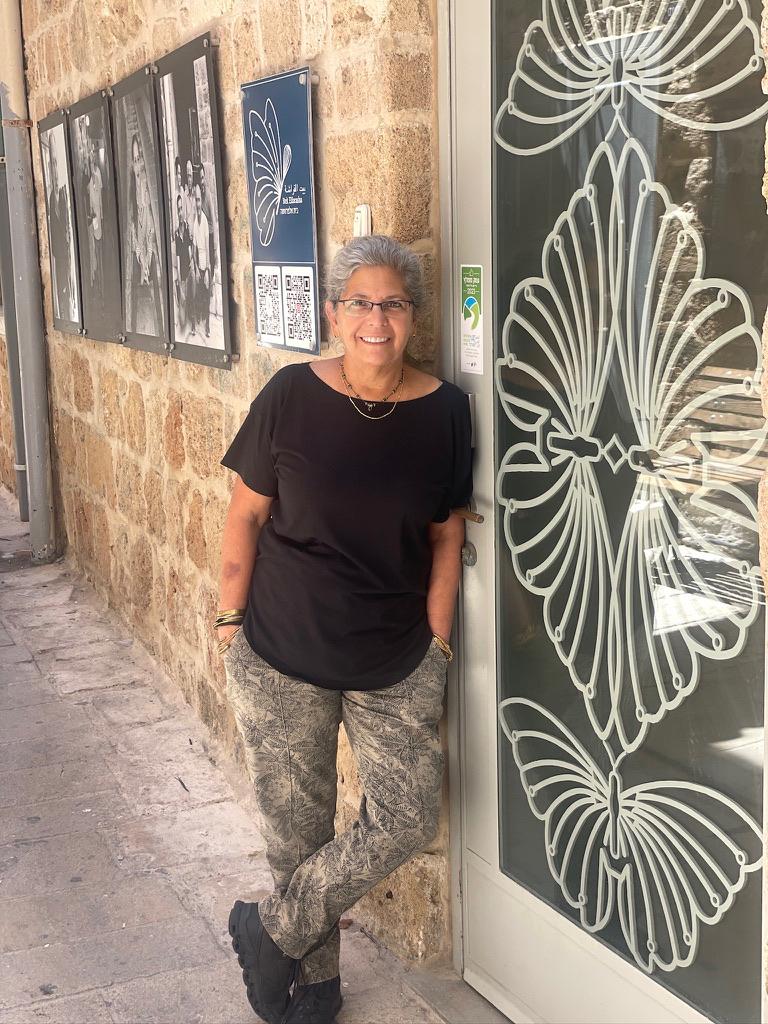
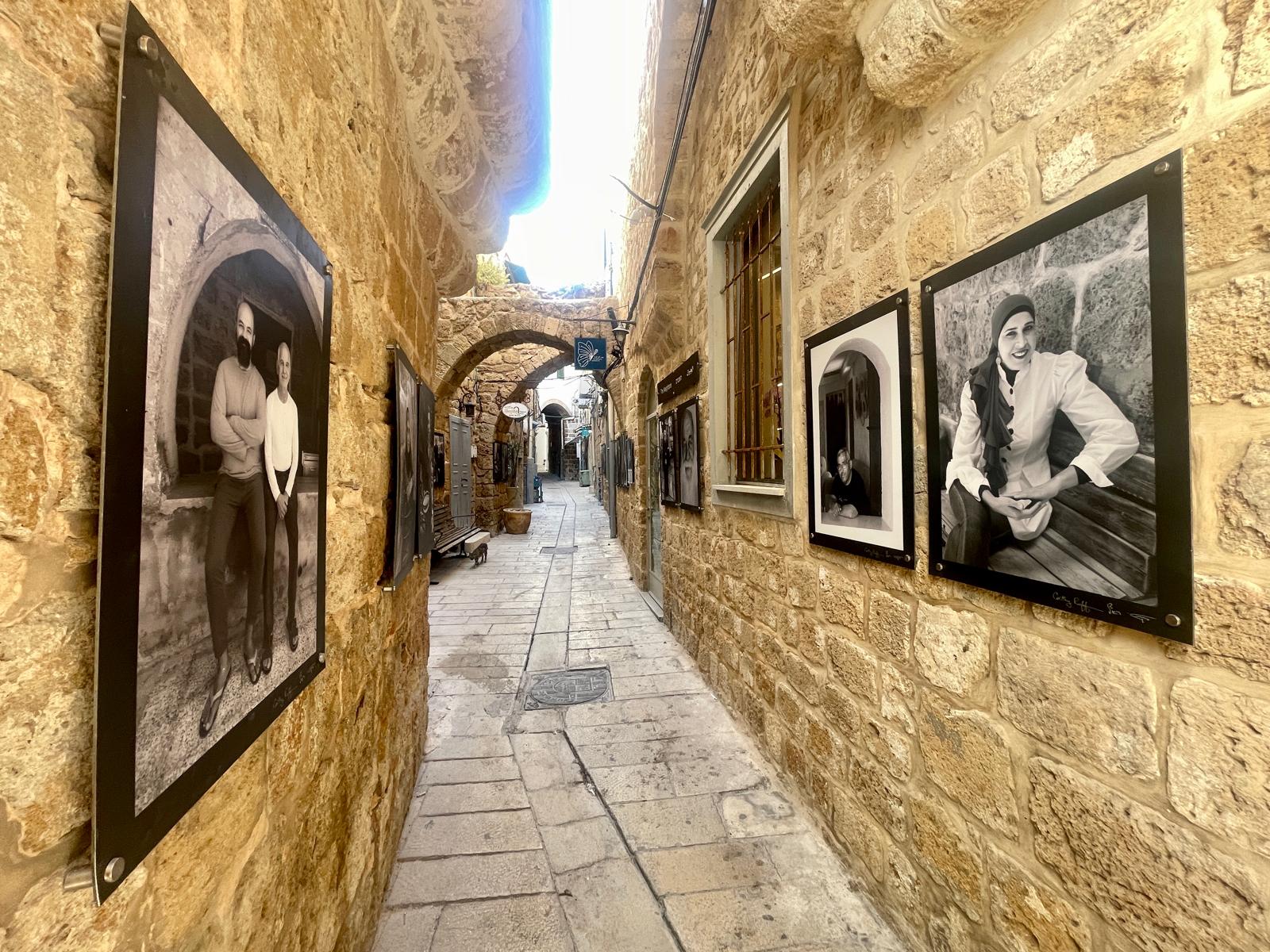 We stayed at Beit Elfarasha, tucked into a quiet alley of Old Akko, a minute’s walk from the ancient sea wall. Manager Nura Kurdi, who grew up in these alleys, welcomed us warmly and answered every question. Farasha is Arabic for butterfly. Founder and owner Cathy Raff built the house around the idea of the butterfly effect: small, personal encounters between visitors and the people of Akko can grow into friendships and real change.
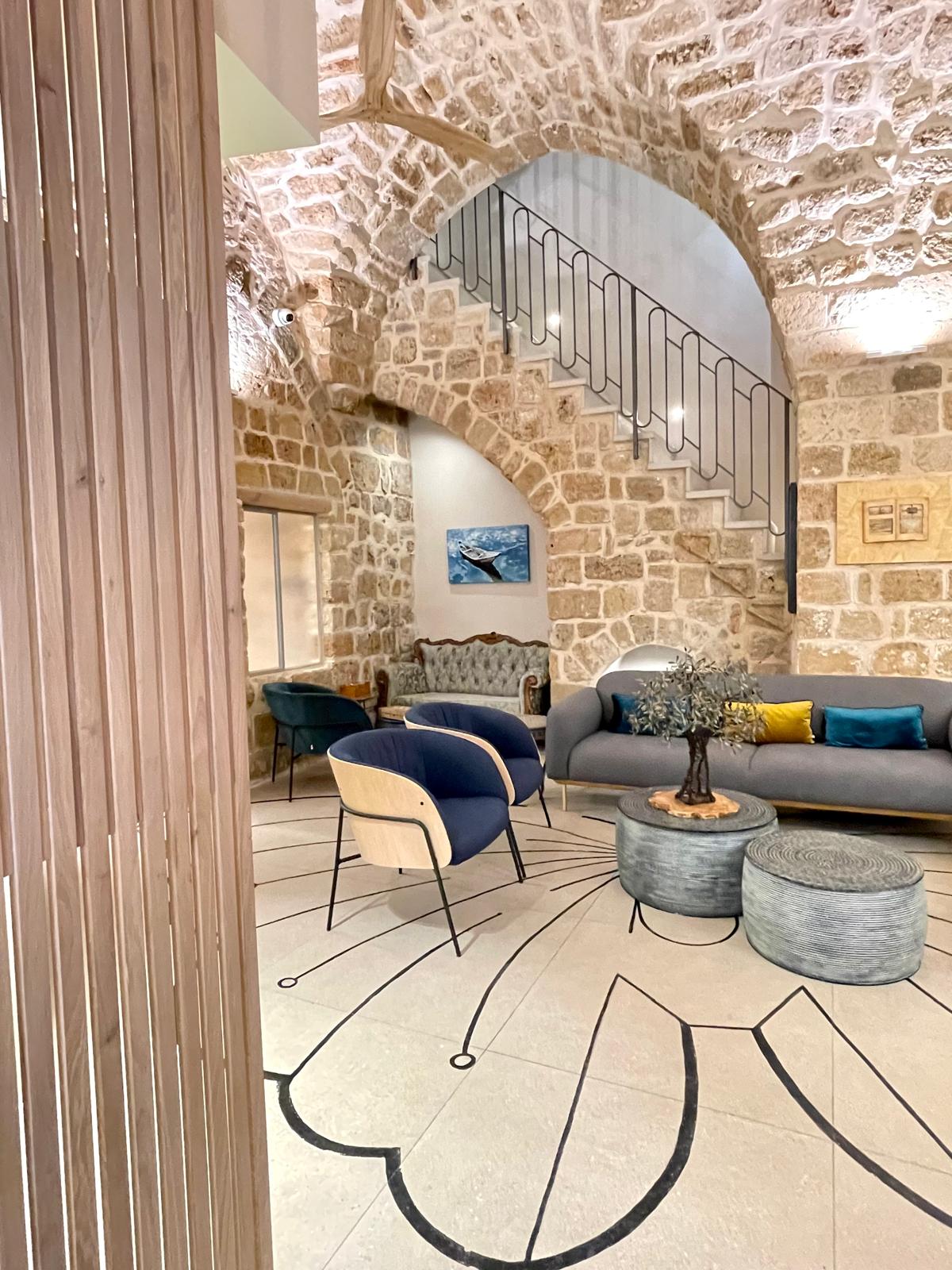
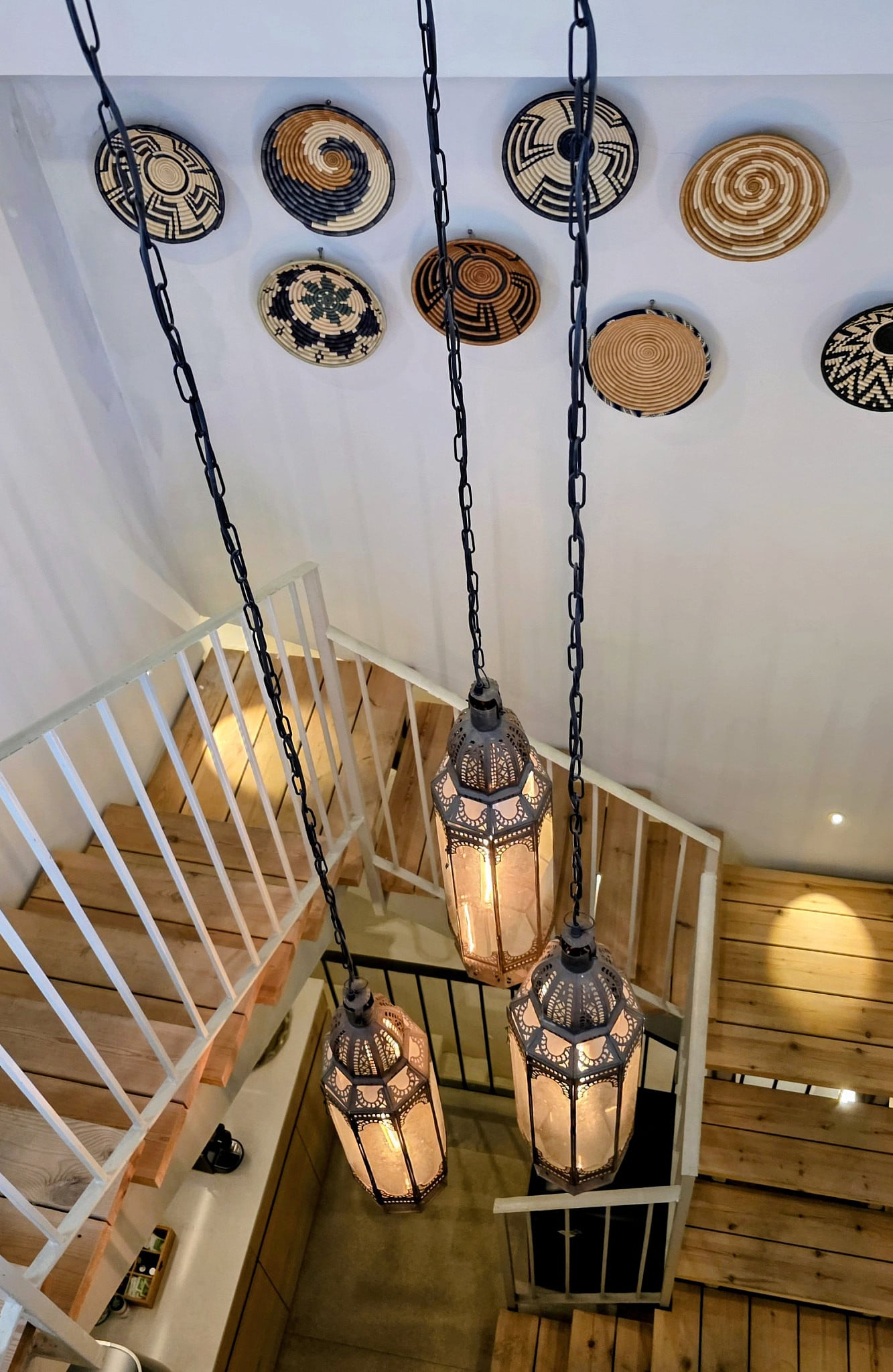
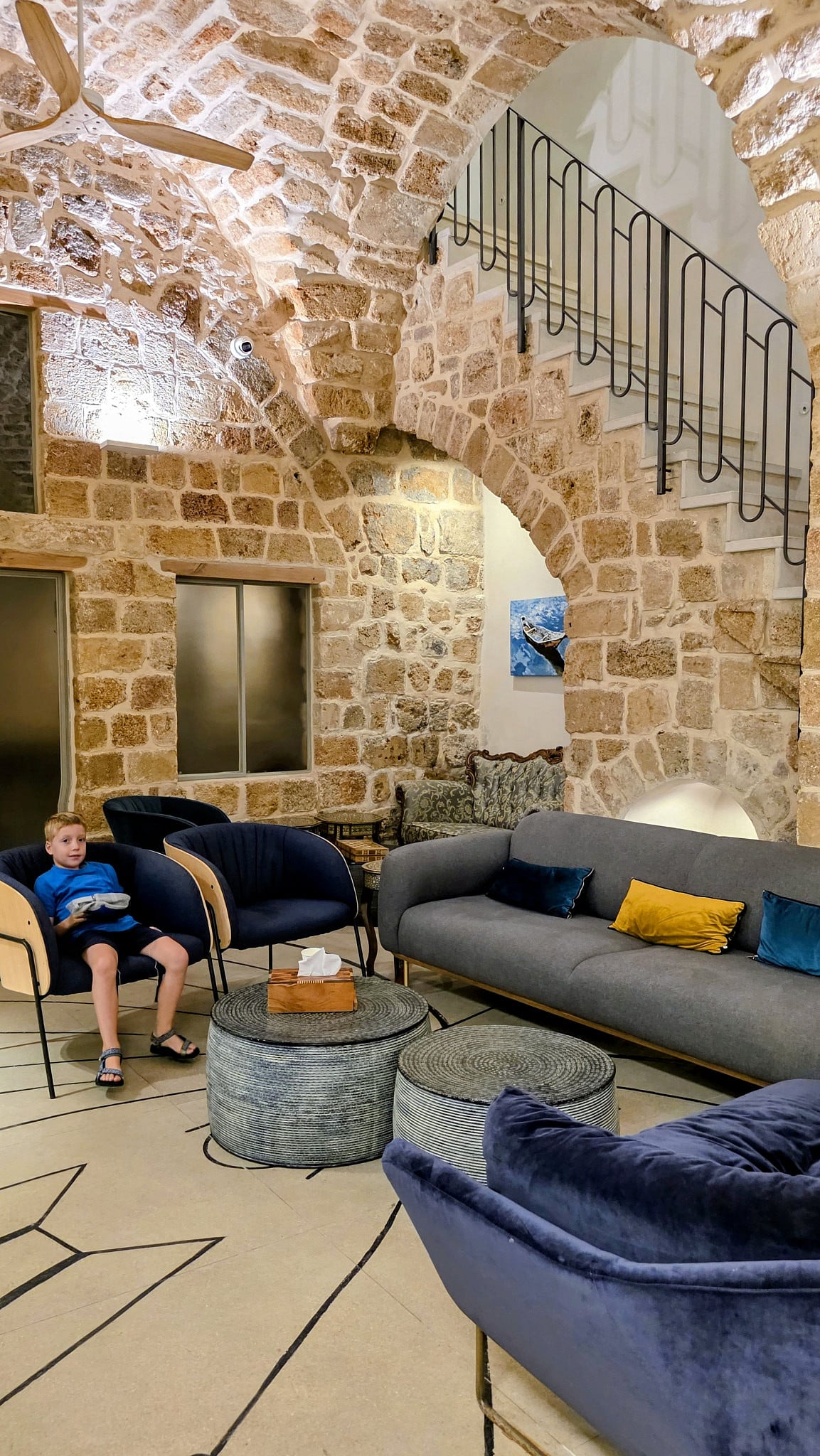 The house sits in a 200-year-old Ottoman building with Crusader remnants nearly a thousand years old, restored with great care. You enter through a butterfly-shaped door into a lobby under a high Ottoman stone ceiling. Set into the floor is a butterfly labyrinth by the international artist Marcia Raff, Cathy’s mother. Pieces from Morocco, Turkey, Rwanda and Israel make the salon feel like a well-traveled friend’s living room.
Every guest receives two Tiger’s Eye stones, left from The Friendship Stone, a business Cathy founded in 2004. She placed the rest beneath the floors to fill the house with positive energy. One stone is a keepsake. The other is meant to be given away, because for Cathy, giving is one of the greatest feelings in the world. Tiger’s Eye changes as you turn it in the light, and she sees a lesson in that: a hard situation can be seen from another angle. We can’t control everything around us, she believes, but we can always choose our attitude.
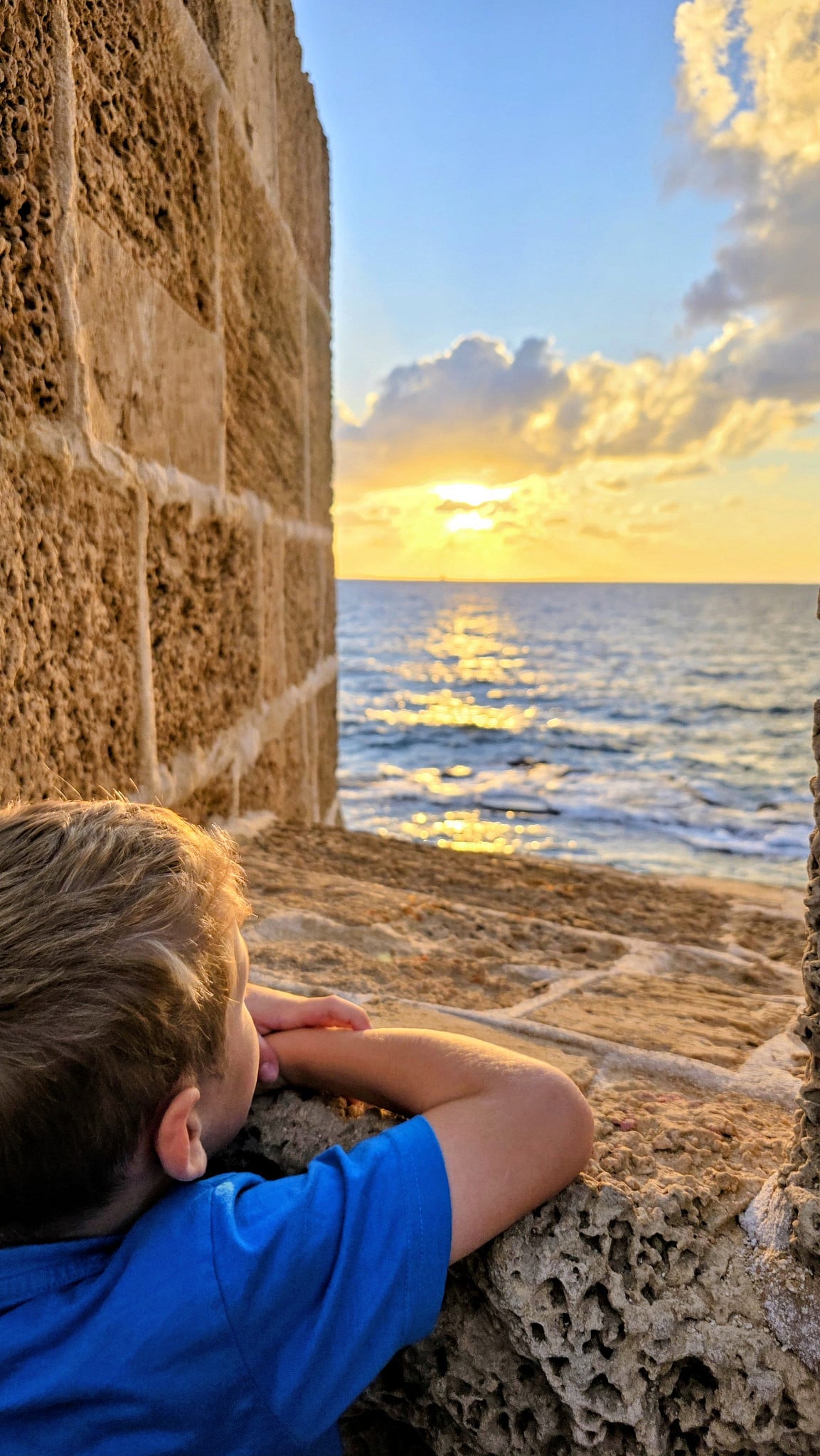
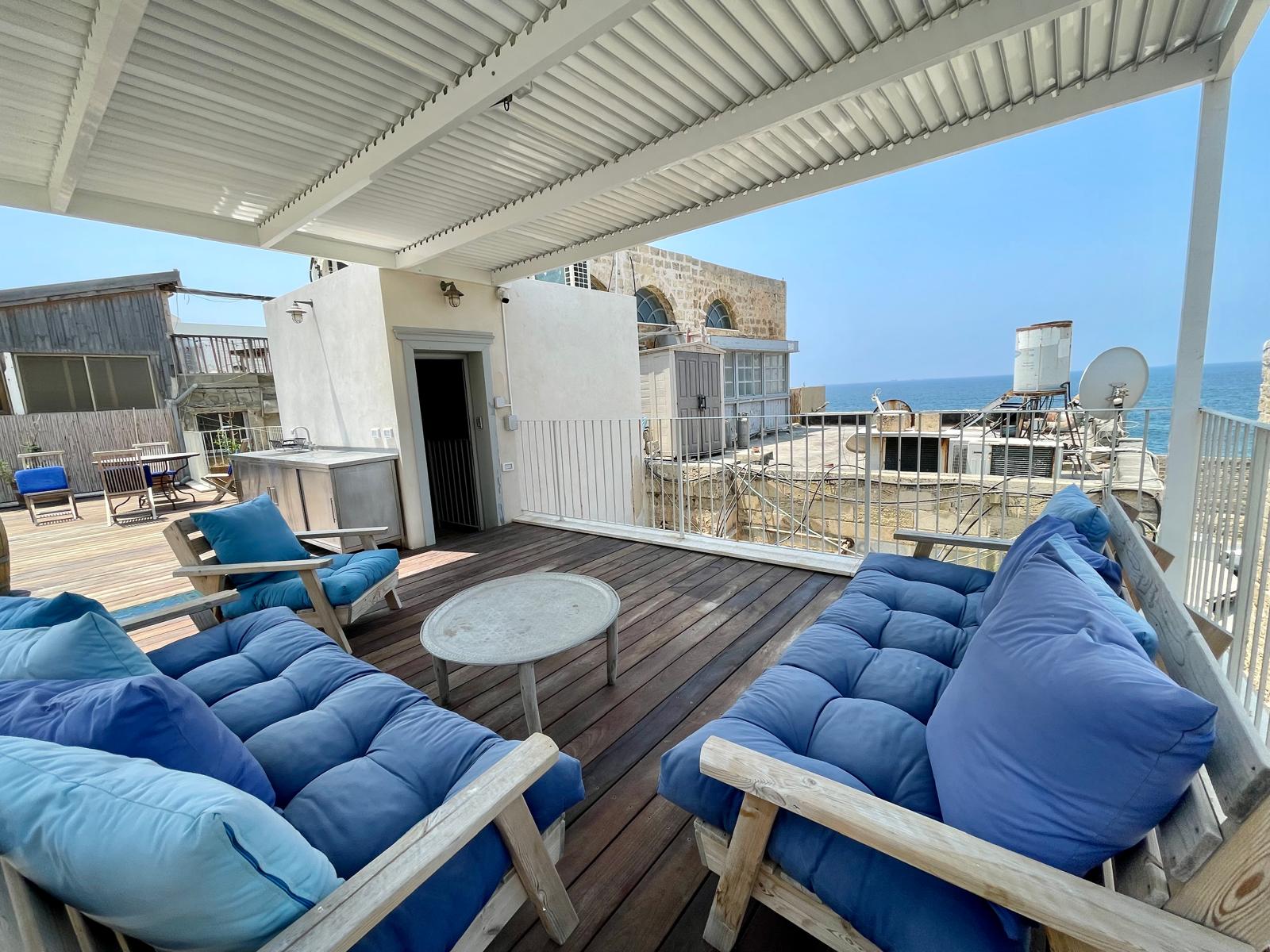
Upstairs are just two suites, the Sky Suite and the Sea Suite, and we stayed in both. A family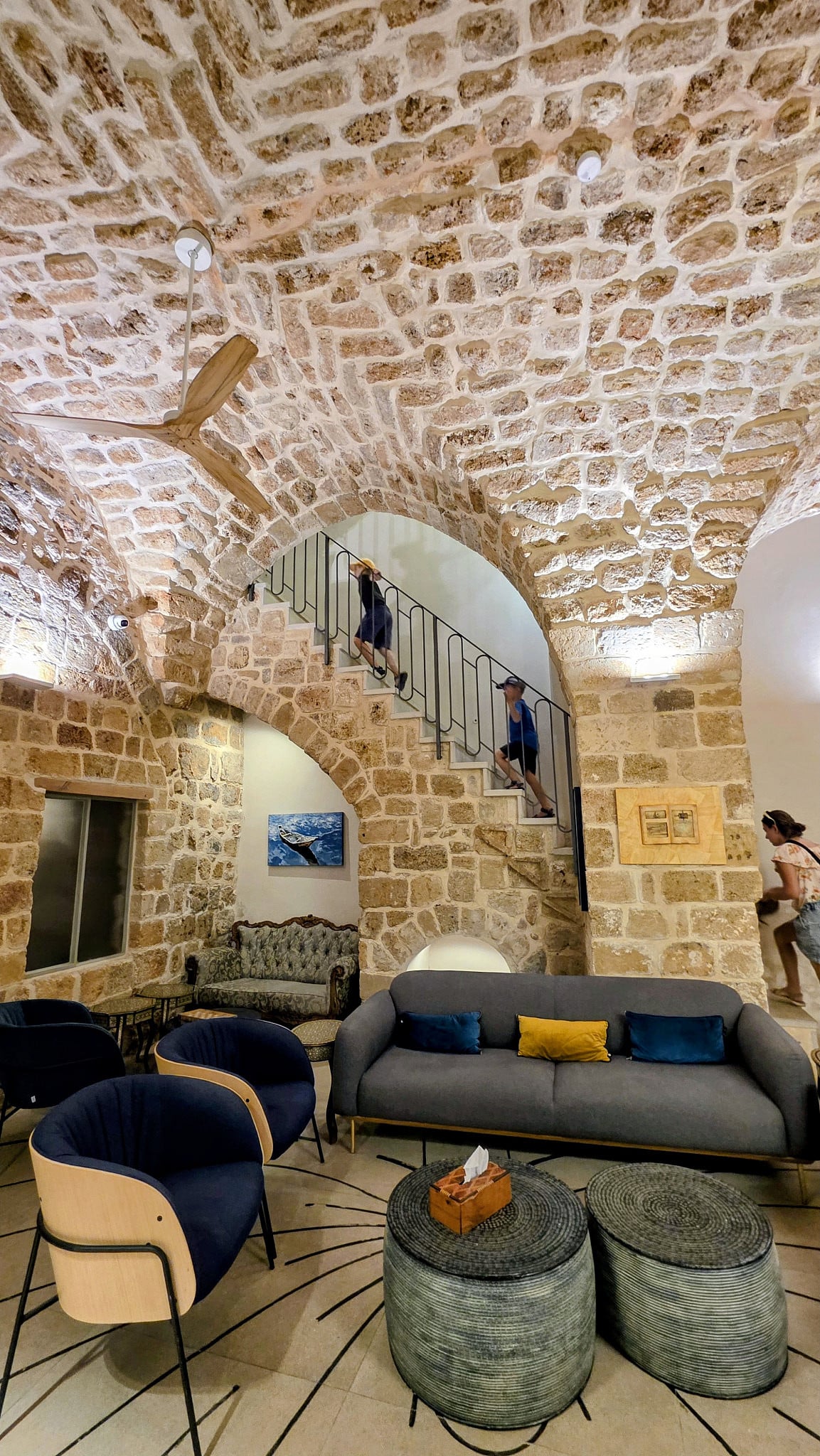 of up to six, or two couples, can have the whole building to themselves, including a private rooftop terrace where the sun sets over the Mediterranean. For larger groups, Nura also manages the nearby Melisende suites, so you can book all seven rooms together. Beds feature Cotton Club sateen sheets, and the bathrooms stock L’Occitane toiletries.
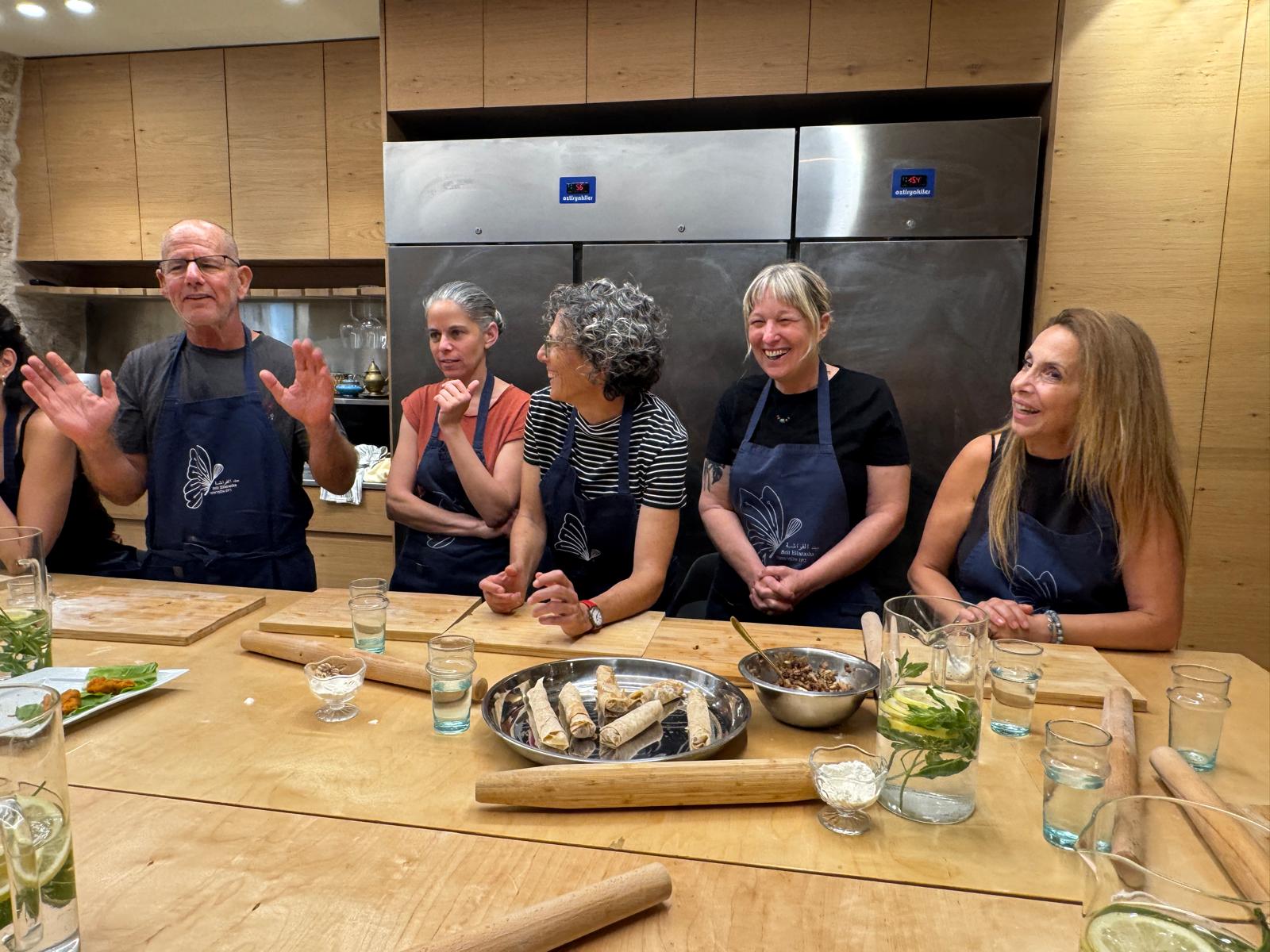
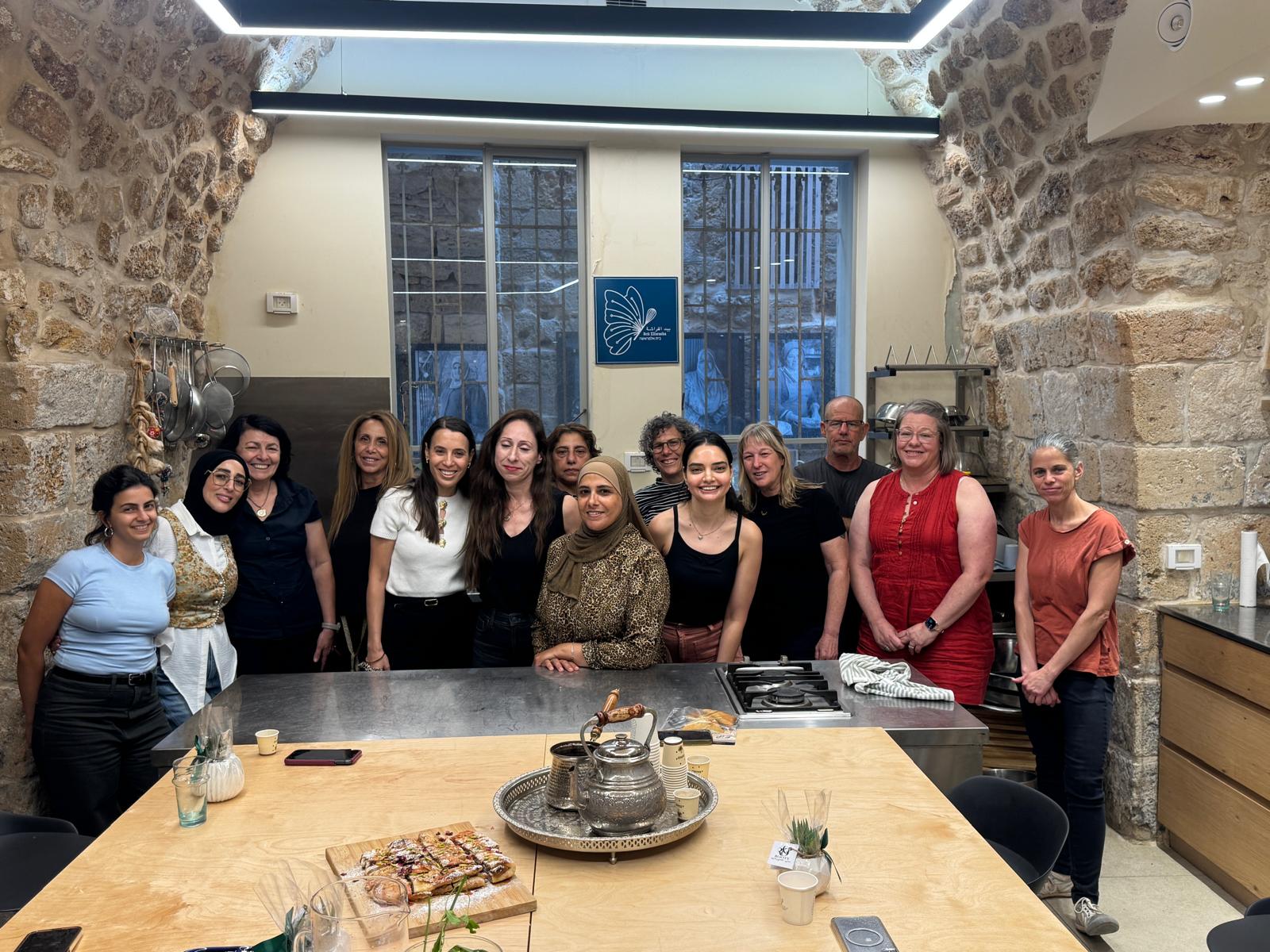
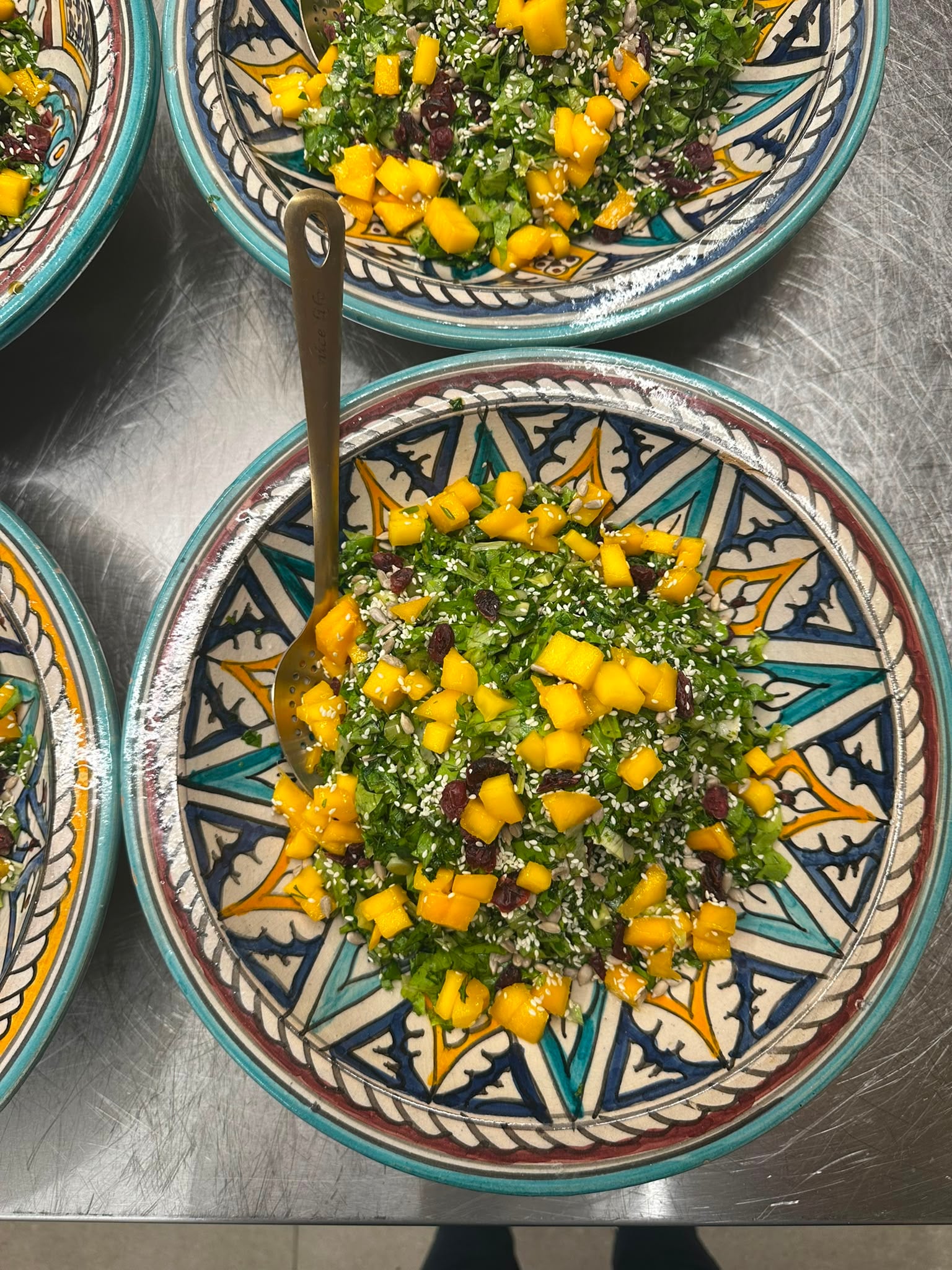 Cathy has been involved in the Old City since 2009 and opened Beit Elfarasha in December 2020 to bring visitors face to face with the people of Akko and to support local women. In a modern kitchen inside a historic Ottoman room, local women lead culinary workshops. “These workshops are meant first of all to strengthen local women economically and socially, and at the same time to create a direct connection with guests,” Nura said. “Usually tourists walk through the market, eat at a restaurant and move on, without a real chance to talk with a local person. Here, the moment men and women step into the kitchen, the barriers fall.” Guests hear each cook’s story and the story behind every dish, then sit down to eat together. Guests can also book a private Tibetan singing bowl meditation with Cathy, played on bowls handmade in Nepal by her teacher.
 Cathy and her partner, Alon Bar-Shany, dedicated the house to their mothers. Dr. Shulamit (Shula) Bar-Shany (1930-2020), a pioneer in hematology and transfusion medicine, directed the Magen David Adom Blood Bank from 1969 to 1991. Marcia Raff turns 95 this November and still designs sculptures. The workshops use olive oil from Sindyanna of Galilee, a female-led fair-trade nonprofit where Arab and Jewish women work side by side. The small lobby shop sells that oil, along with ceramic bowls by special-needs artists at the Kamah Center in Kibbutz Harduf and Mira Awad’s mugs that read Shalam in Arabic and Shalom in Hebrew.
(Last photos courtesy of Beit Elfarasha)
Where We Ate
Our first day began with lunch at Algo Dulce in northern Akko. The name is Spanish for “something sweet,” and Nofar Lankri Broitman runs it as a family place with a high standard of food and service. The kosher mehadrin dairy café serves generous breakfasts, pasta, salads, and desserts, with many gluten-free options and a full vegan menu. House specialties include a broccoli salad in garlic butter with melted Bulgarian cheese, and truffle cream tortellini. Through her catering arm, Odeleh, Nofar also provides kosher dairy catering and hosting platters for events.
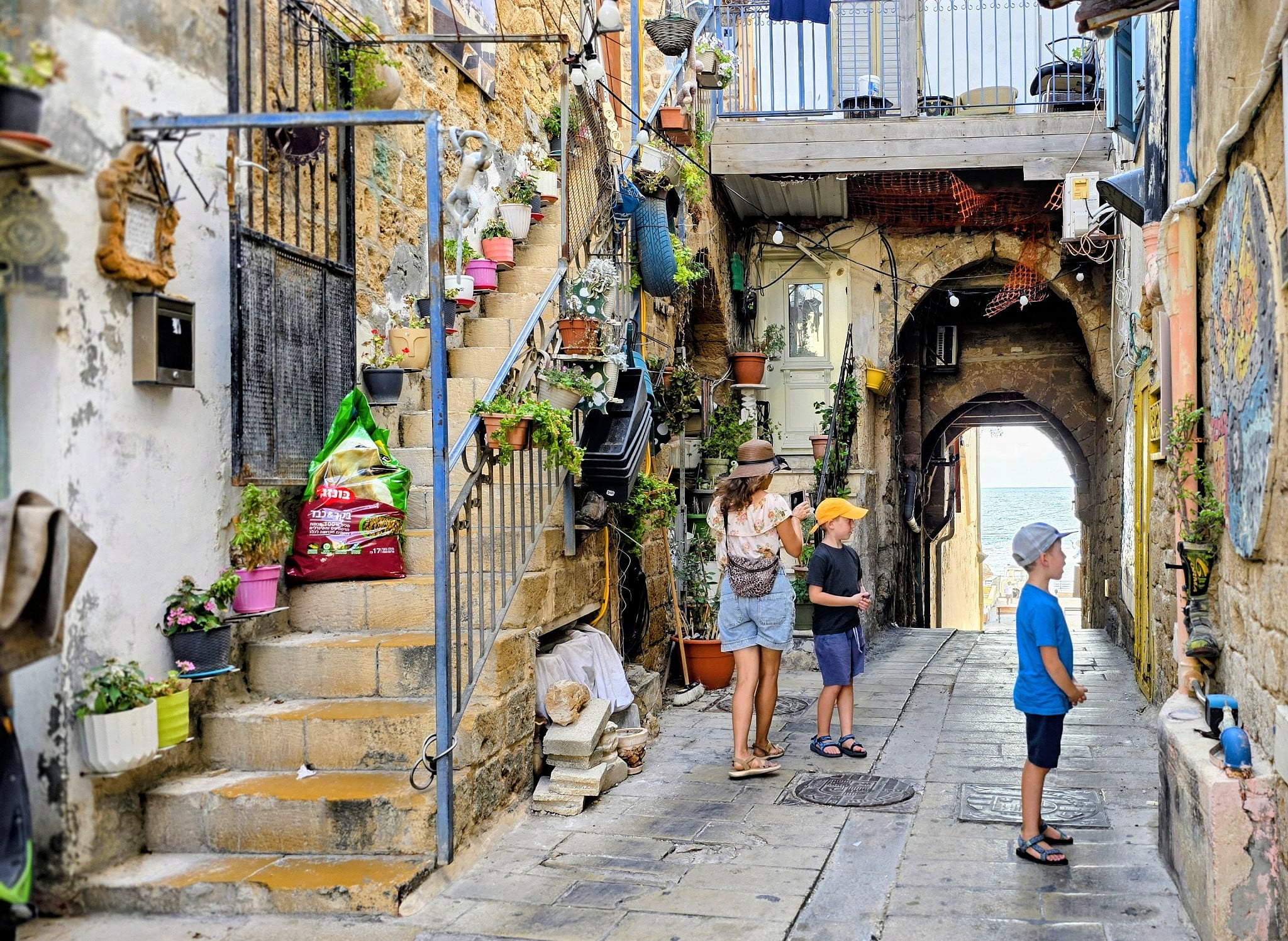
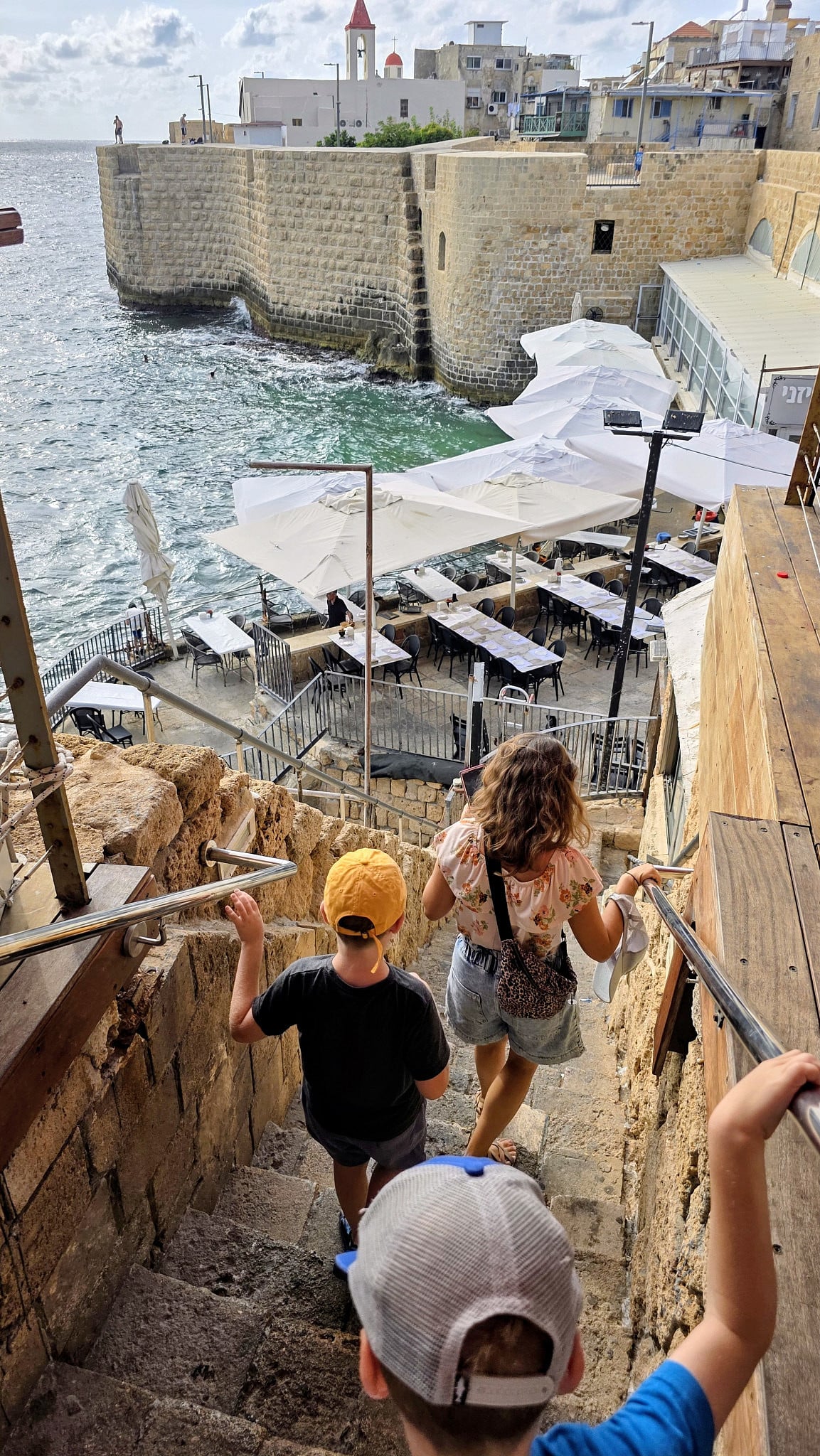
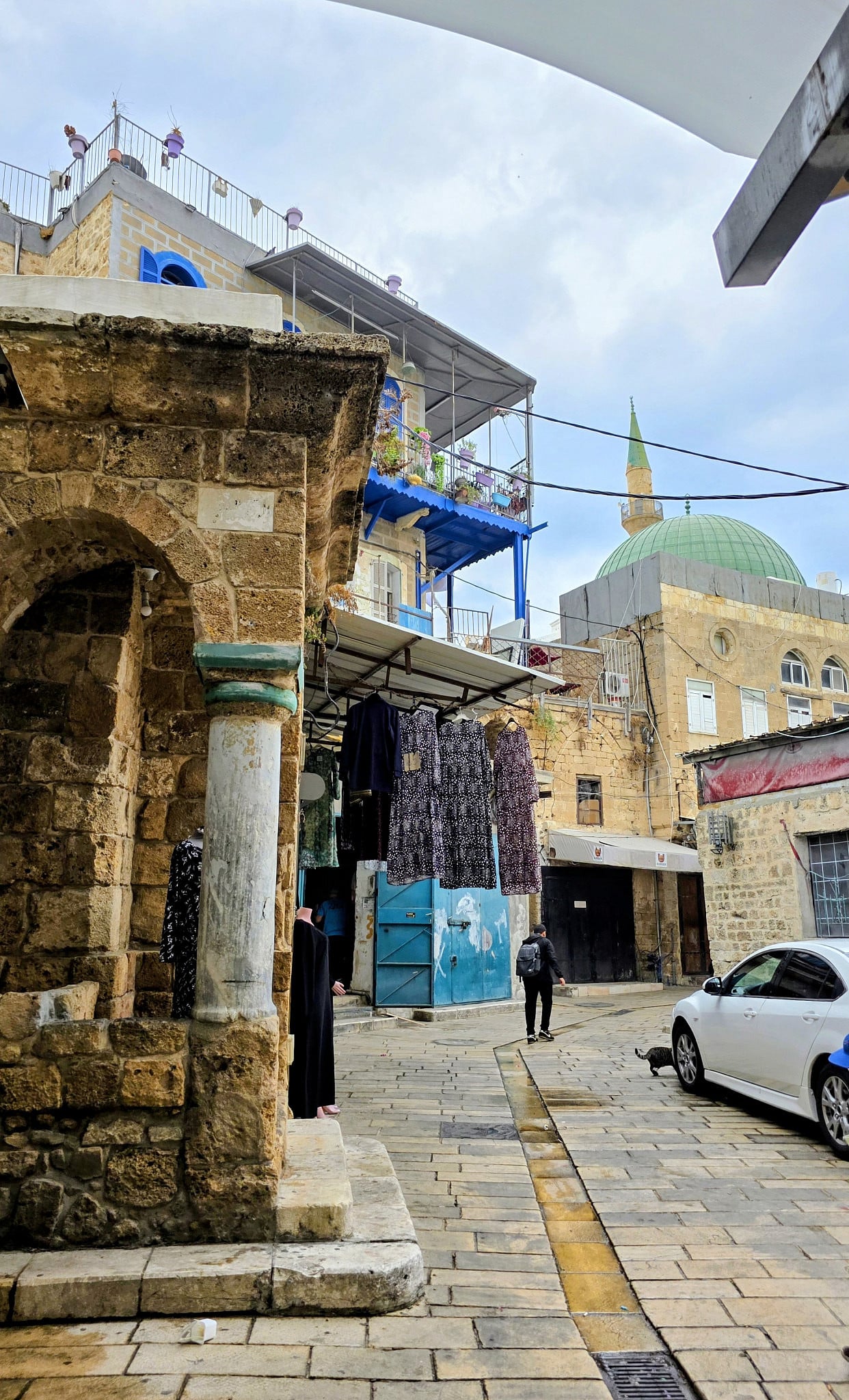
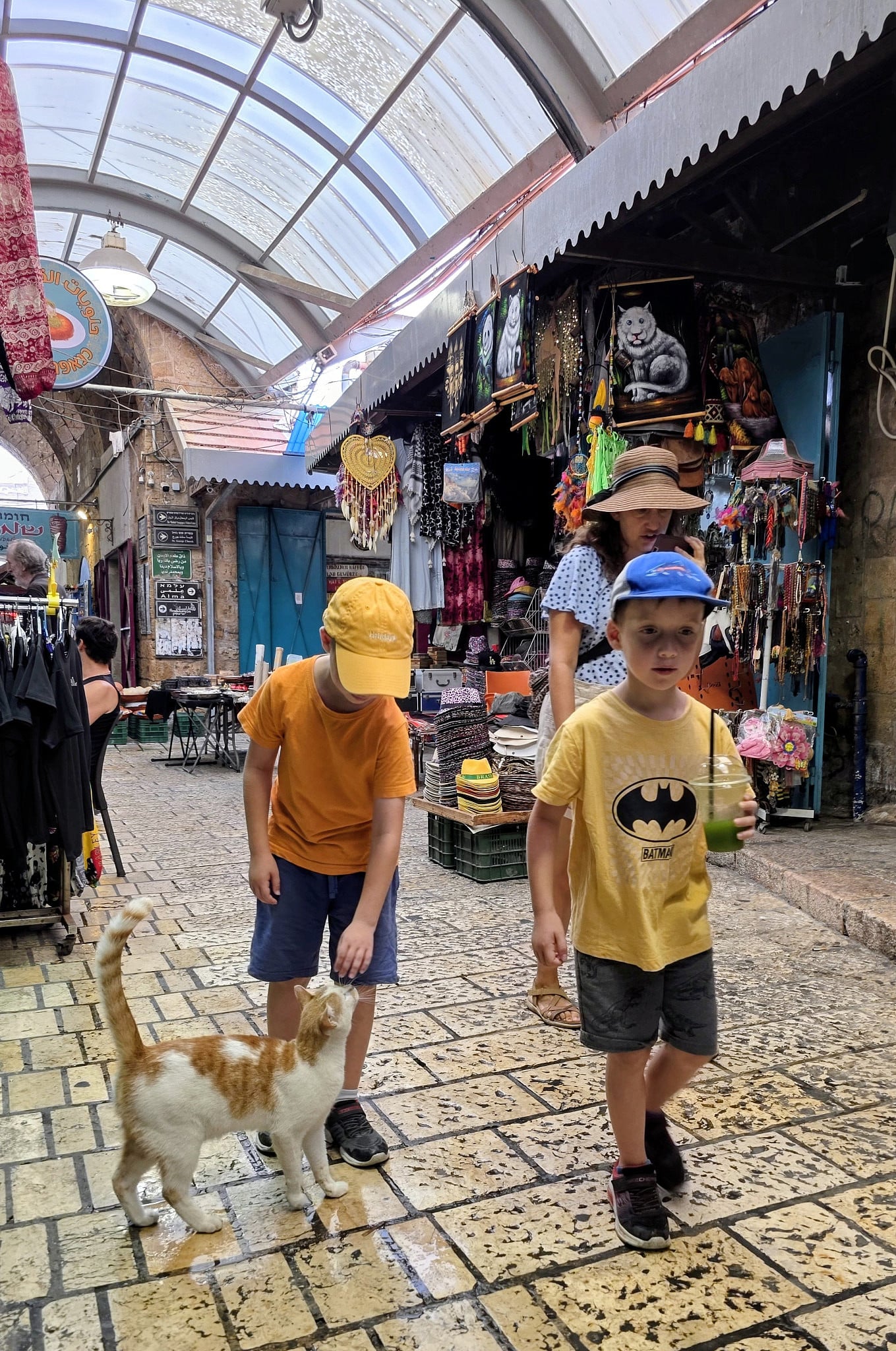
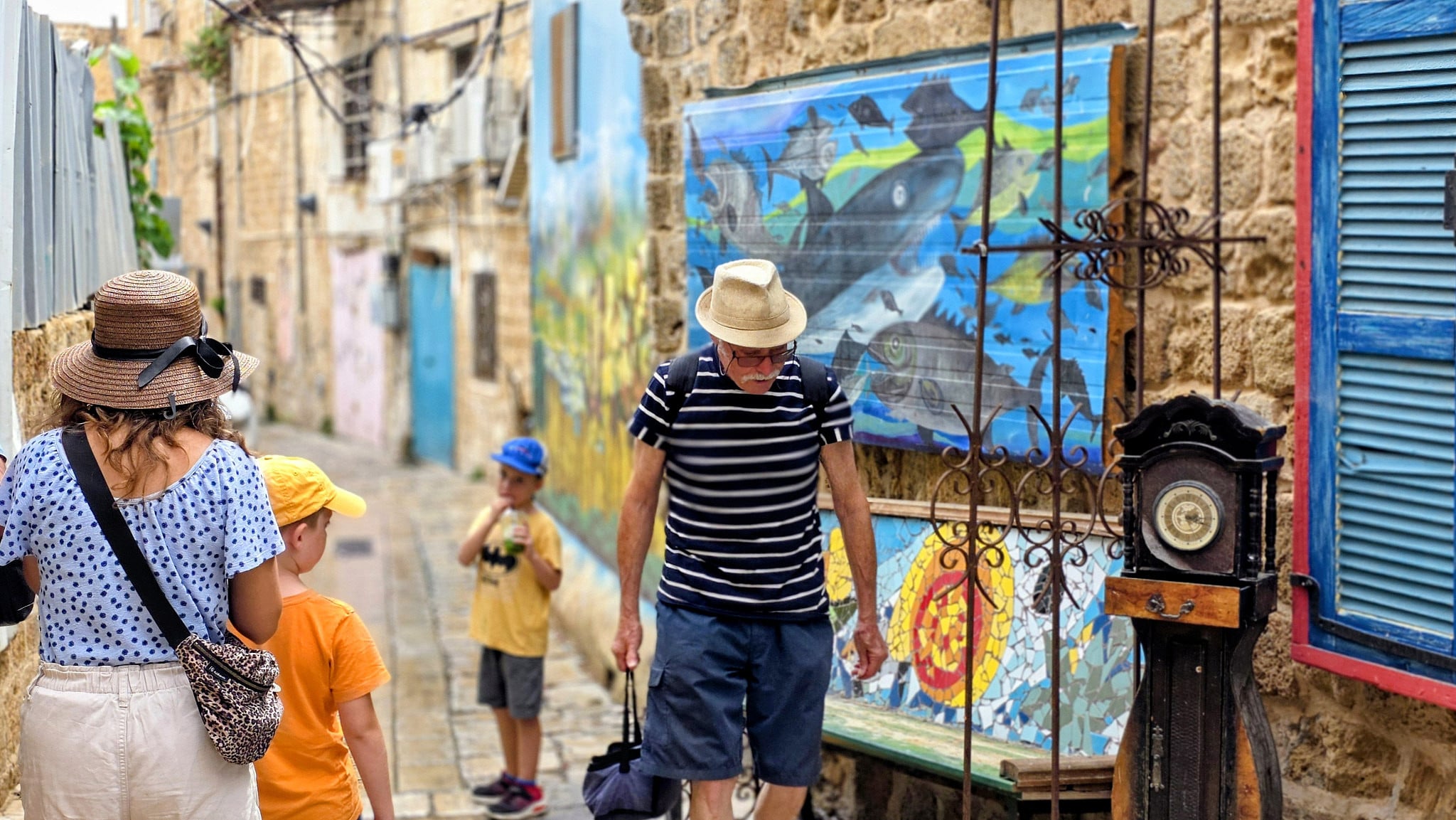
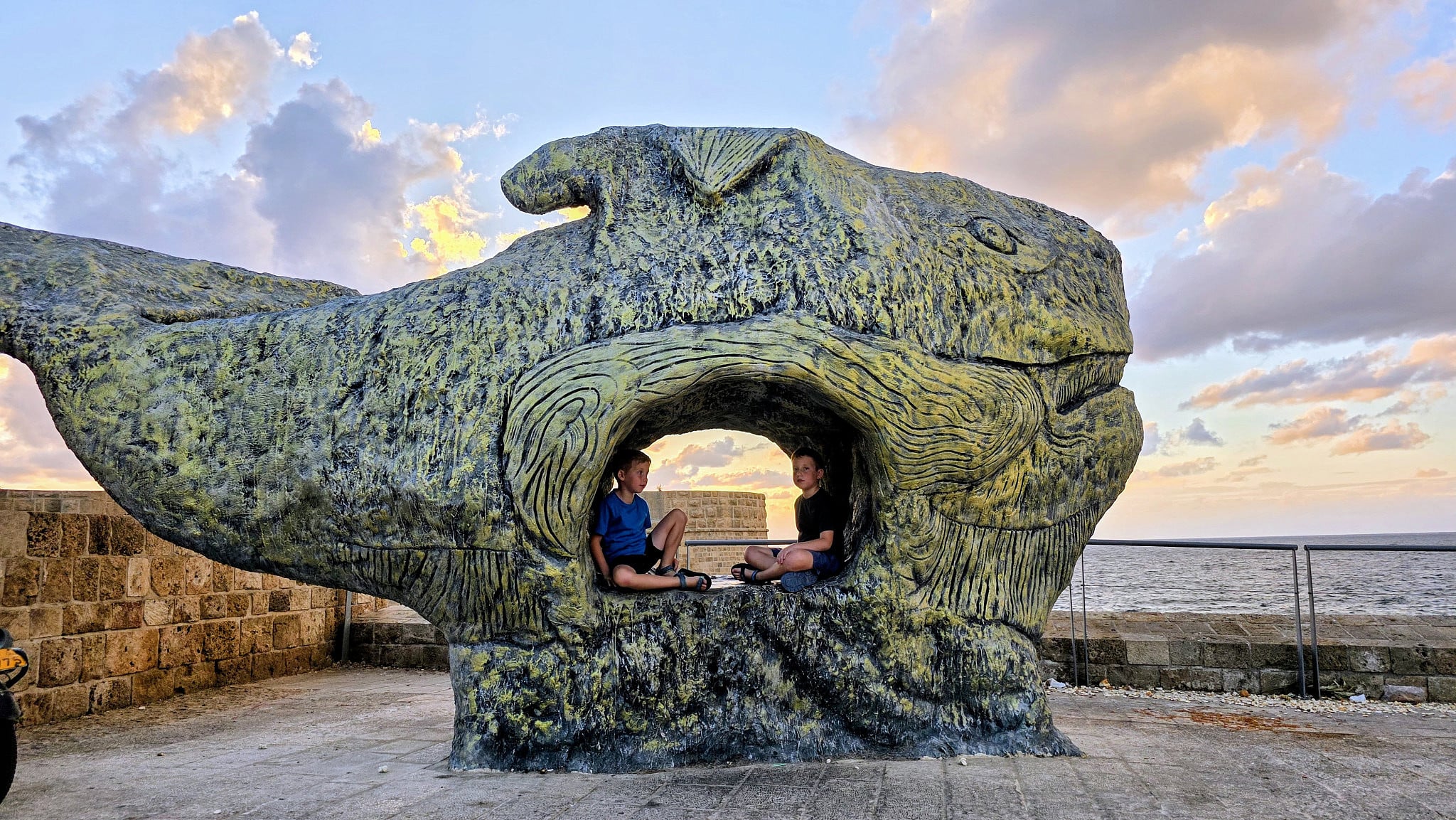
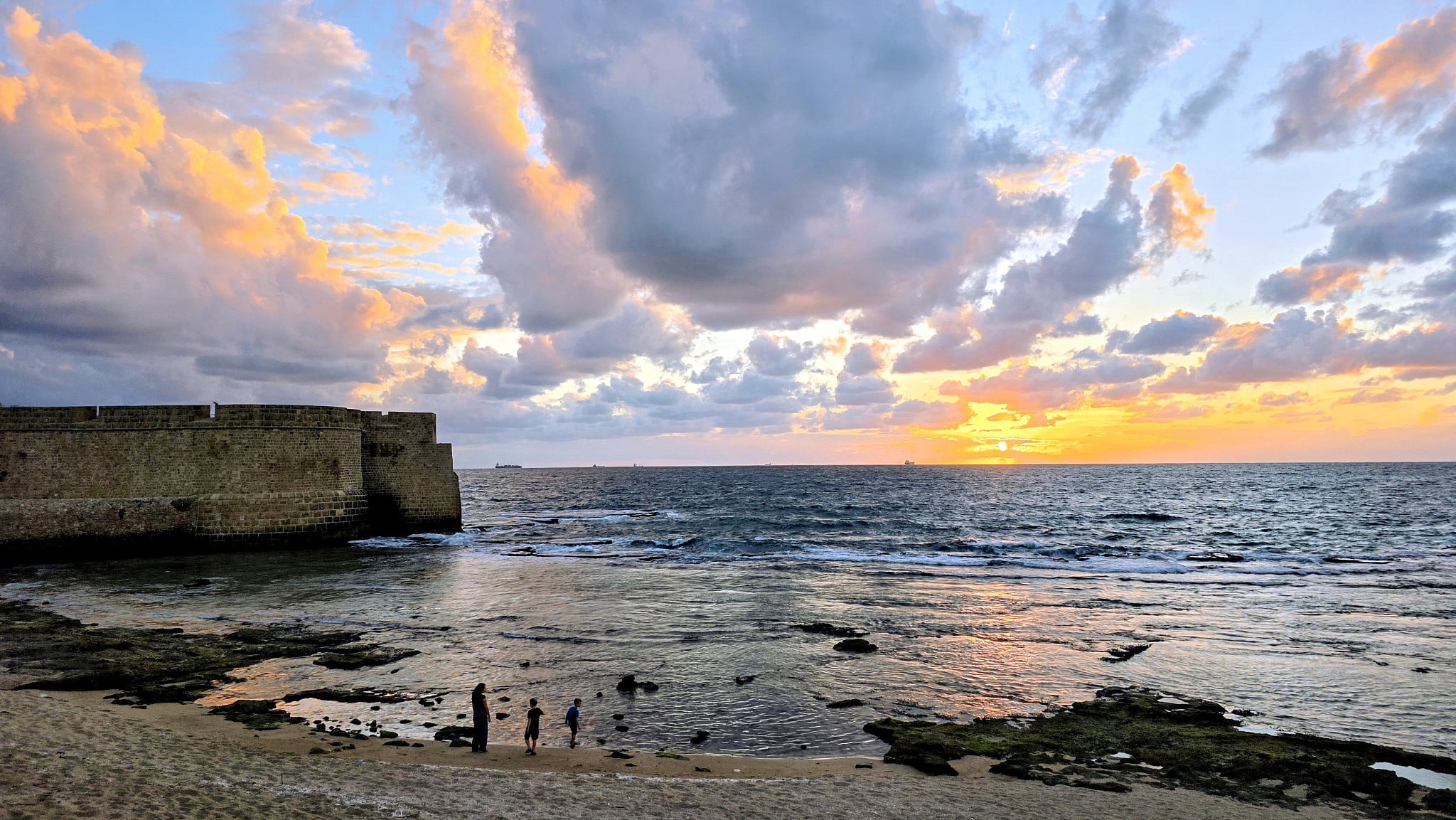
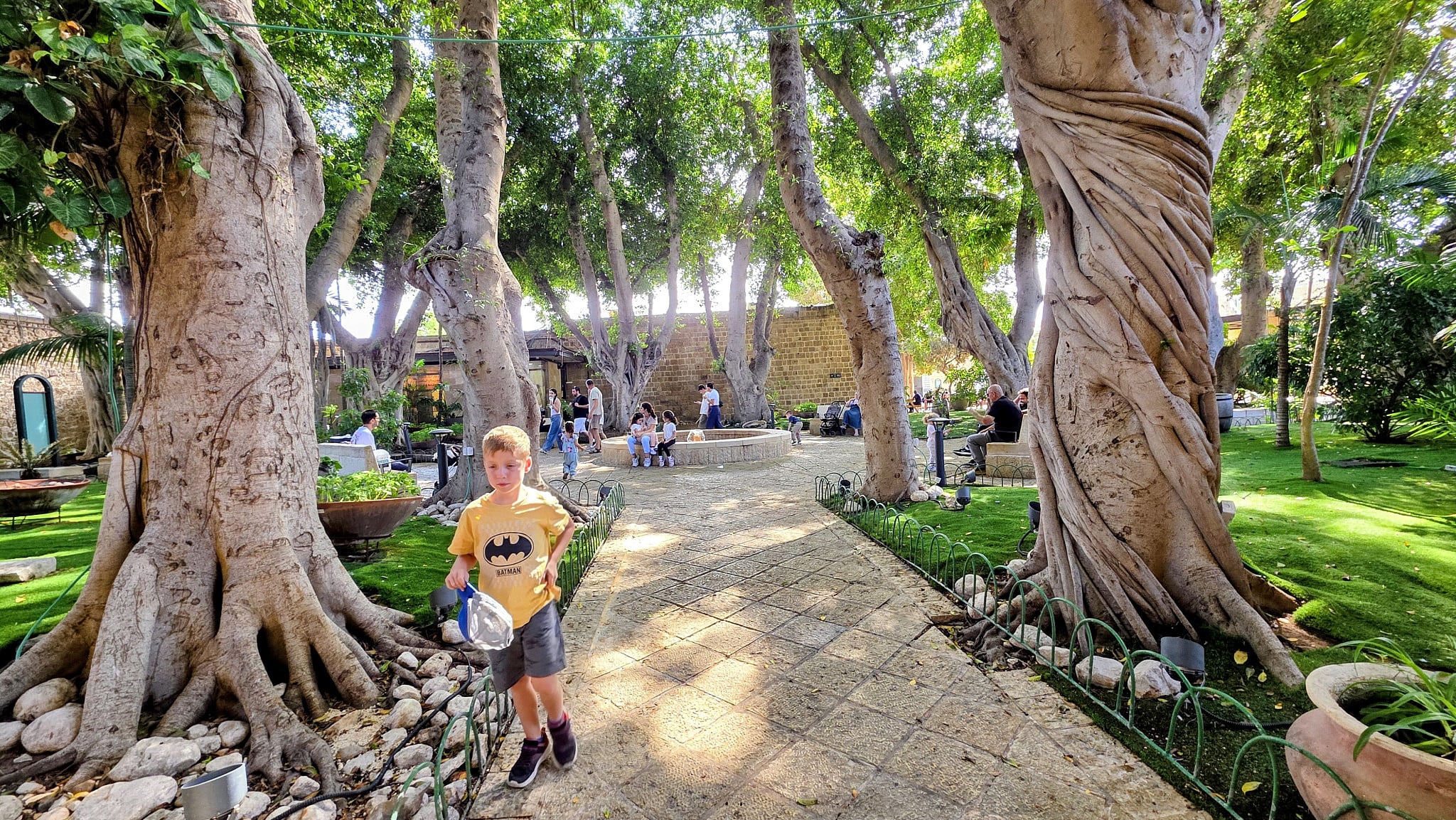
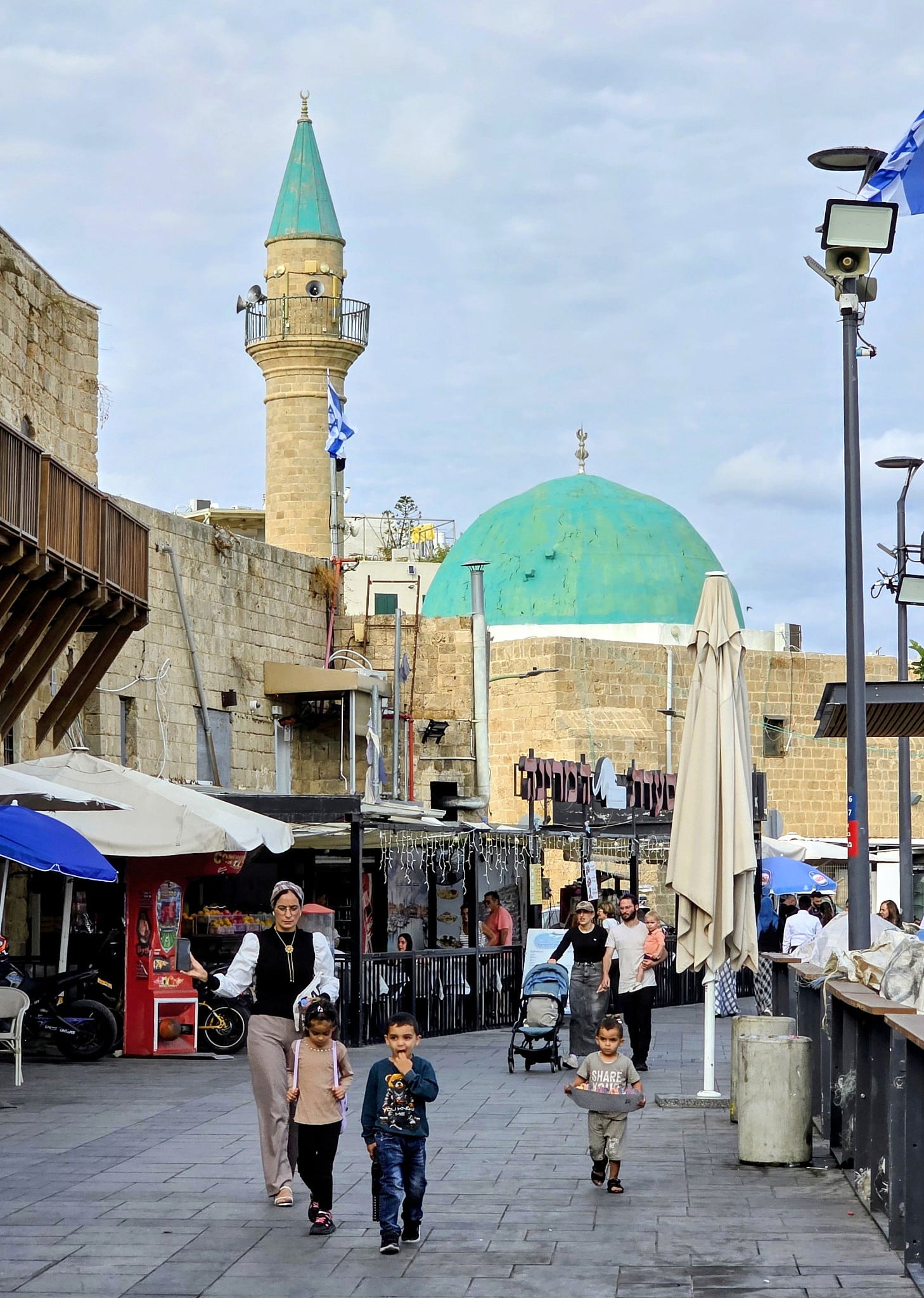
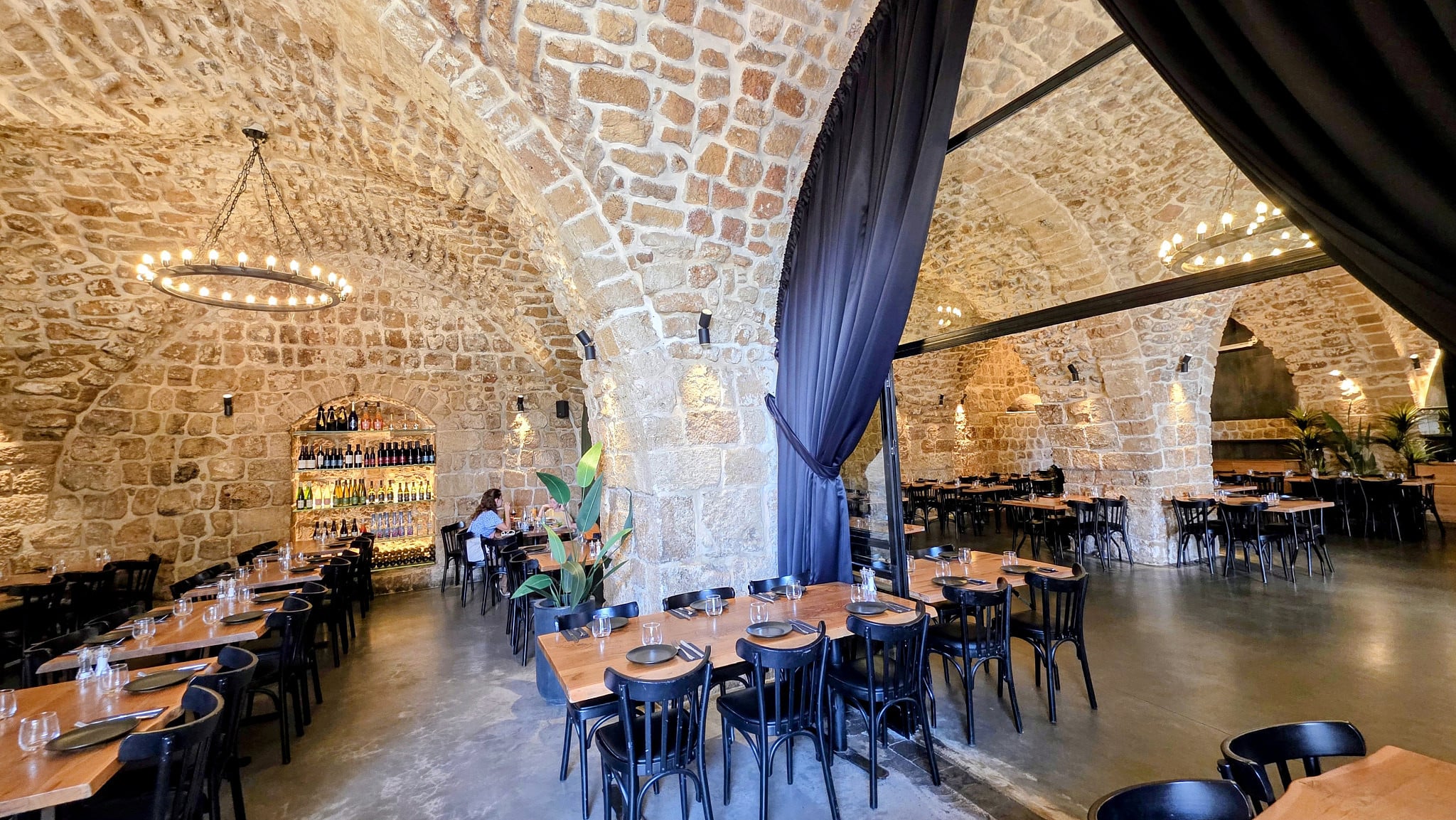
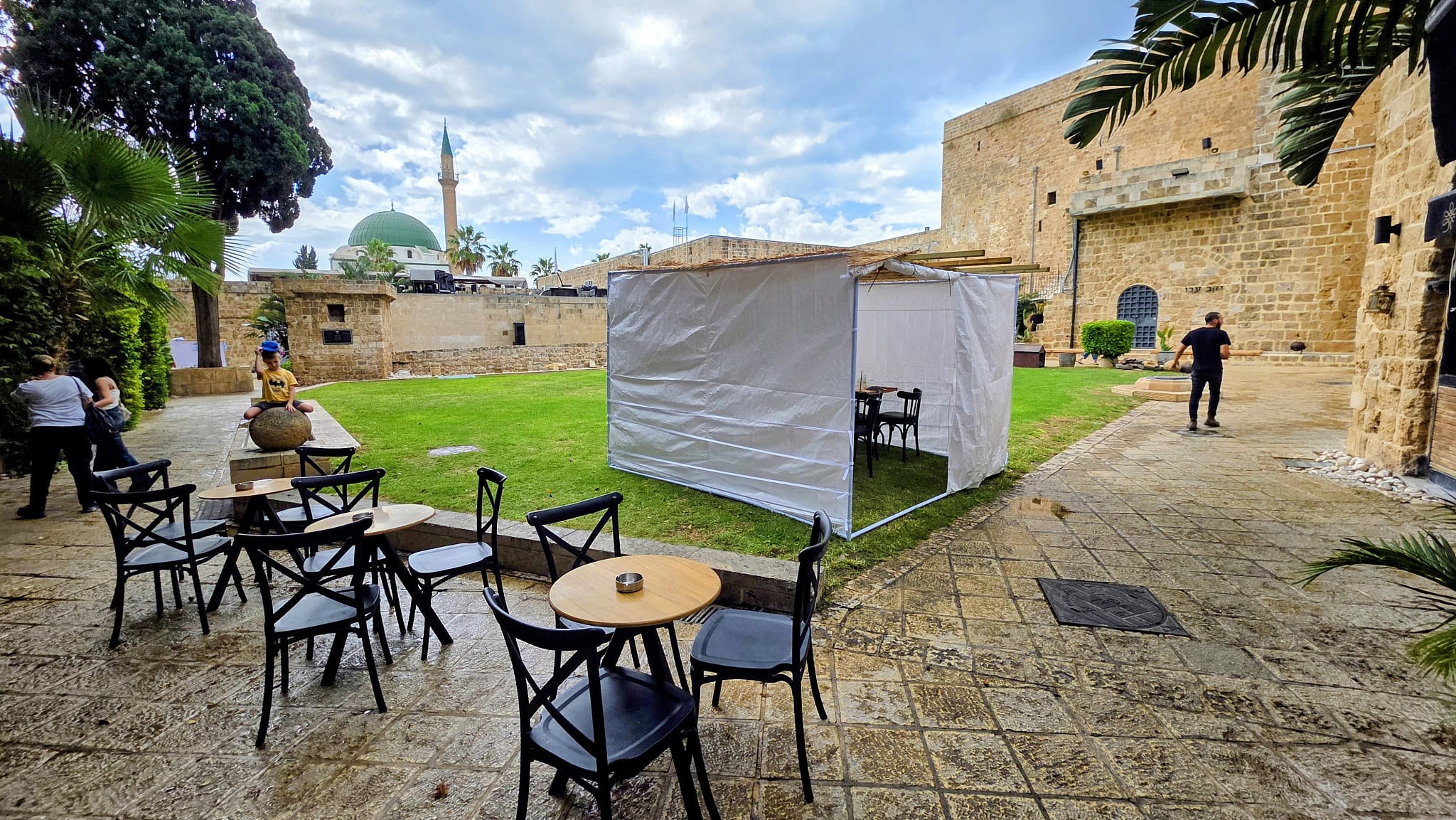
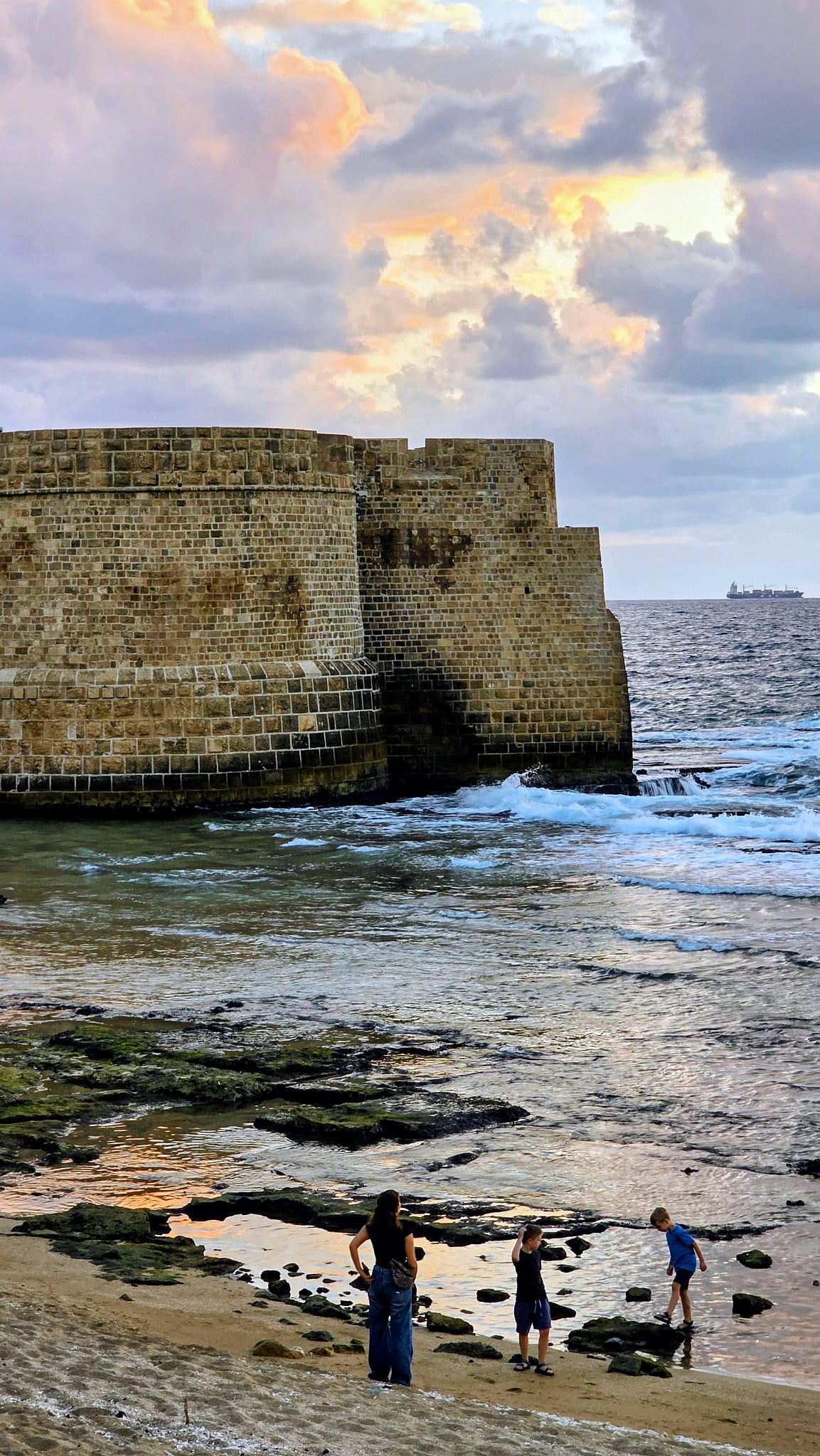
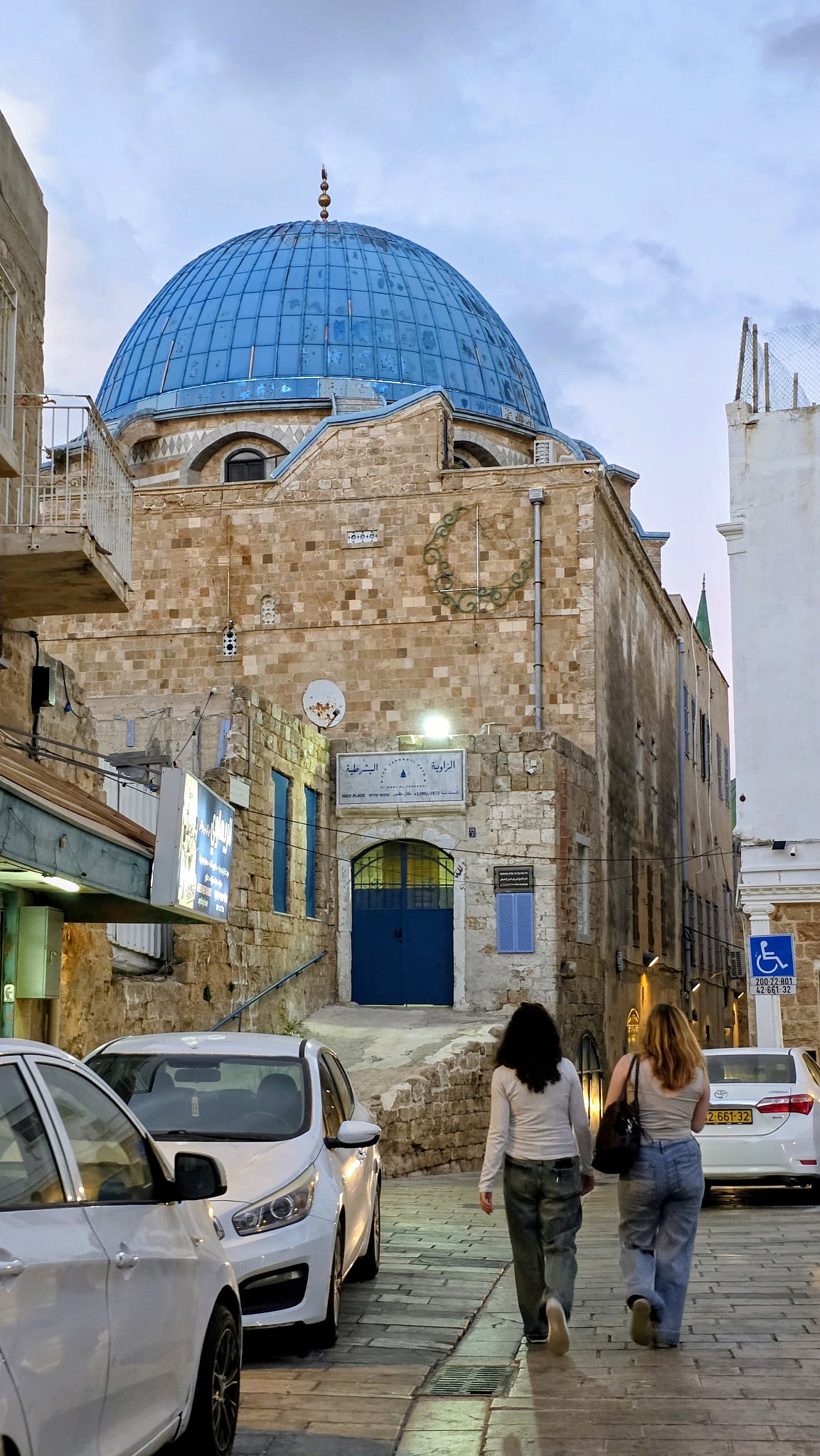
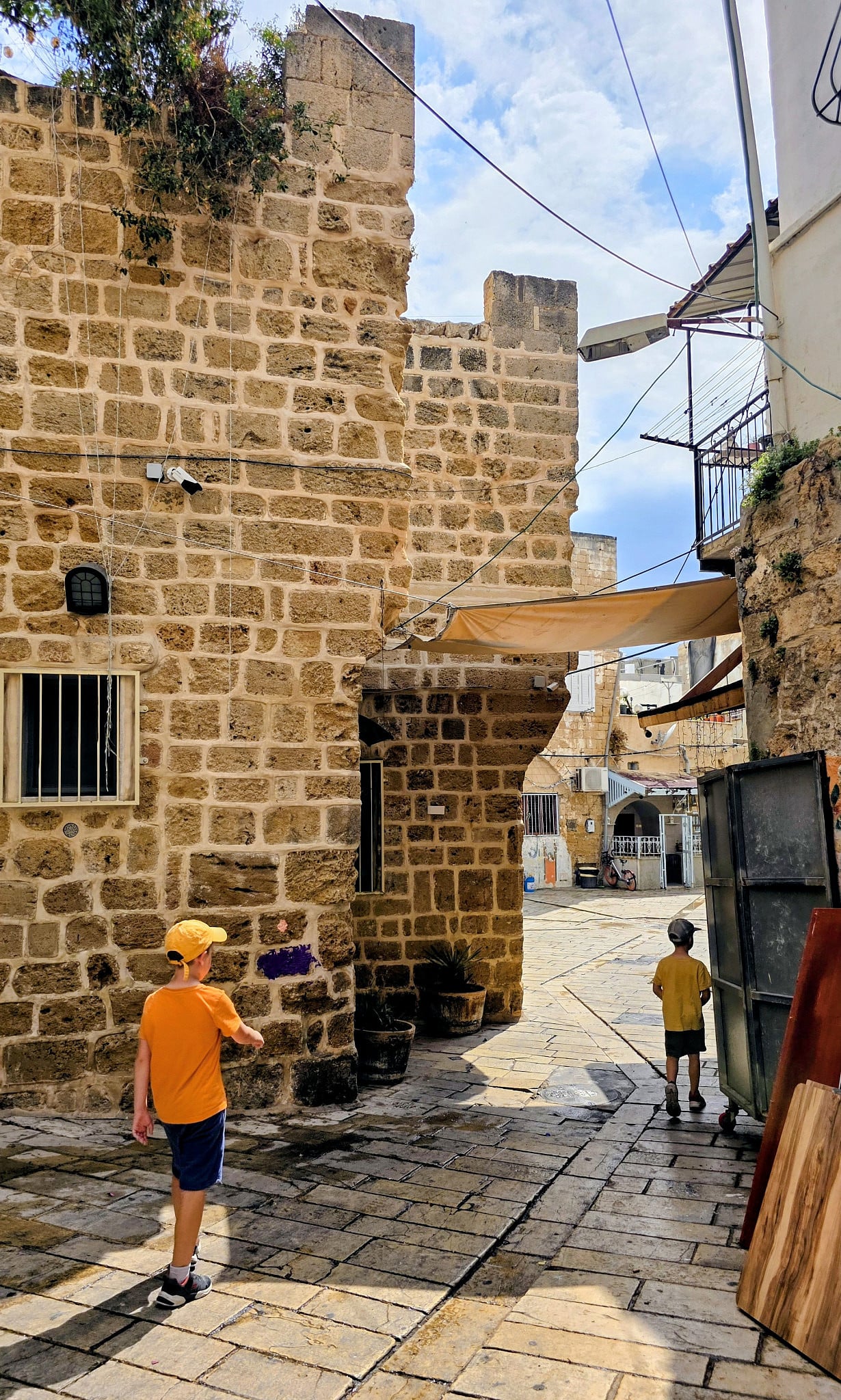
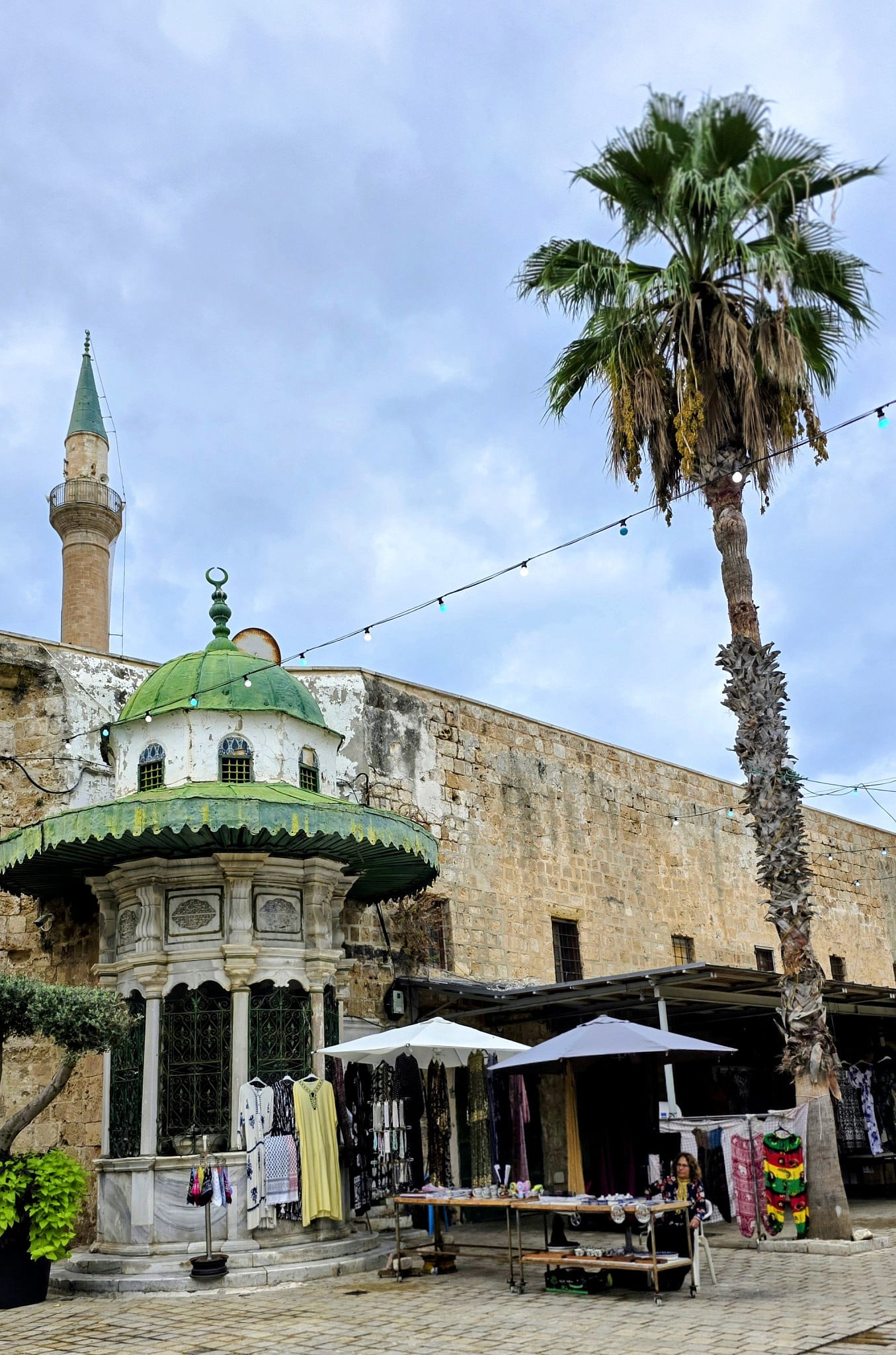
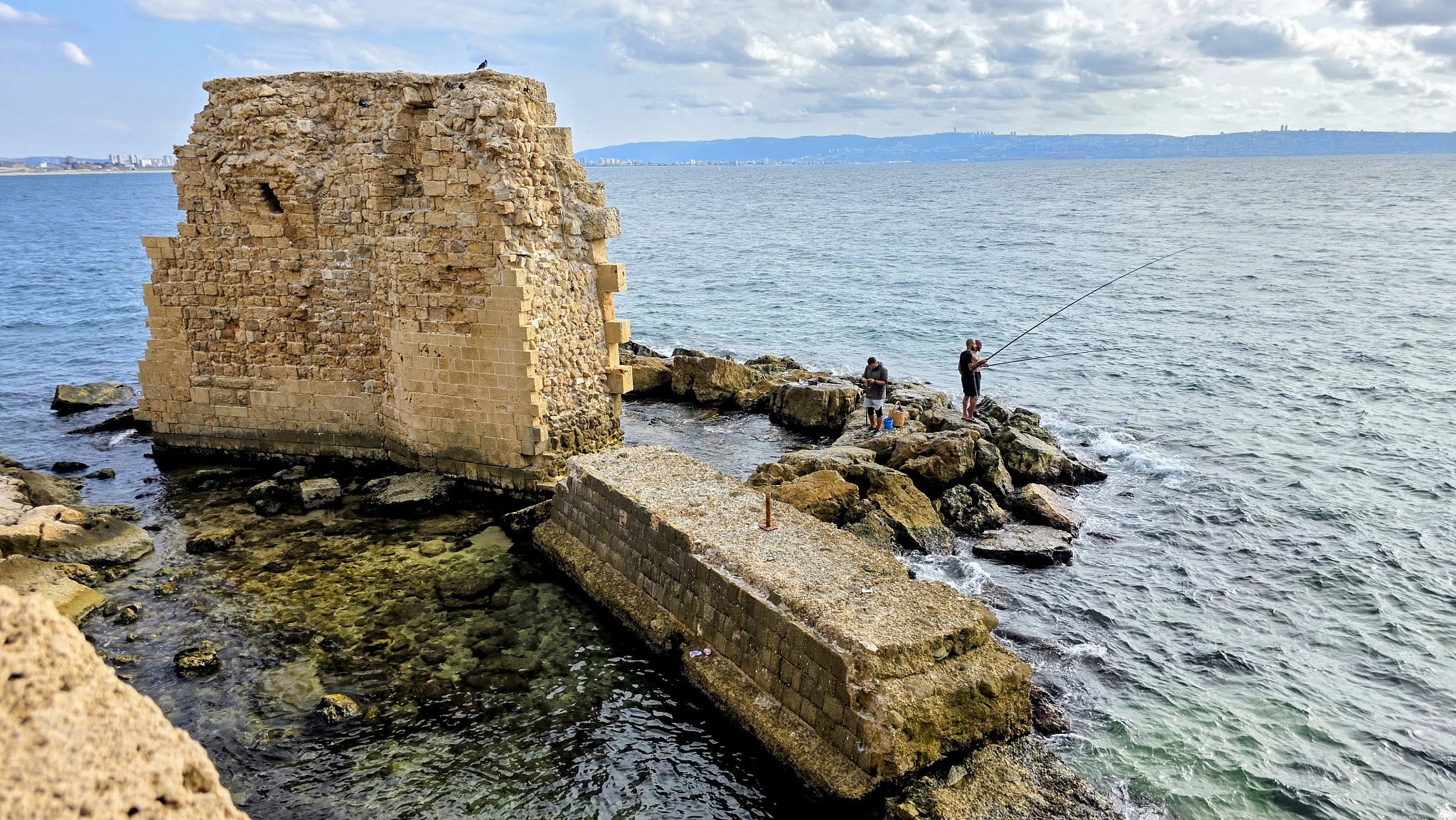
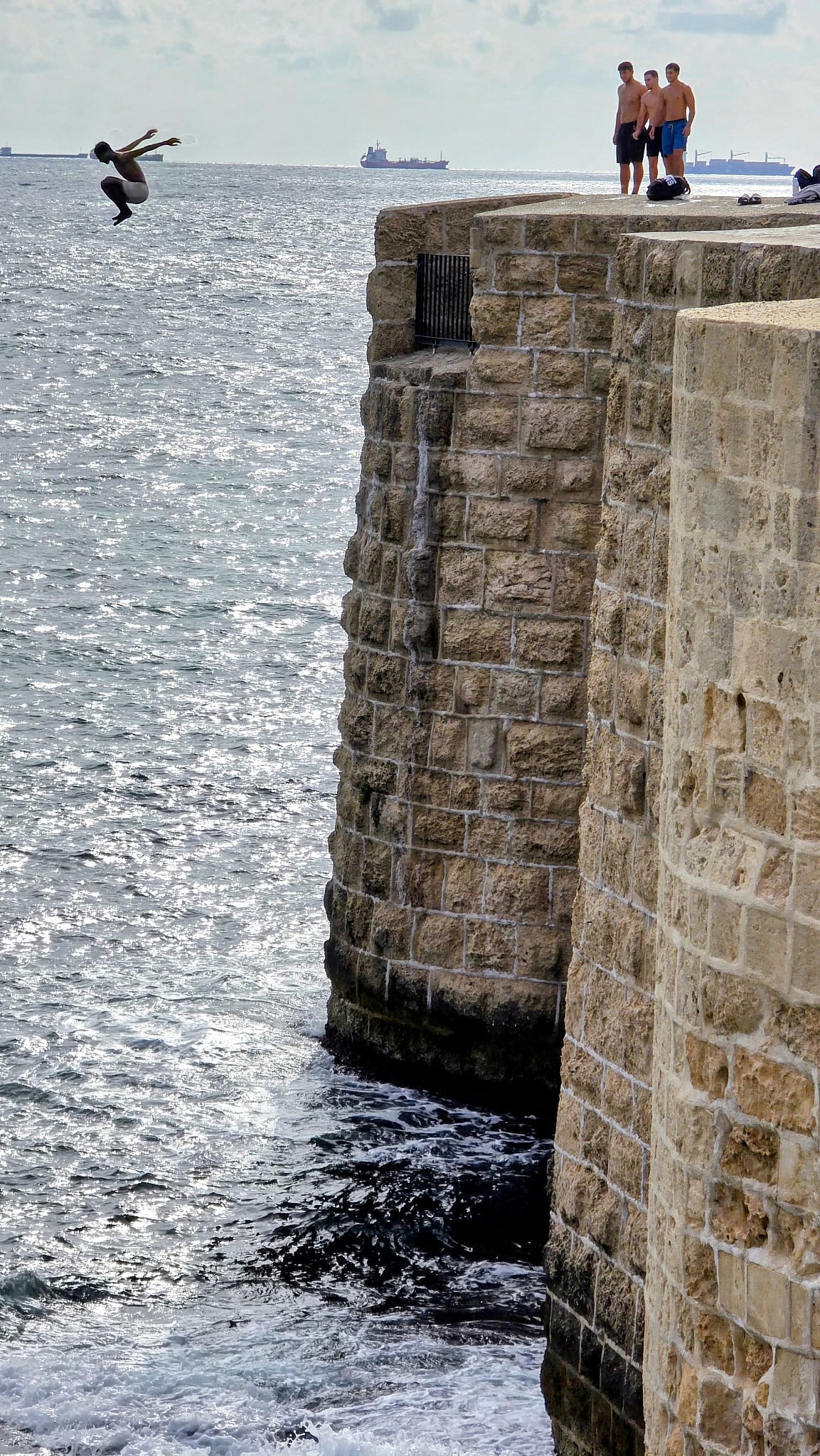
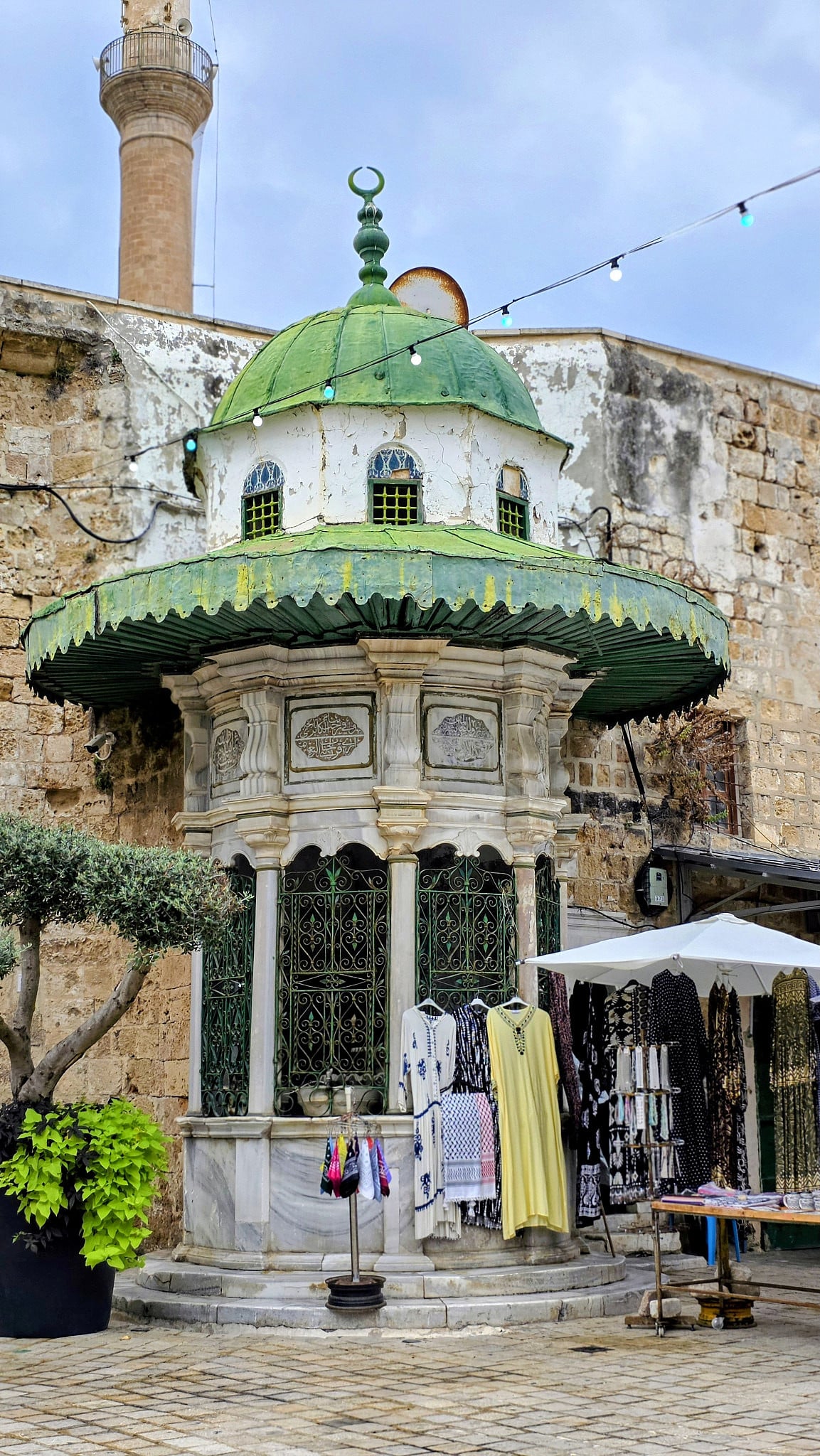
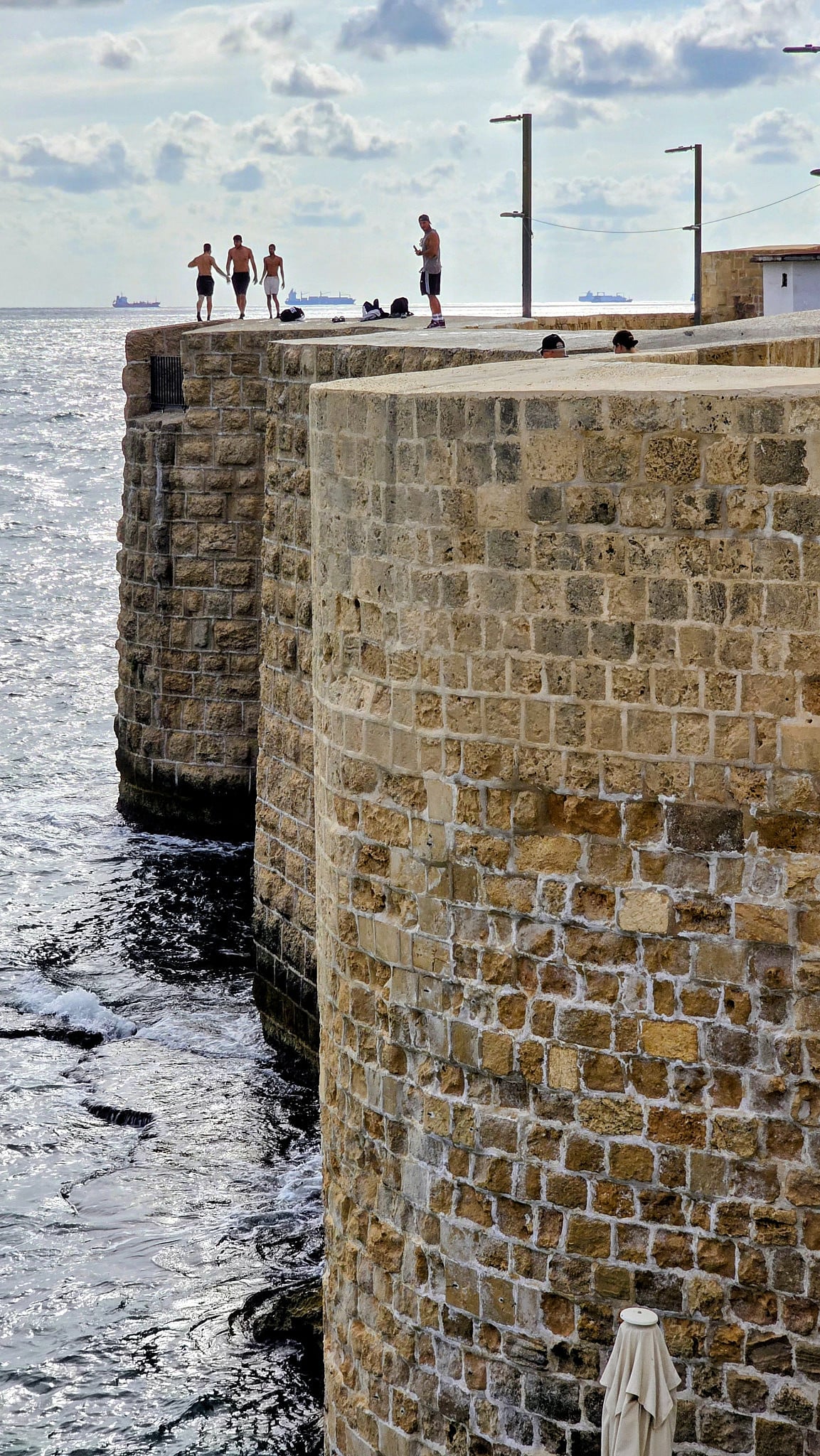
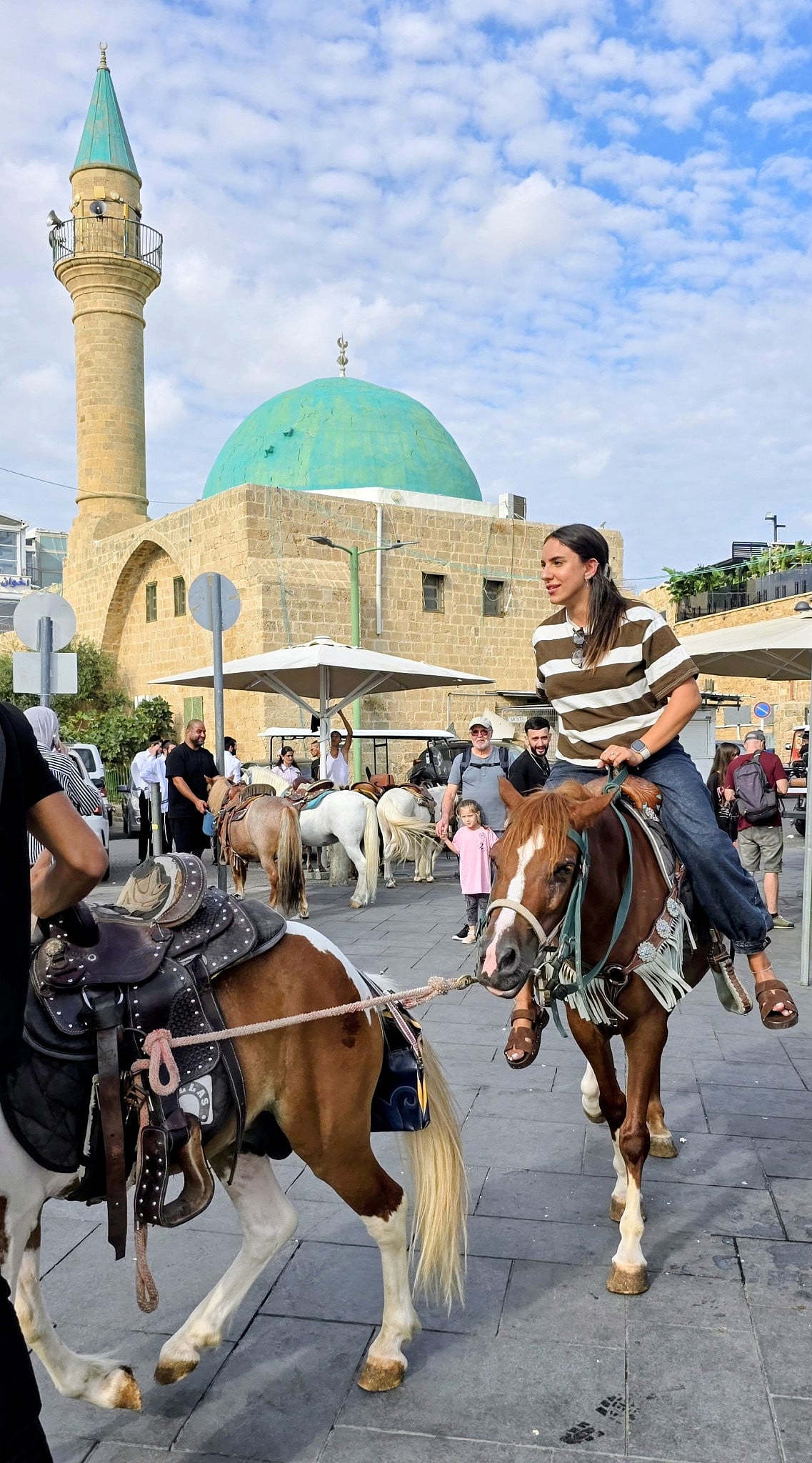
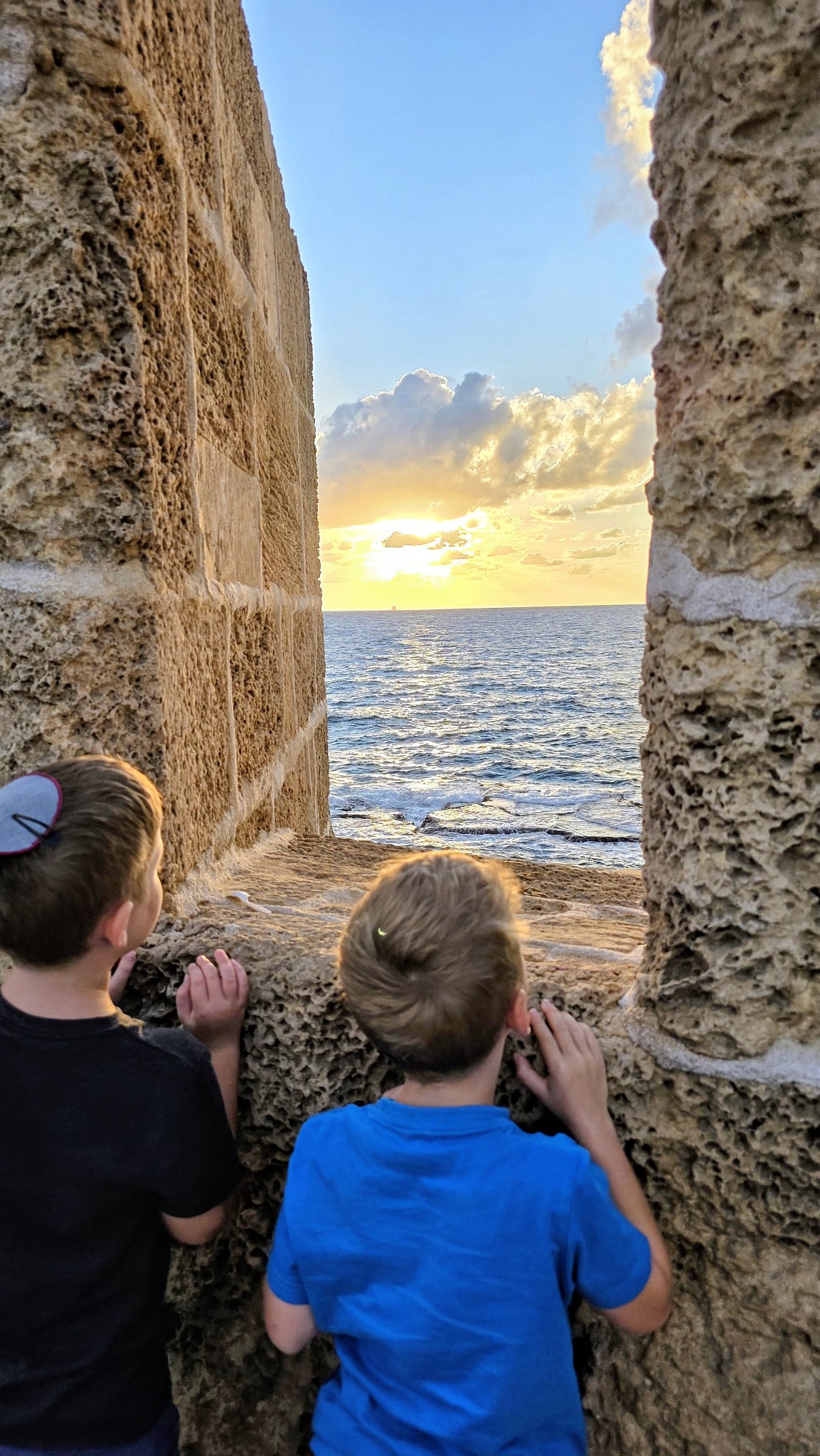
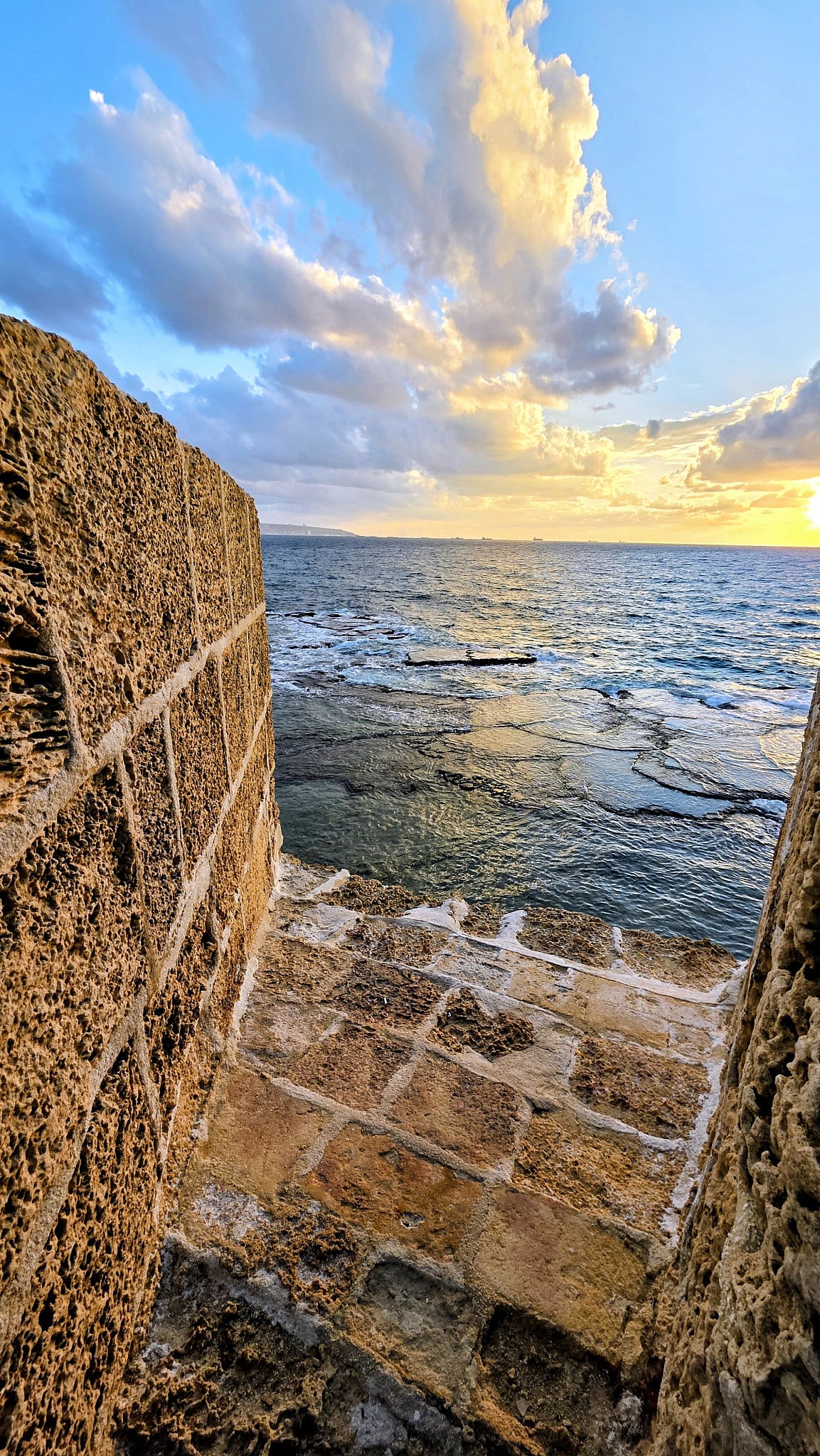
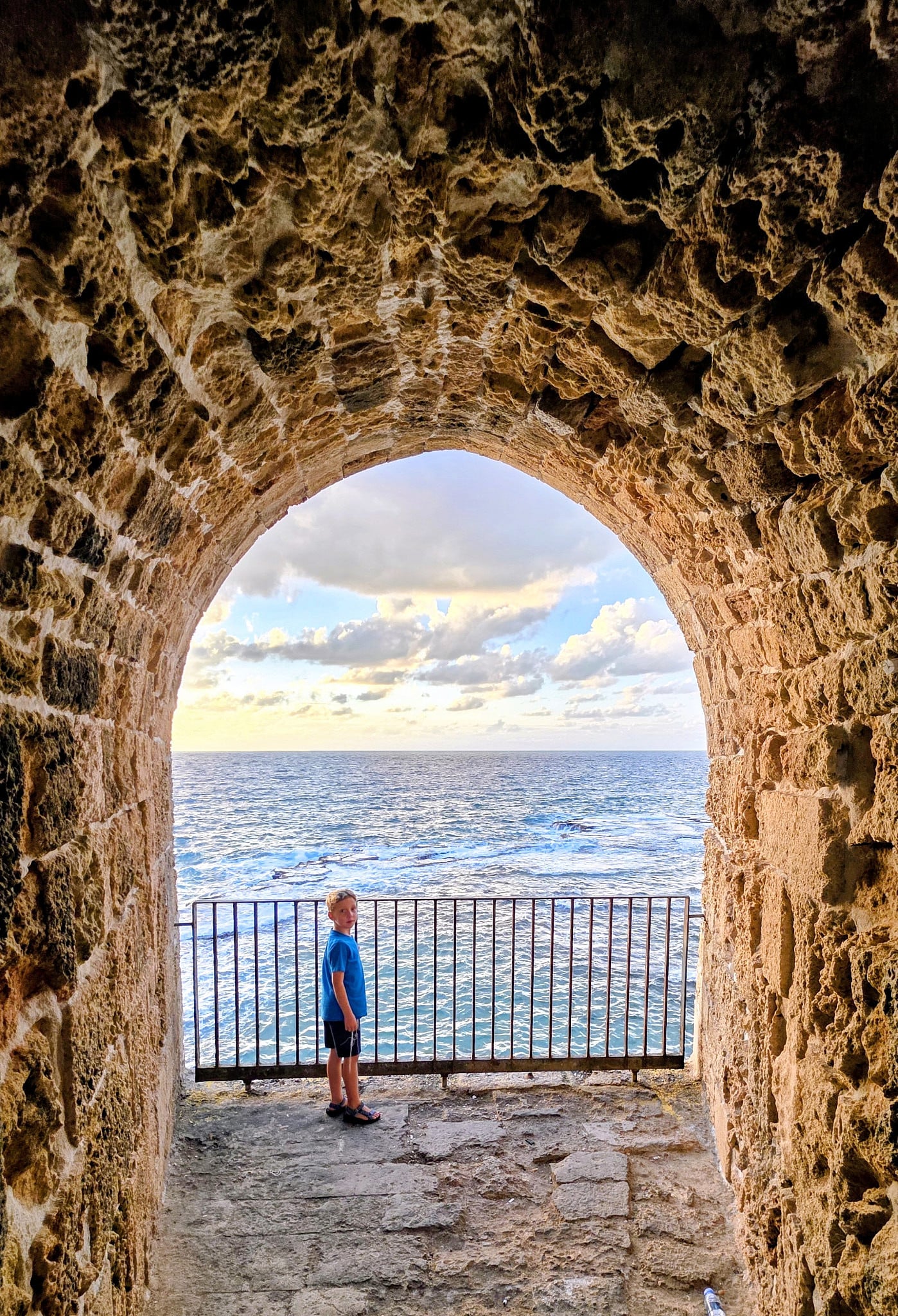
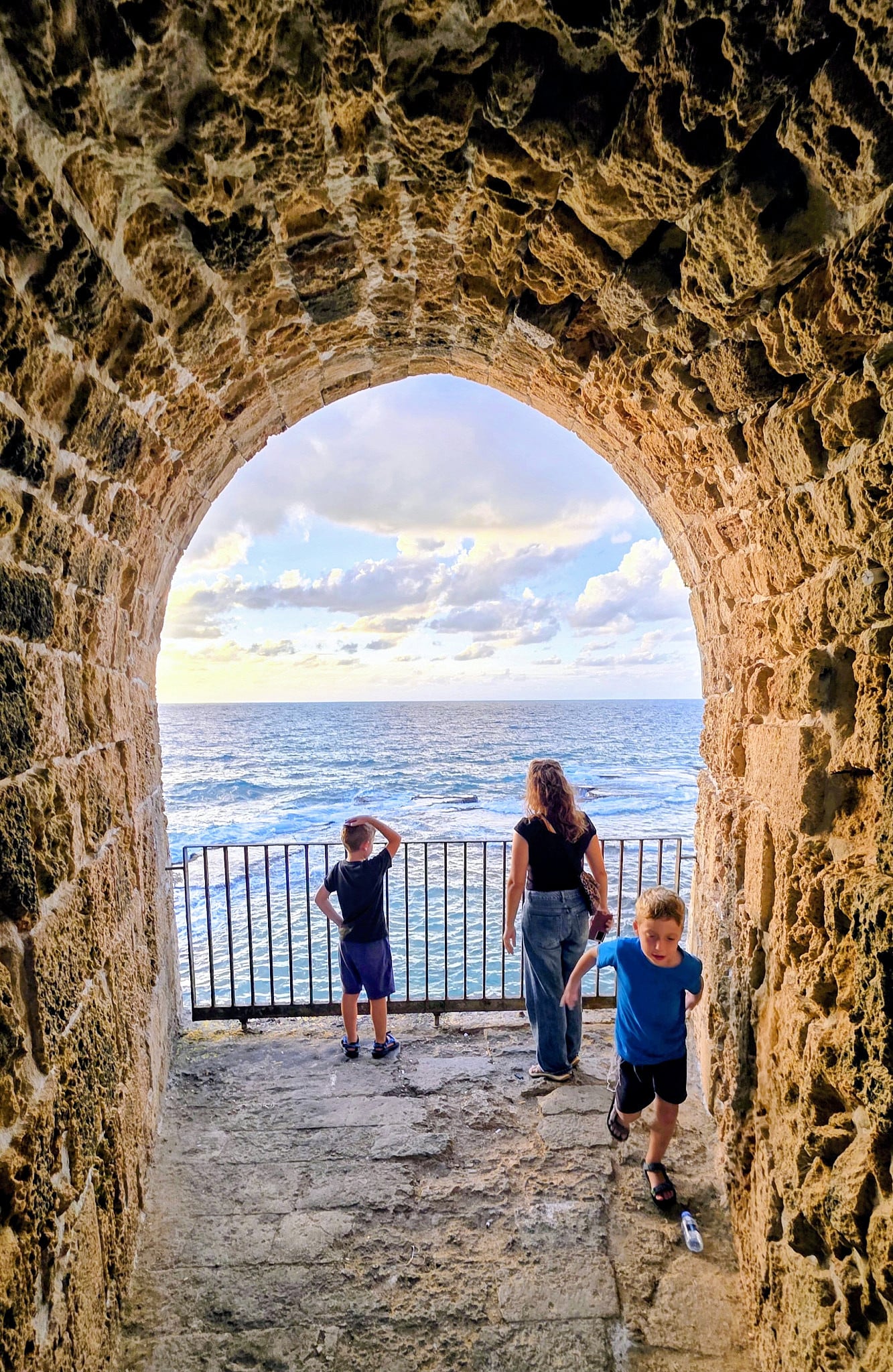
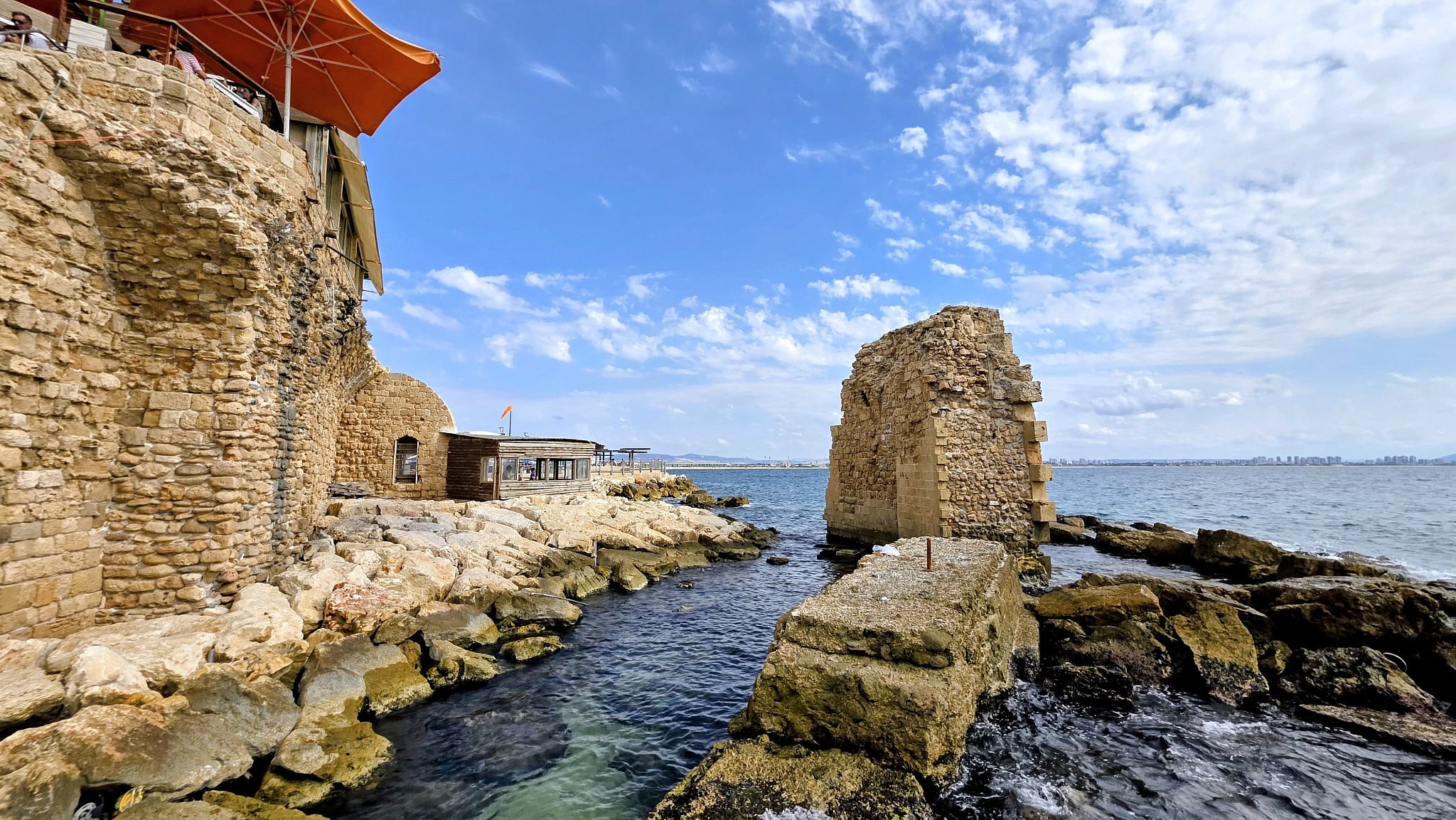
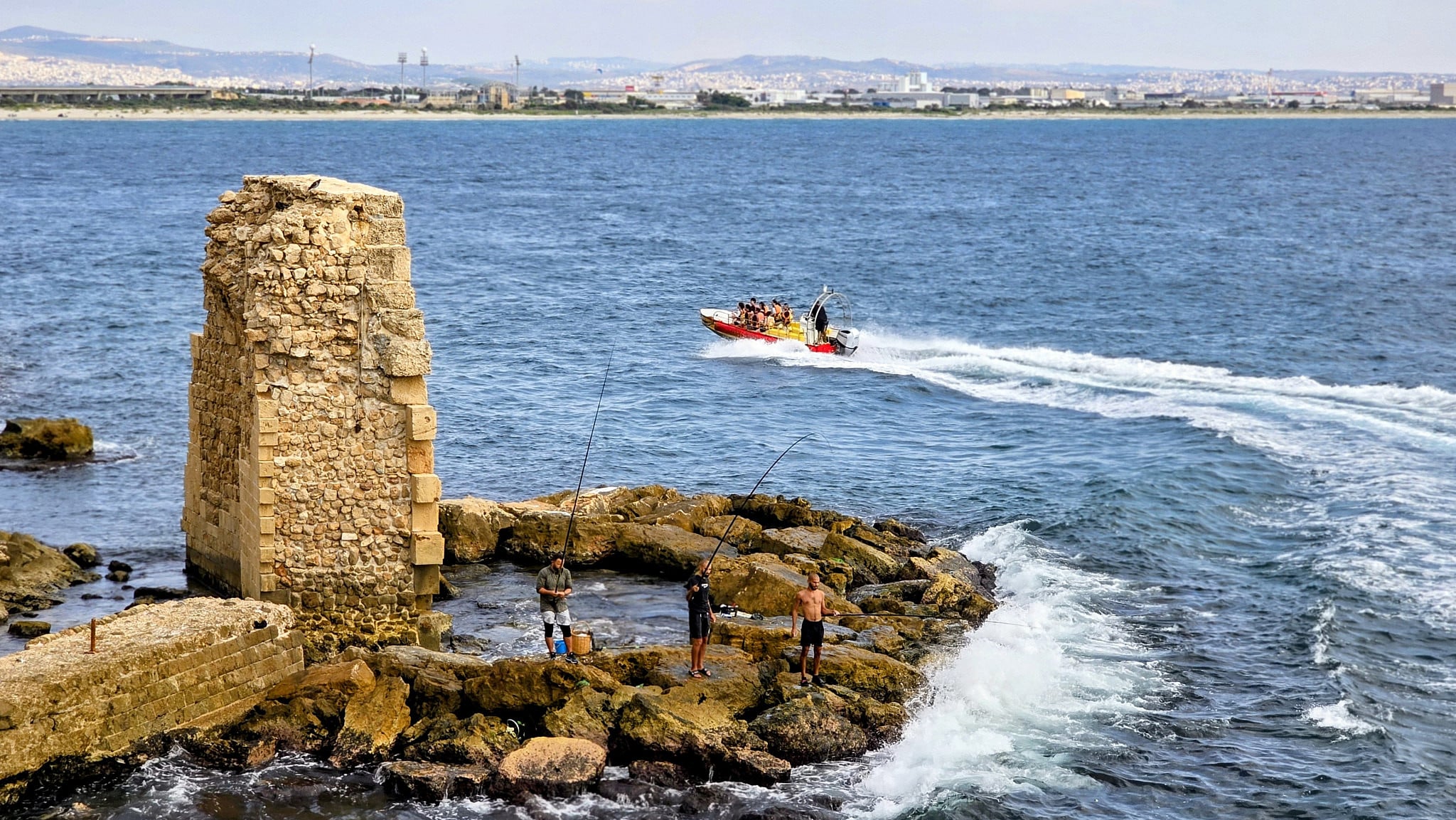
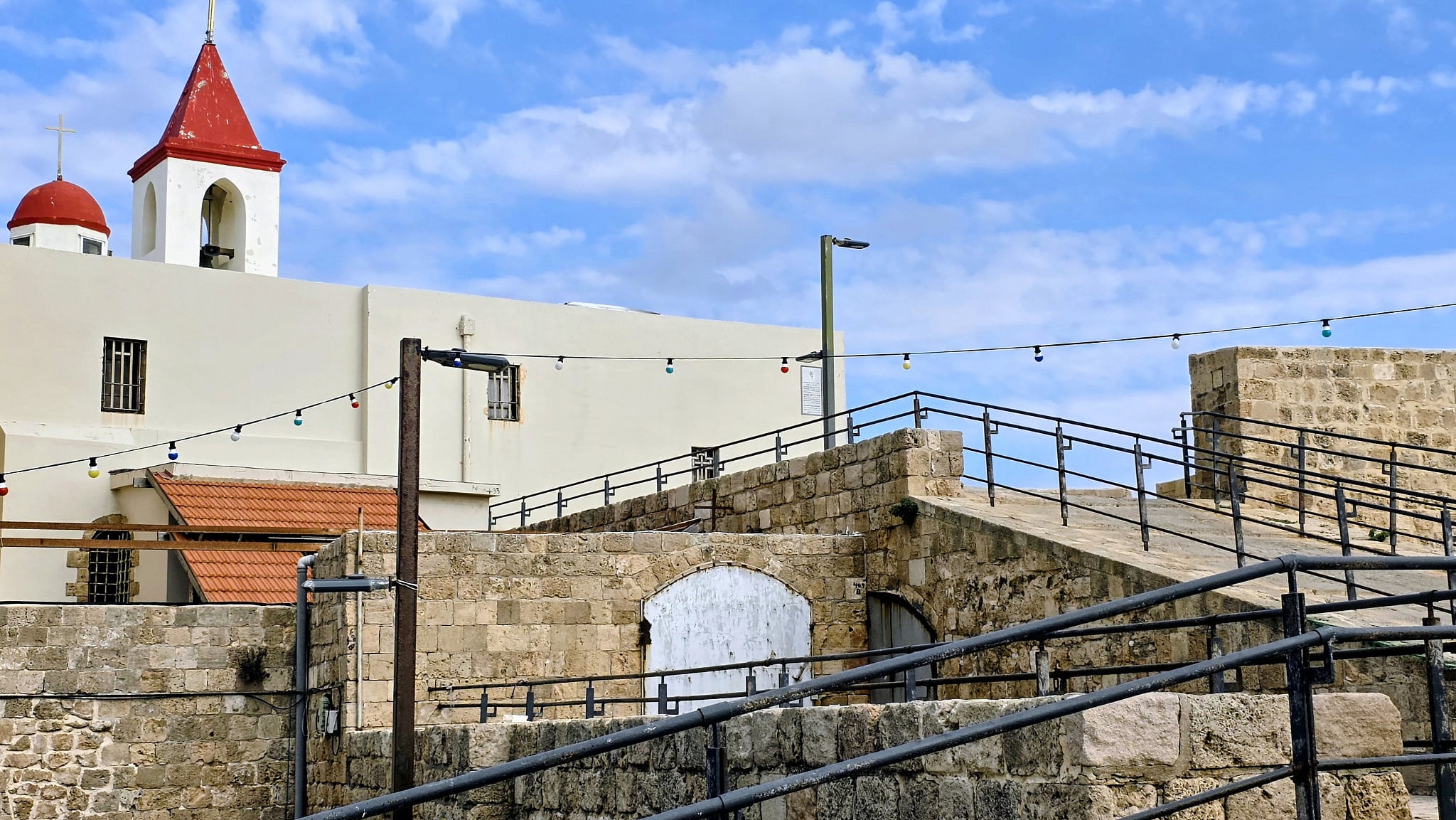
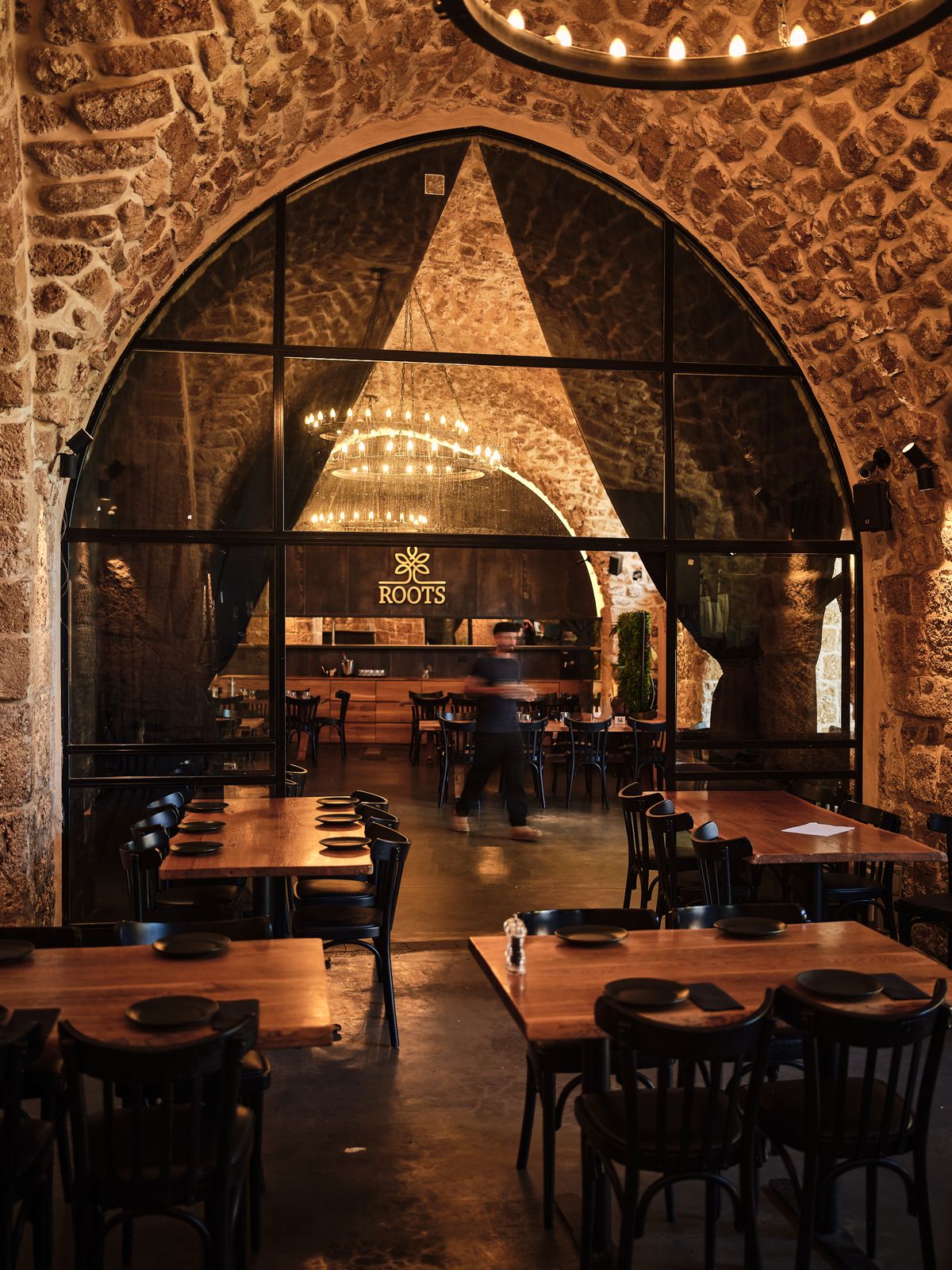
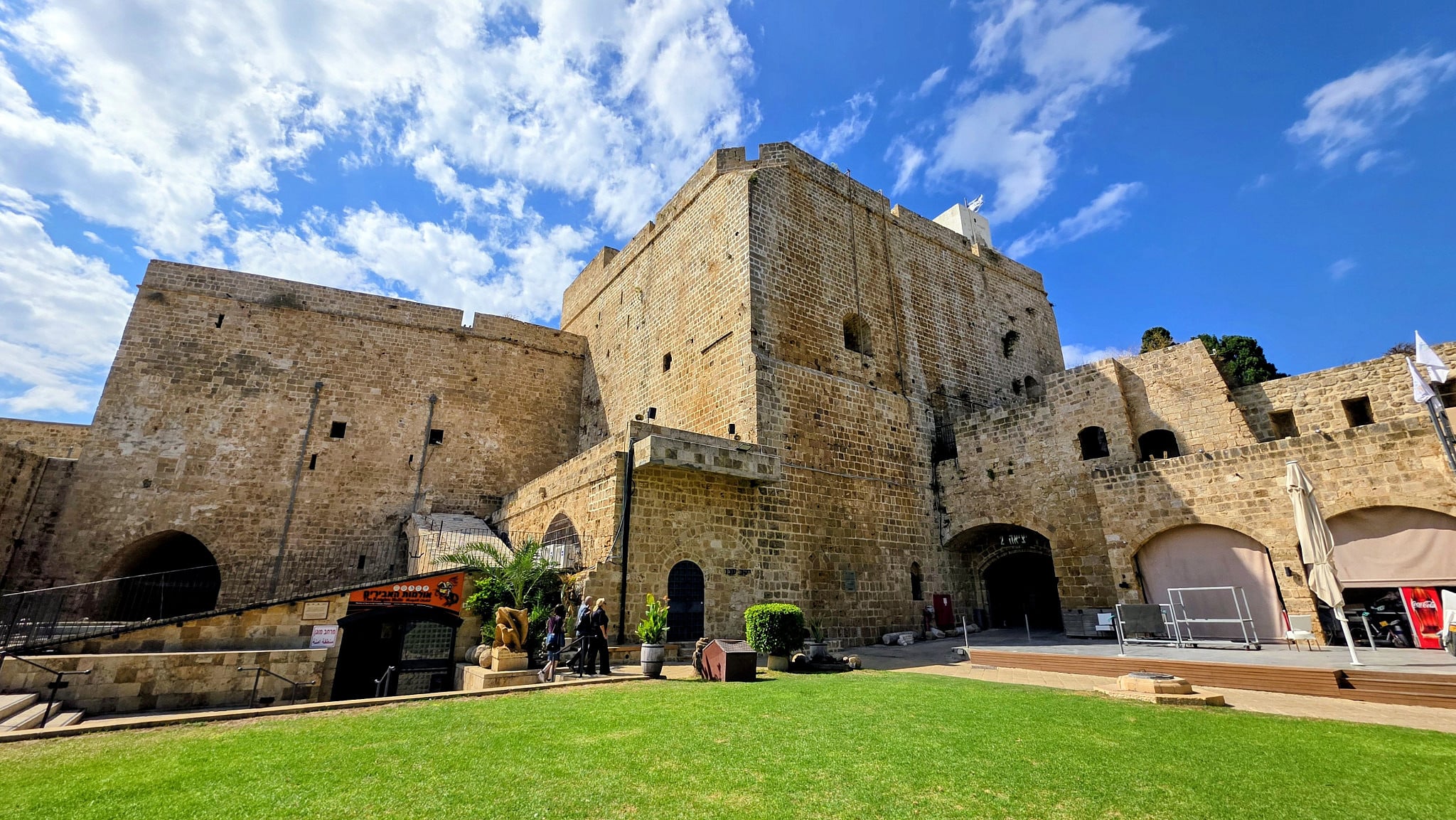
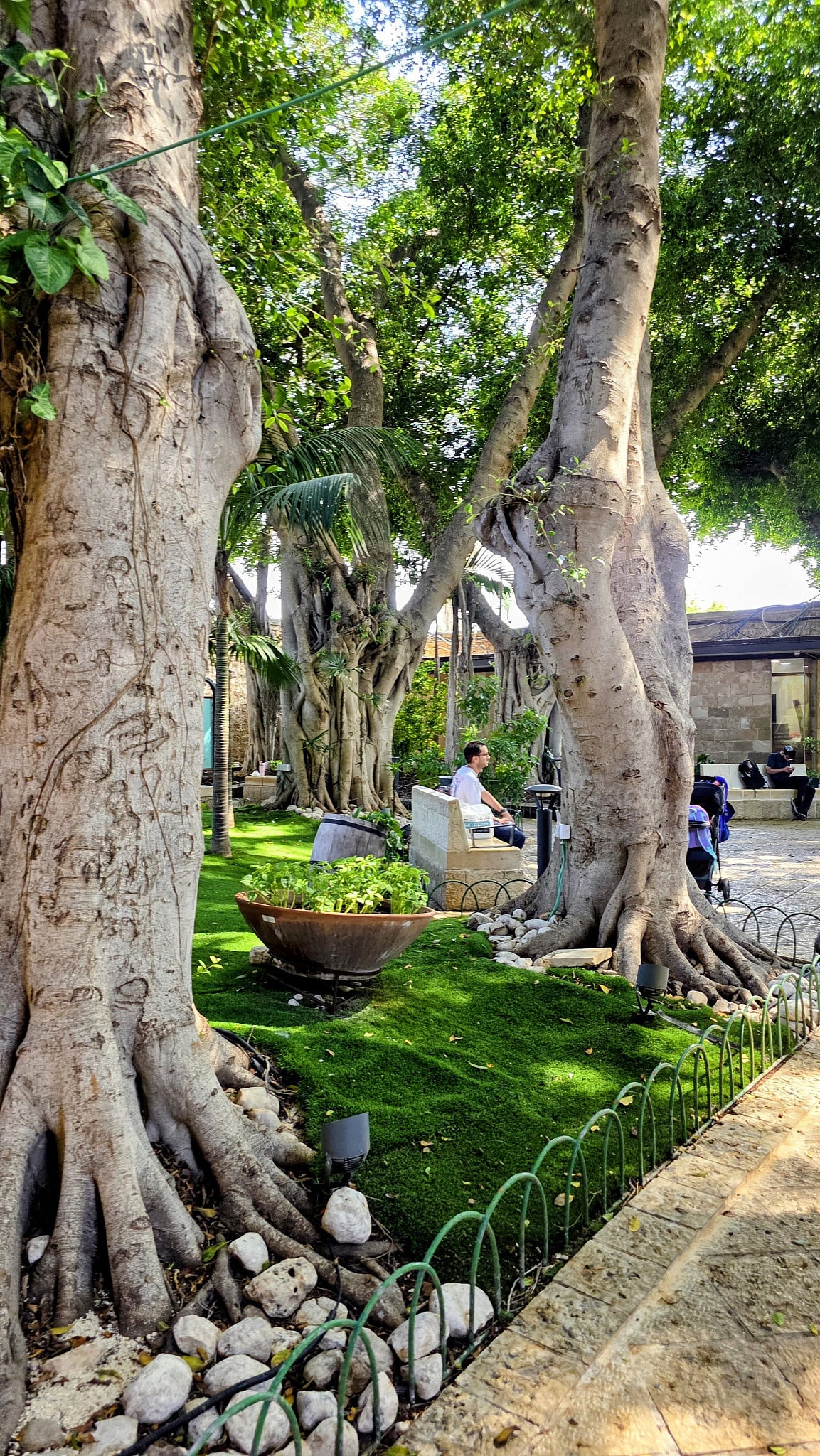 After lunch, we drove ten minutes to the Old City, parked the car and left it there for the next 30 hours. On foot, we wandered past Crusader halls, Ottoman mosques, the markets and the old port, then followed the shoreline path beneath the coastal fortifications. Near the Knights’ Halls, a path shaded by huge old trees leads to the visitor center and to Roots restaurant.
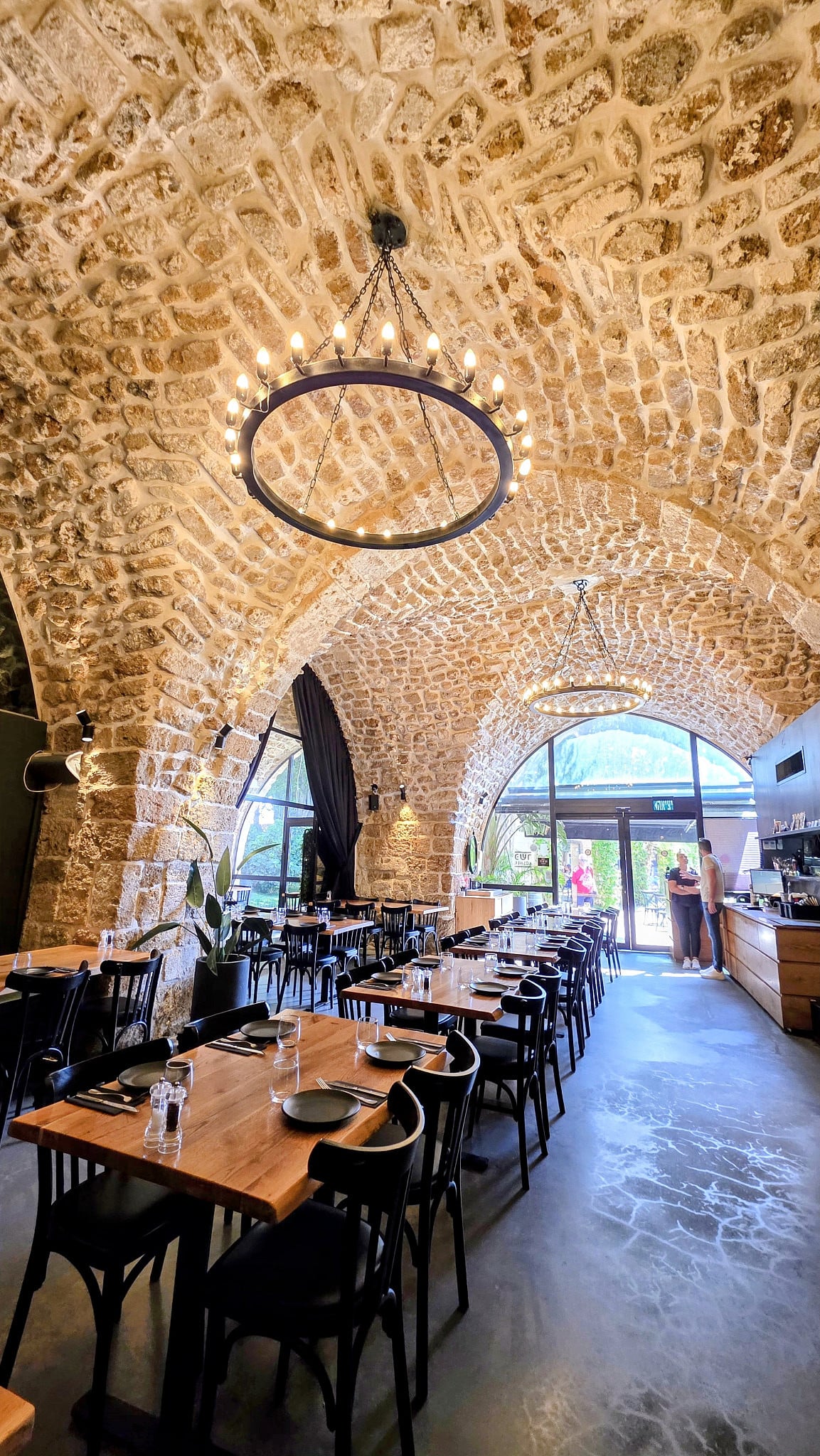
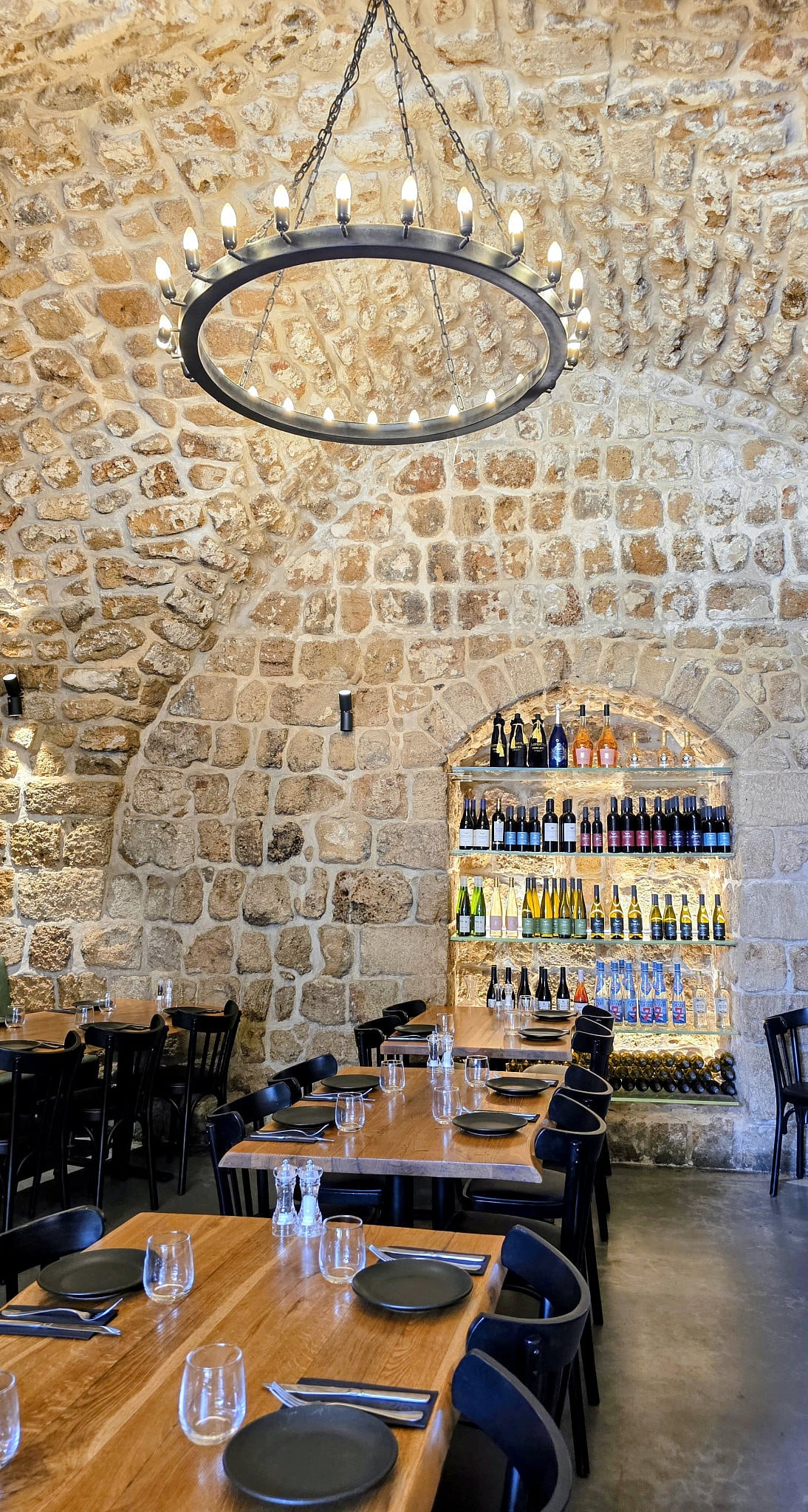
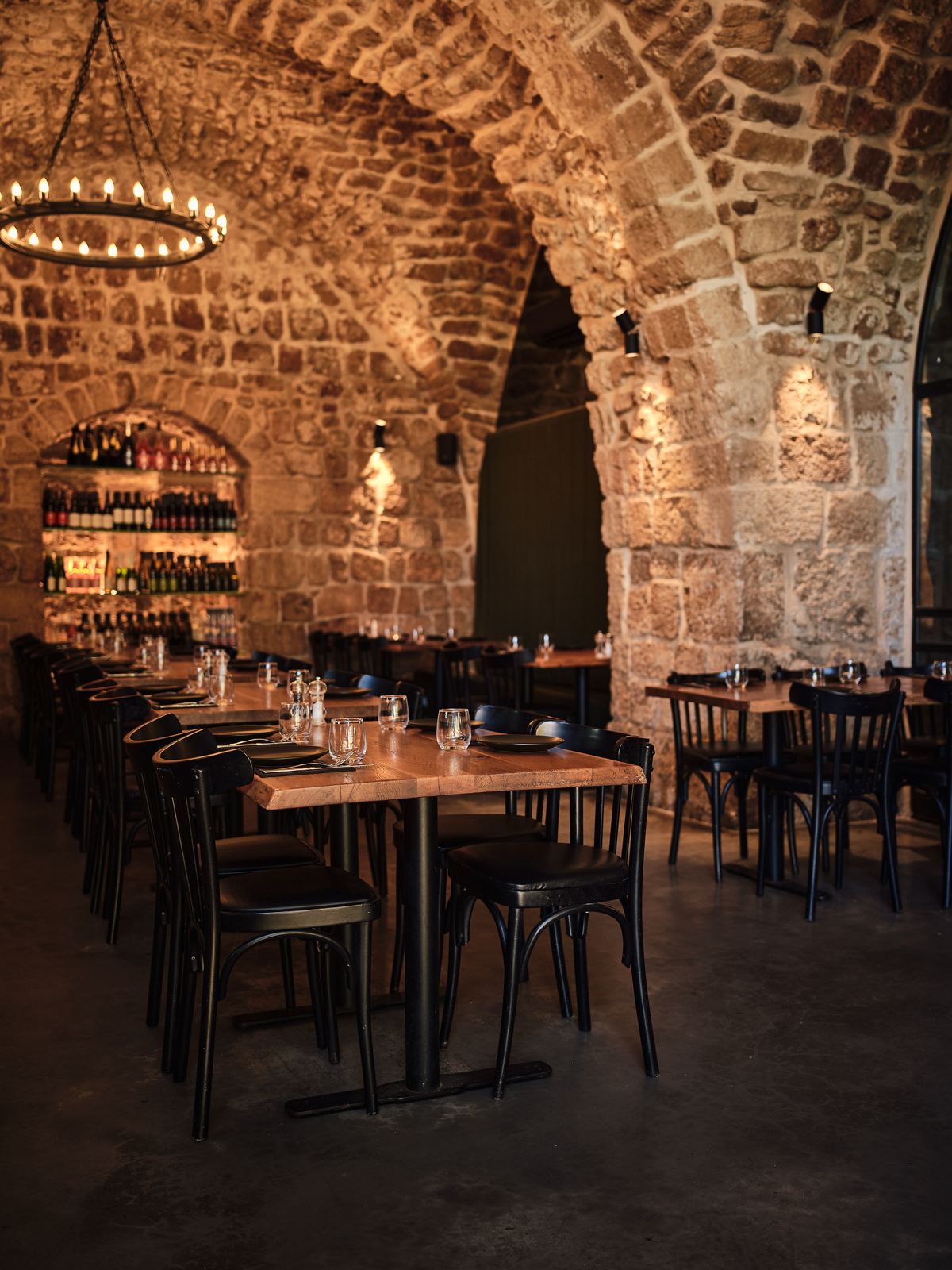
The Roots building is about 1,000 years old, dating from the Crusader period through the Ottoman era, and once served as the citadel’s stables. Three local partners own the restaurant and run it as one team with manager Arslan Abd, whose family has lived in Akko for generations, shift manager Nicole and chef Darry Ben Nevat. Darry grew up in Tel Aviv, has nearly 28 years in professional kitchens, and moved north more than 15 years ago, drawn by Akko’s traditional market.
He came to Roots to fill a gap. Akko had no upscale kosher restaurant serving the cooking of Syria, Lebanon and Aleppo, where meat is often cooked with goat’s milk, labneh and yogurt. Darry spent 11 months developing soy and coconut substitutes that come within about 99% of the original flavor and texture. “We reached a point where someone who keeps kosher can live a dream,” Arslan said. “We pass on culture, and that’s very important to me.”
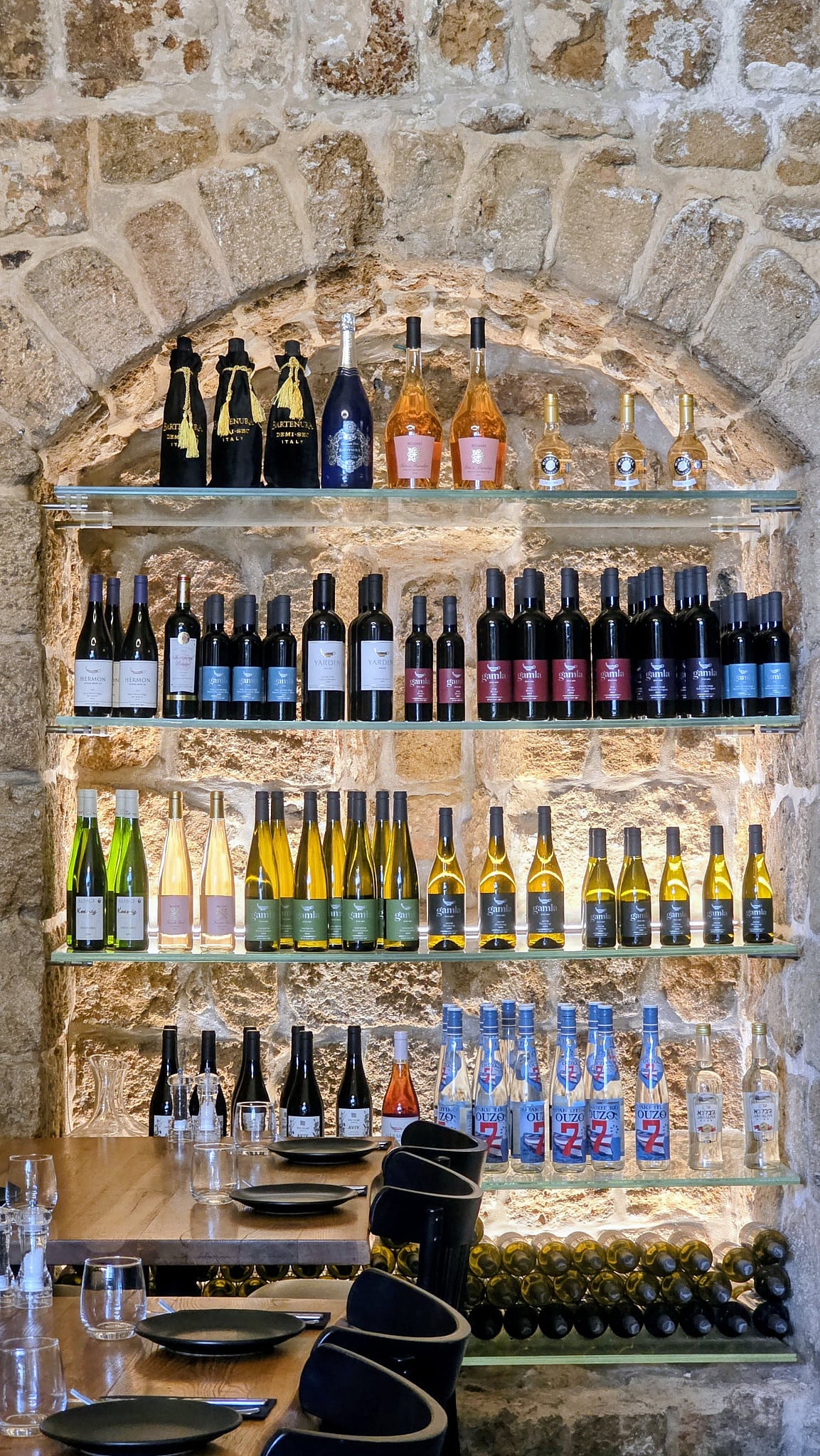
The kitchen team reflects the city around it. Nabila, 62, comes in every day to roll grape leaves by hand and shape kubbeh filled with pine nuts, onion and veal. Head pastry chef Chen comes from a traditional Jewish home. Secular and observant Jews work alongside a Druze sous-chef, Muslim cooks from Akko and staff from Ukraine and Kazakhstan, and they celebrate Ramadan, Rosh Hashanah and Passover together. After October 7, the team mourned two of its waitresses, childhood friends who were killed at the Nova festival. In the weeks that followed, the kitchen served more than 6,500 free hot meals to soldiers and displaced families. 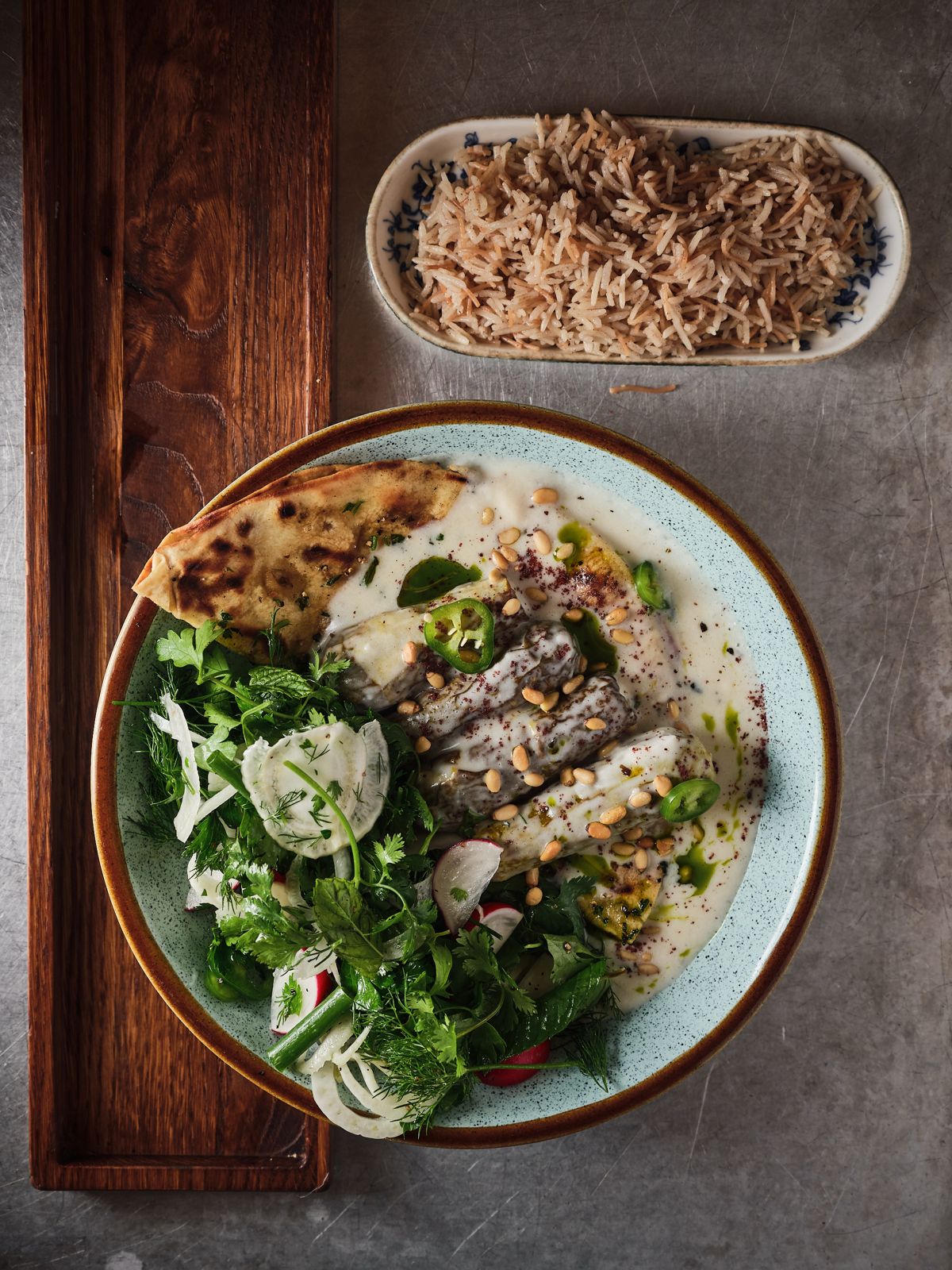
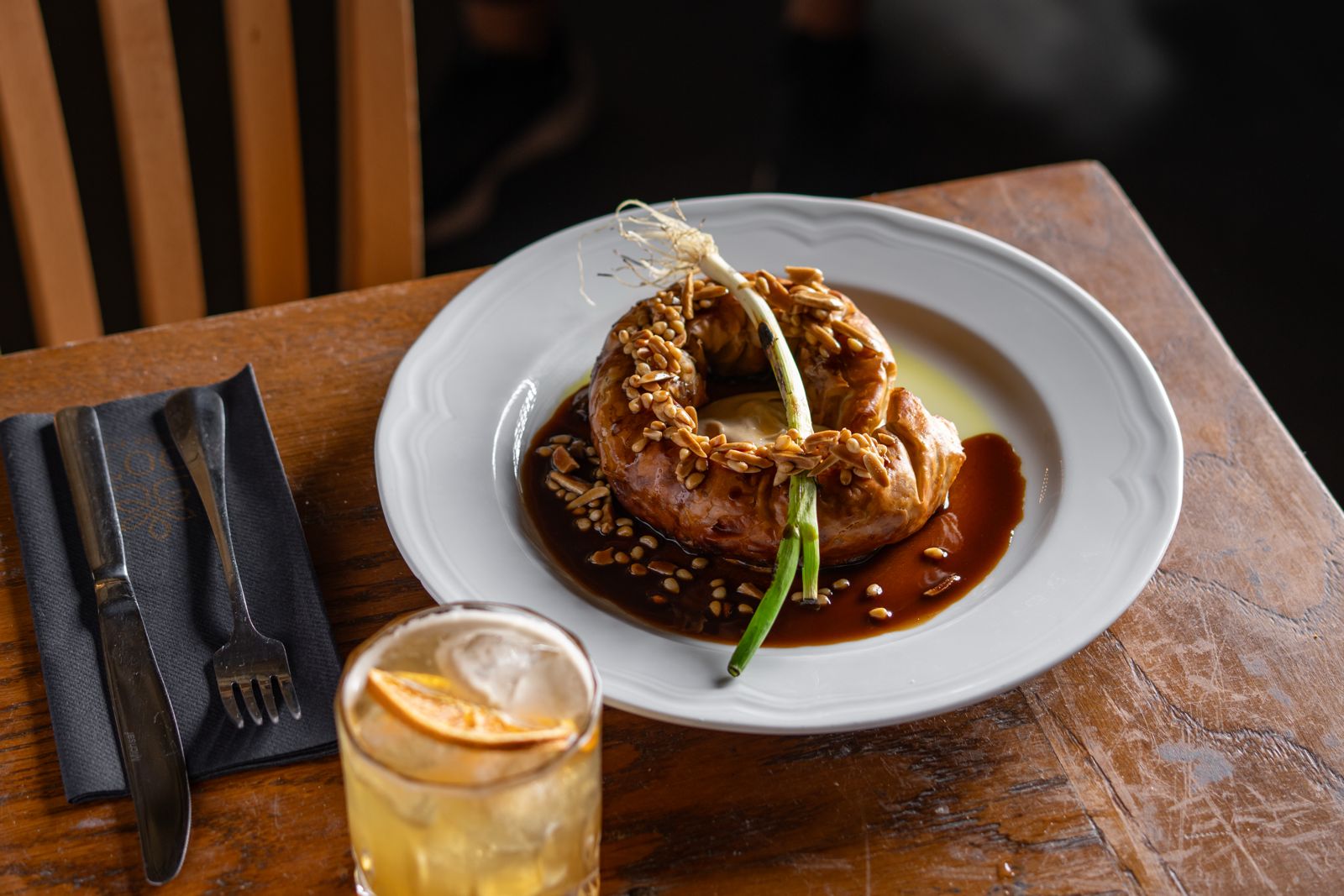
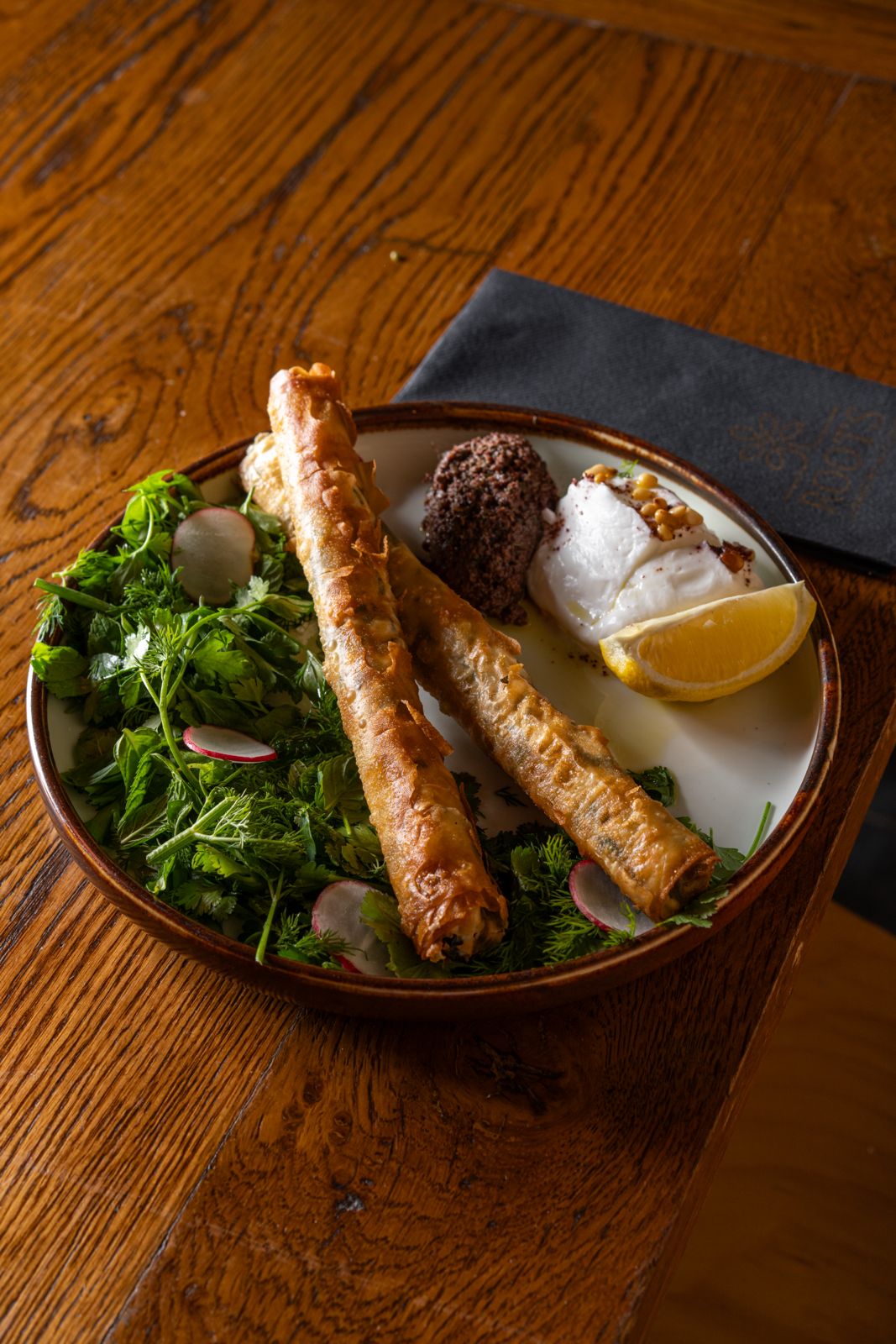
Our meal opened with house olives, muhammara, burnt eggplant cream, soy and coconut labneh, herb tahini, kubbeh and grape leaves, followed by red tuna sashimi with finger lime and sumac. My favorite was the eggplant siniyeh, charred over coals and topped with tahini, eggplant caramel, pistachios and vegan feta. The special menu adds lamb baklava, slow-cooked lamb neck and walnuts wrapped in phyllo over tahini and date harissa; a vegan salad of glazed beets, radish, greens and cherries; and shishbarak filled with cherrywood-smoked veal and lamb in a mint and garlic “yogurt” sauce. Sitting around that table, I understood what Darry meant when he told us, “Around a dining table, magic happens. It is where dialogue lives, where healing happens.”
(Last photo courtesy of Roots restaurant)
 Akko Extreme Park
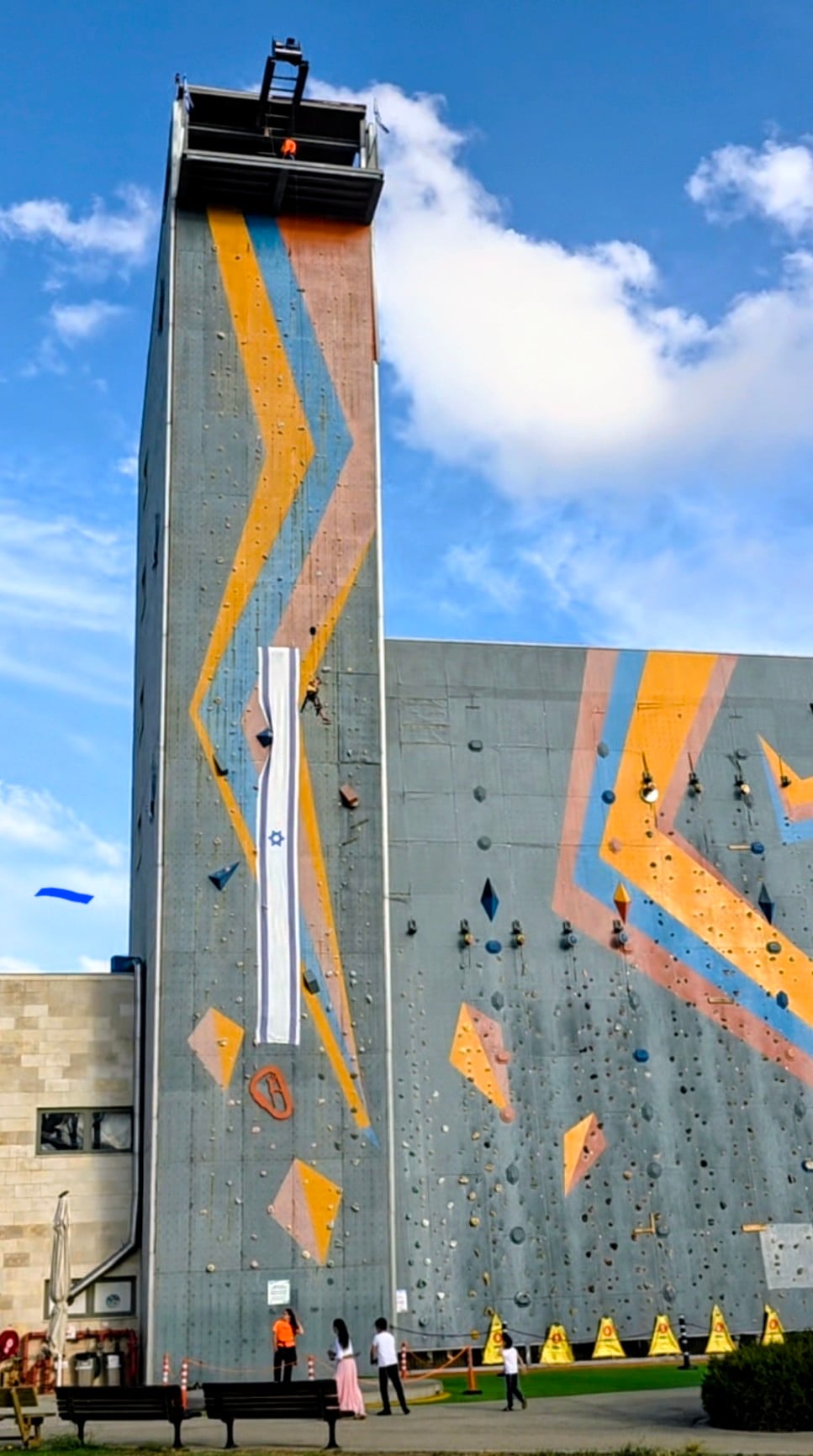
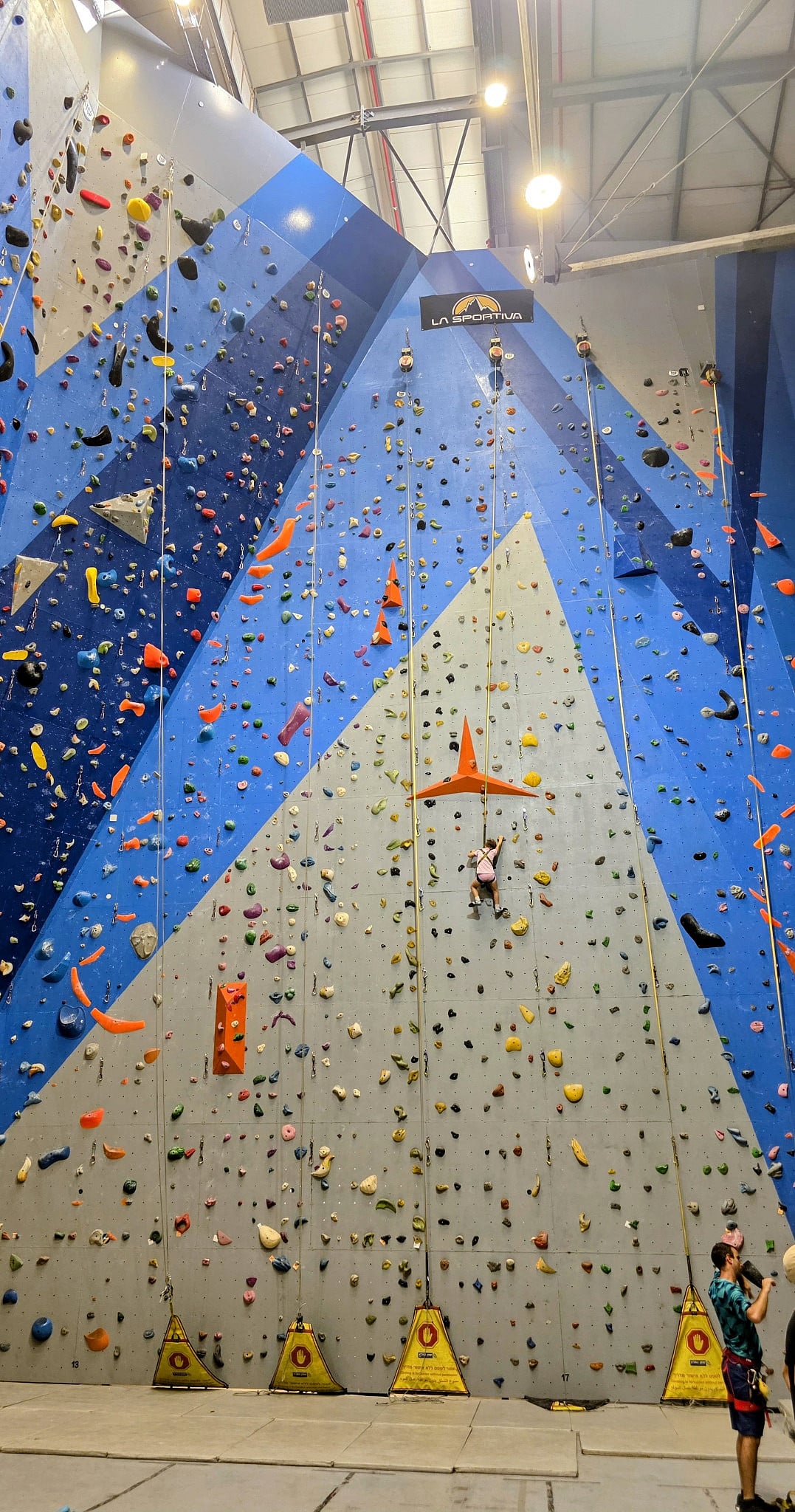
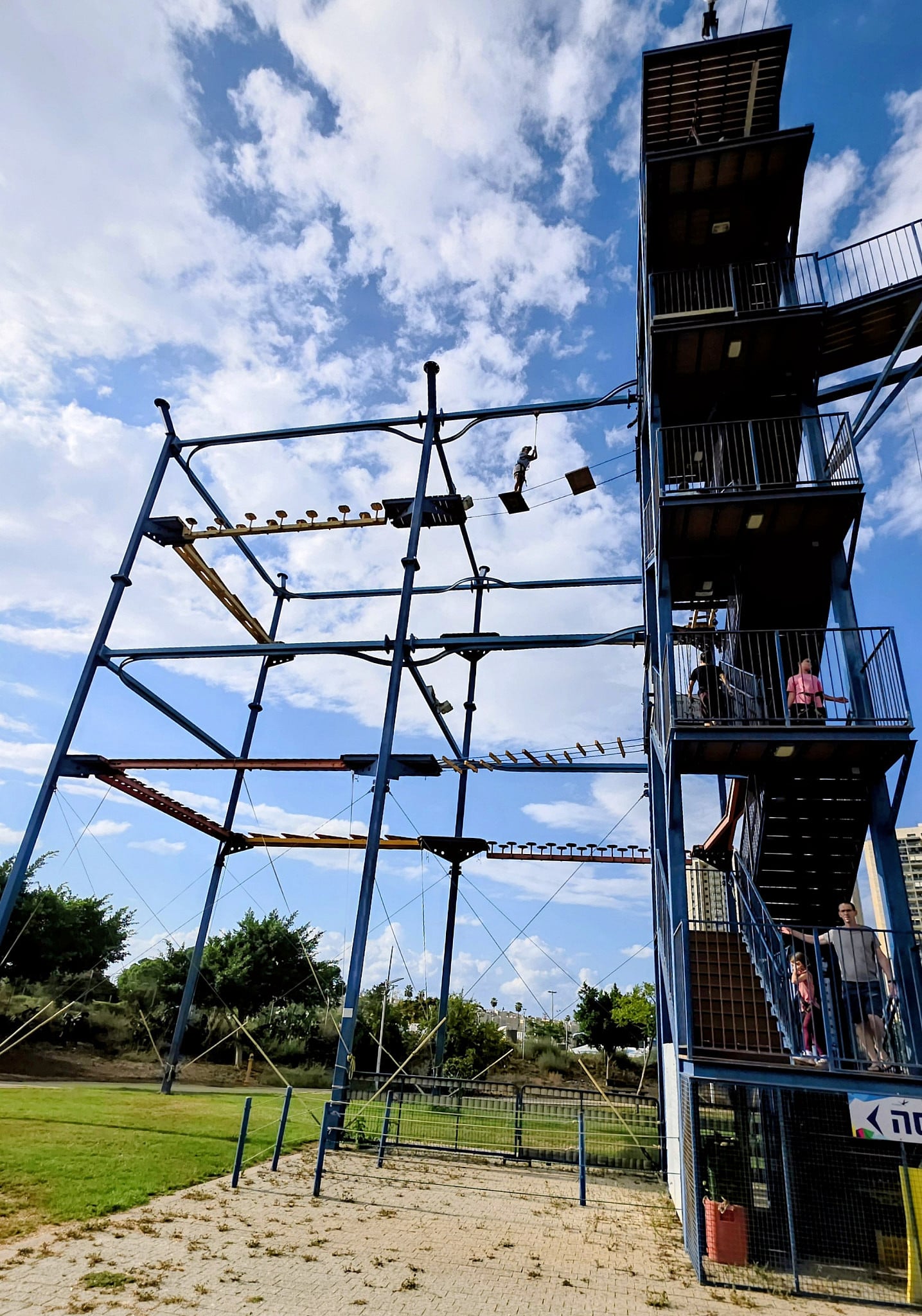
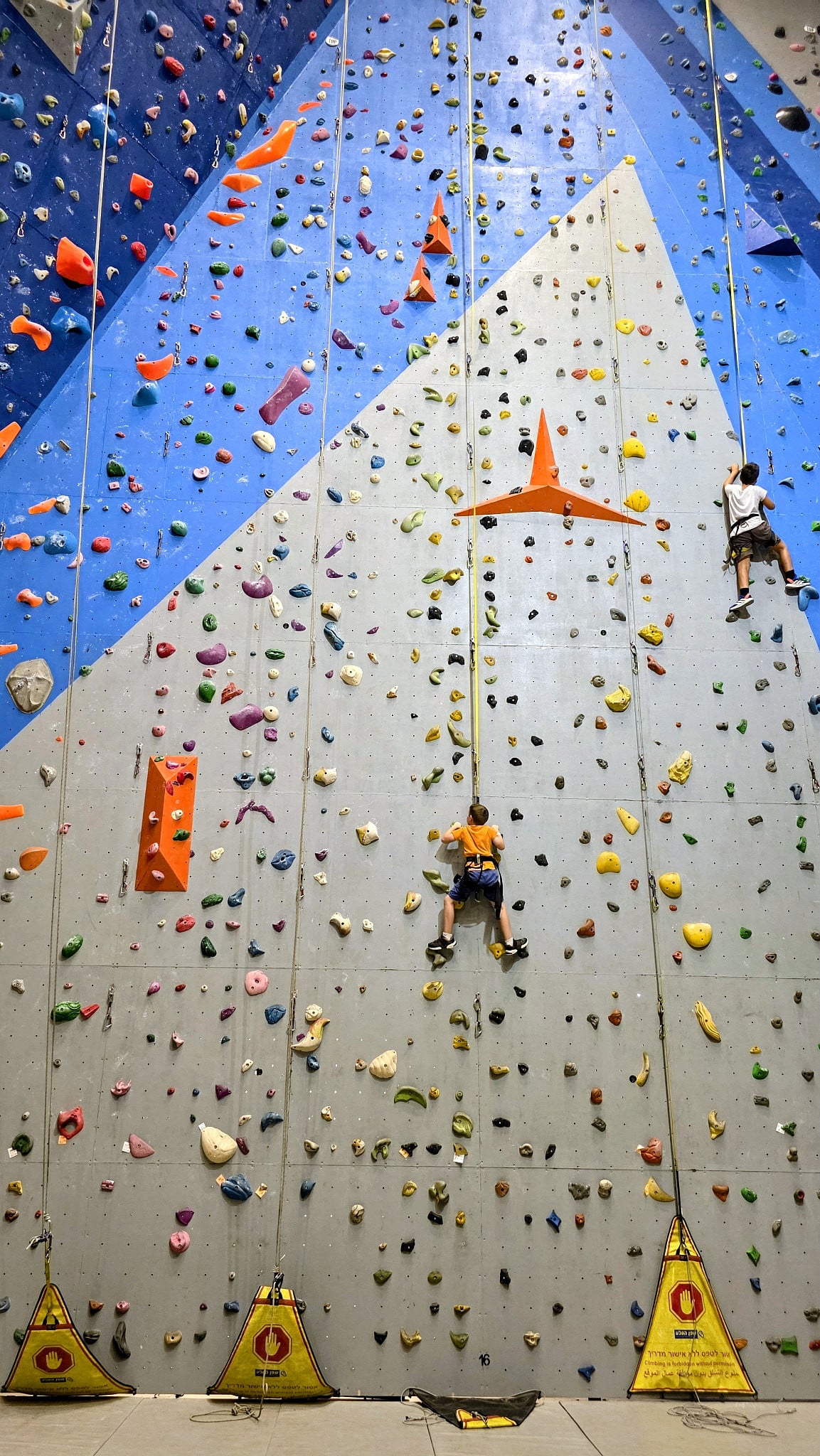
A short drive from the Old City, Akko Extreme Park has Israel’s tallest professional climbing wall, 33 meters high, with routes for every level. Beside it stands a 33-meter bungee jump, the only one of its kind in the country, along with Sky Track rope courses at 7 and 15 meters, an 80-meter zipline and an air-conditioned indoor climbing hall for year-round climbing.
The park is run by Shafan Hasela, an adventure sports and ODT workshop company founded in 1999 and owned by CEO Lior Fogel. Our hosts were Elisha Aviram, who manages productions, special events and client relations, and his wife, Galit. Site manager Noga Kessner oversees the instructors, the cafeteria, safety and shifts, and Eddie, who manages the climbing walls, put nervous first-timers at ease, our boys included.
 The team decided to reopen the park just three days after October 7. “We opened for our own sake first,” Elisha said. “In the first weeks, suddenly a young man came who just wanted to release some tension and climb the wall. Suddenly a family arrived, then a small group. We didn’t want to just complain. That destroys the soul. We wanted to do.”
Since then, the park has hosted hundreds of resilience workshops each year for individuals, families, evacuees and organizations. “Every person has fear. The question is how they deal with it,” Elisha said. “Families and groups have left here with an excitement you can’t describe.”
We saw what he meant with our own sons. Lavie, 10, and Eitam, 7, took on the walls and the high rope courses and pushed well past what they thought they could do. Toward the end of the day, Eitam looked up at the bungee platform and announced that he wanted to jump. He jumped, then went straight back up and jumped again. When his feet touched the ground, his face showed pure pride at having done something that big on his own. For a seven-year-old, facing a fear like that builds self-esteem and self-trust that last long after the harness comes off.
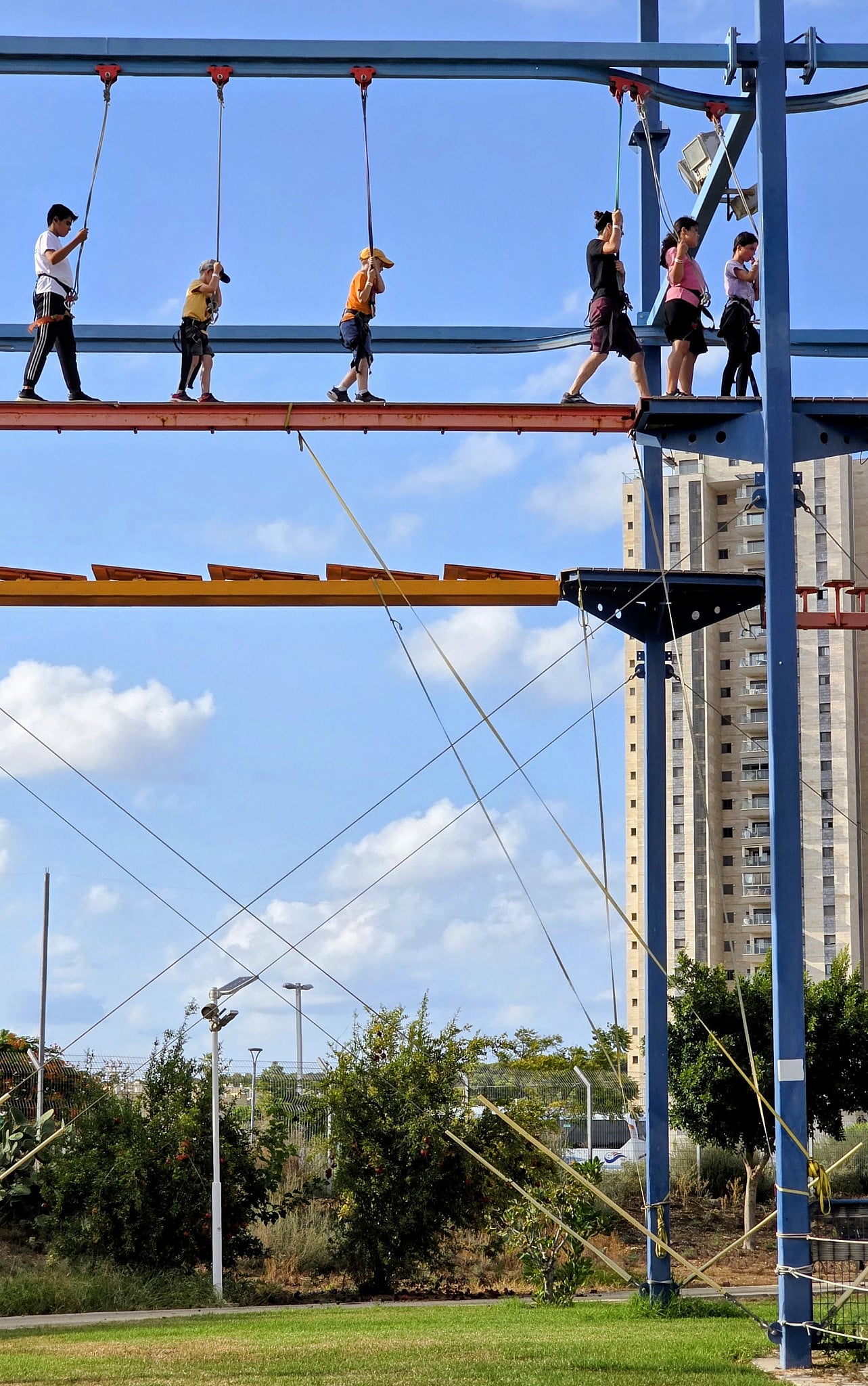
Shafan Hasela is also growing across the north. The company recently added a zipline in Nof HaGalil, and in June it opened Berko Extreme Park in Tiberias, set among ancient ruins overlooking the Sea of Galilee, with challenges for every age.
As the sun went down and the wall cast long shadows across the park, parents and children came down from the platforms tired and smiling. We left with the same feeling, thanks to Elisha, Galit, Noga, Eddie, and the whole Shafan Hasela team.
Contacts
Beit Elfarasha: Suites, WhatsApp Nura at 052-609-2996. Culinary workshops: WhatsApp Cathy at 054-456-1693| beitelfarasha.com
Roots: Open Sun-Thu 12:00-23:00, Fri 12:00-16:00, and hosts boutique events | 04-884-8040
Algo Dulce | Nofar: 3A Uzi Hitman St., Akko | 04-872-7276
Akko Extreme Park: Reservations with Galit | 050-350-4478350-4478 | www.shafan-hasela.com