Host, Echoes of Jewish History Podcast
The CEO Who Never Stopped Writing
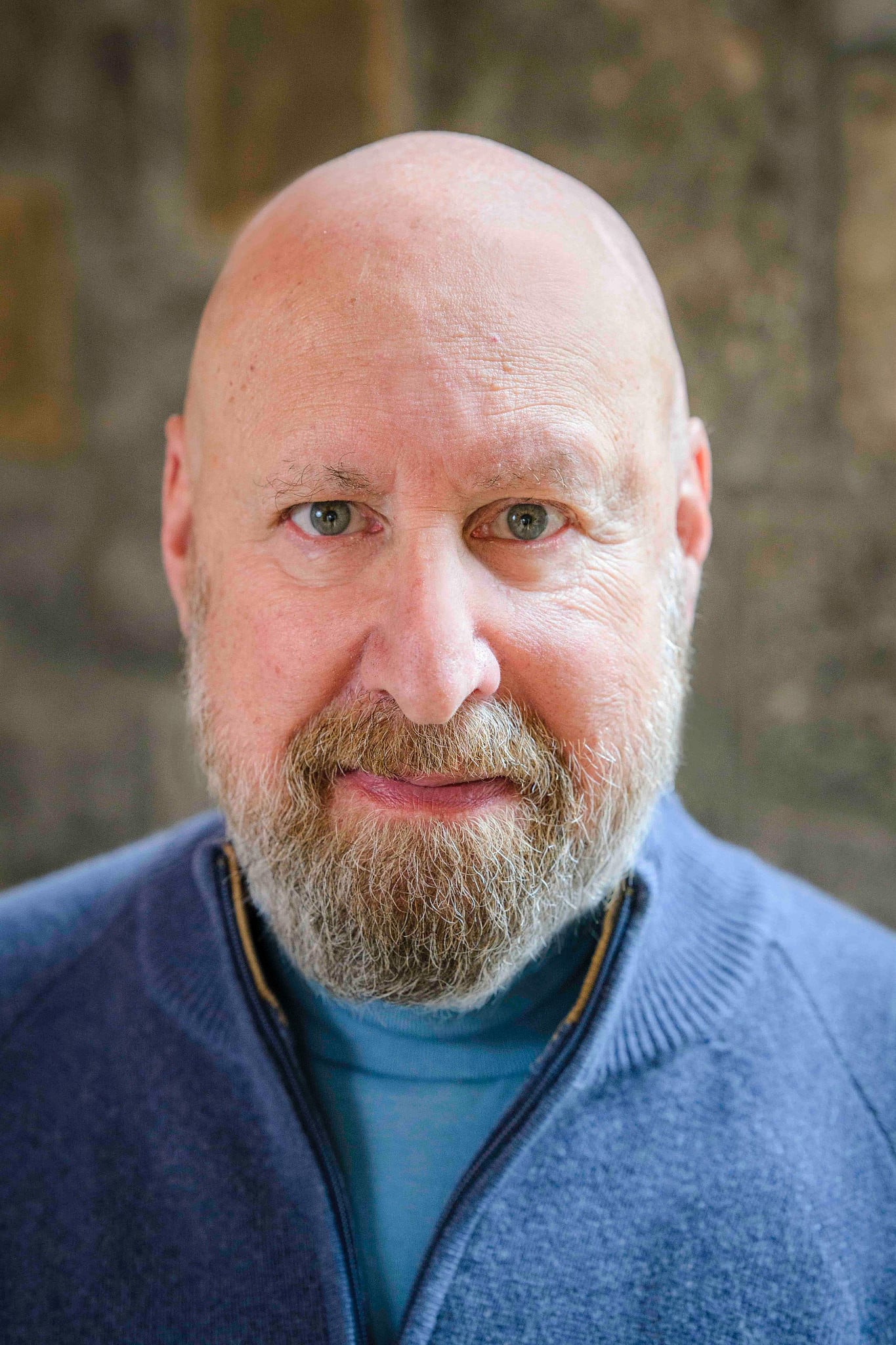
Source: Fredrick Price/ David Hirshberg
Fredric Price has lived a life that resists the usual categories.
In one world, he is a life sciences executive and entrepreneur who has served as CEO of five firms, Chairman of the Board of eight companies, and board member of two other organizations. His professional record includes a key role in the approval of eight new drugs, more than $700 million raised in securities transactions, 24 merger, acquisition, and licensing transactions, two initial public offerings, FDA-approved facilities, and 18 issued US drug patents as co-inventor.
In another world, writing under the name David Hirshberg, he is a novelist of American Jewish memory.
Those two worlds might seem unrelated. One belongs to biotechnology, company-building, financing, patents, boards, facilities, regulatory pathways, and the difficult work of bringing medicines closer to patients. The other belongs to characters, families, neighborhoods, memory, moral ambiguity, dialogue, and history.
But to understand Fredric Price properly, one has to see the connection.
The connection is storytelling.
In biotechnology, storytelling is not superficial branding. It is the discipline by which a company explains why its work deserves time, risk, capital, patience, and belief. A biotech leader must help investors, scientists, employees, regulators, partners, physicians, and sometimes patients understand why an uncertain future is worth pursuing.
In fiction, storytelling performs a different but related act. It rescues human complexity from abstraction. It turns the past from a summary into an inhabited world.
That is what David Hirshberg’s fiction attempts to do.
His novels My Mother’s Son, winner of eight literary awards, Jacobo’s Rainbow, also the winner of 8 awards, and the just released Crossing the Bronx form a Mid-Century Trilogy about American Jewish life in the 1950s and 1960s, a period shaped by the aftermath of World War II, the approach and turmoil of Vietnam, urban transformation, assimilation, ambition, outsiderhood, and the long movement of Jews into the fabric of American society.
My Mother’s Son begins with family memory and postwar Jewish life.
Jacobo’s Rainbow moves into the upheaval of the 1960s.
Crossing the Bronx, completes the trilogy by returning to the Bronx of the 1950s, where brothers, corruption, political power, ethnic tension, urban transformation, and the human cost of progress collide.
What makes this story especially compelling is that Price did not simply leave one career behind in order to begin another. Many executives eventually step away from business and turn toward writing, philanthropy, teaching, collecting, or reflection. Price took a different path. Although he once considered retiring as a CEO and devoting himself fully to writing, he chose to do both. In 2021, he founded a biotech firm developing a treatment for a condition with no approved drugs while continuing his literary work.
Not only has Fredric Price straddled two worlds — biotechnology and literary fiction— he has also maintained a significant presence in two countries: Israel and the United States.
Over the course of his career, he has served Israeli life sciences companies as Chairman of Omrix Biotherapeutics, Chairman and CEO of Chiasma, Chairman of Bioblast, and Chairman of Aummune. His professional relationship with Israel has spanned decades and reflects a sustained commitment to the country’s biotechnology sector.
That relationship continues today. Although NBO Pharma Inc., the company he founded and currently leads as Chairman and CEO, is headquartered in New York, Israel remains central to its operations. The company conducted its first clinical trial in Israel and is preparing to launch its second clinical trial there as well. NBO works with an Israeli clinical research organization, and its Head of Project Management and Regulatory Affairs is based in Israel. Even while building companies in the United States, Price has continued to invest in Israeli scientific innovation and clinical development.
That simultaneity matters.
He remained Fredric Price while becoming David Hirshberg.
He continued to build in the world of science while building in the world of memory.
He remained engaged in the future while writing about the past.
This is why the Crossing the Bronx is a legacy story.
Legacy is often misunderstood as reputation. It is not. Reputation is what people say while one is visible. Legacy is what remains useful after the moment has passed.
Fredric Price’s business life has been built around future possibility: drugs not yet approved, companies not yet matured, facilities not yet completed, capital not yet raised, products not yet brought to patients.
David Hirshberg’s literary life has been built around recovered memory: families, neighborhoods, Jewish identity, outsiderhood, postwar America, the 1960s, and the moral complications of belonging.
One identity builds forward. The other writes backward. Both are forms of responsibility.
The new novel, Crossing the Bronx, makes that responsibility visible. The book is set primarily in the Bronx of the 1950s and examines the human cost of progress when neighborhoods are transformed by power. It is a story about brothers, inheritance, corruption, ambition, and the people forced to live inside decisions made far above them.
The novel carries an echo of Jacob and Esau, but it remains grounded in the concrete world of mid-century New York. That combination gives it depth without turning it into abstraction. The biblical structure sharpens the questions of rivalry, blessing, inheritance, and family fracture. The Bronx gives those questions streets, rooms, voices, pressures, and consequences.
This is what serious fiction can do. It can take public history and show how it enters private life.
A road becomes a wound.
A city project becomes a family crisis.
Progress becomes a moral question.
Corruption becomes inheritance.
A neighborhood becomes memory.
That is why David Hirshberg’s work belongs naturally in the world of Echoes Media. Echoes Media is built on the conviction that the past is not dead material. It reverberates. It shapes identity, responsibility, family, politics, faith, and moral judgment long after the event itself appears to have passed.
Fredric Price has built in biotechnology. David Hirshberg has built in fiction. His three novels now form a record of American Jewish life at a moment when belonging became more possible but not simple, when integration offered dignity but also new pressures, and when Jewish memory had to find its place inside the American story.
At a certain stage in life, the question changes.
It is no longer only: What have I achieved?
It becomes: What will remain?
For Fredric Price and David Hirshberg, the answer is not a monument. It is work.
The work of medicine.
The work of fiction.
The work of memory.
The work of building something that lasts.
Related Topics
Related Posts