


Middle East Forum Fellow/North Africa Risk Consultant
The Chabahar Gambit: Is Confronting China Worth the Risk of Iran’s Concession?
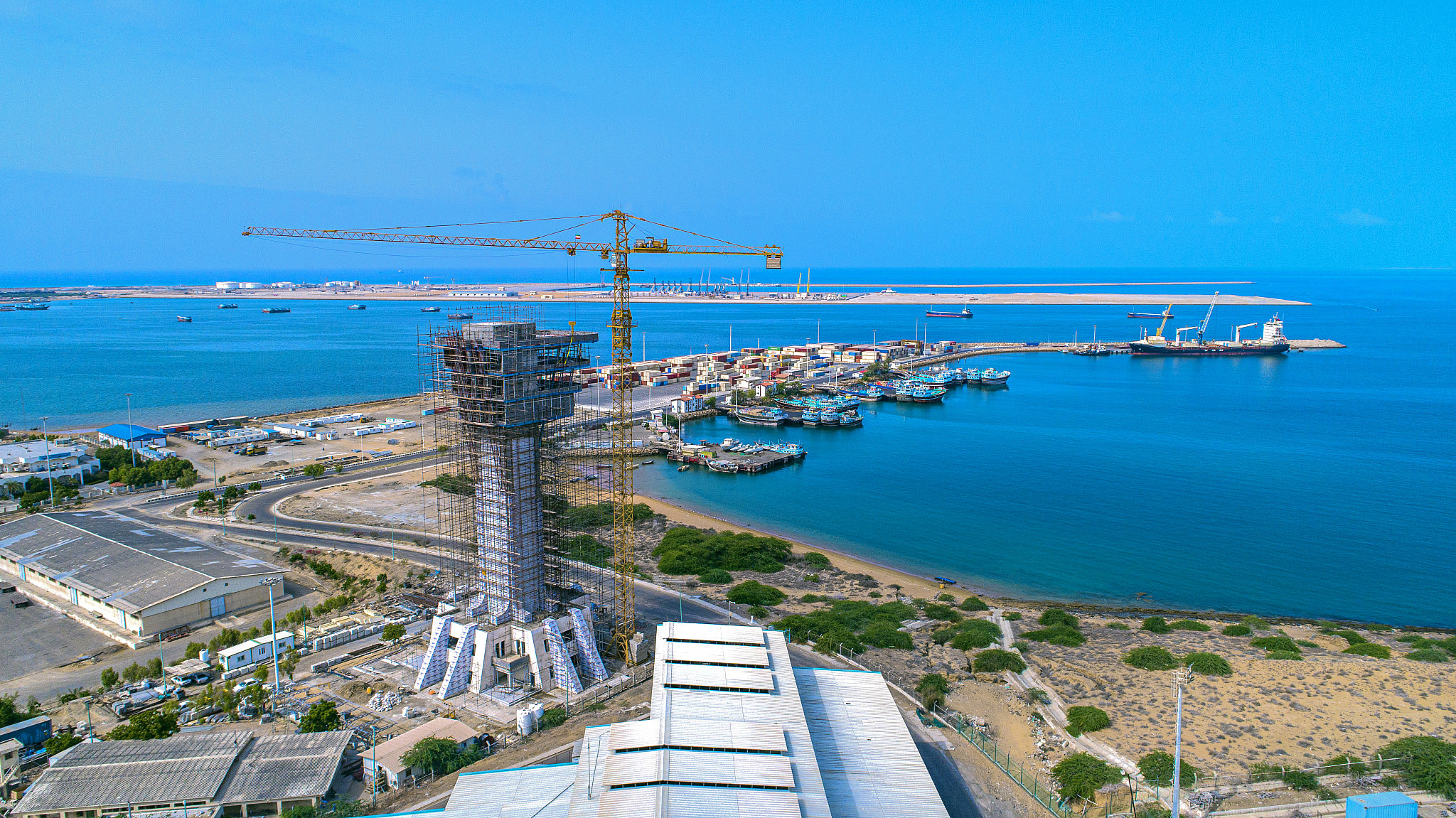
Chabahar Port (creative commons) Source: https://en.wikipedia.org/wiki/Chabahar_Port#/media/
For those dedicated to neutralizing the regional and existential threat posed by Tehran’s Islamist regime, the recent U.S. decision to grant India a six-month sanctions waiver for operating Iran’s Chabahar Port is, on its face, deeply unsettling. It appears to weaken the essential “maximum pressure” campaign and inject vital revenue into the Iranian economy.
Yet, strategic victory in the modern era demands a sophisticated calculus—one that prioritizes the existential, structural threat over the incremental, persistent one. America’s grudging concession at Chabahar is not a betrayal of sanctions policy; it is a critical, temporary measure to secure the greater regional and global balance against a far more capable rival: China.
The core dilemma for Western-aligned security interests is no longer confined to Iran’s “Axis of Evasion.” It is defined by a colossal, concrete threat sitting merely 170 kilometers from Chabahar: the China-backed Gwadar Port in Pakistan.
The Greater Threat: China’s Anti-Access Strategy
The conflict over Chabahar is less about Persian Gulf trade and more about the fight for logistical and, critically, military dominance in the Indian Ocean. Gwadar is the physical terminus of the massive China-Pakistan Economic Corridor, a project whose strategic scale utterly eclipses India’s investment in Chabahar.
Gwadar’s planned capacity—estimated at a staggering 300 to 400 million tons of cargo annually—is a clear declaration of intent to monopolize regional logistics. However, the real threat is military. Gwadar is widely identified as a potential dual-use facility: a logistical support point for the People’s Liberation Army Navy, including submarines operating in the Arabian Sea. This infrastructure allows Beijing to establish Anti-Access/Area Denial capabilities in waters adjacent to the Strait of Hormuz, profoundly modifying the strategic balance across the entire region.
For Israel and its allies, this is not an abstract threat. The security of global maritime freedom, including the Red Sea approaches, is non-negotiable. Allowing China to establish an uncontested security and logistical anchor at Gwadar jeopardizes the stability of the entire oceanic gateway to the Middle East.
India: The Essential Counterweight
The U.S. sanctions waiver, though temporary, recognizes that a rigid “maximum pressure” policy on Chabahar was becoming strategically self-defeating. By threatening to revoke the waiver, Washington risked crippling India’s long-term strategic investment—a commitment of hundreds of millions of dollars and a decade-long operating lease—thereby passively handing China an unearned victory.
India’s operation of Chabahar is indispensable because it anchors the International North-South Transport Corridor. This multimodal network, connecting India to Russia and Europe through Eurasia, is the only operational, non-Chinese alternative to Beijing’s Belt and Road Initiative infrastructure. It is a democratic bulwark against monopolization. By forcing India to abandon its flagship connectivity project, the U.S. would not be punishing Iran; it would be weakening a critical partner’s ability to compete with China on the infrastructural battlefield.
The six-month waiver secured recently is a welcome strategic acknowledgment. It maintains India’s vital gateway to Central Asia, bypassing hostile Pakistan, and keeps alive a diplomatic stake in Afghanistan.
From Concession to Controlled Strategy
However, a temporary waiver is insufficient. The current short renewal cycle creates compliance uncertainty that paralyzes the major capital investments required to make Chabahar a true, resilient rival to Gwadar’s scale. India cannot commit the necessary funds if the regulatory environment shifts every 180 days. This instability serves only Beijing’s interests.
To transform this tactical concession into a robust strategic tool, the U.S. must take decisive action. First, the waiver must be stabilized by granting a codified, long-term exception, ideally tied to the full duration of India’s 10-year operating agreement. This will enable the necessary multi-year capital investment. Second, and crucially for managing the risk to the sanctions regime, this must be contingent upon establishing verifiable, auditable financial frameworks, such as segregated escrow accounts. These mechanisms are necessary to ensure that Iranian revenue is strictly controlled and prohibited from being diverted toward proliferation activities or supporting the Islamic Revolutionary Guard Corps.
The Chabahar gambit demands a pragmatic acceptance of calculated risk. The enduring necessity of countering China’s naval expansion—and securing the crucial maritime lanes of the Indian Ocean—must take precedence. We must manage the risk of leakage to Tehran by imposing stringent controls, but we cannot afford to lose the strategic high ground to Beijing by clinging to an outdated sanctions rigidity. Securing the strategic future of the Indo-Pacific requires a permanent exception.