
The Christian Antisemitism Nostra Aetate Left Unfinished
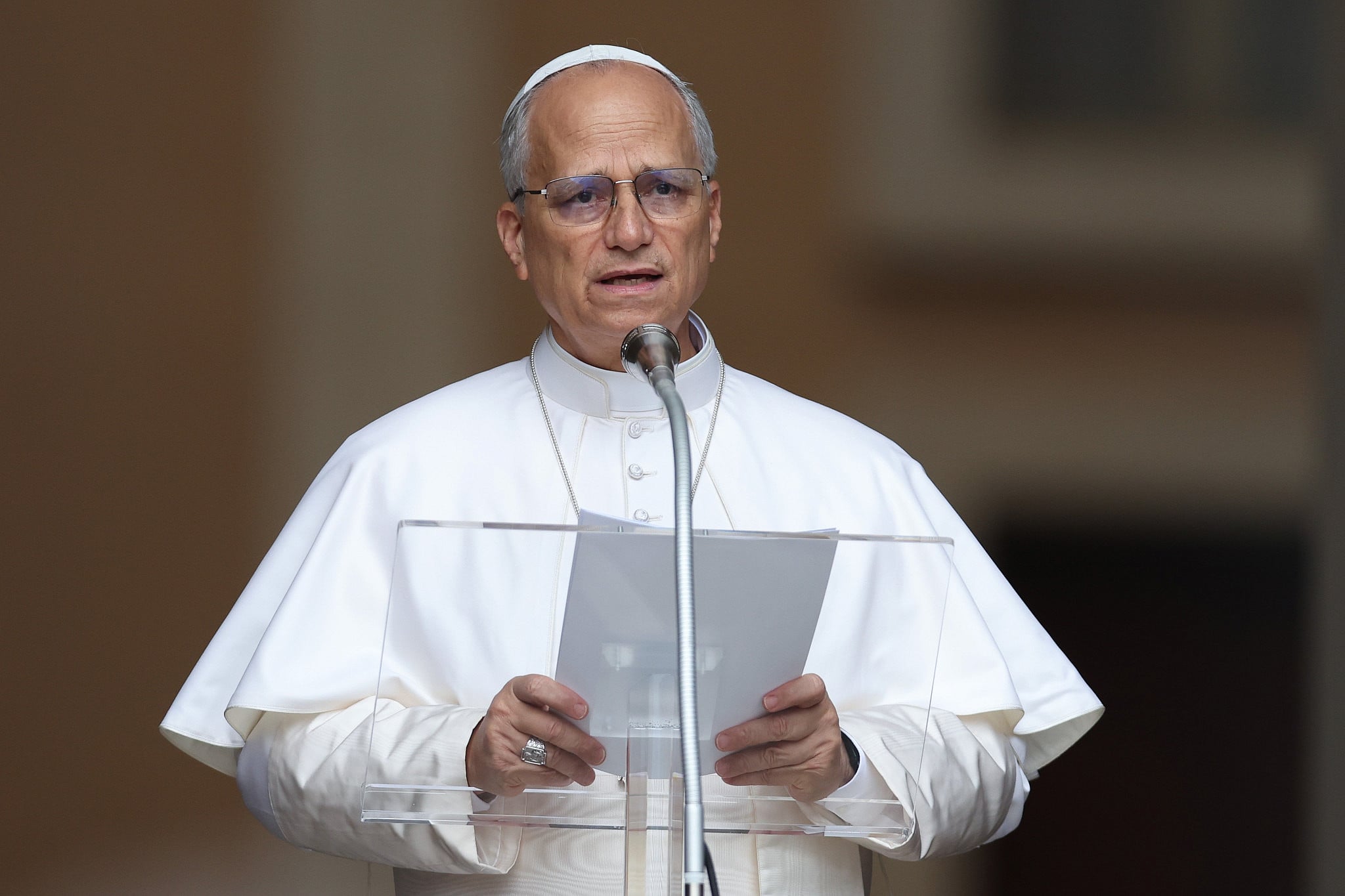
Last week, three major bodies of the Holy See jointly published A Journey of Hope, a new document approved by Pope Leo XIV marking sixty years since Nostra Aetate, the declaration promulgated during the Second Vatican Council on October 28, 1965.
Although Nostra Aetate is now remembered as a landmark in the Catholic Church’s dialogue with other religions, its origins were more specific. As the new Vatican document recalls, it was initially conceived as a response to the “tragic consequences of antisemitism, which culminated in the Shoah.” After meeting the French Jewish historian Jules Isaac, Pope John XXIII entrusted Cardinal Augustin Bea with drafting a text aimed at healing and renewing the relationship between the Church and the Jewish people.
The result was one of the most important documents for Jewish-Christian relations in nearly two thousand years of history. Nostra Aetate reaffirmed Christianity’s Jewish roots, rejected the collective responsibility of Jews for the death of Jesus, and condemned antisemitism.
In the decades that followed, the Church went further. The new Vatican document reiterates one of the most consequential developments of this postwar theology: “God’s covenant with the Jewish people is irrevocable.”
Sixty years later, however, some of these achievements appear to be under pressure again.
The Holy See itself acknowledges the problem. A Journey of Hope notes that the conflicts that have erupted in the Middle East in recent years have left their mark on Jewish-Christian dialogue. “Many channels of communication have been strained,” it states.
Indeed, the October 7, 2023 massacre and the war that followed in the Gaza Strip have made relations between Jews and Christians more difficult. Alongside the suffering of Palestinian civilians and questions over Israel’s conduct of the war came a new wave of antisemitism around the world. And a particularly uncomfortable part of this phenomenon has emerged from within Christianity itself.
The problem crosses political boundaries. Figures and movements on the far right have once again resorted to stereotypes that belonged for centuries to the repertoire of Christian anti-Judaism. In other Christian circles, particularly those influenced by postcolonial readings of the Israeli-Palestinian conflict, old theological categories have acquired a new political vocabulary.
The target is no longer necessarily the Jew. It is the Jewish state.
The distinction is important. Criticizing the Israeli government, its policies, or even historical and ideological aspects of Zionism is not, by definition, antisemitic. The problem begins when Israel comes to play, in the Christian imagination, roles disturbingly similar to those assigned to Jews for centuries.
The old libel that Jews killed Christ finds an echo in images of Israel “crucifying” the Palestinians. The portrayal of Jews as persecutors of the first Christians reappears in attempts to depict the Jewish state as the greatest persecutor of Christians in the Middle East — an image that contrasts with the reality of Israel, where, unlike the decline seen across much of the region, the Christian population has grown in absolute numbers over recent decades.
Even Jesus undergoes a transformation: his Jewish identity is relativized so that he can be presented as Palestinian, while Israelis symbolically assume the role of those who crucify him once again.
There is an important distinction here. The Vatican document itself describes Jesus as belonging to the “Jewish Palestinian” environment of the first century, while simultaneously emphasizing that “Jesus was and always remained a Jew.” The former terminology is itself historically debatable, particularly when read through the categories of modern national identity. What matters here, however, is a broader phenomenon: the retrospective attribution of a Palestinian identity to Jesus in ways that minimize, relativize, or even displace his Jewish identity. Jesus’ Jewishness was not simply a religious affiliation. It situated him within a people, a history, a culture, and a land.
This Palestinianization of Jesus is not merely a rhetorical curiosity. In a 2025 study published in The Journal of the Middle East and Africa, Neil Bar and Harel Chorev Halewa analyze the phenomenon alongside two other narratives found in Palestinian nationalist discourse: claims of direct continuity with the ancient Canaanites and the denial of the existence of the Jewish Temple in Jerusalem. According to the authors, such narratives contribute to constructing a Palestinian claim to autochthony while weakening the perception of Jews as a people historically connected to the land.
In the case of Jesus, the mechanism is particularly revealing. It is not always necessary to deny that he was Jewish. It is enough to reduce “Jewish” to an exclusively religious category. Jesus can then be Jewish by religion but Palestinian by national identity.
The result is to strip Jews of precisely what Zionism asserts: that Jews are not merely a religious community, but a people with a history, a collective identity, and an ancestral connection to a land.
This brings us to one of the most difficult questions facing the dialogue initiated by Nostra Aetate.
The declaration made enormous progress in recognizing the Jewish people, confronting the deicide accusation, and rediscovering Christianity’s Jewish roots. But it said very little about an issue inseparable from Jewish identity itself: the Land of Israel.
That omission was not accidental. During the drafting of Nostra Aetate, Arab Christian circles feared that any recognition of the relationship between the Jewish people and the land would be interpreted as a religious legitimization of Zionism or the State of Israel. This concern cannot be understood solely as a theological or political position. Arab Christians constituted minorities in Muslim-majority countries and feared that a Vatican position perceived as favorable to Israel could expose them to accusations of betrayal, retaliation, and even greater pressure.
The solution was, to a considerable extent, to separate the issues. Nostra Aetate spoke about the Jewish people, their roots in salvation history, and antisemitism, while avoiding a developed reflection on their relationship with the land or on Zionism.
That caution helped make the declaration’s approval possible. It also left behind a question that would continue to accompany Jewish-Christian dialogue.
Sixty years later, that question has become impossible to ignore.
It is relatively easy to recognize Christianity’s Jewish roots when Judaism remains confined to the Bible, the synagogue, or the past. The more difficult test begins when Christians recognize that, for Jews themselves, their religious and historical identity is also bound to Jerusalem and to a land continuously present in their Scriptures, prayers, festivals, and collective memory.
None of this requires Christians to support every policy of the State of Israel, nor does it turn Zionism into a Christian dogma. But it does require Jewish-Christian dialogue to take seriously the way Jews themselves understand their identity.
In this sense, A Journey of Hope arrives at an important moment. By reaffirming Christianity’s Jewish roots, insisting that Jesus “was and always remained a Jew,” and reiterating that God’s covenant with the Jewish people is irrevocable, the Holy See recalls achievements that seemed firmly established after six decades of dialogue, but which recent years have shown are not irreversible.
Perhaps the challenge of the next sixty years will be precisely to confront the question that the first sixty left unresolved: how to recognize the Jewish people without demanding that they be separated from the land that occupies a central place in their own history, religion, and collective memory.
This article was adapted from a Portuguese-language version originally published in Revista Crusoé. The original article is available here.