
A voice from Morocco
The Comfort Clause: Israel Decides Who Gets In
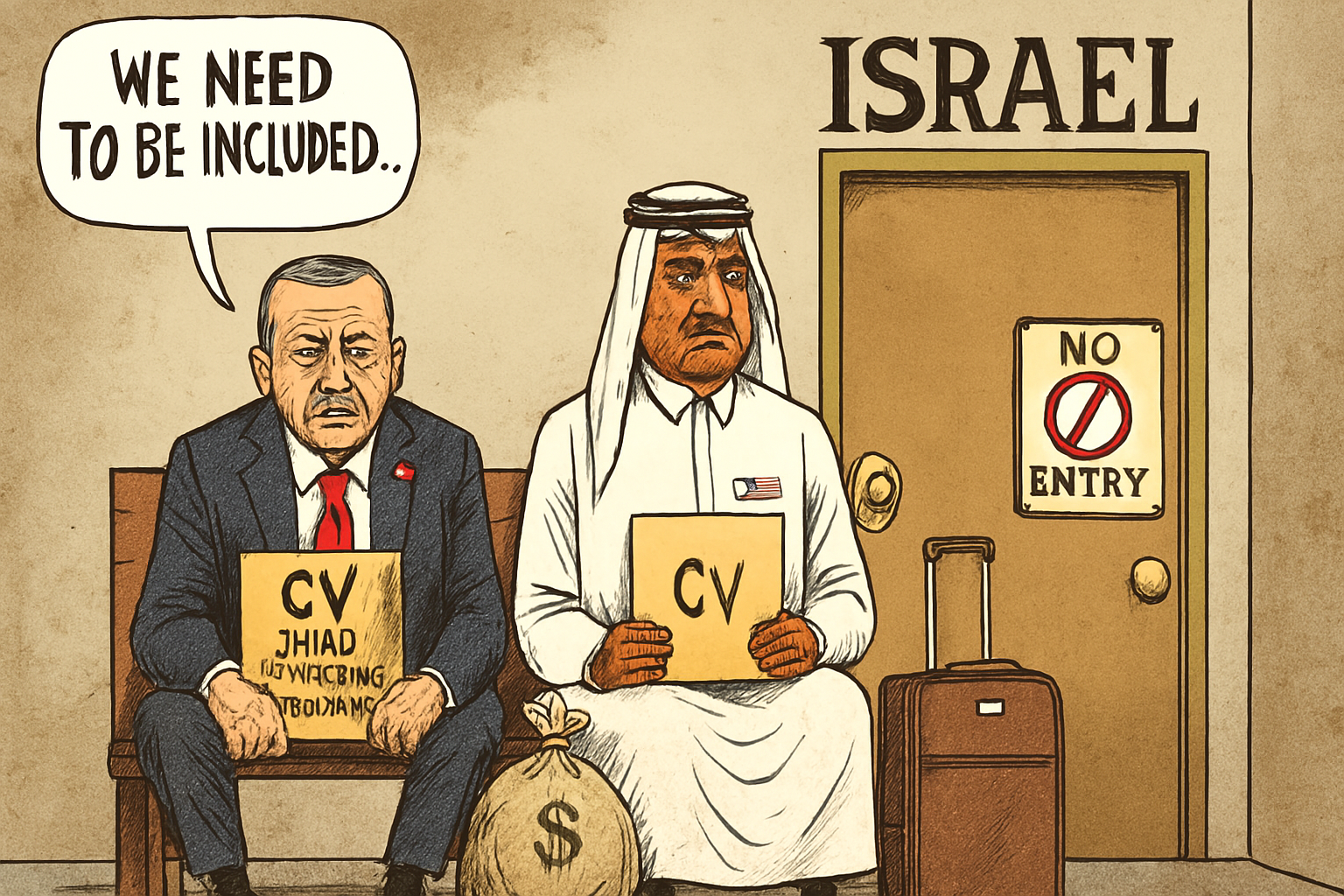
From Arrogance to Appeasement: The Brotherhood’s Backers Beg for Relevance. And from this platform, I kept shouting for years: Qatar doesn’t mediate—it metastasizes.
In his press conference at the GMCC headquarters, Marco Rubio—hailed by President Trump as “the best Secretary of State ever”—was not just clear. He was intense. Resolute. The Trump 21 Plan, he declared, has one unshakable aim: to ensure Gaza never again constitutes a threat to Israel.
But what Rubio didn’t say outright was just as important as what he did. The future of Gaza, under this plan, will not include countries still clinging to the old models of perpetual conflict and eternal jihad. That means Turkey. That means Qatar. And that means the end of the road for the Hamas project they’ve nurtured for over two decades.
Let’s be blunt. Hamas is not just a rogue militia. It is an extension of Erdoğan’s and Tamim’s ideological army—a proxy force for their regional ambitions and their Brotherhood-inspired vision. October 7 was not just a military assault. It was psychological warfare. A bullying of Israel and the Jewish people, carried out with the backing of states that have long treated antisemitism as a strategic tool.
And now, some voices dare to suggest that Hamas—or its backers—should be rewarded with a foothold in Gaza’s future? That the guerrilla force should be replaced with a more potent, structured army like Turkey’s? That’s not peace. That’s an upgrade. A rebranding of the same ideology, now with better uniforms and diplomatic cover.
This is not rehabilitation. It’s reincarnation. It’s giving the Muslim Brotherhood another chance to repackage jihad as governance, terror as diplomacy. And Israel is expected to be comfortable with this?
No. The Trump 21 Plan must be more than a security blueprint. It must be a moral firewall. Gaza’s future cannot be built on the ruins of October 7 only to invite more powerful enemies through the front door. The ideology of terror and antisemitism must be dismantled—not redesigned.
And here’s the irony life sometimes throws at us: those two regimes—Turkey and Qatar—now find themselves at the mercy of Israel’s comfort. After two years of total and absolute Israeli military success, so undeniable that even the most adamant critics have gone silent, Israel has flipped the entire regional dynamic. The tables haven’t just turned—they’ve spun a full 360 degrees.
Those who once felt disgust at the idea of shaking an Israeli hand now stand like beggars, desperate to be included. That’s not diplomacy. That’s divine comeuppance. A reckoning against two regimes that built their regional clout on ideological warfare and antisemitic propaganda.
If it were about money, Qatar could be dismissed in a heartbeat. The UAE, as Trump once said while shaking hands with the Emirati diplomat, has “unlimited wealth.” Strategic depth, financial muscle, and regional credibility—Qatar simply doesn’t compete.
And Turkey? Alongside Egypt, another regime that has long sucked the blood of Jewish identity through its propaganda machine—movies, television, speeches that portray Israelis as the ultimate evil. But now, with Israel’s control over the Rafah crossing and the border with Egypt, the Sisi regime stands stripped of leverage. No more lifeline to Hamas. No more smuggling routes. Just silence.
These regimes once played kingmakers. Now they wait for Israel’s comfort. And that comfort will not come easily—not after October 7, not after decades of ideological assault disguised as diplomacy.
The Trump 21 Plan is not just a geopolitical blueprint. It’s a moral reckoning. And those who backed jihad for twenty years must now reckon with the cost of exclusion.
Related Topics
Related Posts