The Communities Michael Brooks Taught Us to Build

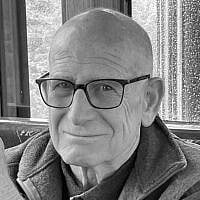
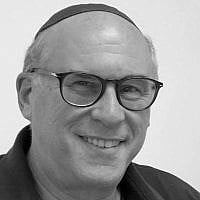
Heads are bowed, words are hushed – and for those who knew him well – knowing smiles can still be smiled, as we absorb the news that Michael Brooks has died. I knew Michael as the legendary leader of Hillel at the University of Michigan. His unique way of looking at the world was refreshing. His intimate connection with each person he embraced was comforting. Those qualities, among so many others, were inspiring.
Today I wish to share something he taught me, something I then tried to teach others in my role at Hillel International and subsequently in other Jewish communal capacities. Something that captures, for me, the essence of Michael Brooks.
I once asked him what a Shabbat dinner looks like at Michigan Hillel. He told me that the students would come to Hillel to pick up all the food and supplies they needed and then head back to their dorms for groups of students to make their own Shabbat dinner. I wondered about this, aloud. Many of us have a vision of what a Shabbat meal at a Hillel should look like. All the students would be in one big dining hall. The cacophony of sound, the variety of faces – all of this would create one remarkable expression of Jewish community. He clarified that Hillel offered this, too. But then he explained his thinking, and in doing so he wasn’t patronizing, he wasn’t paternalistic, and he wasn’t prideful. He simply saw things differently. This is what he said, “If Hillel only hosted one Shabbat dinner for everyone, then when the students come back for their 25th reunion, one might say to the other ‘Hey – Remember those great Shabbat dinners we had at Hillel?’ But since so many of the students take charge of their own Shabbat dinners, when they come back for that 25th reunion, they will be able to say, ‘Hey – Let me tell you about the great Shabbat dinner I hosted last week!’”
This was not only quintessential Michael Brooks, but permit me to say that this should be us. Taking risks on people. Not merely “engaging” them, but empowering them. And in the end trusting people to create their own lives, their own communities, to show up in the image of God that they see in themselves and that they, in turn, will honor and respect within others.
Shimon ben Nezira quoted Rabbi Yitzchak’s teaching that whenever we say something in the name of someone who died, his lips move along with ours as we share his words (Shekalim 7b). Many of us will be sharing what we learned from Michael, and as we do, his voice will mingle with ours—challenging us, guiding us, inspiring us to build the communities that we envision by trusting others enough to invite them to build with us.