
The Cultural Freedom Dolly Parton Protected
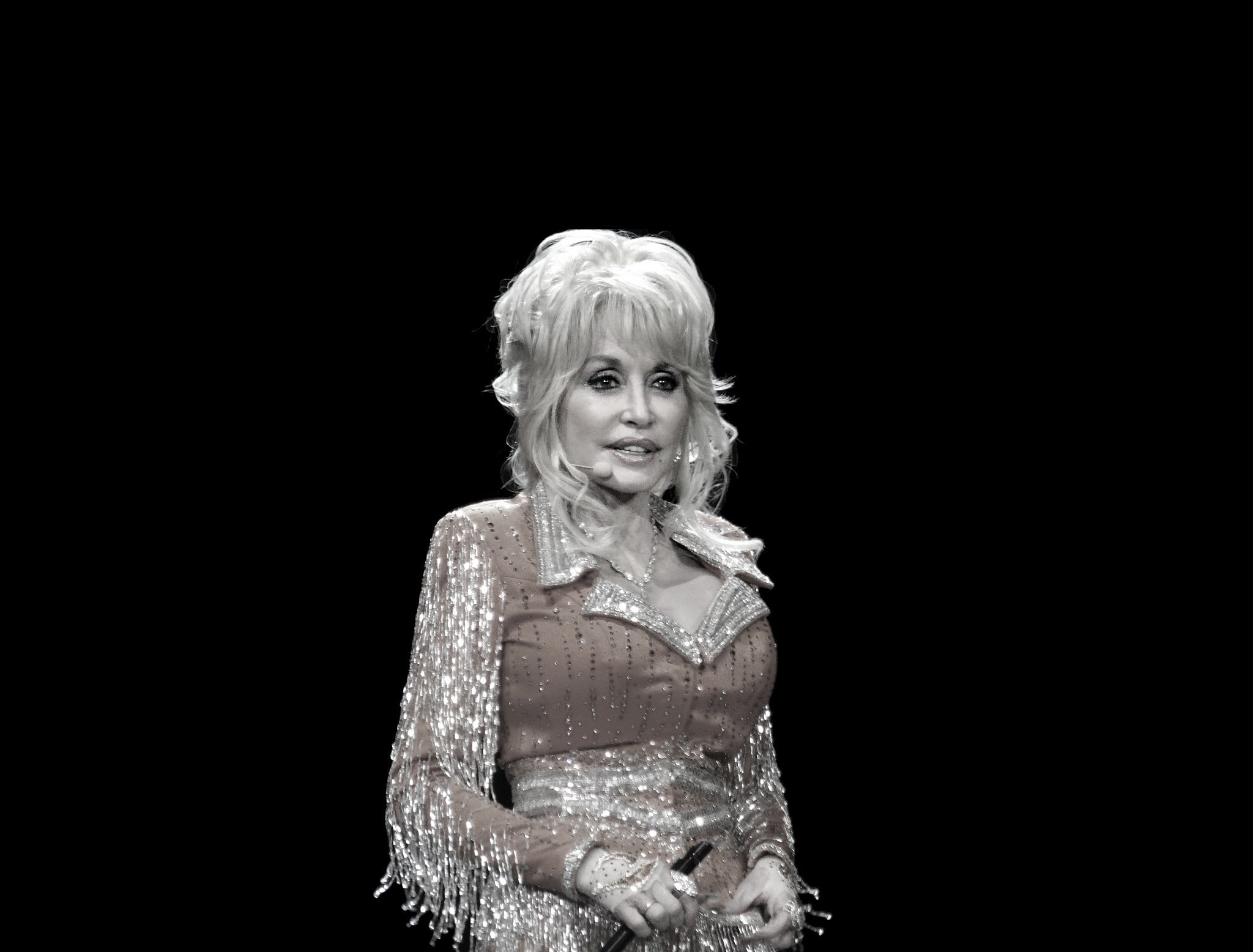
Every performer has a cultural space around them: the people who come, who listen, who sing the songs at their own weddings. Dolly Parton, who died in Nashville on Tuesday at 80, stood at the center of one of the largest such spaces any American musician has held, and she stood there for well over half a century.
What Parton protected in that space was a kind of cultural freedom: the freedom to contain politics without being organized by it. Pierre Bourdieu used autonomy to describe a cultural field’s capacity to retain ways of assigning meaning and value that are not simply imposed from elsewhere. Parton’s career suggests what a version of that autonomy can look like around an artist: politics can be present without political position becoming the dominant measure of the artist, the work and the audience.
Parton protected that autonomy not by keeping politics out of her work. Just Because I’m a Woman, released in 1968, attacked a sexual double standard. Down From Dover followed a pregnant girl rejected by her family. Coat of Many Colors remembered the humiliation of childhood poverty. Family asked country listeners to keep loving a gay relative, and Travelin’ Thru, written for a film about a transgender woman, brought her death threats. Late in her career, World on Fire went after politicians and a public life consumed by greed. She was protecting the space from being sorted, not from being disturbed.
What she withheld was political affiliation. Her father was a Republican, her mother a Democrat. She had too many fans on both sides of the fence, she said, and had learned years ago to keep her mouth shut about partisan politics. The values were public. The camp was not.
That distinction matters. Political content does not politicize a cultural space simply by being present in it. Politicization changes the hierarchy of meanings within the space. Beauty, humor, memory, faith, class and sentiment remain, but political judgment acquires authority over them: where the artist stands begins to determine what the work means and what listening to it says about the listener. A song that once could belong to someone because it reminded her of her mother can begin to function as evidence of what kind of person she is.
The pressure is particularly visible now. Artists, writers and cultural institutions are repeatedly asked to declare where they stand, including on Israel and Gaza. Statements are demanded, petitions circulated, boycotts organized, and silence itself can be read as a position. Speaking is an exercise of freedom. But when political positioning becomes expected even from those who have not chosen to make it part of their work, another freedom can contract: the autonomy of the cultural space itself.
Parton made that autonomy visible partly through the number of things about her that never resolved into a single identity. She was conspicuously Christian, extravagantly feminine and sexually playful, enormously wealthy and attached to her working-class Appalachian origins. She did not become inclusive by becoming less Christian, or serious by becoming less feminine. No one of these identities was given authority to explain all the others.
Her feminism worked similarly. Parton built an exaggerated femininity out of enormous hair, rhinestones, cosmetic surgery and cleavage while retaining remarkable control over her songs and business. She supported women’s independence but resisted being told what a feminist should look like or how a woman with a public voice ought to use it. There is something feminist in that refusal. Liberation cannot mean acquiring a voice only to discover that its legitimate uses have already been prescribed.
A person’s beliefs, Parton said in 2021, need not be used “like a weapon when it could be a tool.” Once one affiliation is allowed to predict everything else about a person, the person goes flat. A cultural space can go flat in much the same way.
What that space produced was not only songs. Parton founded her Imagination Library in 1995 because her father had never learned to read. Harold Grinspoon, a Jewish philanthropist in western Massachusetts, encountered the program, funded it in his own county and in 2005 built PJ Library on the model. His foundation’s Israeli arm went on to create Sifriyat Pijama with the Education Ministry in 2009, and Maktabat al-Fanoos five years later. The books are chosen in Israel, in Hebrew and Arabic, each for its own community rather than simply translated from the other.
The path matters. An idea born in the life of an evangelical woman in Appalachia could pass to a Jewish philanthropist and eventually into Jewish and Arab classrooms in Israel.
Parton was loved across political and cultural divisions. That was the result, not the achievement. To describe her simply as someone who “brought people together” misses what made that possible. The space around her remained crowded with religion, class, sexuality, feminism, sentiment, disagreement and politics itself without requiring any one of them to become the measure of all the others.
Her refusal of affiliation was not freedom from politics. It helped protect the autonomy of culture: its freedom to contain politics without being required to become politics.