


The Curious Case of Terrorism’s Respectable Friends
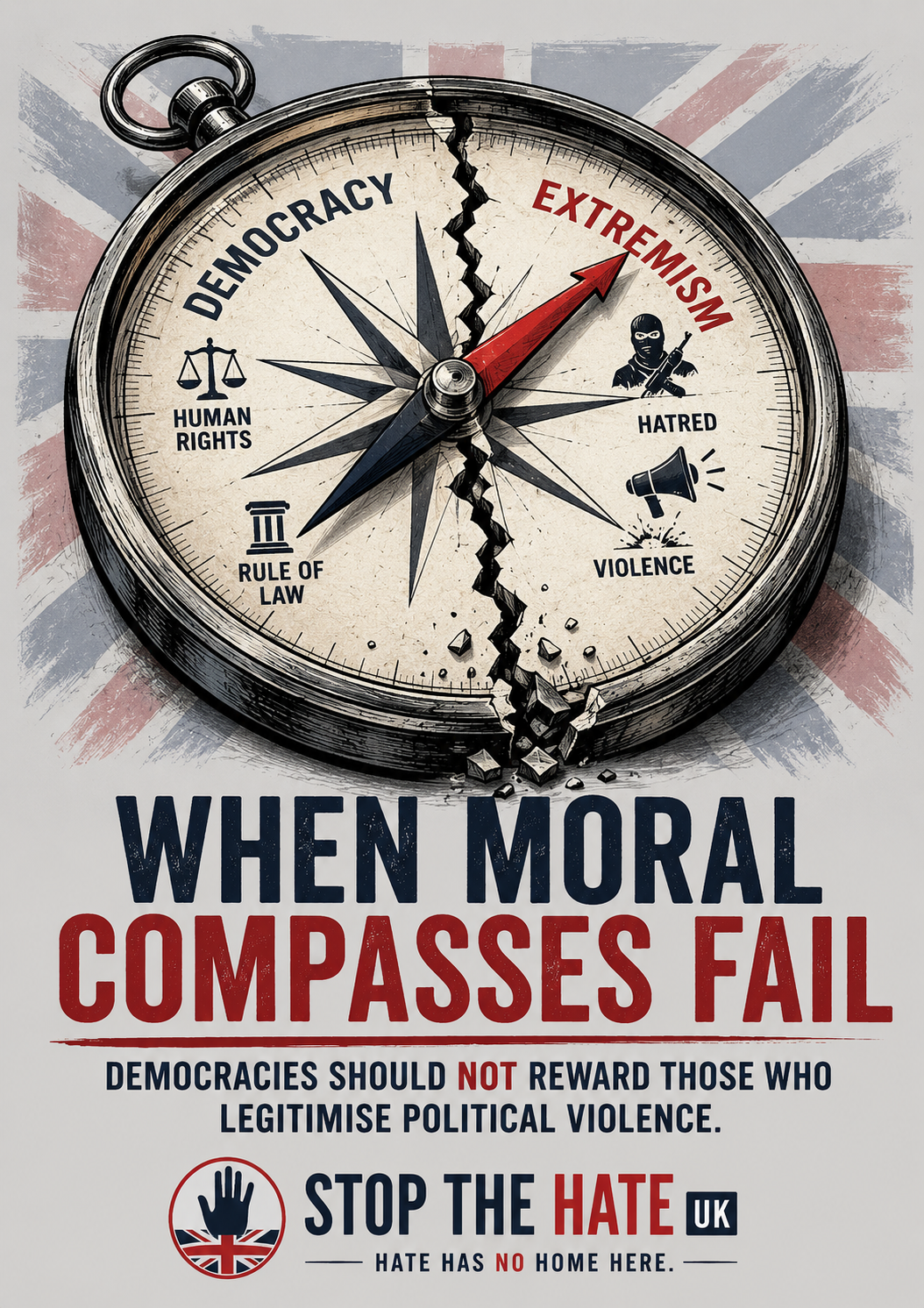
One of the stranger developments in British politics is the ease with which certain views can travel from the margins into public life, provided they arrive dressed in the right vocabulary.
We are constantly reminded that words matter. Careers have stalled over careless remarks. Public figures have been hauled before the court of opinion for comments made years earlier. Institutions issue apologies with industrial efficiency. Language, we are told, shapes the world around us.
Yet there seems to be an exception.
For reasons that remain difficult to fathom, expressions of sympathy for organizations whose methods include murder, kidnapping and terror are often treated with remarkable indulgence. The linguistic gymnastics required to transform a proscribed terrorist organization into a subject of polite debate would be impressive were the subject matter not so grim.
The controversy surrounding the appointment of Kamel Hawwash to Birmingham City Council’s cabinet brings this question into sharp focus.
The issue is not disagreement. Democracies depend on disagreement. Nor is it criticism of Israel, which is as legitimate as criticism of any government.
The question is much narrower.
Should those who have publicly praised, justified, or aligned themselves with the rhetoric surrounding a proscribed terrorist organization be elevated to positions of public trust?
One might have thought the answer obvious.
Apparently not.
What stands out is the inversion of standards. We have become exquisitely sensitive to perceived harms while displaying an astonishing tolerance for genuine extremism.
A public figure can find themselves in trouble for a tasteless joke, an ill-judged tweet, or a phrase that has fallen out of favor. Yet when it comes to those who excuse or romanticize political violence, many suddenly discover a deep appreciation for nuance.
Context has become the universal solvent. Given enough of it, almost anything can be softened. Atrocities become complicated. Murder acquires footnotes. Terrorism is recast as a conversation starter.
October 7 provided a brutal example.
The world watched civilians murdered in their homes, families taken hostage, young people hunted at a music festival. Hamas recorded much of it themselves. There was little ambiguity about what happened and even less about who carried it out.
Yet before long, efforts began to explain, rationalize and sanitize.
Imagine extending the same generosity elsewhere. Imagine describing IRA bombings as acts of courage. Imagine explaining away Islamist attacks in London as understandable reactions to historical grievances. Imagine appointing those who celebrated such violence to positions of civic authority.
The suggestion would be met with horror.
Quite rightly.
Which brings us to a distinction that is frequently forgotten.
Public office is not a right.
Freedom of speech is a right. People are free to hold unpopular, eccentric or offensive opinions. Liberal societies depend on that freedom.
A seat in government, however local, is something else entirely.
It is a privilege. A mark of trust. A judgement that an individual possesses the character and judgement required to exercise authority on behalf of others.
That judgement becomes difficult to defend when there is a record of excusing or celebrating those who use terrorism as a political instrument.
No one is proposing censorship. No one is suggesting that controversial views should be prohibited.
People may say what they wish.
The public may also decide that certain views reveal a temperament unsuited to public office.
Those are not contradictory principles. They are two sides of the same democratic coin.
A healthy democracy expects more from its leaders than mere legality. It expects judgement. It expects moral seriousness. It expects a clear understanding that terrorism is something to be condemned, not rationalized; something to be opposed, not dressed up in fashionable language.
There was a time when sympathy for violent extremism closed doors.
Today, in some corners of public life, it appears to open them.
That should concern anyone who believes democratic values are more than slogans recited on ceremonial occasions and forgotten when they become inconvenient.