


The Dangerous Price of Political Blindness
When solidarity with a cause replaces critical thinking, hateful rhetoric can find its way into even the most established democratic institutions.
In the first season of Homeland, Nicholas Brody returns to the United States after eight years in captivity. A U.S. Marine sergeant, he is welcomed home as a national hero. His story moves the public, his image embodies patriotism, and his survival turns him into a figure of admiration.
But there is another story behind that image, one the American public does not know.
During his captivity, Brody was indoctrinated by Abu Nazir, an Al-Qaeda leader in the series. While Americans celebrate his return, Brody is secretly preparing an attack against prominent figures in the U.S. government.
Brody is a fictional character. But the question his story raises is anything but fictional: How much does the image we construct of someone influence our willingness to question what that person actually stands for?
Contemporary politics offers fertile ground for this discussion. In an era of polarization, identification with certain causes often takes precedence over examining policies, alliances, and public statements. Solidarity with historically marginalized groups, although legitimate and necessary, can become a moral shortcut: when someone represents a minority or advocates for a cause considered just, their positions may receive less scrutiny.

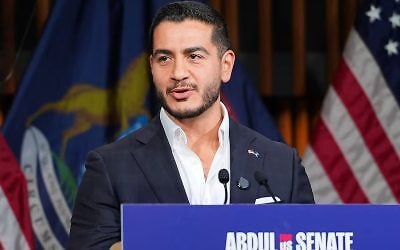
This is the context in which Abdul El-Sayed’s election to the U.S. Senate deserves attention. As the first Muslim elected to serve in the Senate, El-Sayed built his campaign around progressive causes, including criticism of American military support for Israel. His victory also came amid controversy surrounding his association with Hasan Piker, an influencer who appeared alongside him at campaign events.
In 2019, Piker stated that the United States deserved the September 11 attacks. He later walked back the remark. He has also made comments about American Jews that sparked accusations of antisemitism. El-Sayed, for his part, has said he does not consider September 11 justified and that the influencer’s views do not represent his campaign.
The episode matters not because a Muslim politician should be questioned for his religion, but because no public representative should be granted immunity from scrutiny because of the cause they champion or the community they represent.
There is a fundamental difference between defending Palestinian rights and excusing terrorism. Between criticizing the Israeli government and reproducing antisemitic rhetoric. Between defending freedom of expression and normalizing statements that dehumanize or threaten particular groups.
These distinctions may seem obvious, but they become less clear when politics operates through an us-versus-them mentality. Once someone is identified as an ally of a particular cause, their positions begin to be judged differently. What would be unacceptable coming from a political opponent may suddenly become easier to dismiss when it comes from someone who shares our values or political commitments.
And the current climate does not allow antisemitism to be treated as a secondary concern. According to the Anti-Defamation League (ADL), the United States recorded 6,274 antisemitic incidents in 2025. Although this represented a decline from 2024, it was still the third-highest annual total since the organization began tracking such incidents in 1979.
This is not about preventing criticism of Israel, silencing advocates for Palestinian rights, or questioning the legitimacy of Muslim representation in American politics. It is about establishing a principle that should be non-negotiable: no cause, identity, or political banner should make hateful rhetoric acceptable.
Perhaps Homeland’s greatest contribution to this discussion is its portrayal of how trust can be built upon an incomplete narrative. Brody does not win over the American public by revealing his terrorist plans. He wins their trust by presenting the story people want to believe.
In politics, ideological blindness can work in much the same way, even when it does not involve hidden or criminal intentions. Voters can become so focused on the cause they want to defend that they stop paying attention to the contradictions of the people they choose to represent them.
Democracy cannot depend solely on the ability to choose a side. It also requires the willingness to question one’s own side.
Because when solidarity replaces critical thinking, we stop evaluating ideas and begin granting advance absolution to those who claim to be fighting for a good cause. And in the face of rising antisemitism, we cannot afford to normalize what should remain unacceptable, regardless of who speaks those words.