
"These fragments I have shored against my ruins"
The Danube: A River of Remembrance
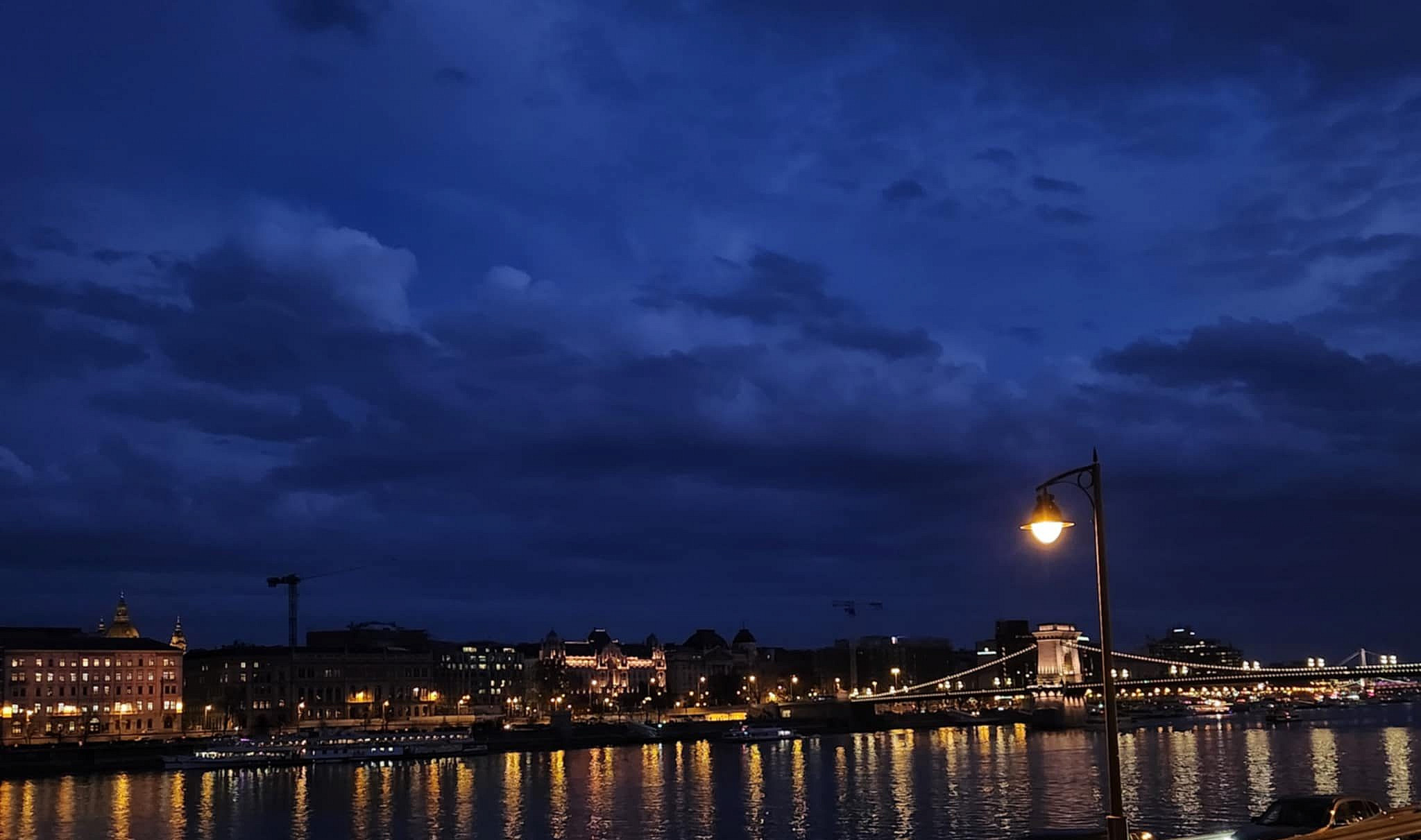
Photo: Inez Korontos-Porath
When I die, I want to be cremated, and my ashes scattered into the Danube. I am aware of all the implications: theological, historical, emotional. Yet I have never found a place that I could call home, and Budapest is as close as I have had; the river that runs through it has held me in times of grief, anger, exile, and in some fleeting moments of peace.
I want to begin my final journey deep in the Black Forest, where the water still seems innocent, flowing eastward in a lazy, almost naïve waltz tempo, the Blue Danube as Strauss imagined it, shimmering with the gentleness of a lullaby. Yet this river darkens as it moves: it turns green, then grey, then rust-red, then a muddy, sickly yellow before slipping into the Black Sea, heavy with silt, memory, and all the things we no longer speak of. And with the river, I want to vanish into something vaster, not into paradise or resurrection, but into movement, from river to ocean, from memory to oblivion.
Yet ashes cannot be scattered into the Danube without remembering the ghosts, because in certain cities the Danube is not a backdrop or a postcard view, but a wound. It cuts through some towns like a surgical scar; precise, central, and impossible to ignore, dividing Buda from Pest, Novi Sad from Petrovaradin, and between them the water that carried away the bodies. It divides memory from myth, before from after, life from death, remembering from forgetting.
Vienna, Bratislava, and Belgrade were also marked by Nazi occupation and deportations but did not use the river as a killing ground in the same way. In Budapest, the Danube became a stage for public executions, a method of terror that was both logistically efficient and psychologically devastating. The practice of executing people directly into the river appears to have been a uniquely Hungarian atrocity, particularly associated with the Arrow Cross Party’s reign of terror in late 1944 and early 1945. Victims were lined up at the riverbank, shot, and left for the current to carry away; it was a method repeated often enough to acquire its own term: úsztatás — “making someone swim, letting someone float”, a euphemism colder than the water itself.
Further downriver, during the Cold Days in January 1942, the Royal Hungarian Army carried out mass killings in Novi Sad and surrounding towns during its occupation of Yugoslav territories. Civilians, mostly Jews and Serbs, were executed in their homes, in the streets, and on the frozen river, forced onto the ice where they were shot or pushed into holes to drown or freeze, sometimes prodded under the ice with bayonets. This massacre claimed the lives of three to four thousand people, leaving a lasting scar on the city. Even the Horthy regime initiated trials against its own officers, rare among Axis-aligned governments, though the memory was later suppressed, distorted, and politicised.
In the winter of 1944–45, even colder days came when Serbian partisans retaliated, executing thousands of civilians (again, with many Jews among them) without trial. The river did not thaw; it simply changed hands and justice blurred into vengeance, memory into silence.
While the Arrow Cross were not responsible for the Novi Sad raid, the memory of the 1942 massacre may have influenced their choice of method. In Budapest, by the end of 1944, under direct Nazi control and Arrow Cross rule, Jews were bound, barefoot, and nameless when they were shot into the river, often in full view of the city. Historian Gábor Tabajdi has observed: “No similar series of murders took place in other large European cities. It is truly unique. Mass murders were taking place daily in the centre of the city.” Estimates suggest that twenty thousand Jews were murdered in this way — too many to conceal, too many to forget.
But in Hungary, memory was not only buried; it was redacted. The communist regime condemned fascism but often erased Jewish suffering, subsuming it into broader narratives of class struggle and national victimhood. Trials were held, but remembrance was fragmented, politicised, and often silenced. The river kept flowing, indifferent to the monuments that would come decades later.
György Faludy left a devastating account of his family’s fate:
For all who lived in this house have died:
my aunt slit her throat, and she bled,
the rest in siege or gas they died,
my sister in the icy Danube’s bed —
for all who lived in this house have died.
There is something terrifying and holy about water that remembers violence yet reveals almost nothing. Sometimes, it even gives something back. In 2011, during restoration work on Margaret Bridge, the remains of fifteen to twenty people were found beneath a wartime structure; anthropological and DNA analysis revealed gunshot wounds and Ashkenazi genetic markers. These were likely victims of úsztatás whose bodies had lain hidden for seventy years. In 2019, the Israeli rescue team ZAKA sent a mission to probe the riverbed for further remains; but the numbers are uncertain, and the current is unhelpful.
Water cleanses: it washes blood from stone, tears from skin, sins from memory. But it also conceals. It swallows names, distorts faces, carries away the evidence. The Danube has been both mikveh and morgue, both ritual and ruin. It purifies the living and hides the dead.
Today Budapest remembers them with iron shoes on the riverbank — Cipők a Duna-parton — because the victims were made to remove their shoes before execution, the shoes having value, the bodies having none. Novi Sad has plaques and statues; elsewhere there is nothing. The Danube remains, for some, a romantic emblem of Europe, a ribbon of music and light. For others it is a grave, or rather, a site of murder without graves.
The river runs through more Jewish history than most imagine: Vienna, Bratislava, Komárno, Budapest, Vukovar, Novi Sad, Belgrade, Ruse, Galați, Tulcea — an unmarked map of emptied communities, abandoned cemeteries, ruined synagogues, and quarters now populated by souvenir stalls and silence. Memory persists not only in plaques or brochures, but in the way the winter light touches the water, in the sound of Kaddish in a language the locals no longer understand, in stories told quietly to those who know how to look beneath the surface. The Danube remembers, not as metaphor, but as sediment.
The Danube has always meant different things to different people; a source of livelihood, a trade route, a place for leisure, a border to cross, a line to be pushed behind, a grave that never needed digging. Somewhere between languages and ruins, between one regime’s memory and another’s erasure, we find ourselves weeping again by foreign waters.
Danilo Kiš once gave voice to an apatrid, a stateless man, based on Ödön von Horváth:
You, dear sirs, would like for me to show you the house in which I was born? But my mother gave birth in the hospital at Fiume, and that building has been destroyed. And you won’t manage to put up a memorial plaque on my house, because it has probably been torn down, too. Alternately, you’d have to hang three or four plaques with my name on them: in various cities and various countries, but in this I could not be of assistance to you either, because I don’t know in which house I grew up; I no longer recall where I lived during my childhood; I barely even know anymore what language I spoke. What I do remember are images: swaying palms and oleander somewhere by the sea, the Danube flowing along, dark green, next to pastureland, and a counting rhyme: eeny, meeny, miny, moe . . .
Empires have risen and fallen, borders shifted like mistranslations, systems have been imposed and dissolved, yet the river has remained, not as a place but as a witness, a continuous thread of memory, indifferent and eternal.
It’s strange, what we remember. Not names or faces but colours, fragments, gestures. The pull of the current. And the Danube remembers, flowing through Jewish history like blood through a wound that never fully closes.
When I say I want to be scattered here, I mean this: I already have been. So have my people. My languages. My stories. Even my gods.
Related Topics