


The Day I Stopped Resenting My Name
The day before my Kabbalah class, I found myself frustrated by my own name.
Matthew Robin.
It sounded so thoroughly American, so thoroughly non-Jewish, that I almost felt disconnected from it. As my own Jewish practice has deepened, I’ve become increasingly aware of how much my family’s story mirrors that of many American Jews: each generation becoming a little more assimilated than the last. My name seemed like another reminder of that story.
Then, during Rabbi Ari Solish’s Kabbalah class, something unexpected happened.
He mentioned a teaching of the sages: after the end of prophecy, one of its last remaining vestiges is the naming of a child. Parents may not be prophets in the biblical sense, but when they give a child a name, they sometimes participate in something that reaches beyond themselves. A name can become a hint of a person’s future calling.
I had heard this idea before, but this time it landed differently.
Almost immediately, I remembered something I had forgotten.
Matthew is Matityahu.
The English name had obscured its Hebrew origin so completely that I had stopped seeing it. Yet Matthew is simply the long journey of the Hebrew Matityahu through Greek, Latin, and finally English.
Suddenly I wasn’t thinking about my own name anymore.
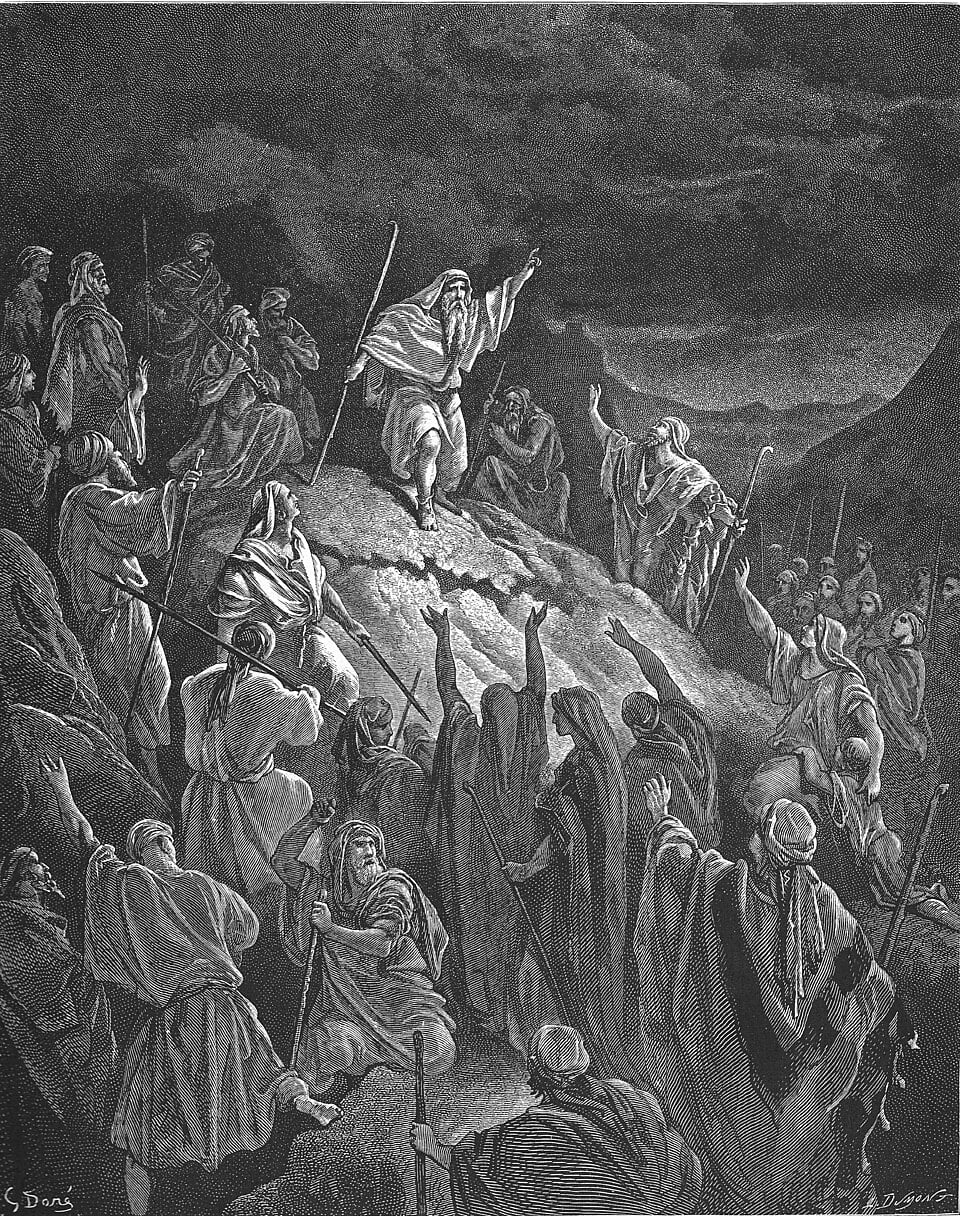
I was thinking about the priest.
Matityahu lived during one of the great crises of Jewish history. Under Seleucid rule, Judaism was being steadily Hellenized. The pressure was not simply military; it was cultural and spiritual. The temptation was to blend in, to compromise, to become a little less distinct as Jews.
At a decisive moment, Matityahu refused.
He would not participate.
His courage became the spark that ignited the Maccabean Revolt. Though his sons—especially Judah Maccabee—would become the great military heroes, it was their father’s refusal to surrender Jewish identity that made everything else possible.
He did not simply fight an army.
He drew a line.
“No farther.”
That story suddenly became personal.
My family has been blessed in countless ways by America. Like many Reform Jewish families, however, ours also experienced the quiet pull of assimilation. Nothing dramatic. No persecution. Just the slow drift that comes naturally when Jewish distinctiveness becomes optional.
For generations, that current carried us along.
Yet somewhere along the way, something changed.
I found myself studying Torah, learning Hebrew prayers, attending Kabbalah classes, keeping more mitzvot, and discovering the richness of Jewish tradition that previous generations had only partially known.
Looking back, I realized that my own life has become an attempt to draw a line.
Not against America.
Not against modernity.
Not against the Reform movement that helped preserve Jewish identity for my family.
Rather, against assimilation itself.
Every Jewish family eventually faces its own version of this question. How much of itself is it willing to surrender to the surrounding culture? Hellenization today rarely arrives in the form of Greek philosophy. More often, it comes as the quiet pressure to become just a little less recognizably Jewish with each passing generation.
Perhaps every family needs someone willing to say:
“This is where the drift stops.”
I don’t imagine myself to be another Matityahu. History grants very few people that role.
But I do recognize the pattern.
One person rediscovers something ancient.
One person decides that the inheritance will continue.
One person chooses not merely to remember Judaism but to live it.
When Rabbi Solish spoke about names carrying a remnant of prophecy, I wondered whether prophecy always points toward extraordinary futures.
Perhaps sometimes it simply points someone back toward who they were meant to become.
For years I thought my name represented distance from Judaism.
Now I wonder whether it quietly carried a reminder all along.
Matthew.
Matityahu.
The Hebrew name Matityahu means “Gift of God.” For most of my life, I never knew that my own name carried that meaning. Perhaps my name itself was a gift—not because it determined my path, but because it patiently waited for me to rediscover it.
And perhaps that rediscovery has become its own invitation: to be a faithful steward of an inheritance that was never meant to disappear.